








Chimera
The Body as Optical Rupture
Mirrored, fractured, reformed. Chimera turns the body into illusion—where flesh bends, multiplies, and escapes the singular gaze.
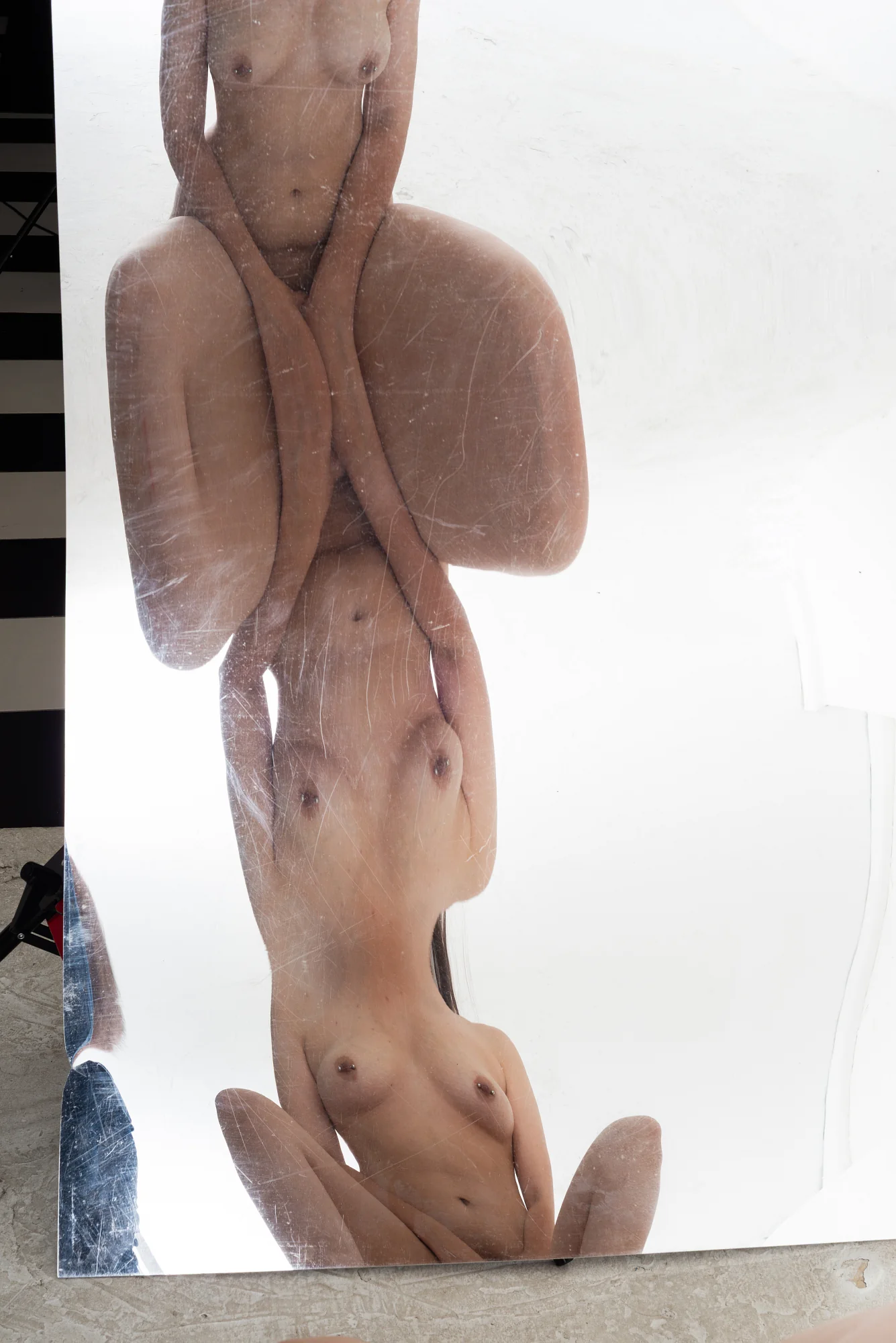
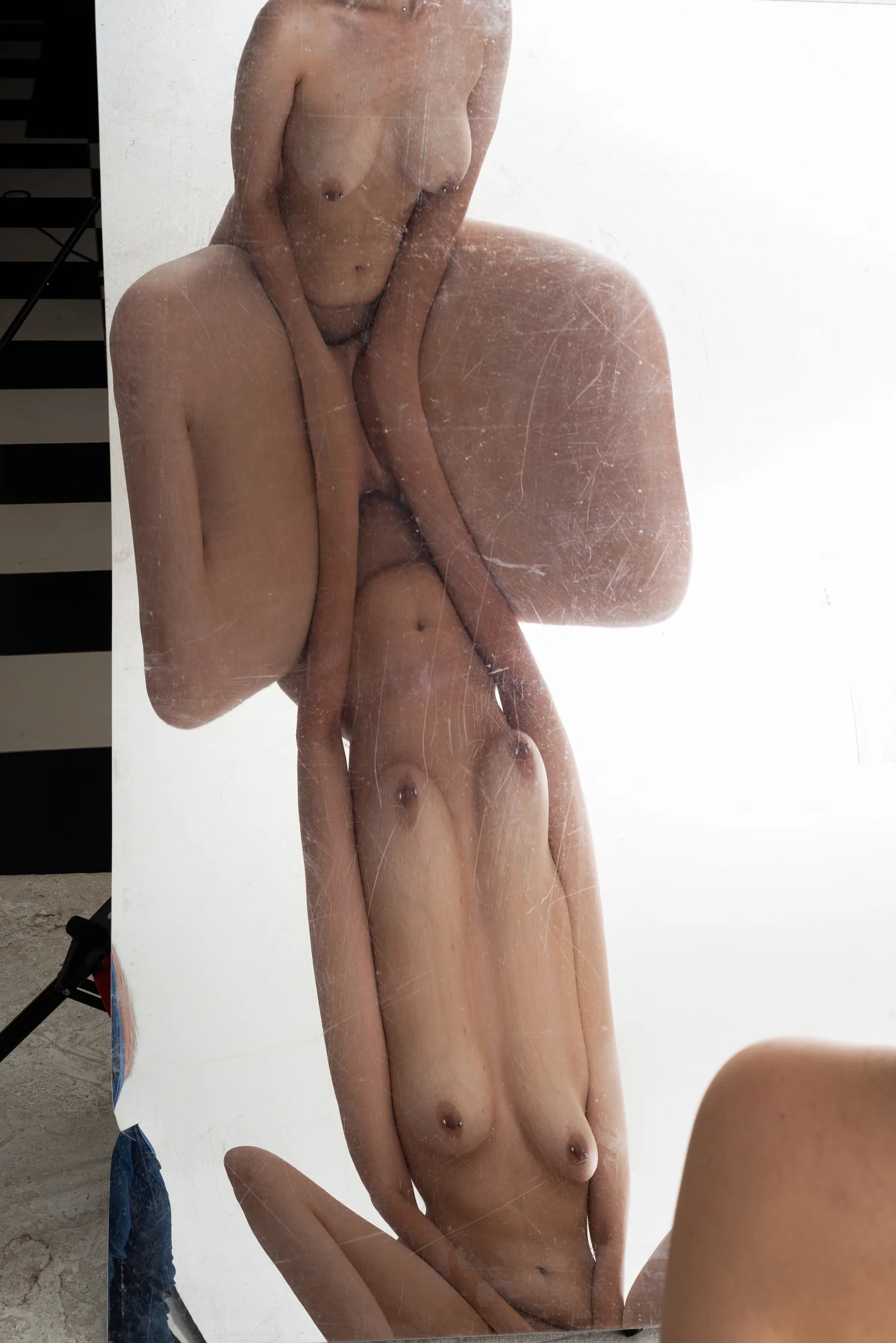
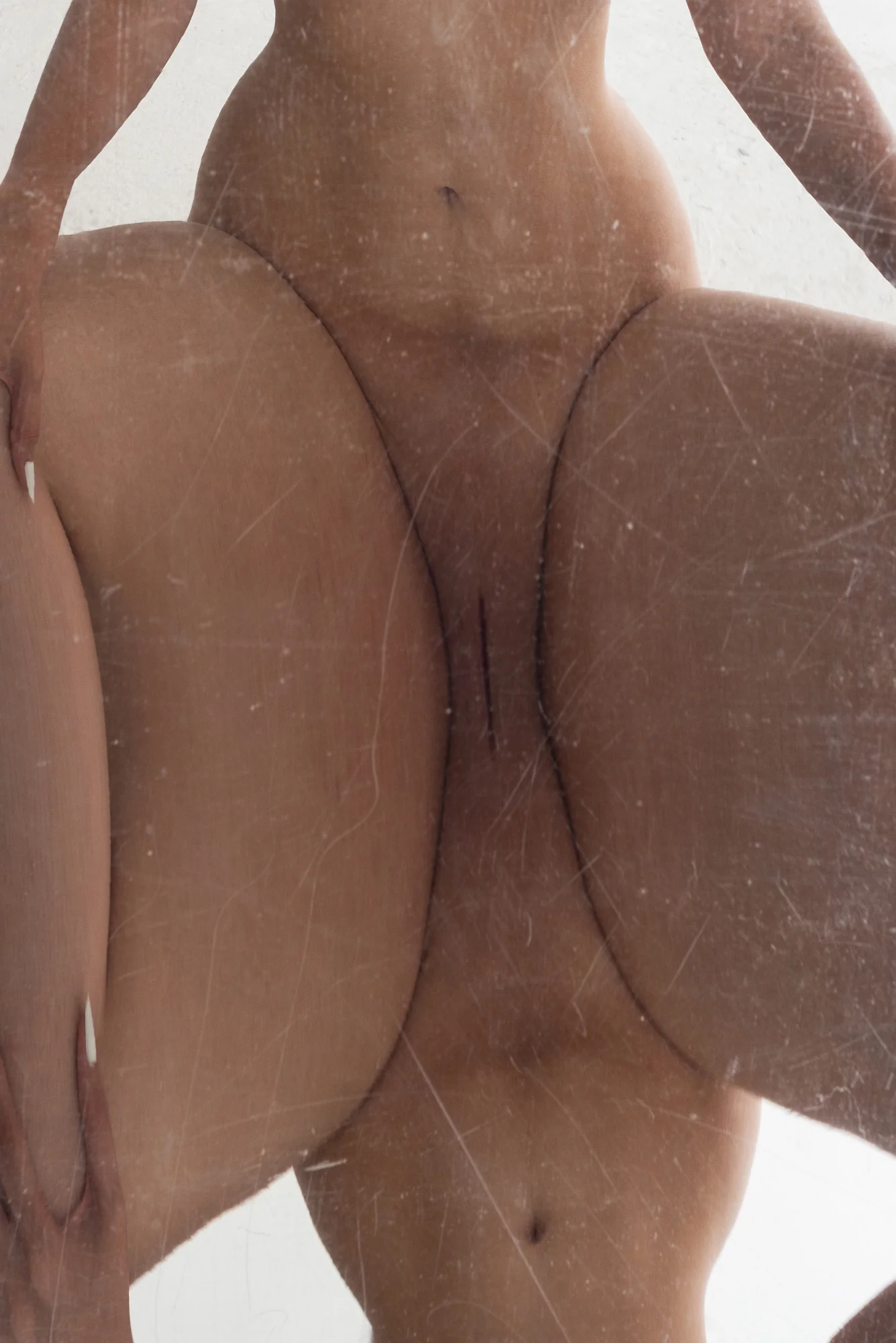
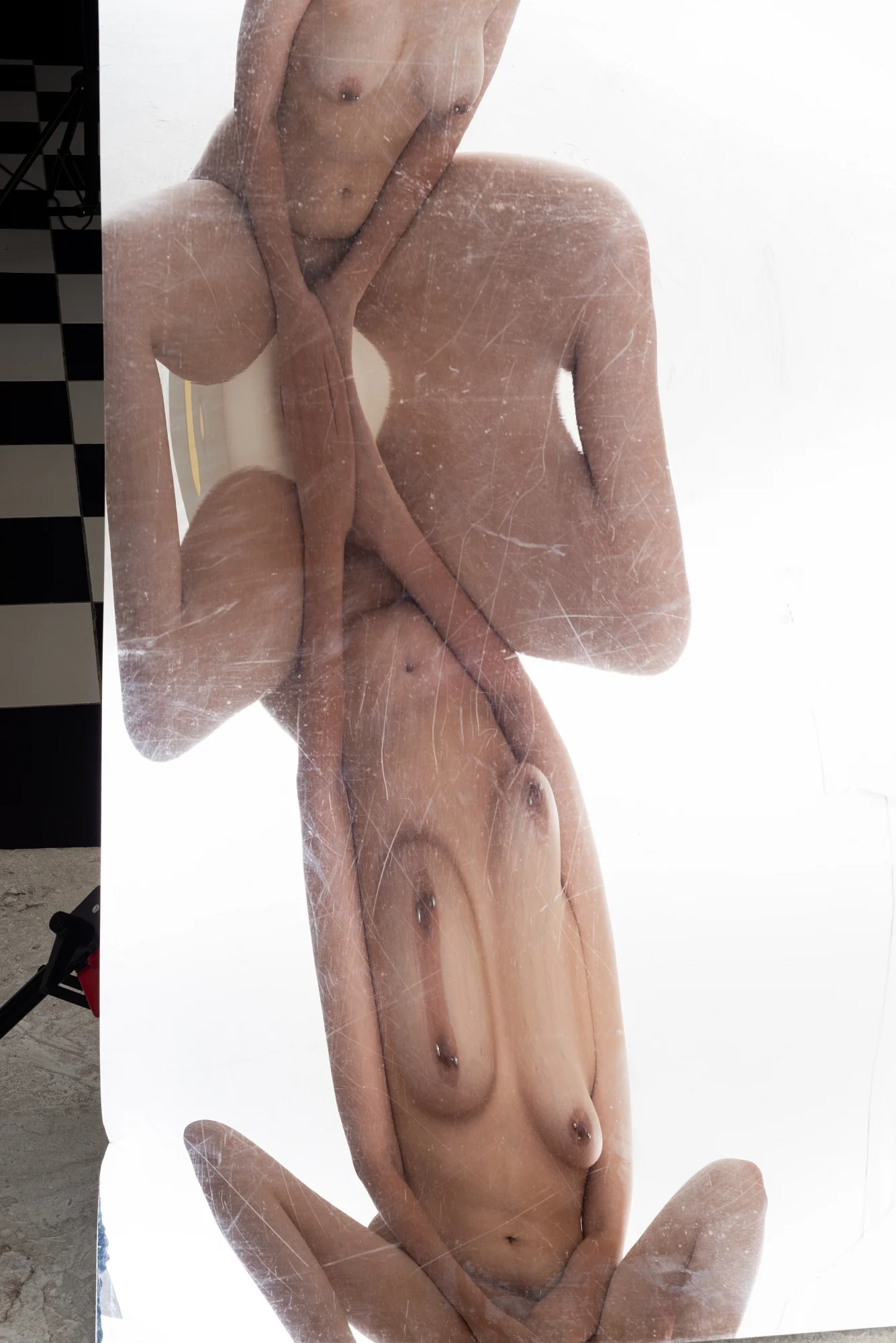
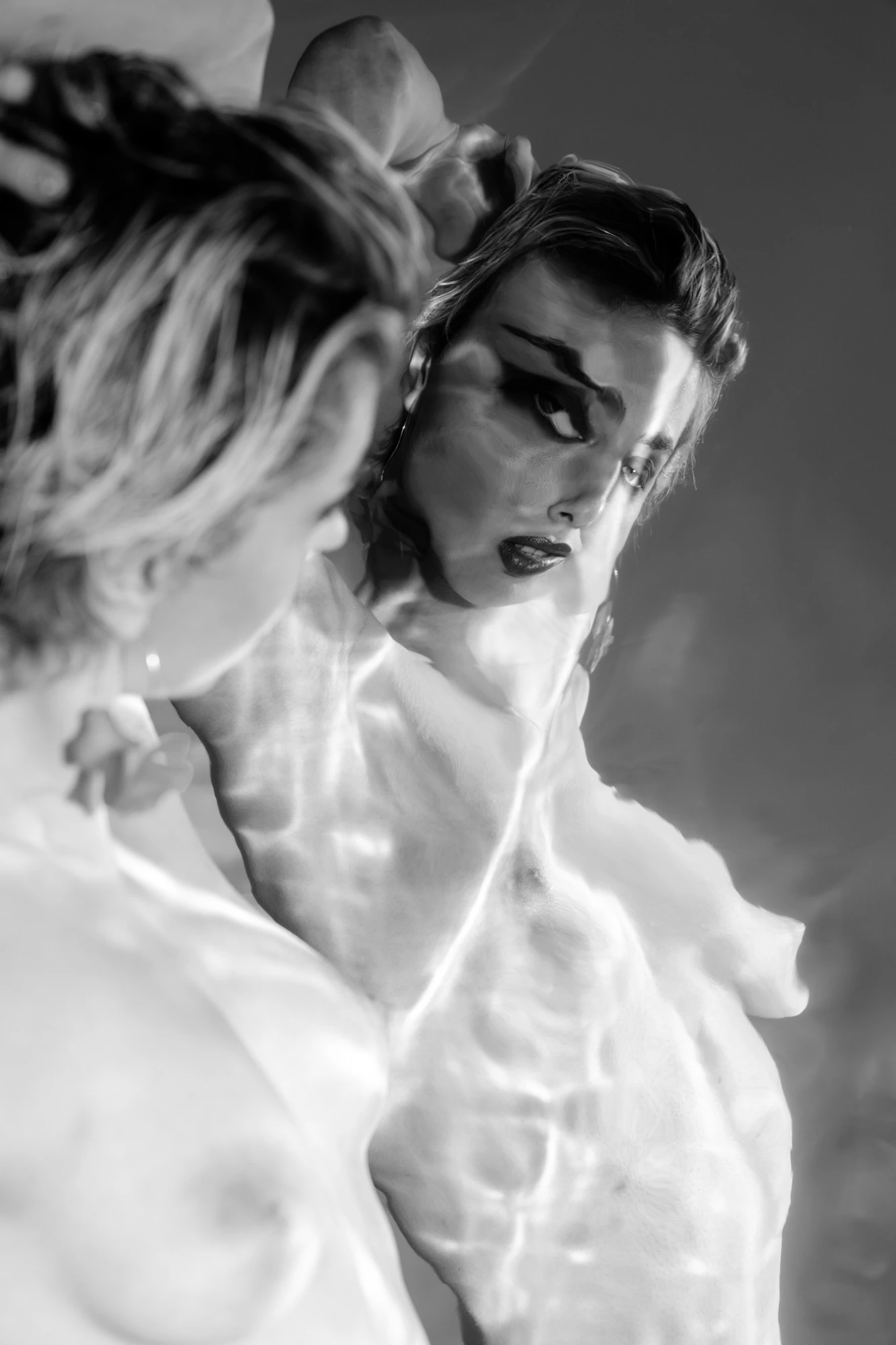
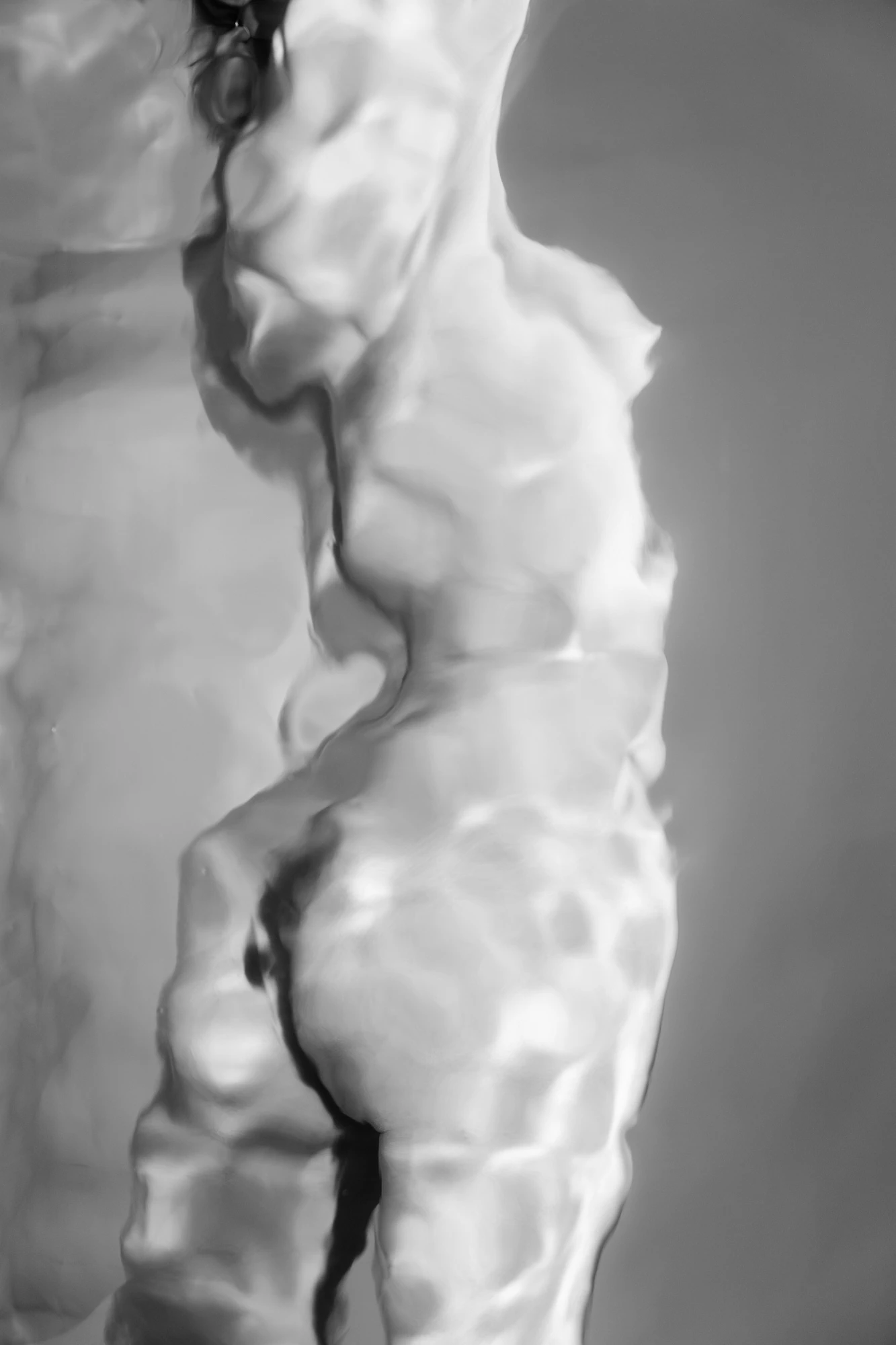
Photography promises to capture what is. Chimera disrupts that promise. In this ongoing series, Burak Bulut Yıldırım uses damaged mirrors, refractive surfaces, and projected light to fragment the body into something that cannot be fixed or fully known. The figure appears doubled, stretched, folded into itself—not broken, but liberated from the tyranny of a single perspective.
The series title invokes the mythological chimera: a creature assembled from incompatible parts, impossible yet undeniably present. Here, the body becomes its own chimera—a form that contains contradictions, that cannot be reduced to a single truth. These distortions are not added in post-production. Every fracture is achieved in-camera, through the choreography of light, surface, and flesh.
The work exists in dialogue with artists who have challenged the body’s apparent unity. Hans Bellmer’s La Poupée dismembered and reassembled the female form to expose the violence beneath desire—but Yıldırım’s approach differs fundamentally. Where Bellmer cut and sutured, Yıldırım refracts; there is no violence here, only optical multiplication. The body remains intact while perception splinters.
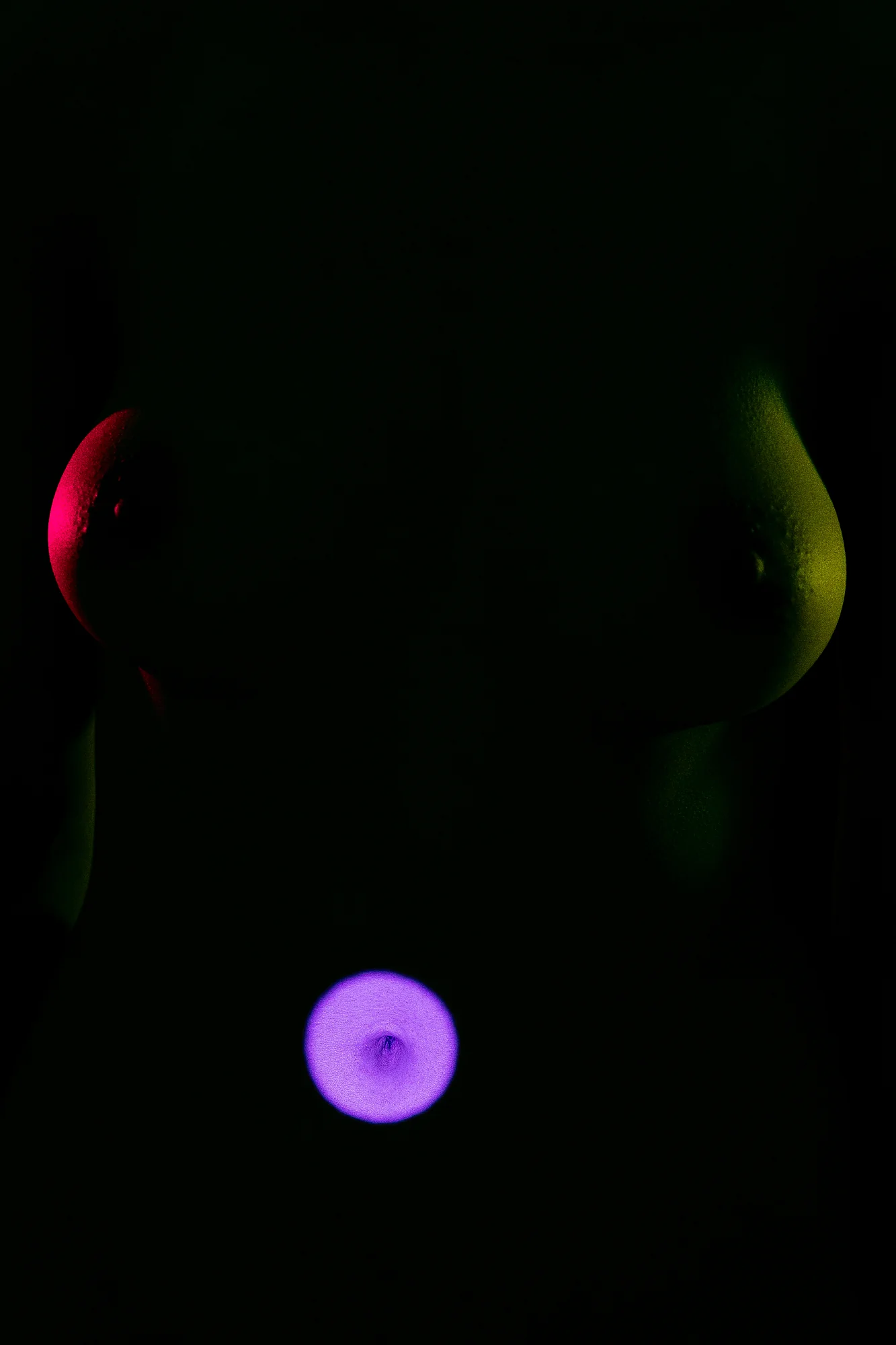
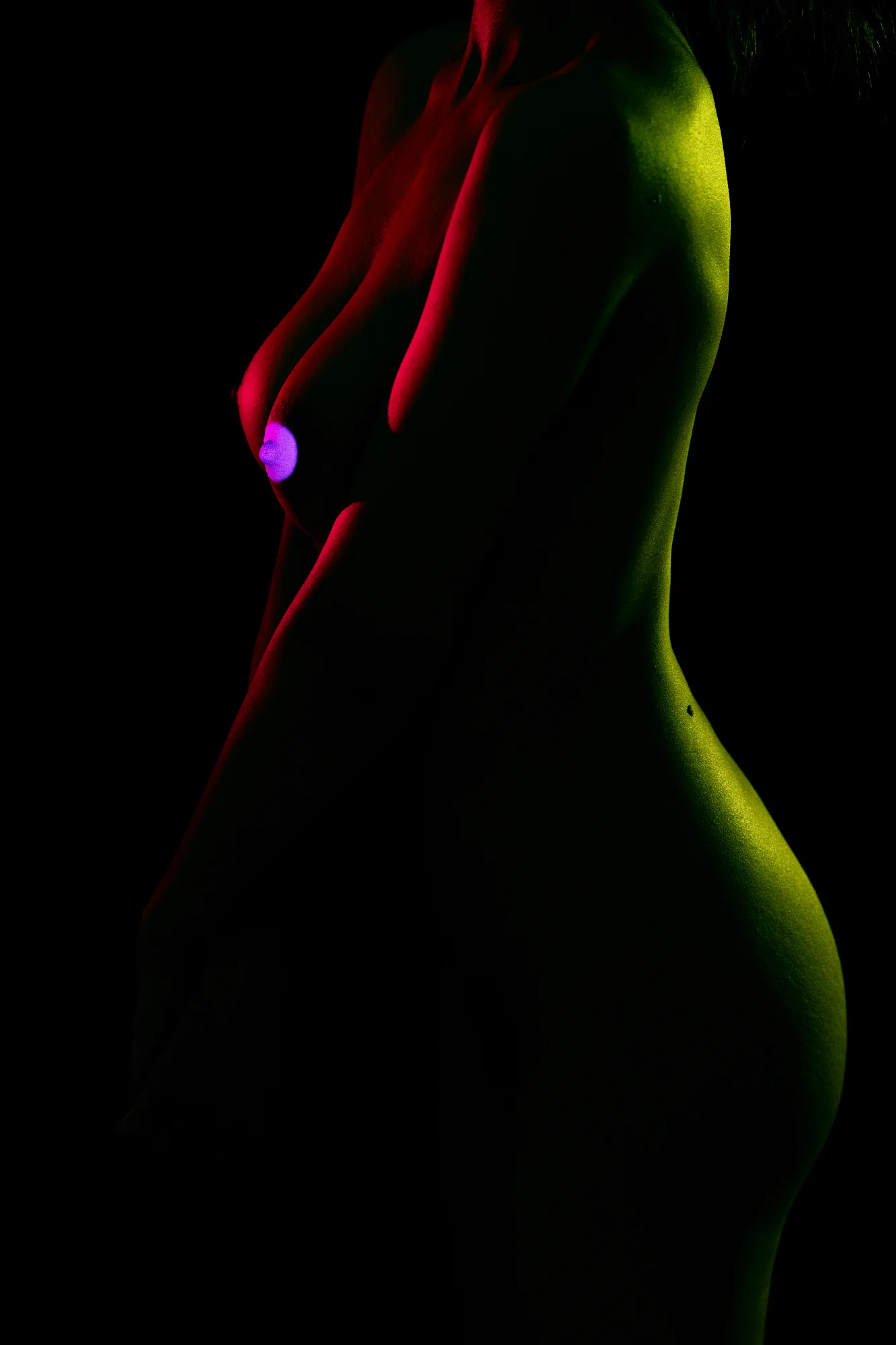
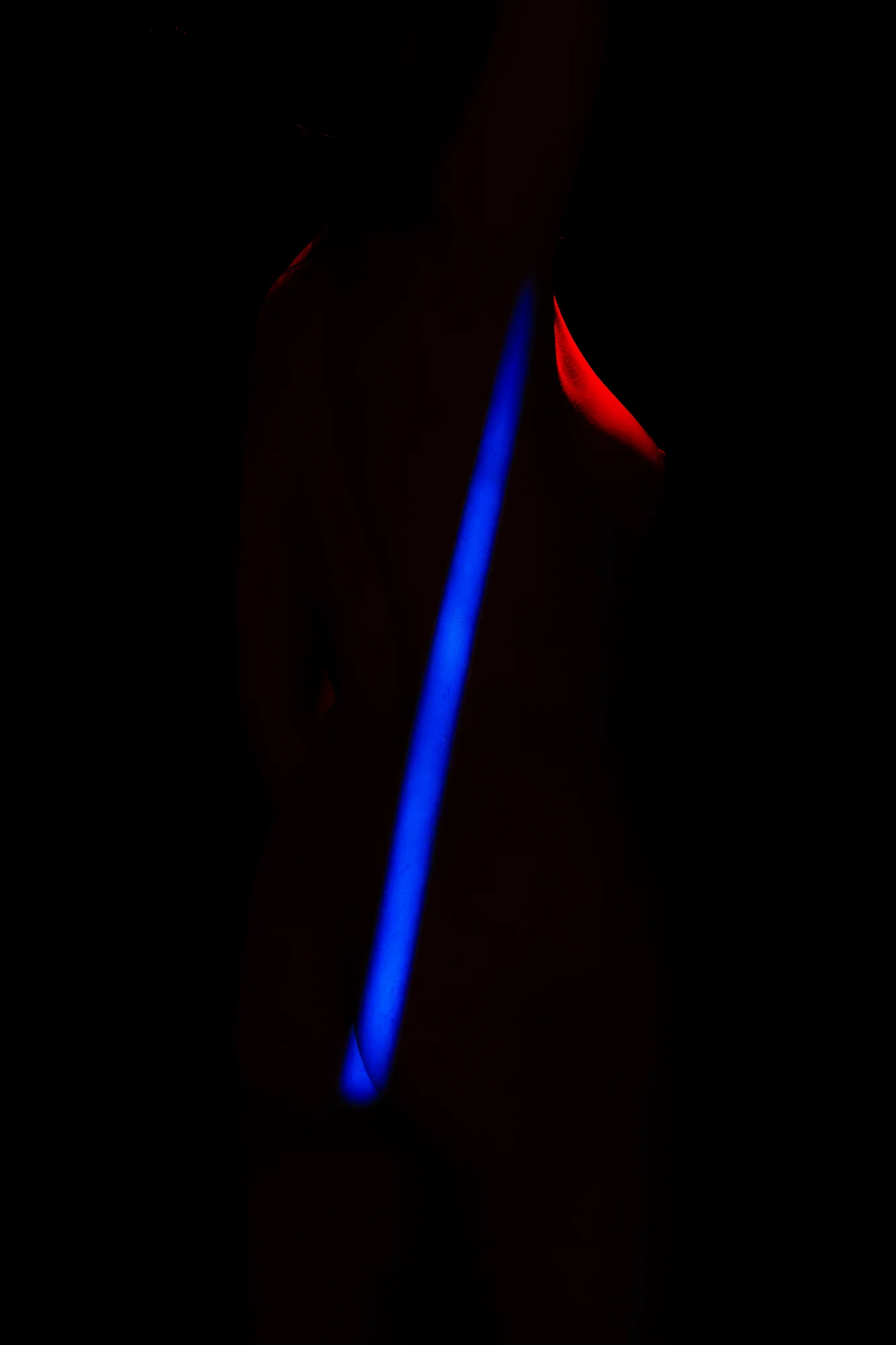
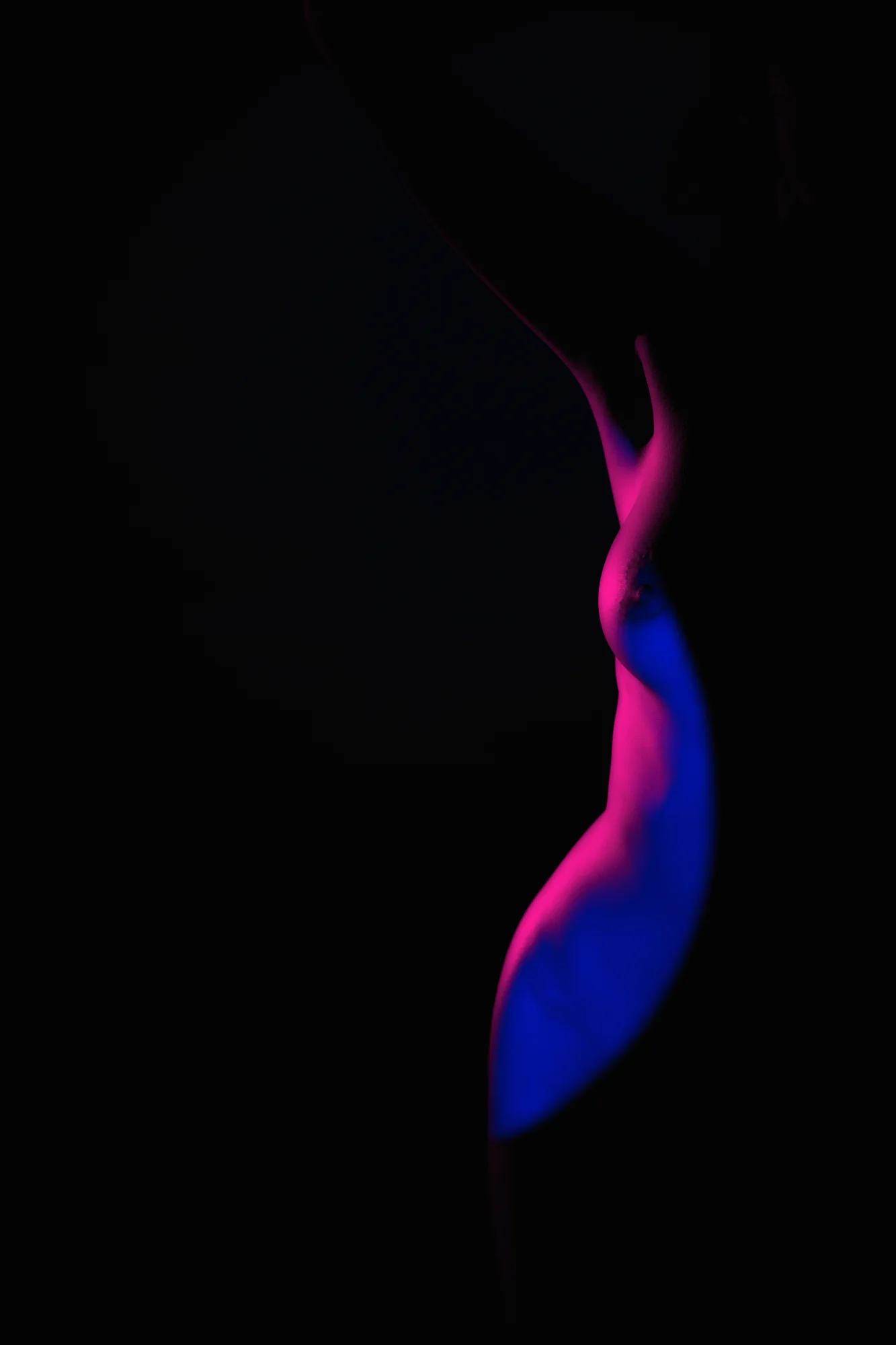
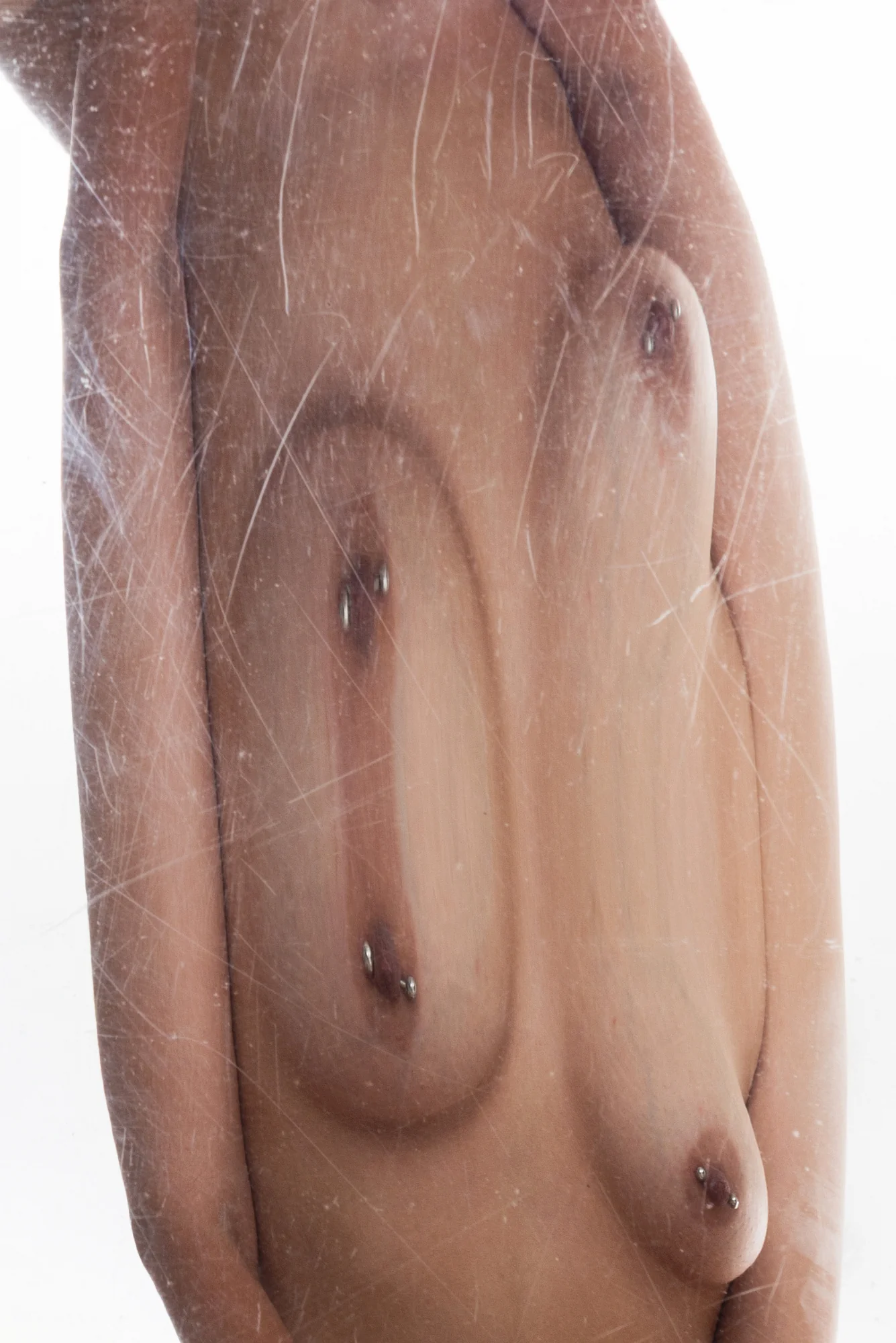
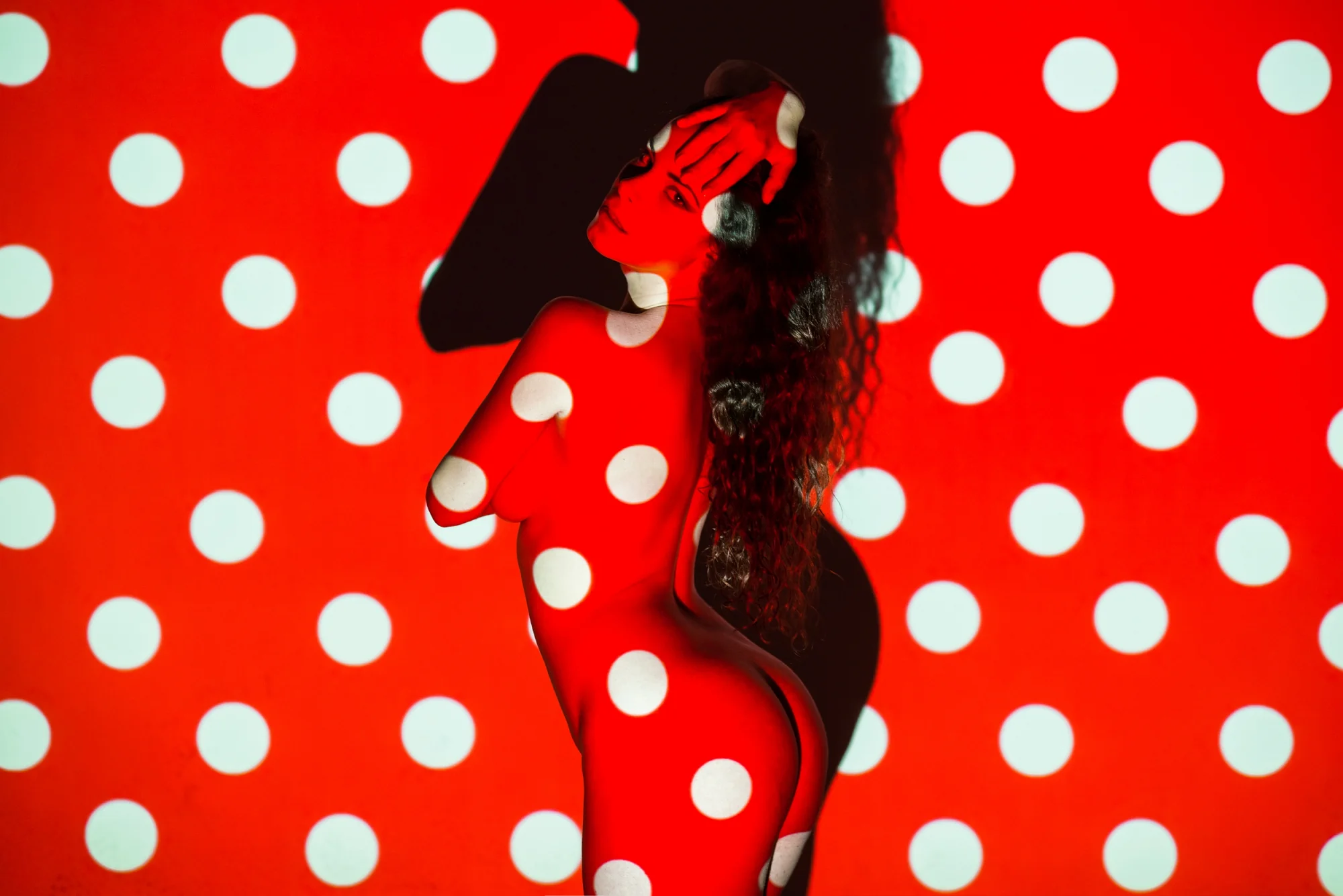
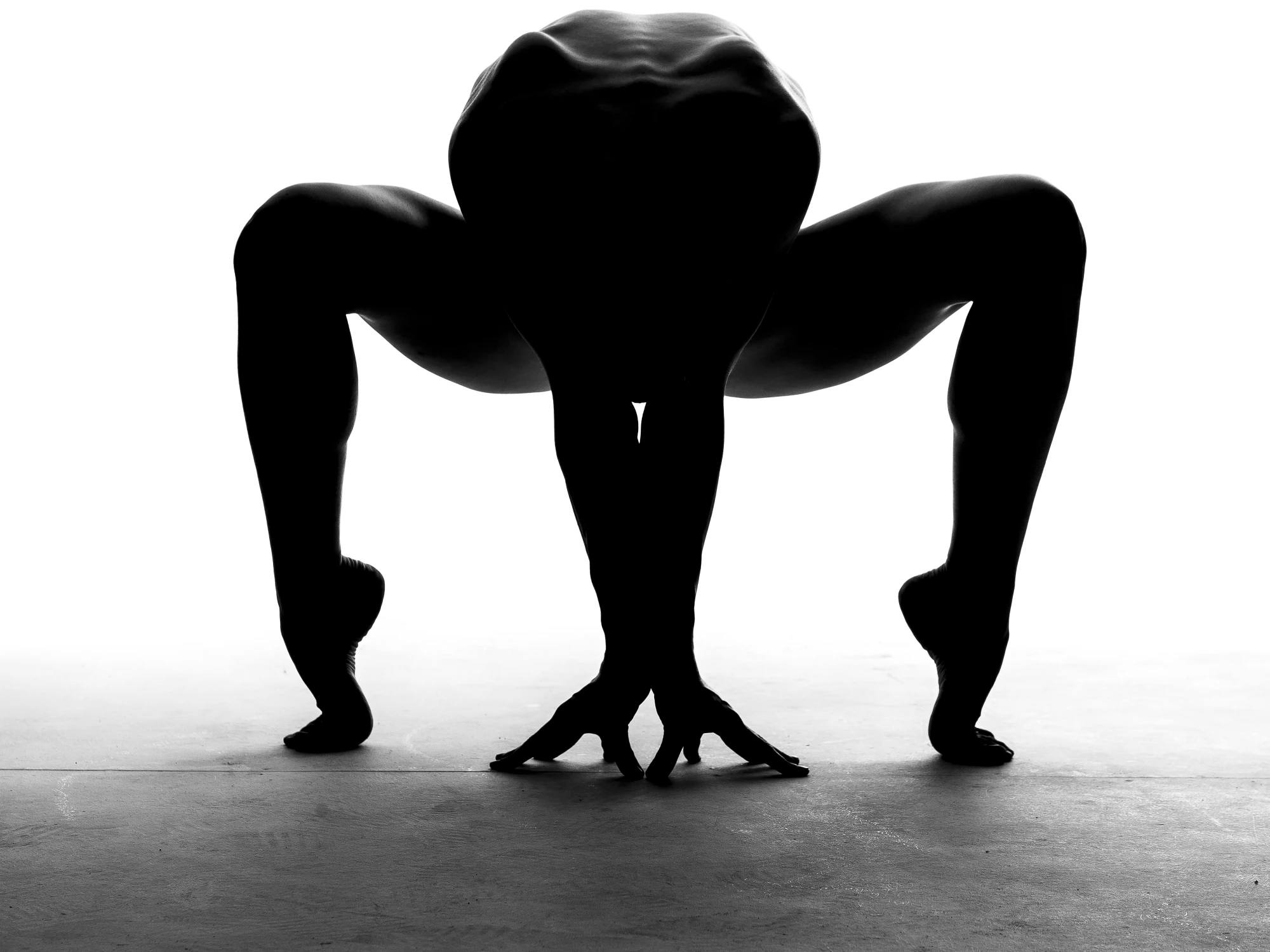
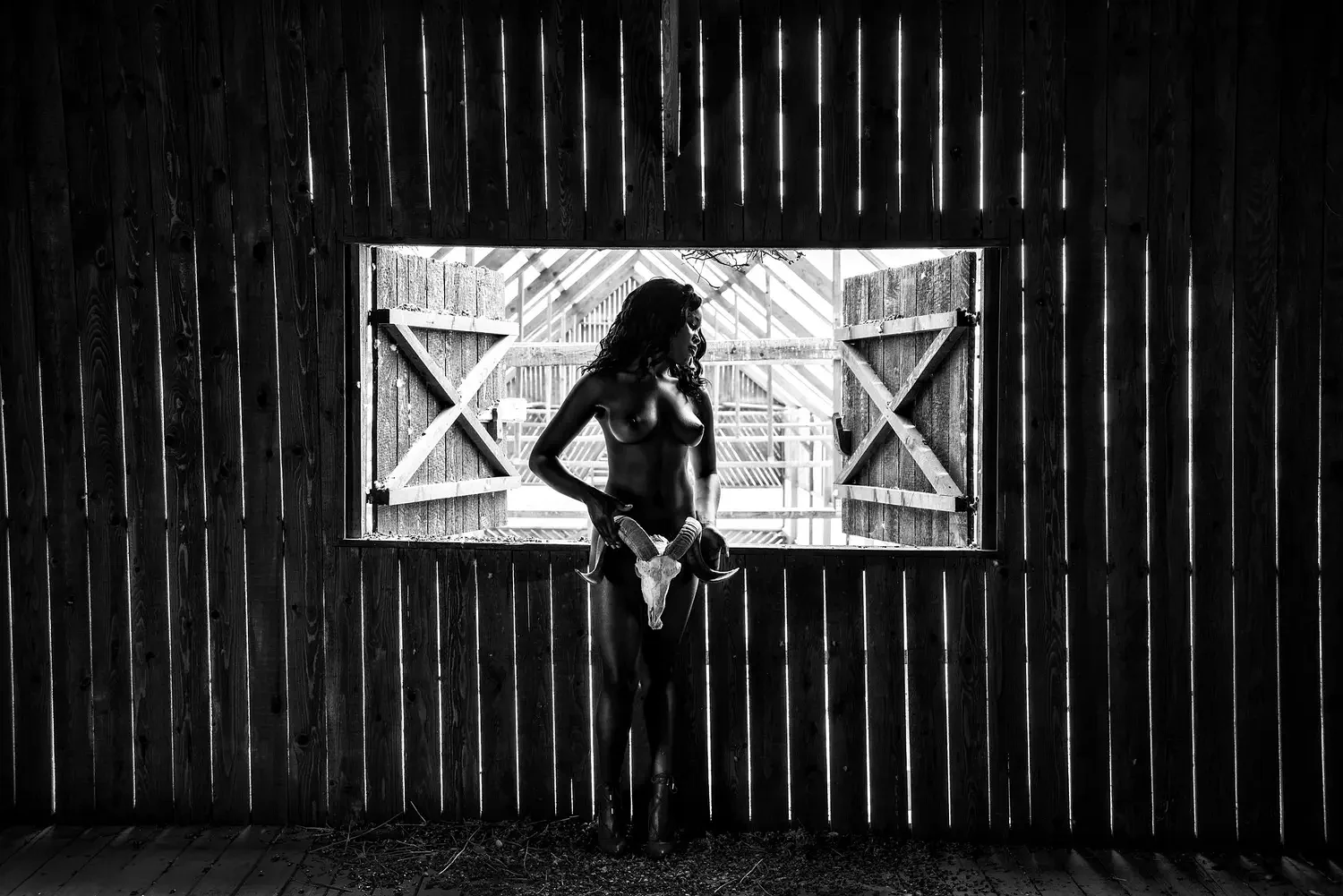
Two distinct visual strategies operate within Chimera. The first employs deliberately damaged mirrors—surfaces scratched, aged, or scored—that catch and scatter the reflection into overlapping planes. The body appears to fold through itself, occupying multiple positions simultaneously. The second strategy uses projected light that slices across the body in darkness, reducing the figure to contours and edges. In both cases, the photograph does not record a body but a perceptual event.
The contemporary resonance is unavoidable. In an age of filtered selfies, AI-generated bodies, and augmented reality, Chimera asks: what is an authentic image of a body? The answer, these photographs suggest, may be that no single image can contain the body’s full truth. Every representation is already a distortion; Chimera simply makes that distortion visible.
Within the series, the sub-group Dysmorphia explores a darker register. Here, bodies are photographed through scratched glass and warped reflective surfaces, their forms stretched and compressed in ways that evoke the distorted self-perception of body dysmorphic disorder. These images do not illustrate a diagnosis; they visualize an experience. What does it feel like when the mirror lies?
Chimera has been in development for over a decade, with Dysmorphia emerging as a focused investigation in recent years. The series continues to expand as new optical methods are explored. Selected works are available as limited edition archival prints through Artsper, Saatchi Art, and Artmajeur.