Chimera
The Body as Optical Rupture
A body that exists only within the optics of the camera.
No AI, no compositing, no multiple exposures: every image is a single frame shaped by mirrors and light.
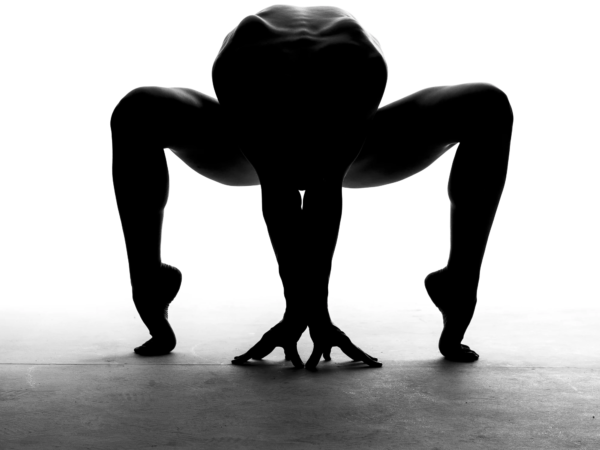
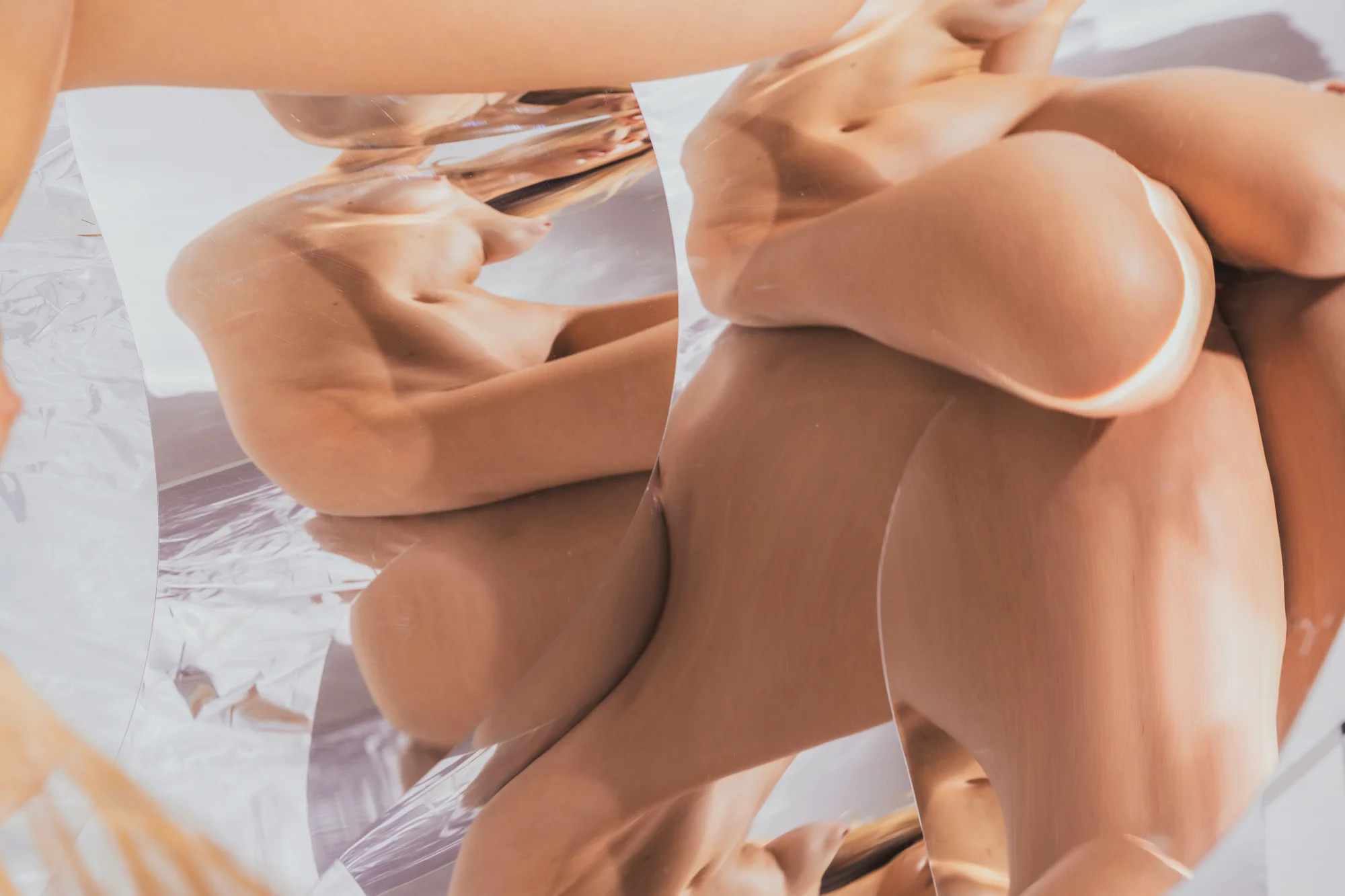
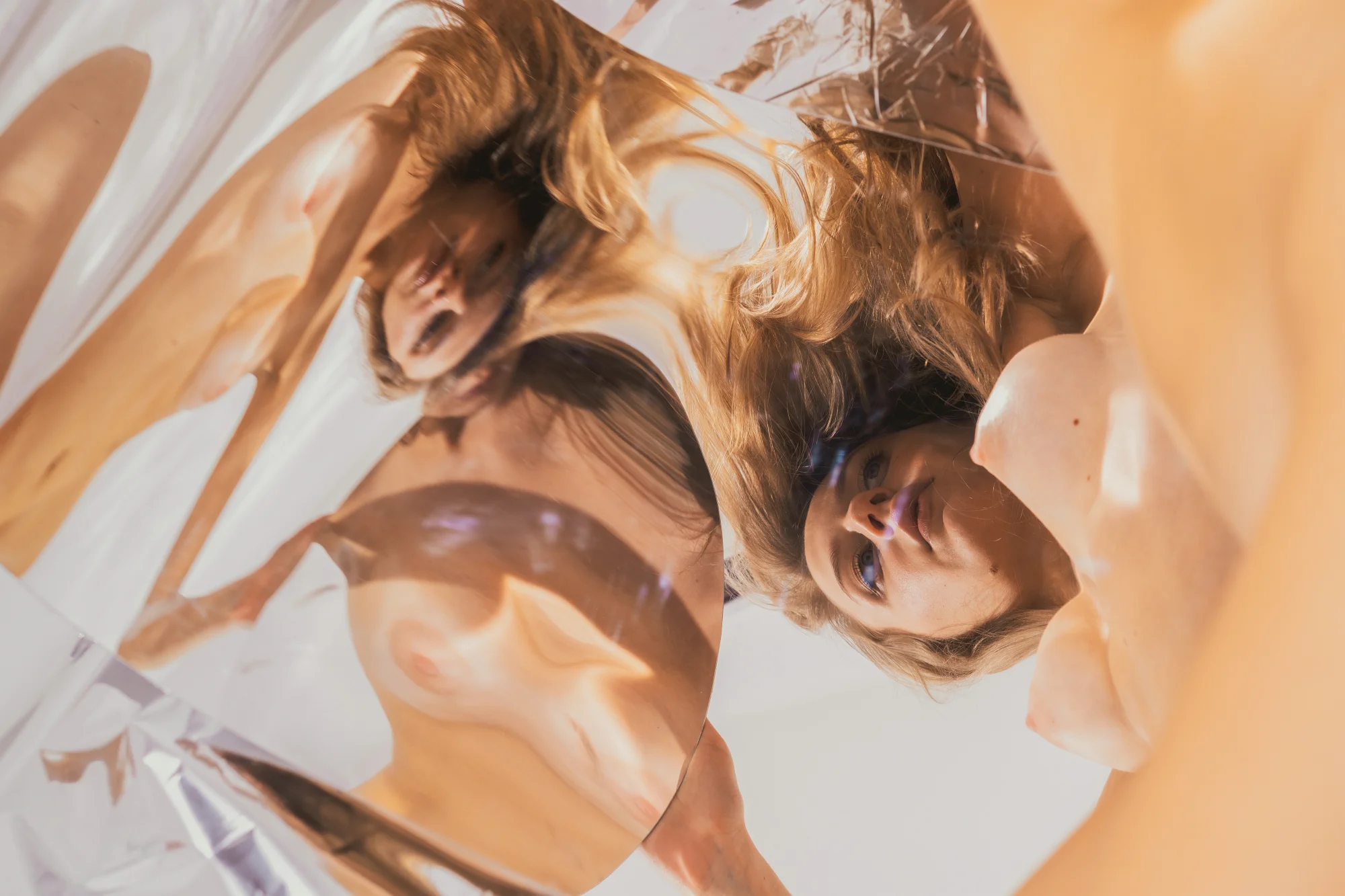
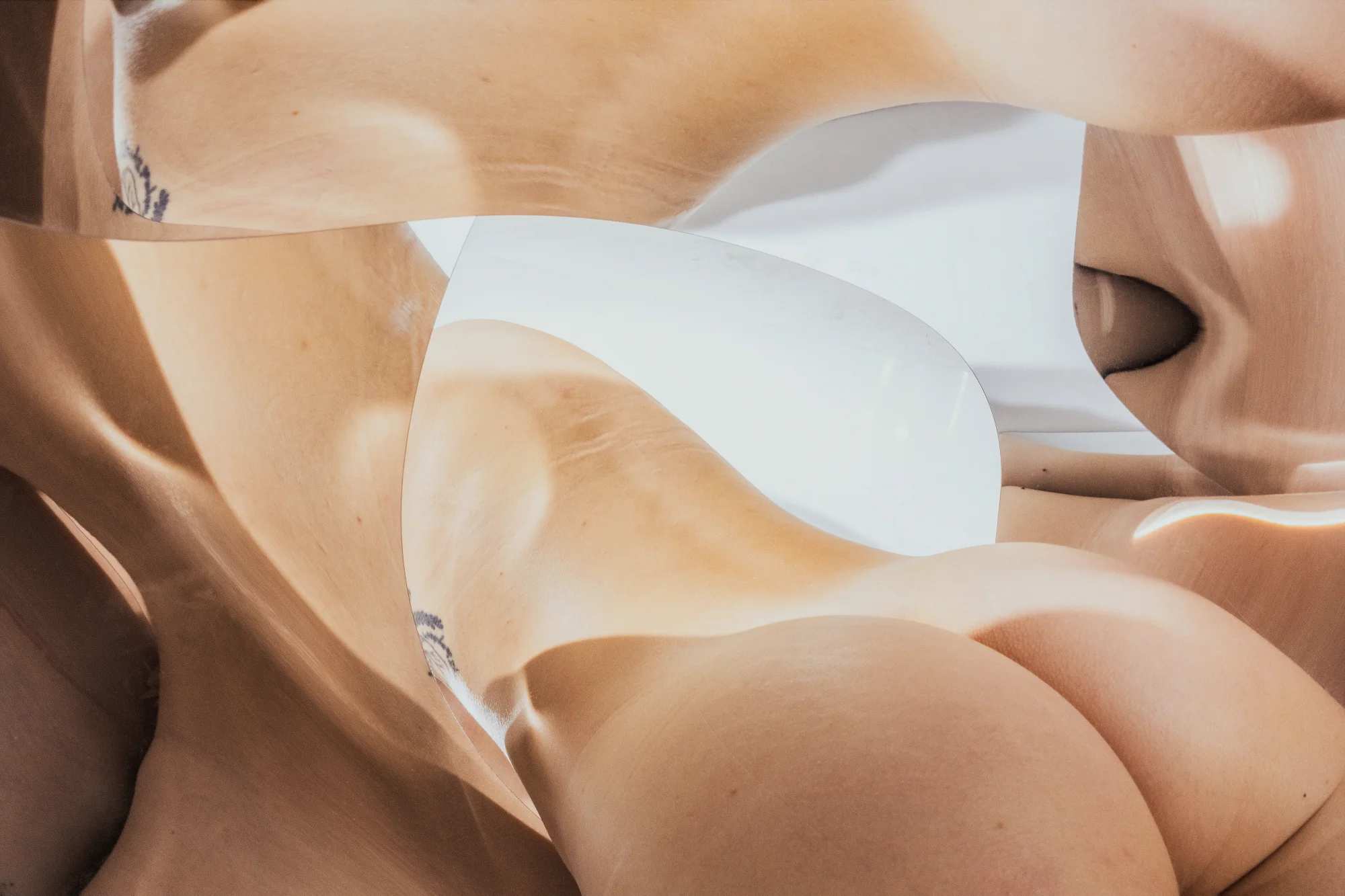
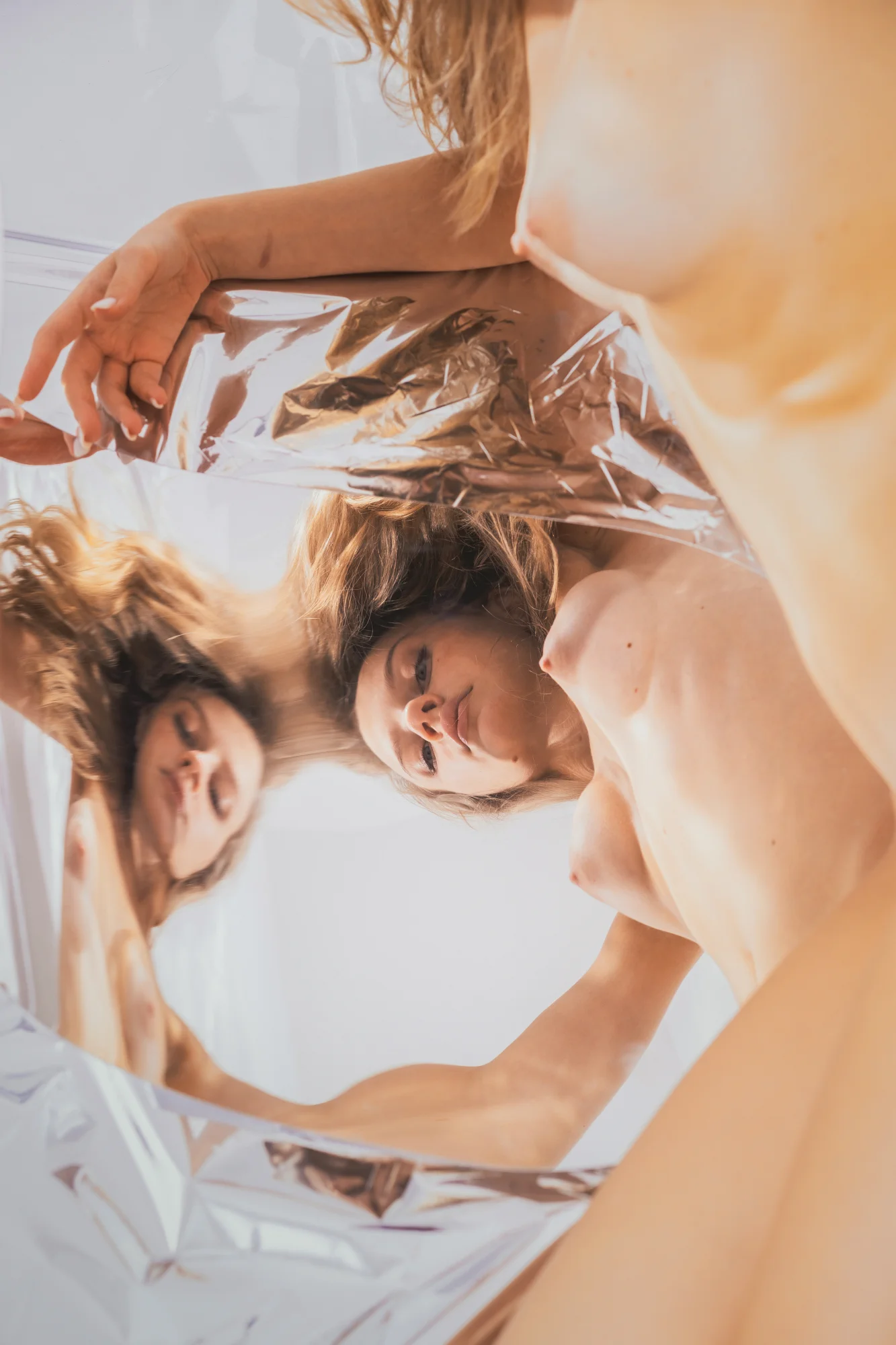
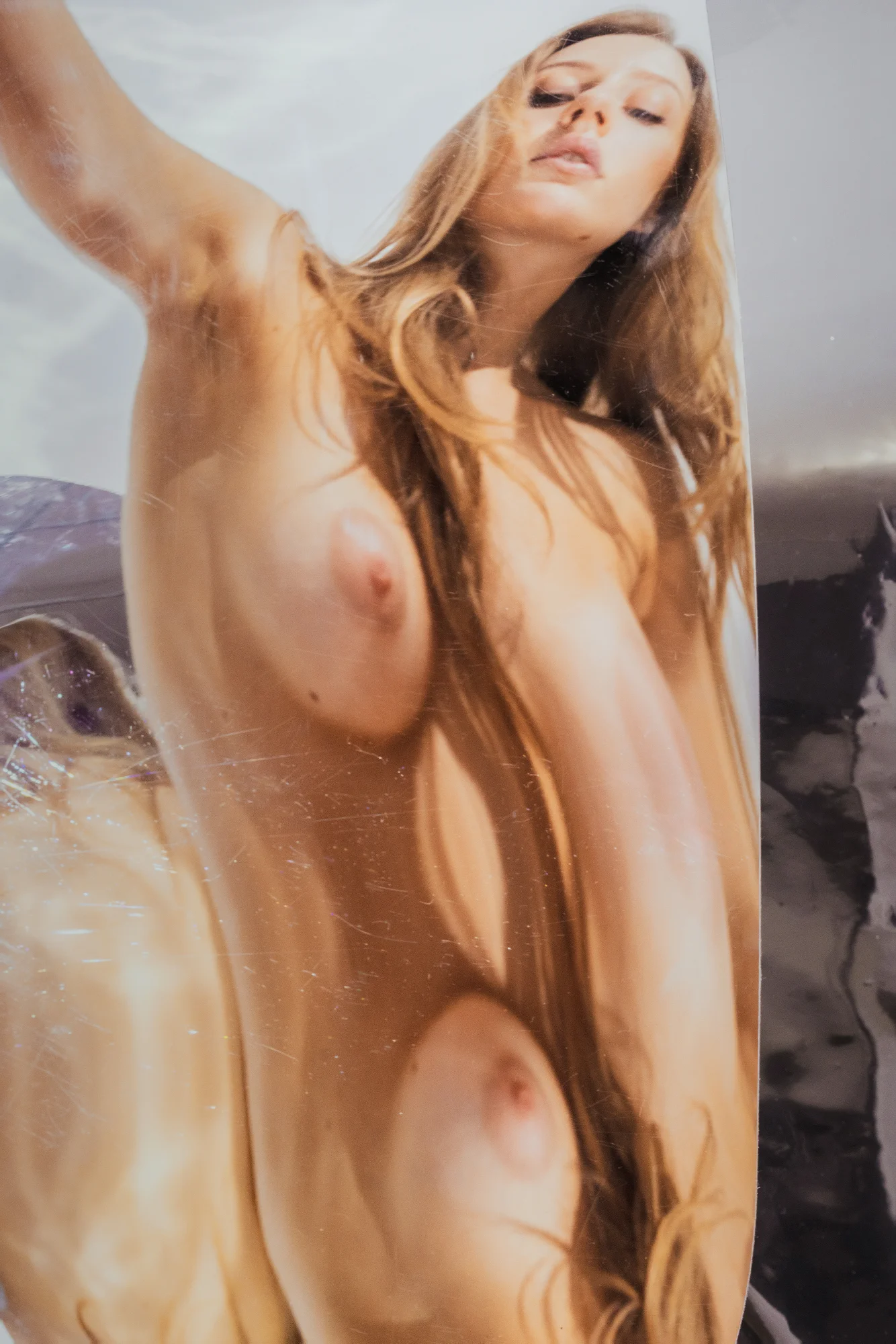
Photography promises to capture what is. Chimera disrupts that promise. The series bends mirrors around the body and photographs what they return: a figure multiplied, fragmented, stretched, and folded into itself. Nothing is assembled afterwards. Every distortion happens in front of the lens, in the curve of the mirror.
The title comes from the chimera of Greek myth, a creature assembled from incompatible parts. Here, the body becomes its own chimera.
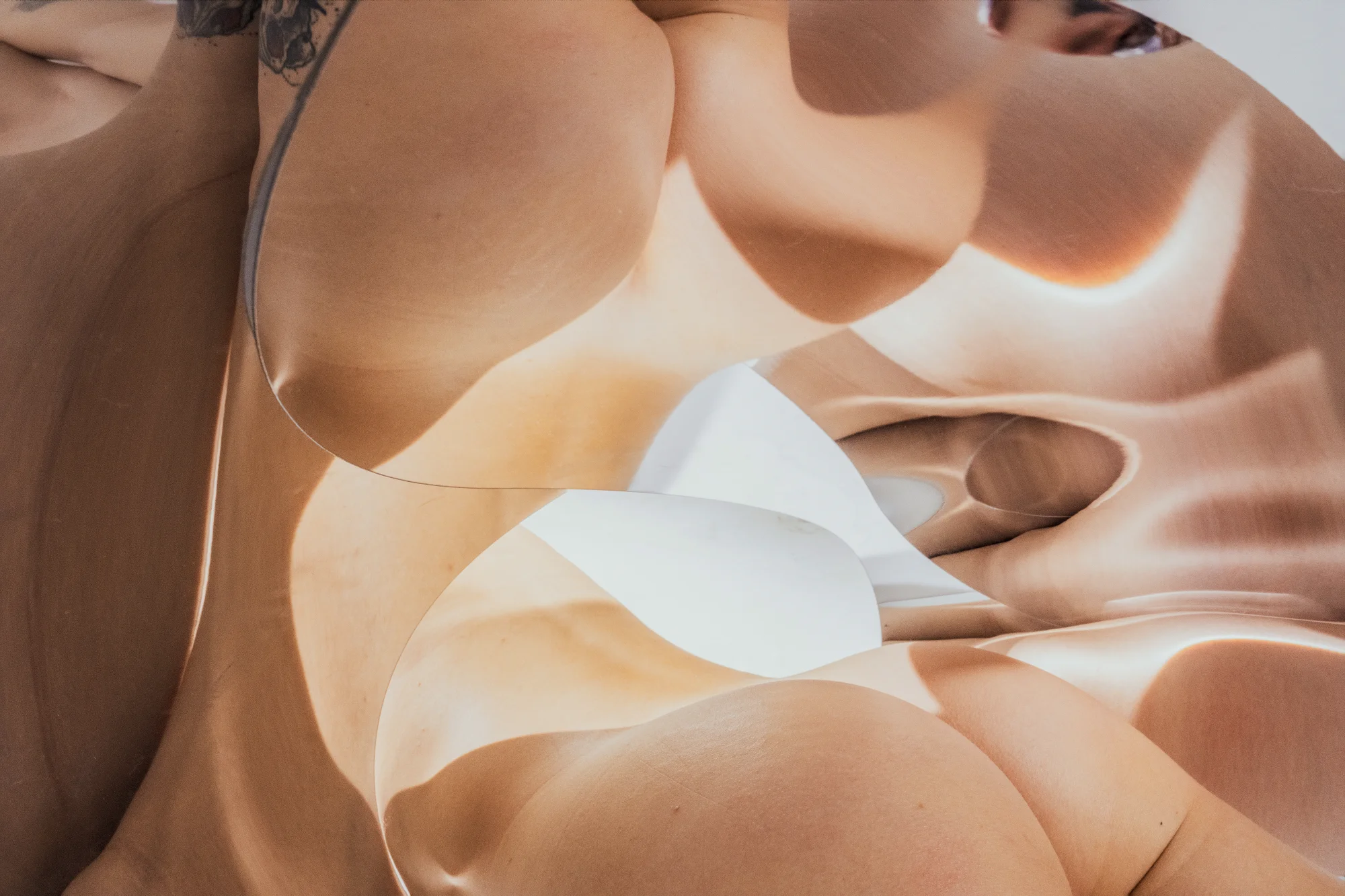
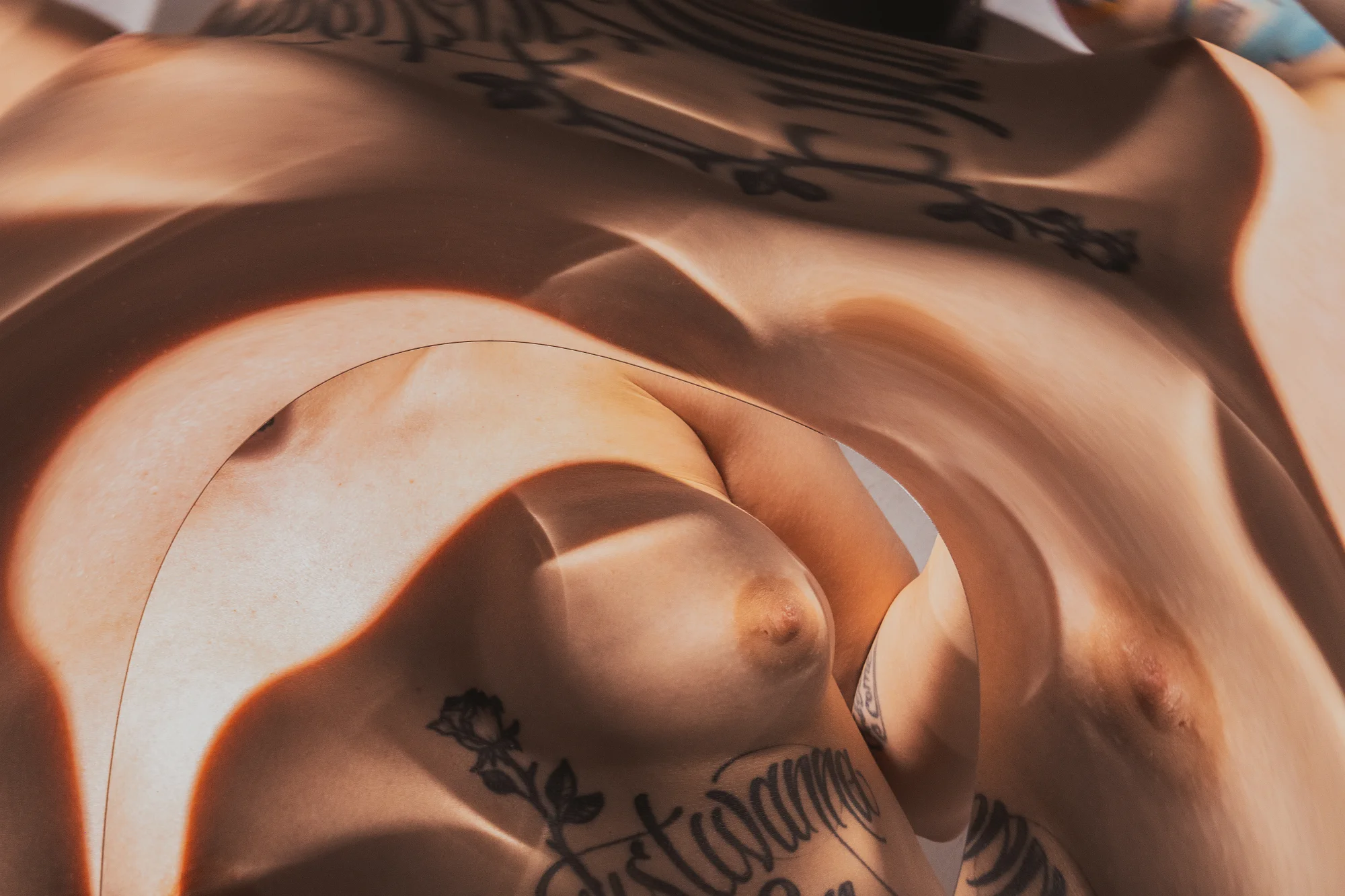
The mirror is the instrument. Mirror sheets are bent and curved, and each bend rewrites the body differently. Where the surface curves outward, a torso narrows. Where it curves inward, a limb swells, and a little further from the glass the same curve can flip it. Where the sheet folds, the figure doubles and reattaches in unexpected places. Refractive surfaces and coloured or projected light extend this toolkit. In one photograph, a tattooed torso flows through the curved edges of several mirrors at once, the script on the skin bending with the body until lettering and flesh become a single pattern.
The photographs are faithful. The camera records exactly the light that reached it; only the path of that light has changed. A mirror adds nothing to the body. It redirects the light the body sends out, and the shape of the glass decides where each part arrives. A curved mirror can also work the other way, gathering a distorted picture back into order, so that the eye finds a coherent shape where the flat image shows only distortion. Chimera uses the mirror in reverse: the body in front of the mirror is whole, and the mirror is what makes it impossible.
Taking a body apart in an image has often meant exposing the violence that can sit beneath desire. Chimera moves in the opposite direction. The images bend the light that carries the body, so the body remains whole while perception splinters. The figure is never cut or reassembled; what breaks is the viewer's certainty about what they are seeing. The patterns the bends produce can also work directly on the eye: repeated, saturated forms that keep vision moving and resist settling on a single reading.
Selected works

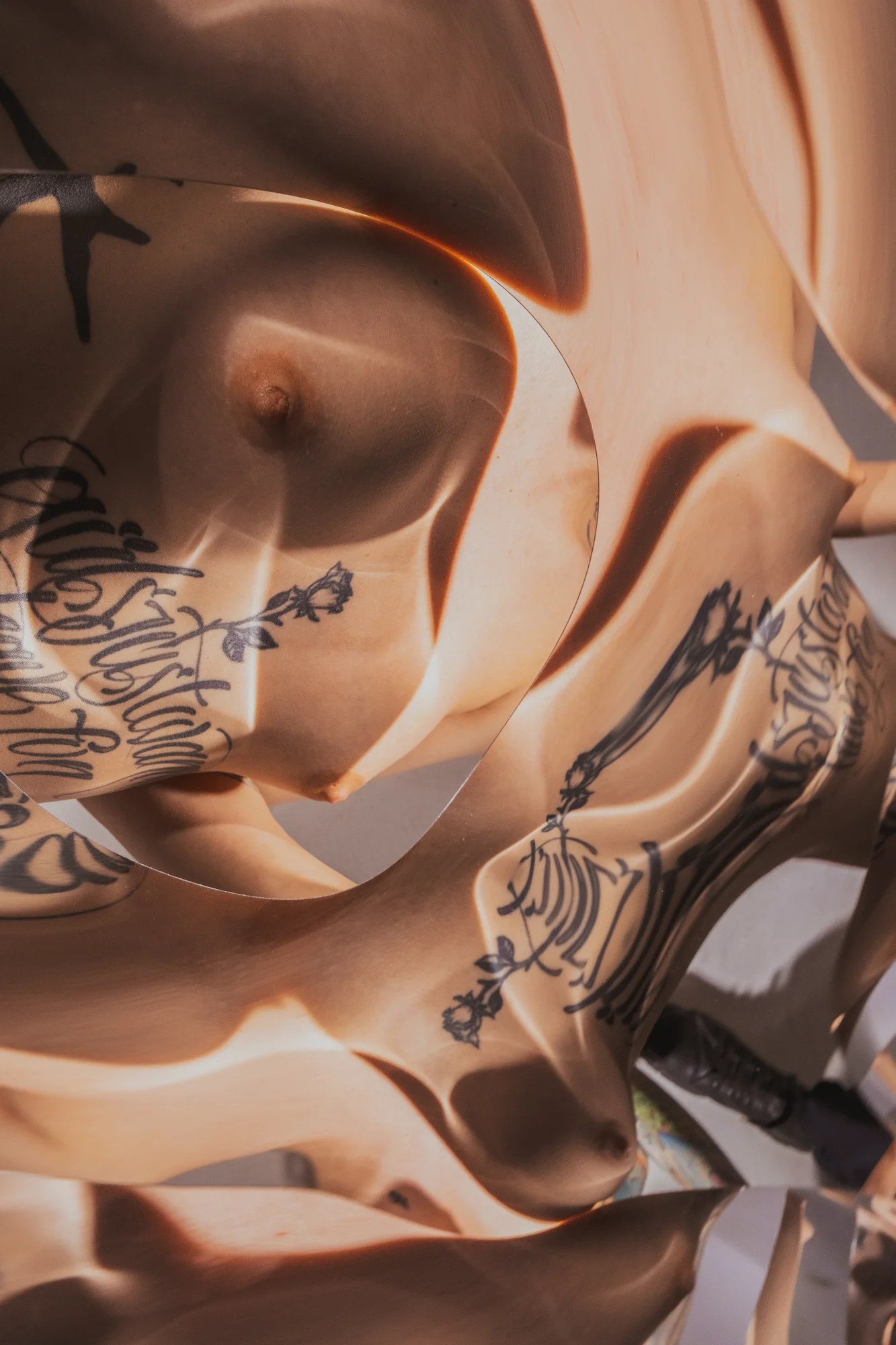
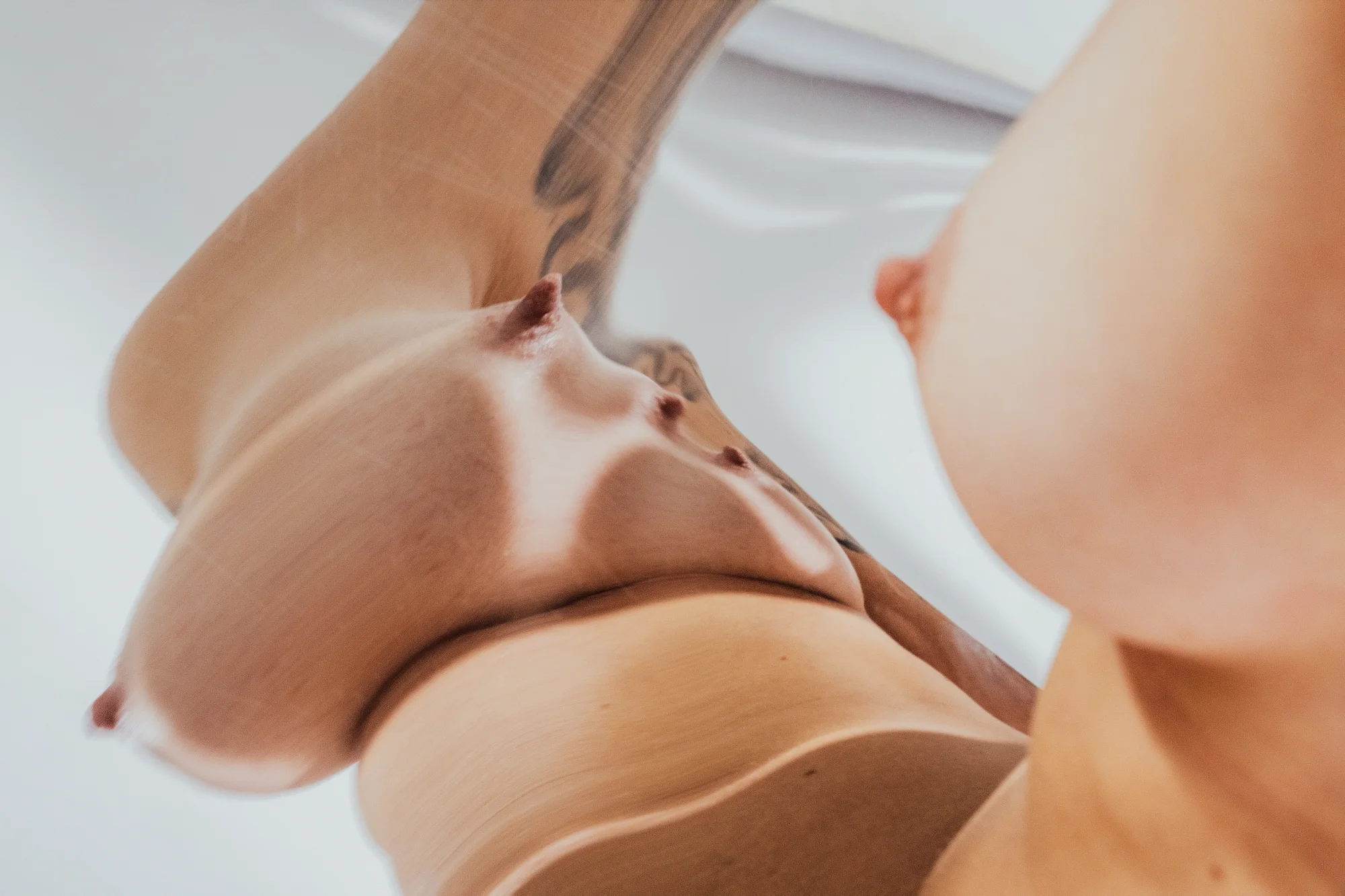
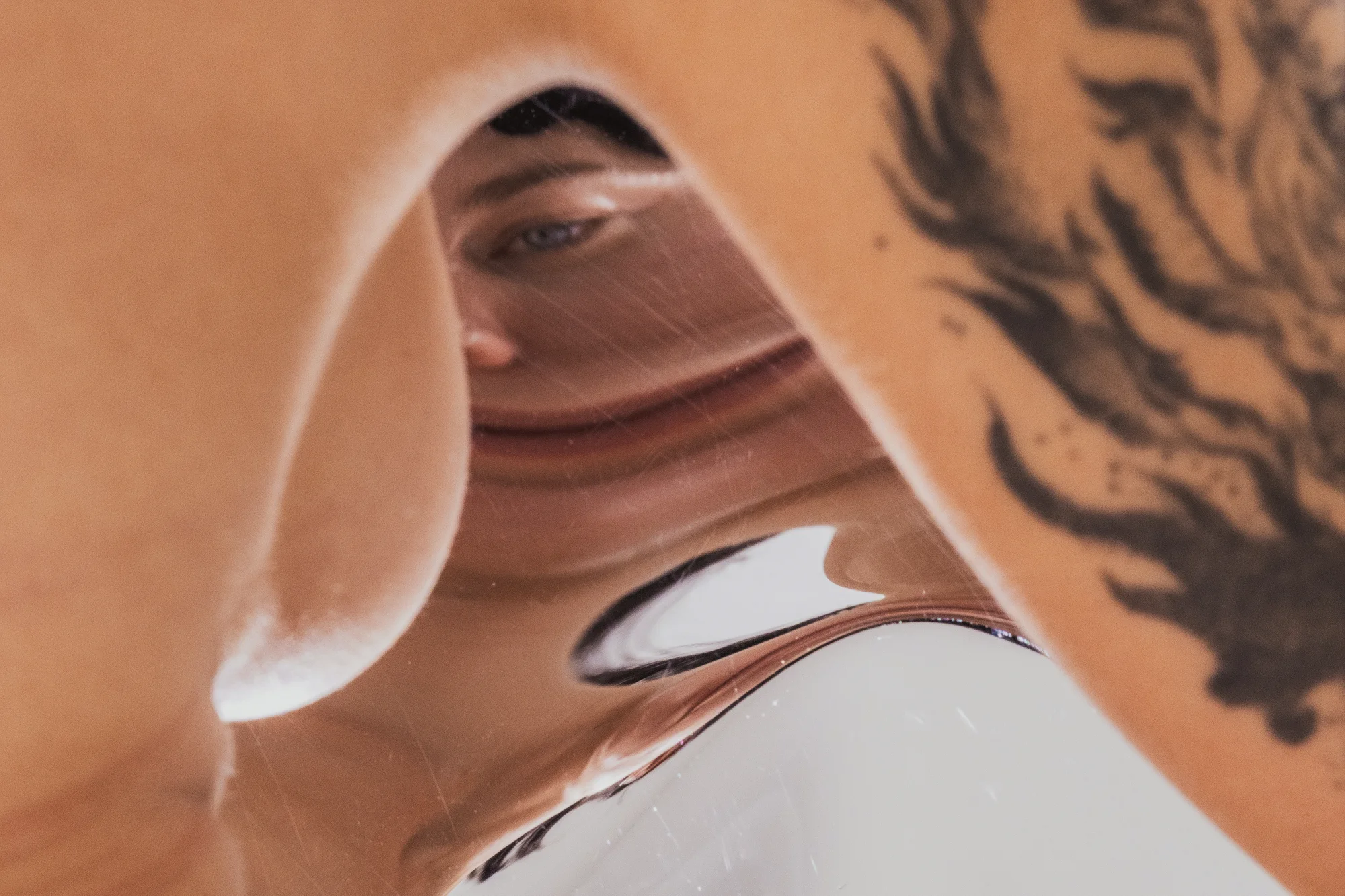
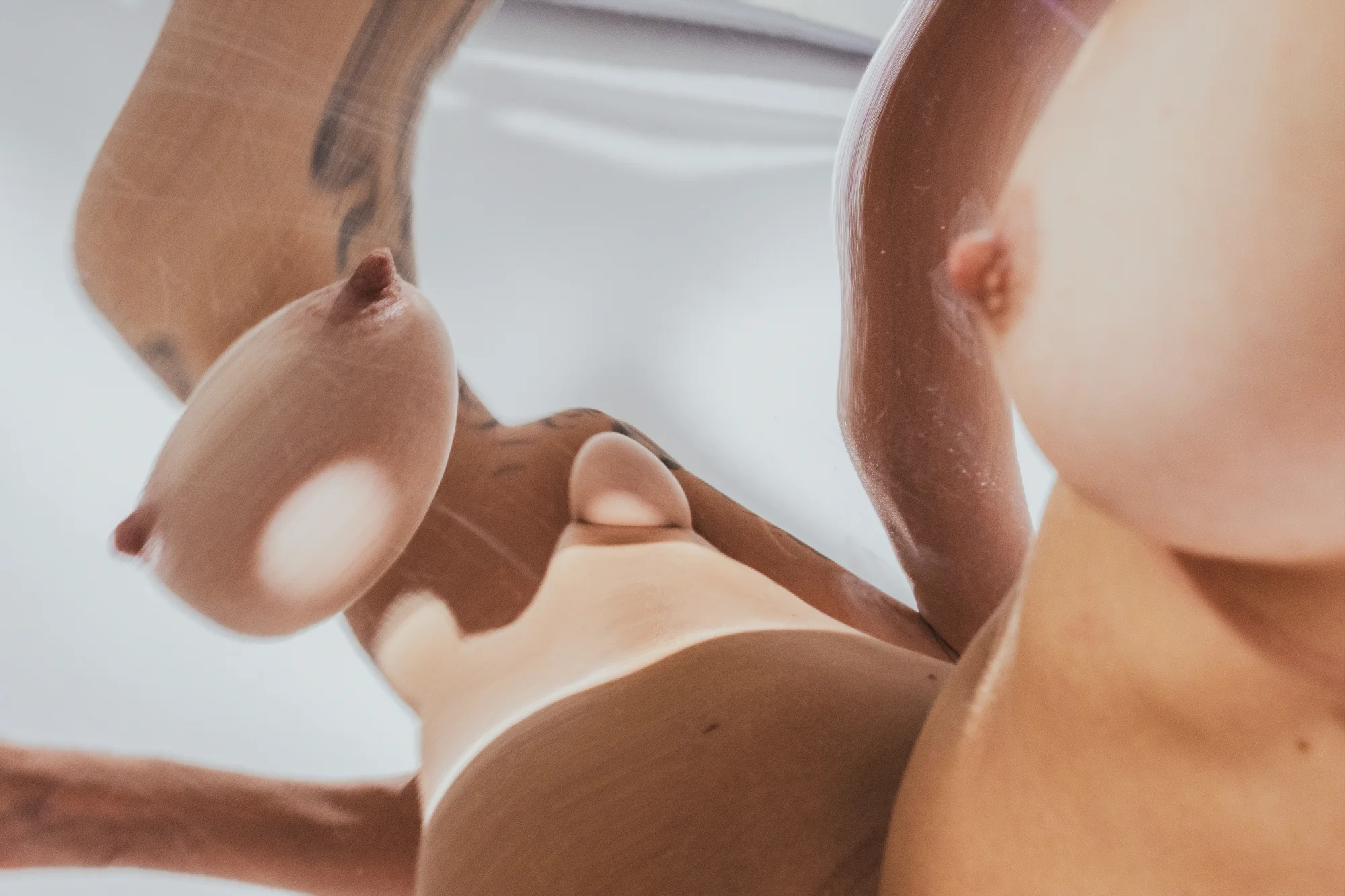
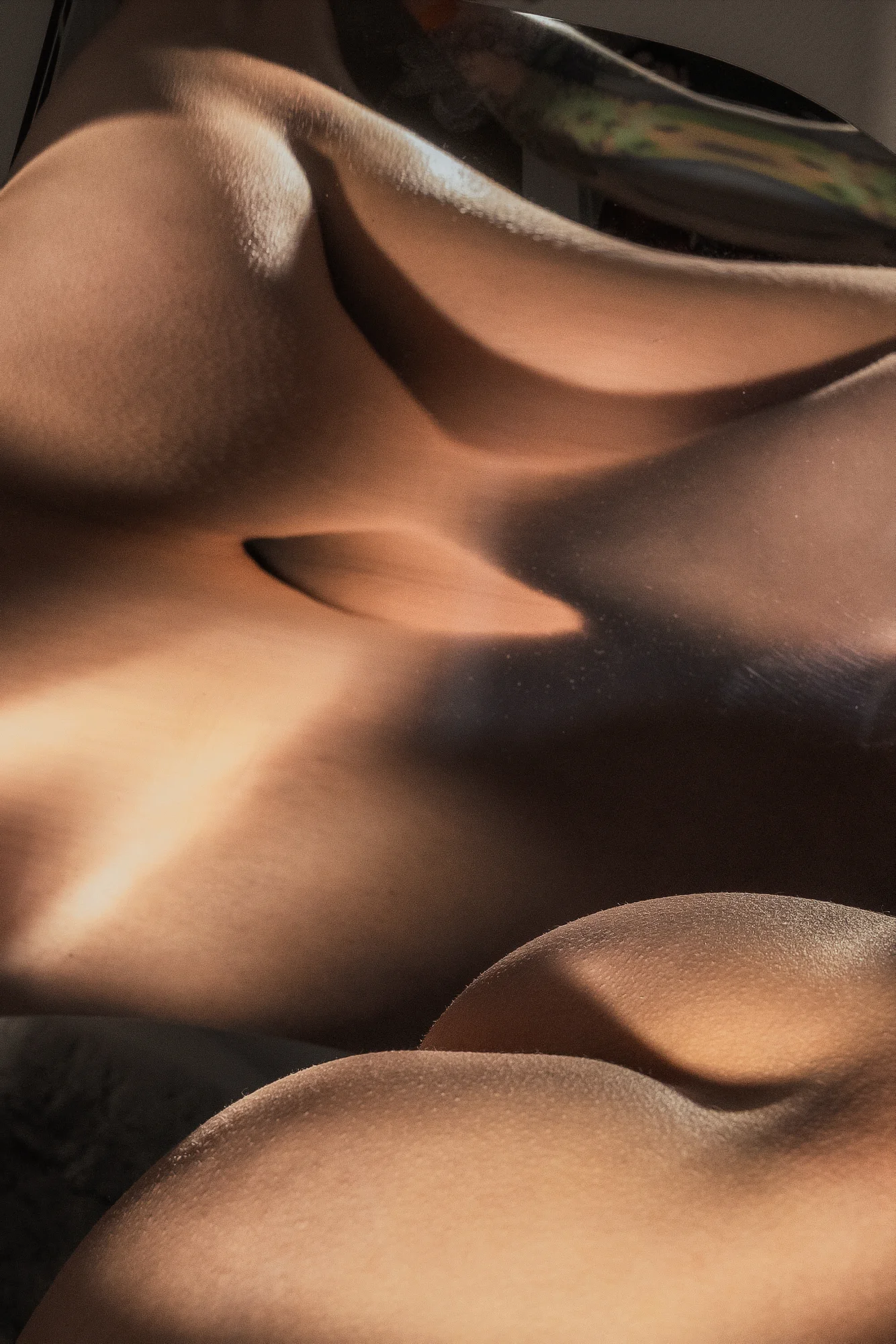
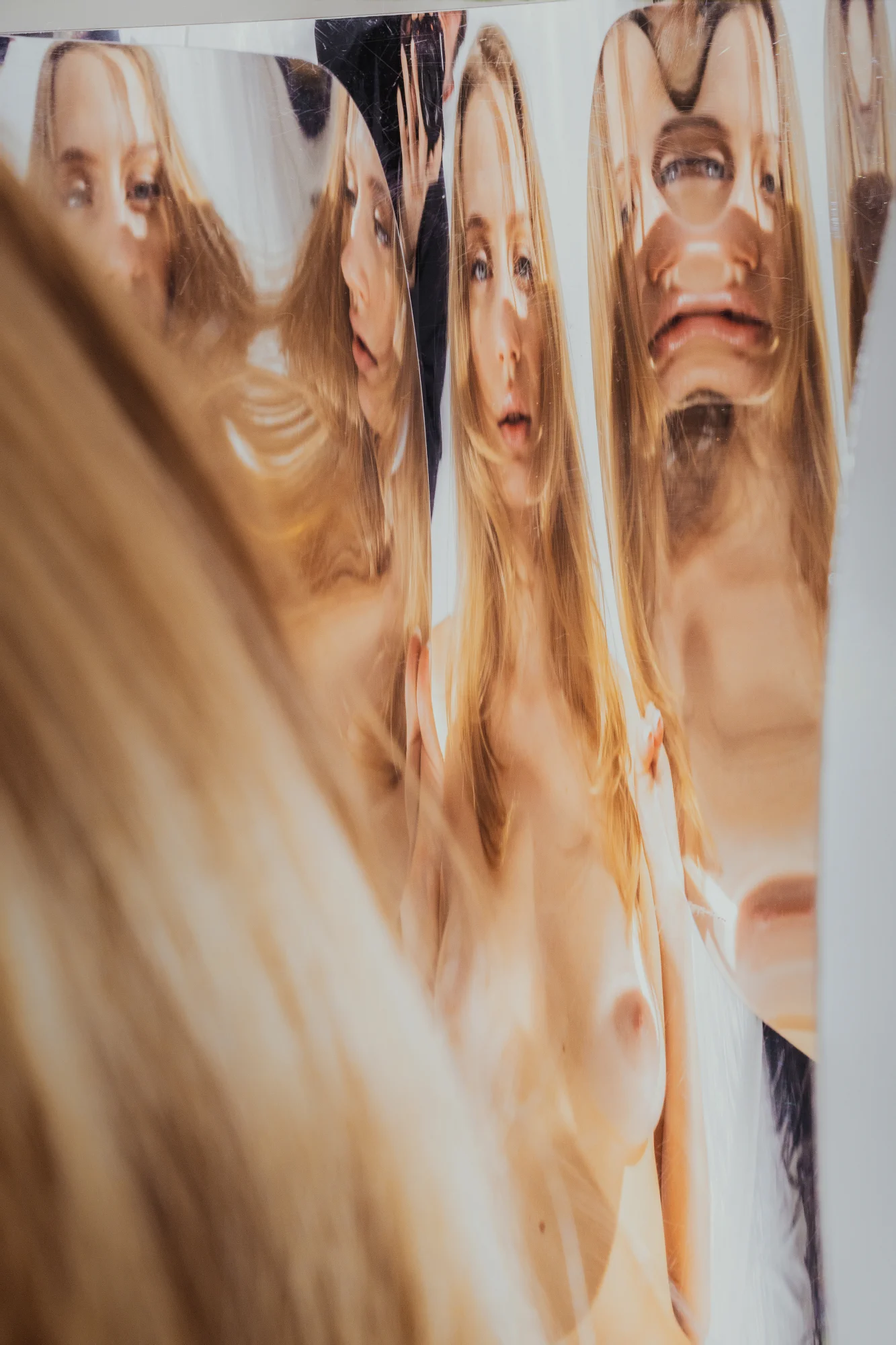
Chimera · From photograph to collection
Limited edition prints
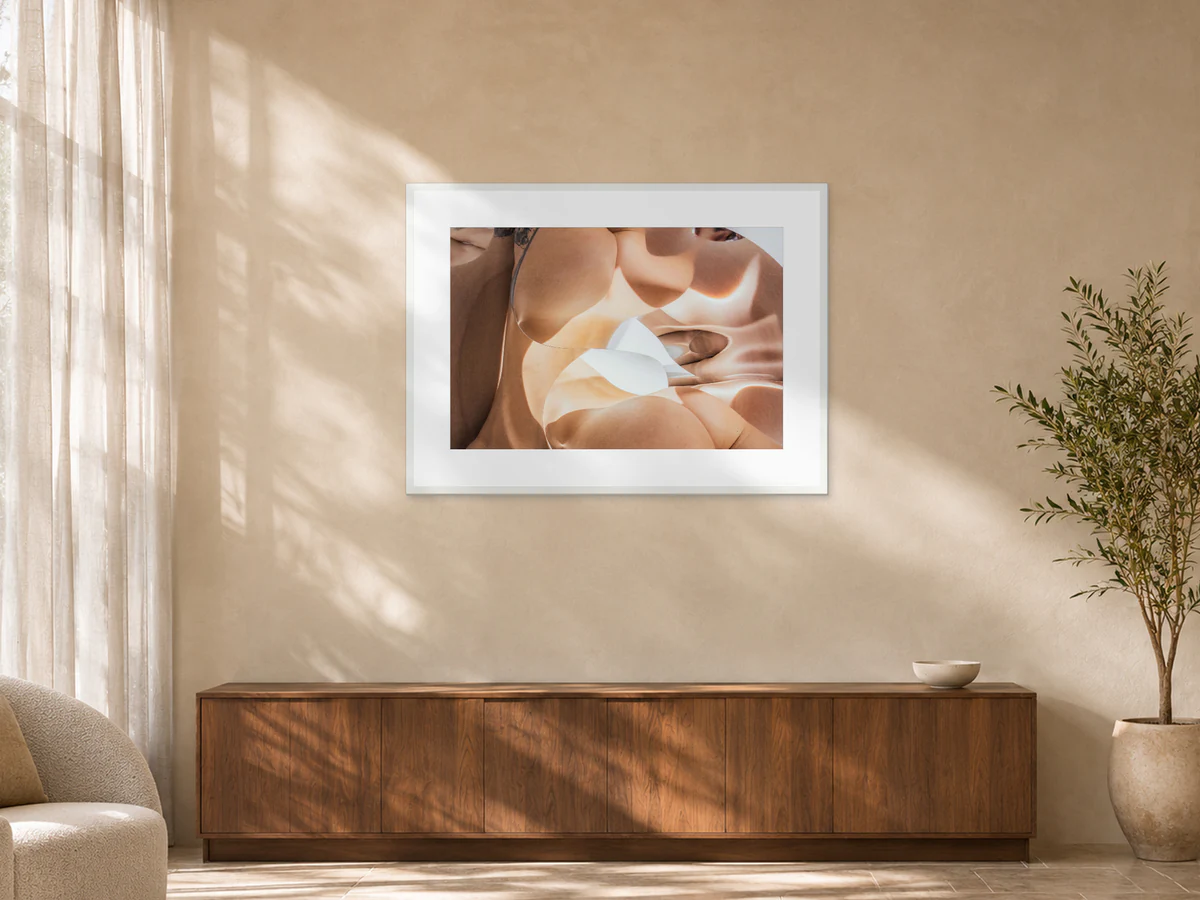
Bring a work from Chimera home. Each photograph is printed as an archival pigment print on acid-free Hahnemühle fine art paper, in an edition of five plus one artist’s proof. When the five are sold, the edition is closed. Every print is signed and numbered by the artist and comes with a Certificate of Authenticity.
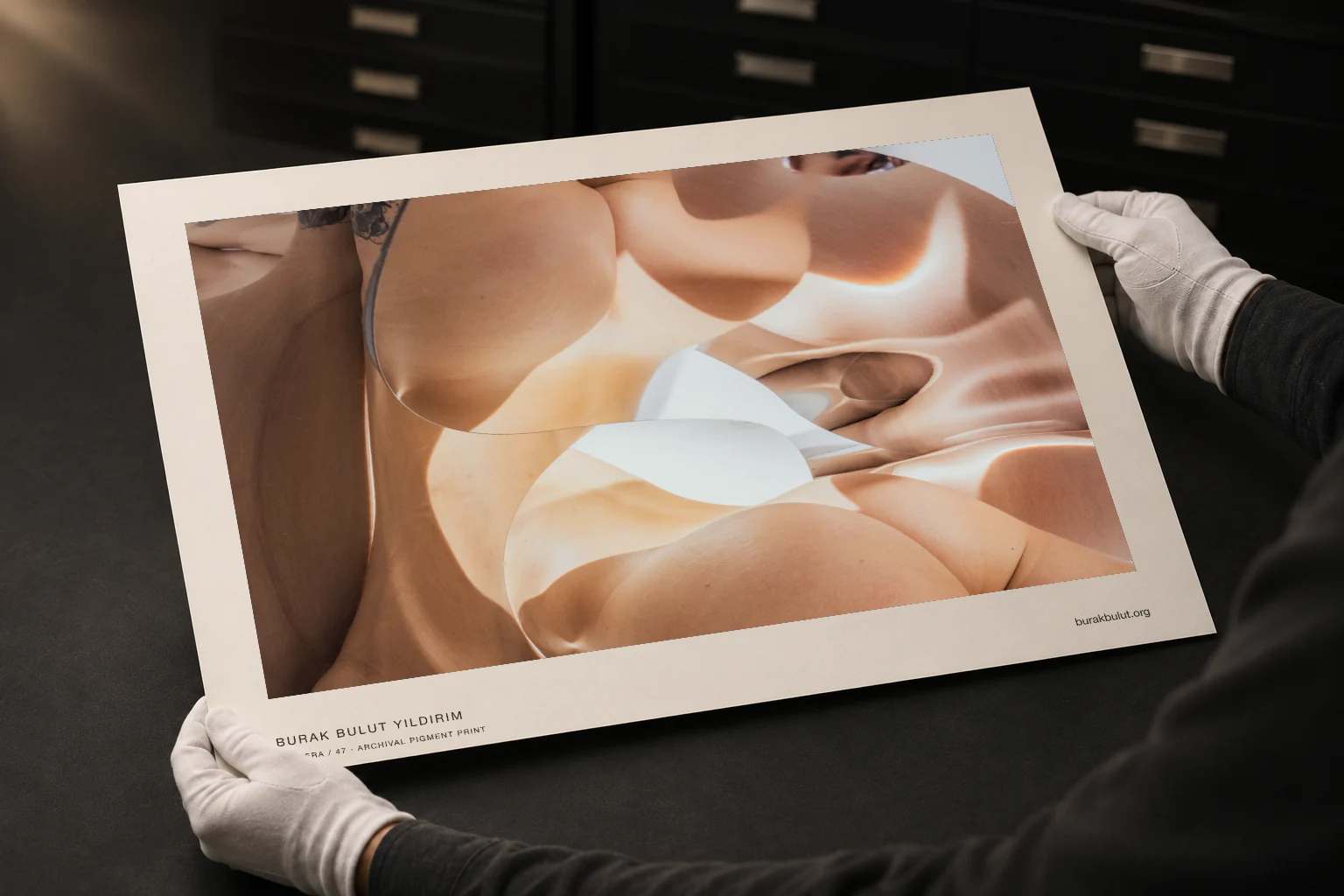
Sizes
40 × 60 · 60 × 90 · 80 × 120 cm
Selected works can also be printed in other sizes. Prints ship unframed, and the studio is glad to advise on framing.
Worldwide shipping from Berlin
To order, write to print@burakbulut.org with the work and size you have in mind. The studio replies with availability, price and delivery to your address.
Direct from the artist · print@burakbulut.org
Selected editions are also available through Artsper, Saatchi Art, and Artmajeur.