
Antemortem
The Body Before Silence
Photographs that dwell in the space between presence and absence: bodies already becoming traces.
The term antemortem, from the Latin ante mortem, means before death
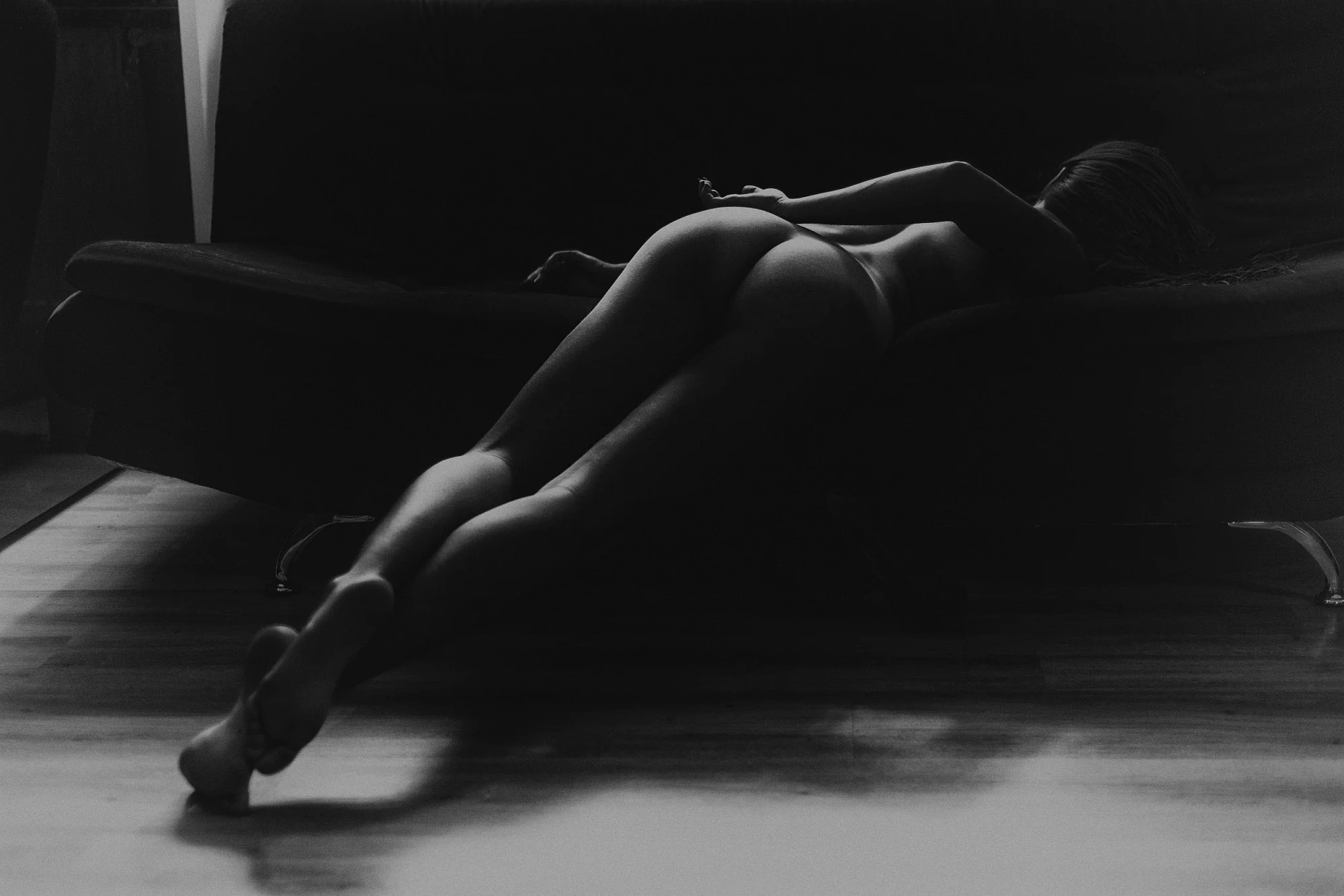
. In forensic medicine it distinguishes injuries sustained during life from those that occur after death. In forensic identification the same word names the records gathered from a person's life, photographs among them, against which unidentified remains are compared. In that sense, any portrait can become antemortem data. Antemortem reclaims this cold terminology for something tender. The series gathers photographs that feel suspended between life and death: bodies that are still present, yet already seem to be leaving.
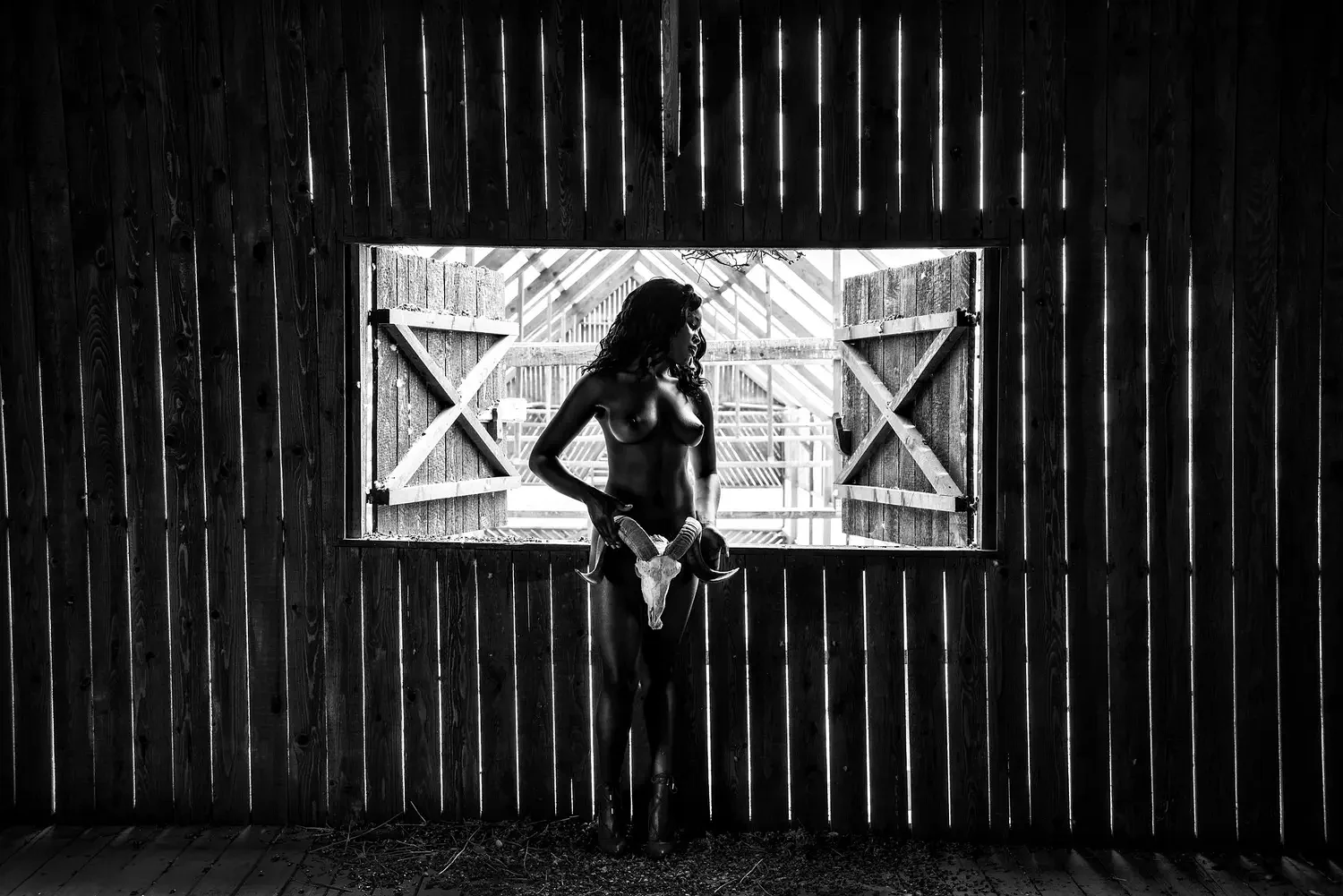
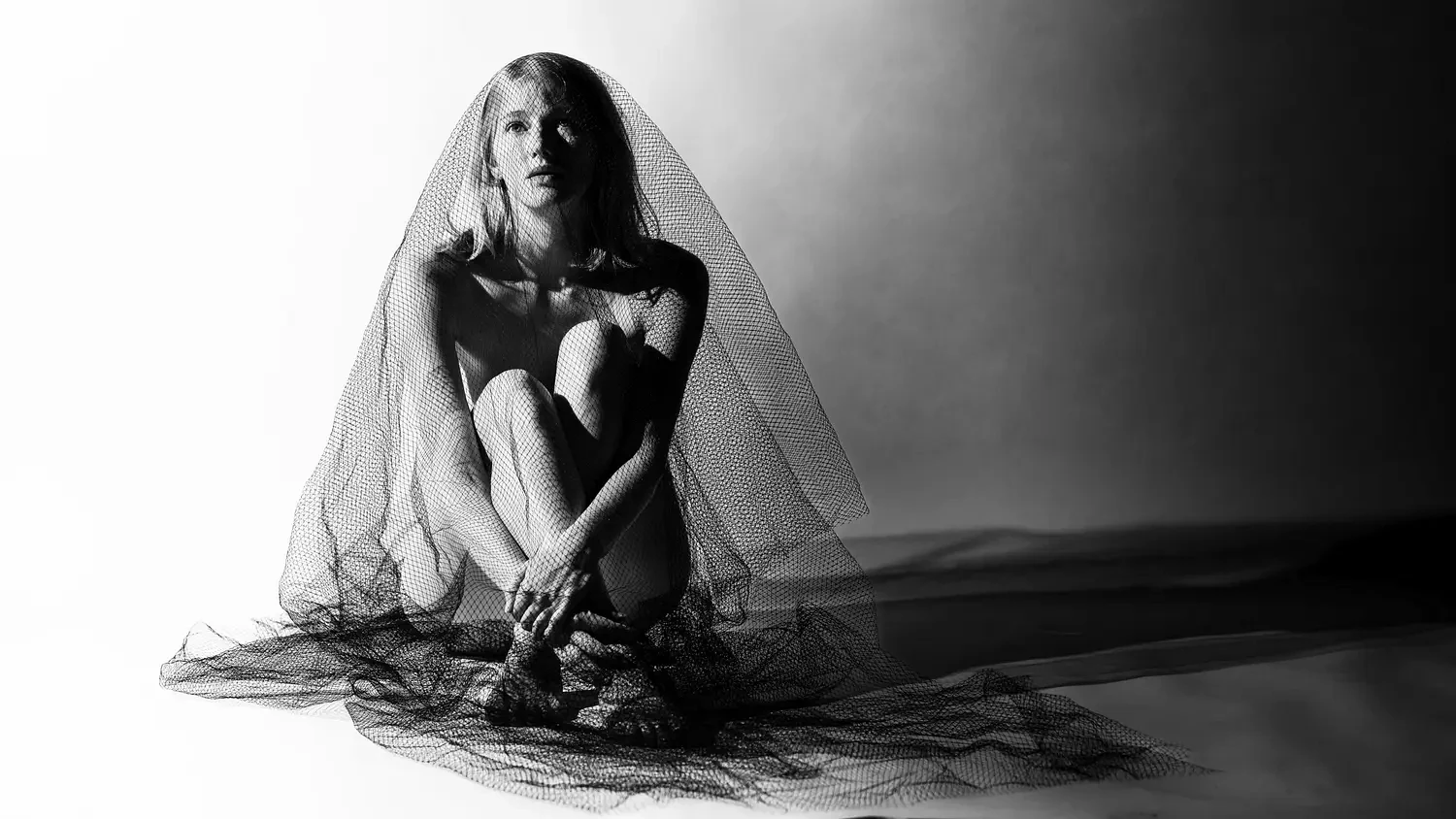
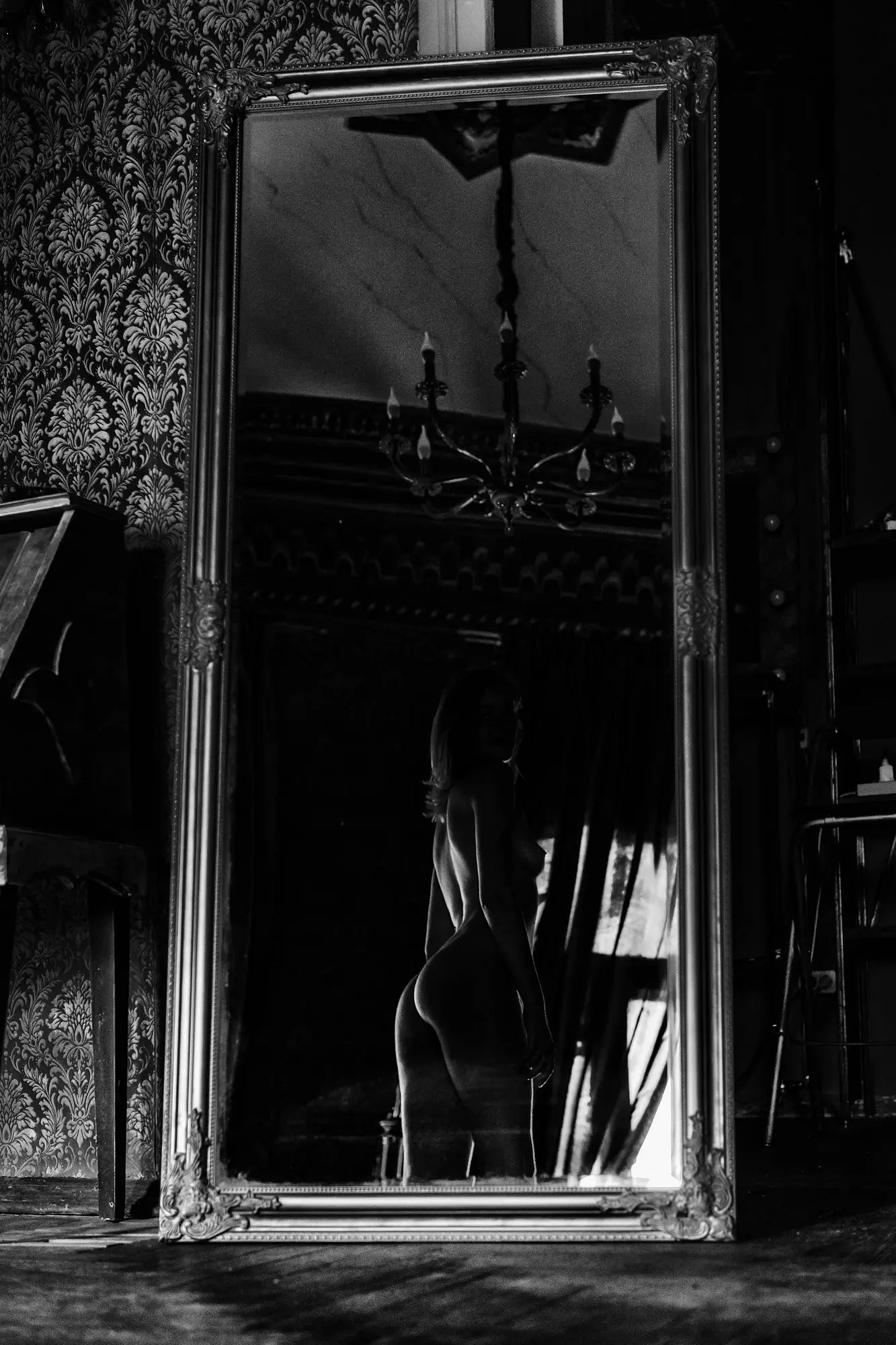
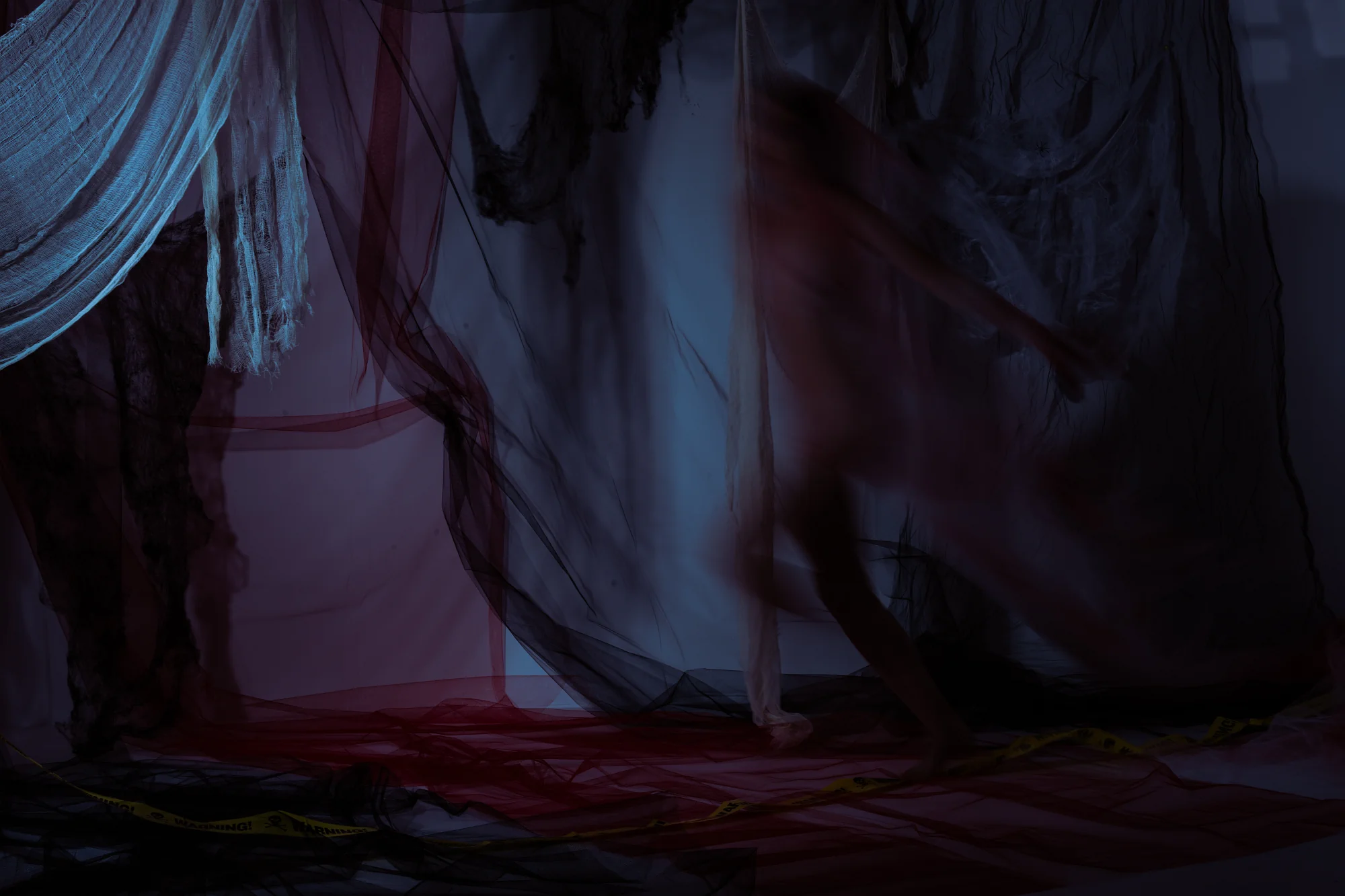
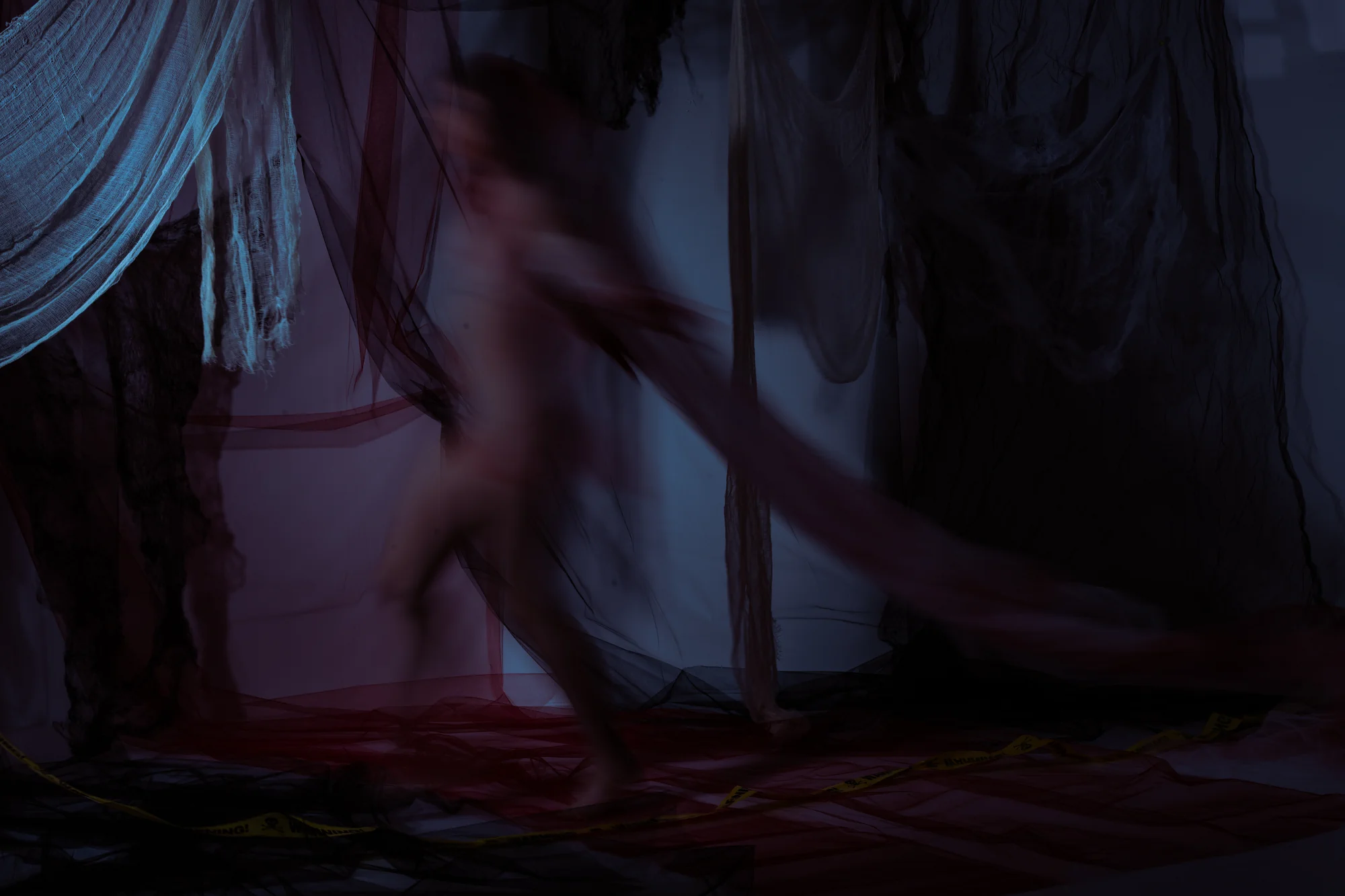
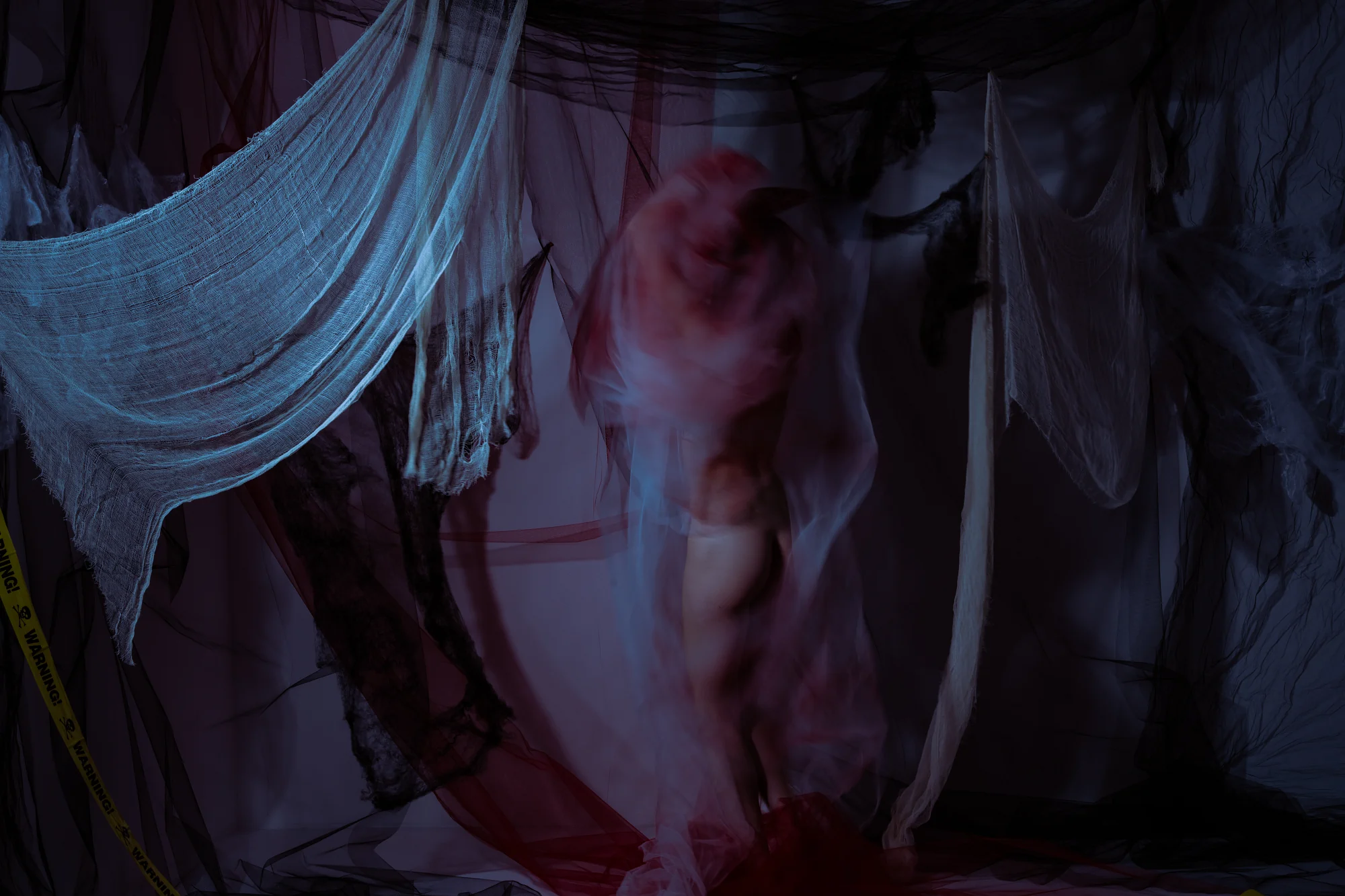
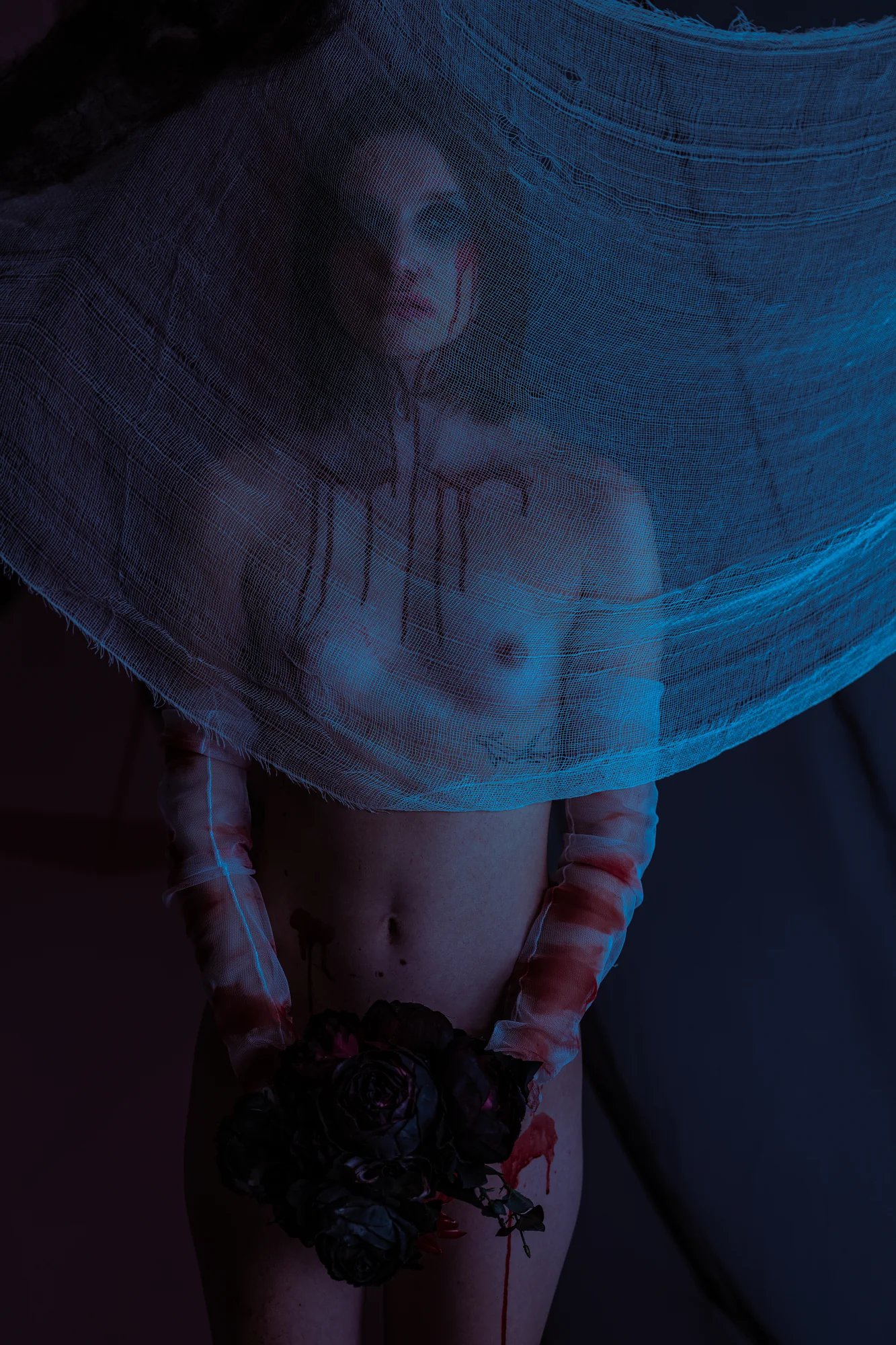
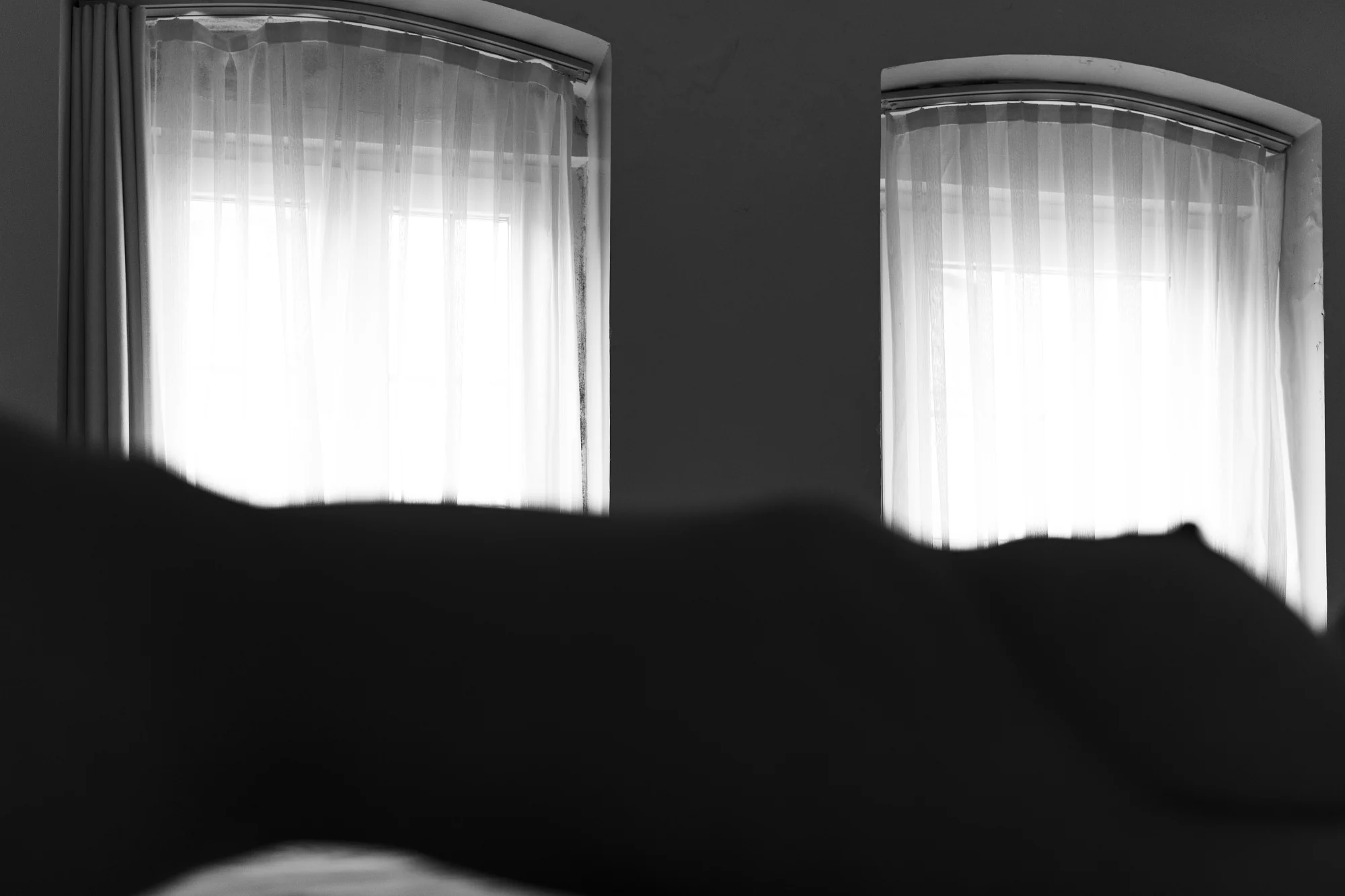
In one photograph, a woman stands in the dark of a barn, light leaking through the gaps between its boards, and holds a ram's skull against her body: the oldest sign of mortality pressed to living skin. In another, a woman sits wrapped in a black net that spills across the floor like a shroud, looking up with wide, open eyes. In a tall mirror, a body exists only as a reflection, a dark shape beneath a chandelier, with no figure visible in front of the glass. Elsewhere, a figure passes through hanging gauze and red tulle as a blur, while a strip of warning tape crosses the floor like the edge of a scene no one should enter. Under a sheer veil and strong backlight, a reclining body grows translucent, as if it were turning into light.
In Camera Lucida, Roland Barthes described the essence of photography as ça-a-été, that-has-been
. Every photograph records something that existed and is now irrevocably past. In the same book, Barthes looks at the portrait of a young man photographed while he awaited execution and reads two tenses in it at once: he is dead, and he is going to die. Antemortem lives in that second tense. Its photographs are made before an ending and already carry it. They read like photographs of photographs, records of presences already becoming ghosts. The series takes up the memento mori tradition, including the seventeenth-century vanitas still lifes of skulls and wilting flowers, but without their moralising. There is no sermon here, only sustained attention to the body's transience.
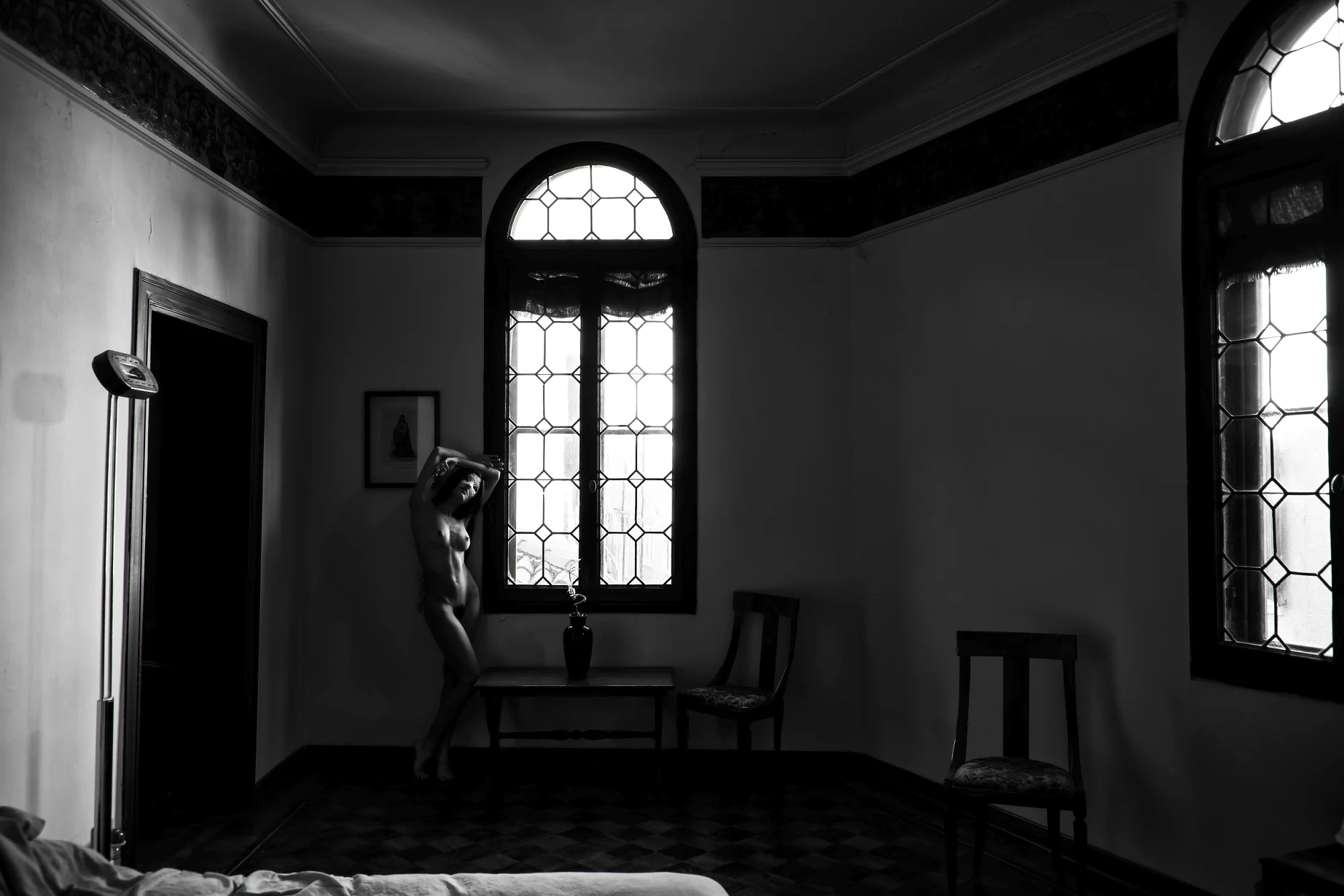
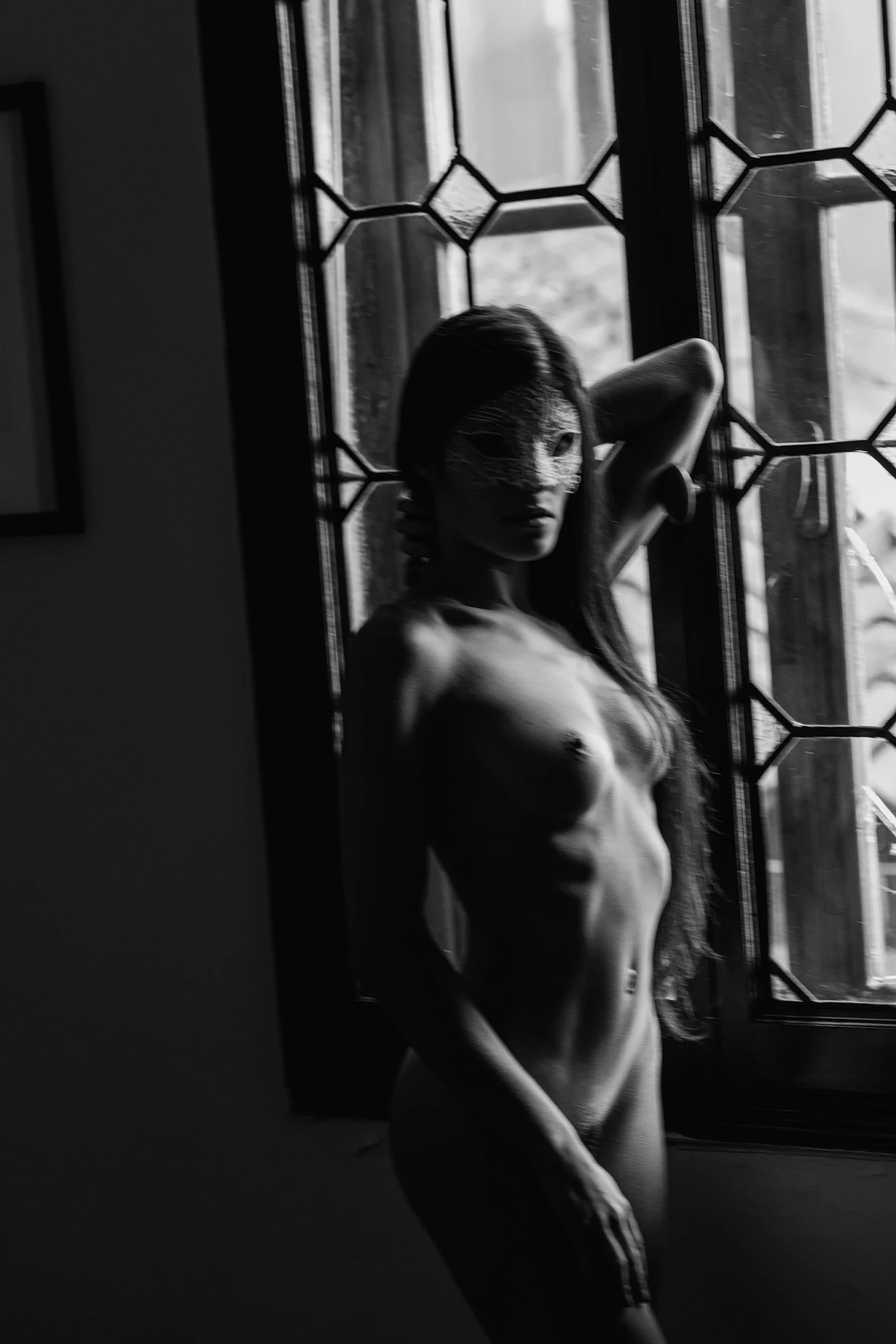
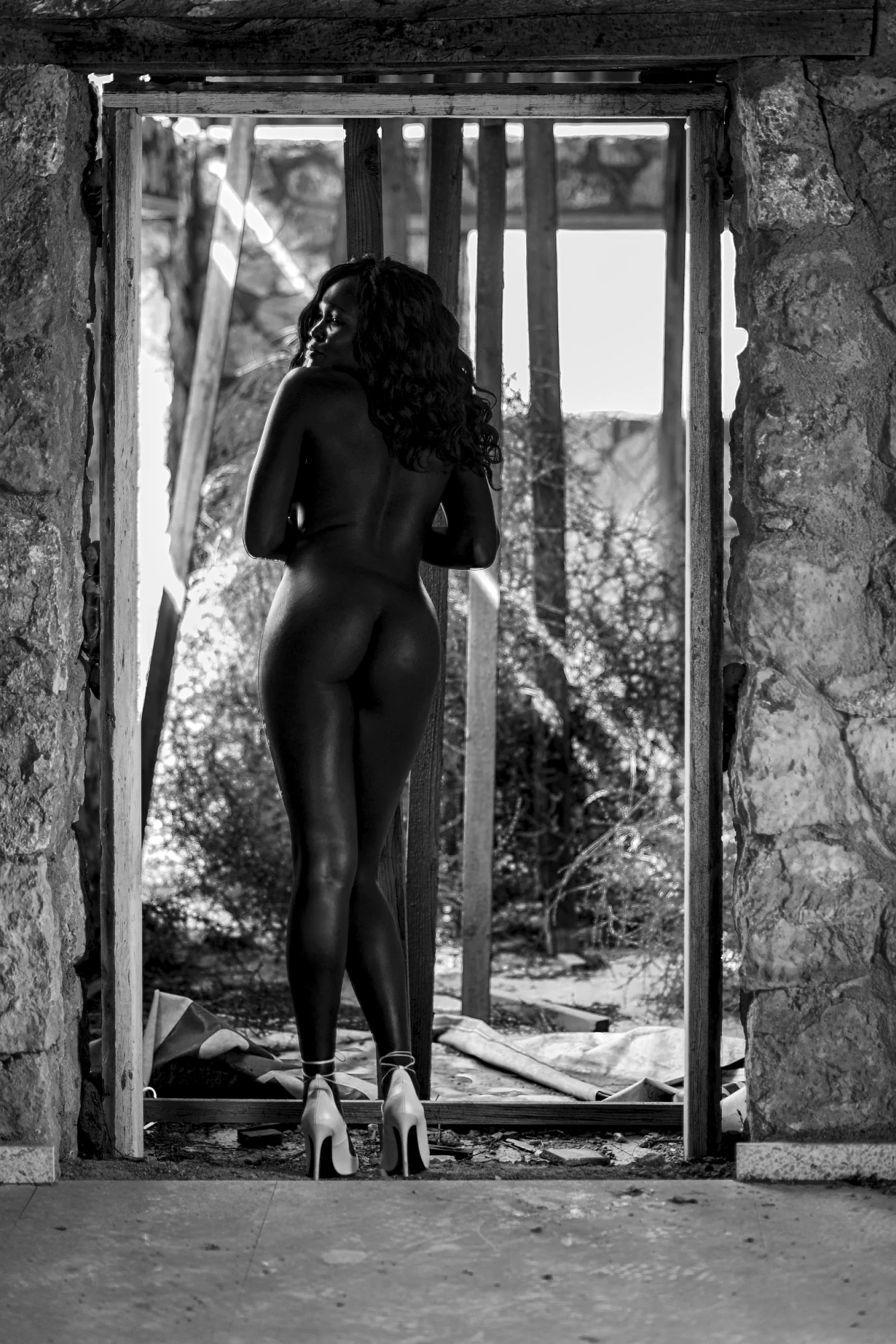
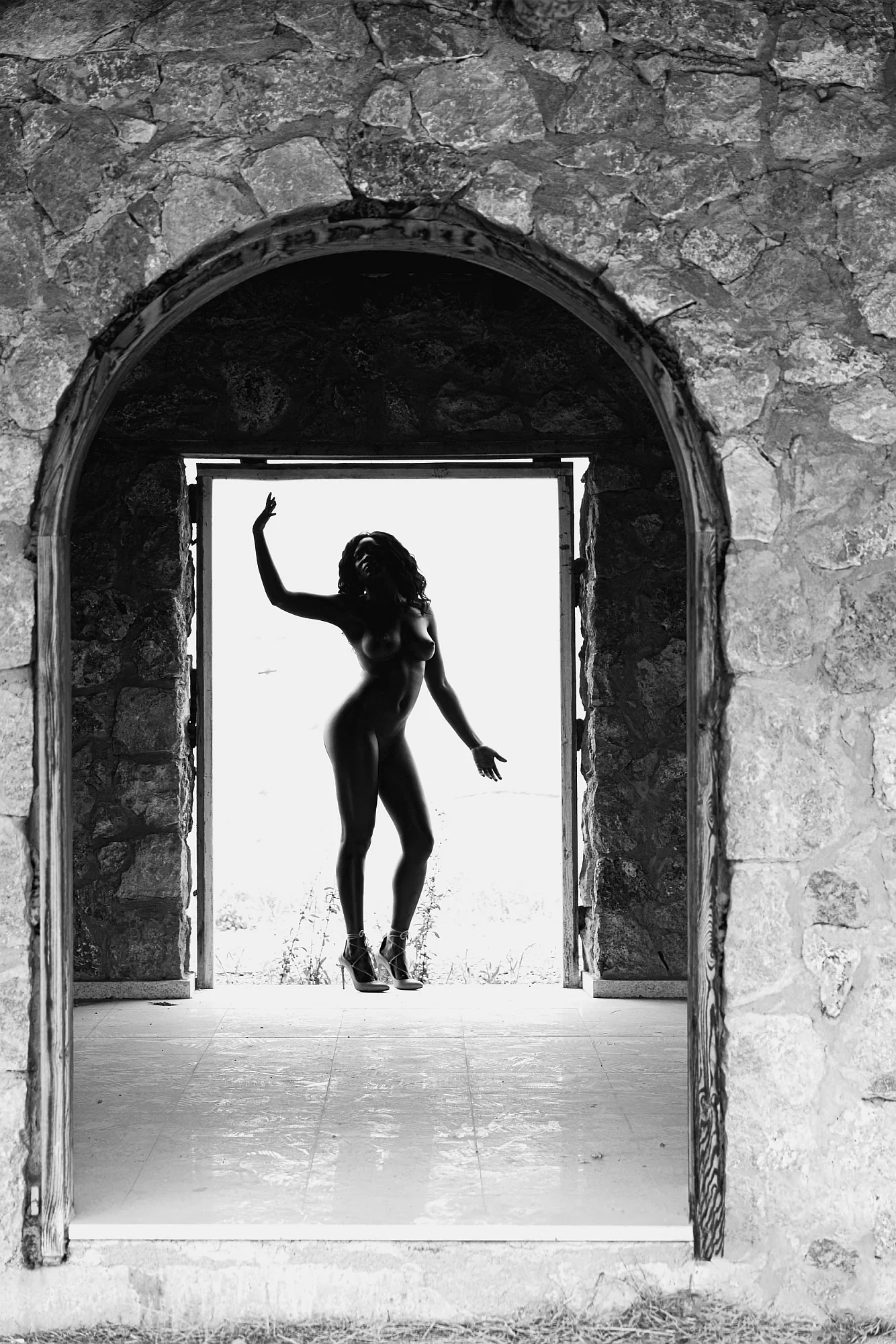
Antemortem moves between registers. High-contrast black-and-white images that recall Victorian mourning photography give way to work in deep blues, muted reds, and spectral tones that evoke the threshold between sleep and waking, and, at the other extreme, to white light in which the body almost dissolves. Abandoned structures, barns, empty villas, rooms where antique surfaces hold tarnished reflections, appear alongside controlled interiors in which heavy drapery and natural light do most of the work.
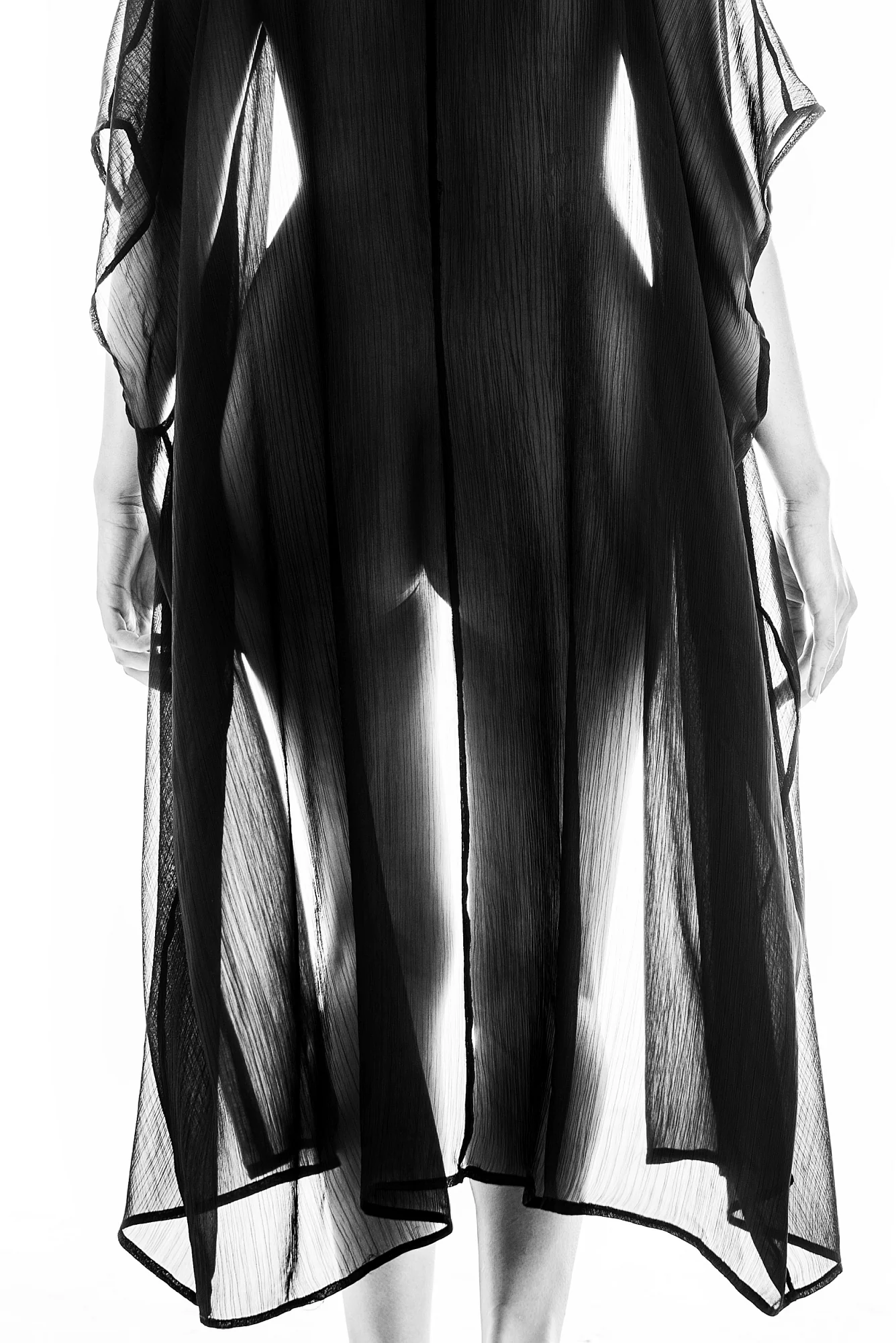
Veils and translucent materials recur in several photographs. Fabric is a membrane: between visibility and disappearance, between the body and the room, between the moment of exposure and the viewer's later encounter with it. The body is glimpsed through layers, partially erased, never fully present. Long exposures allow movement to blur and multiply the figure, so that a single body appears to fragment across time. These are durational captures made in the camera, the body's passage recorded as trace.
The nudity in Antemortem carries no erotic charge. Unclothed, the figure becomes elemental: the body in its most vulnerable and most mortal state, unadorned and unprotected.
Selected Works






Editions
Archival pigment prints are released in limited editions of 5 + 1 Artist Proof, printed on Hahnemühle Photo Rag and FineArt Pearl papers. Selected works are represented on Artsper, Saatchi Art, and Artmajeur. For direct inquiries, exhibition loans, or collector pricing: print@burakbulut.org.