Motus
The Body as Duration
Movement and time turned into space, and a body dissolving inside it.
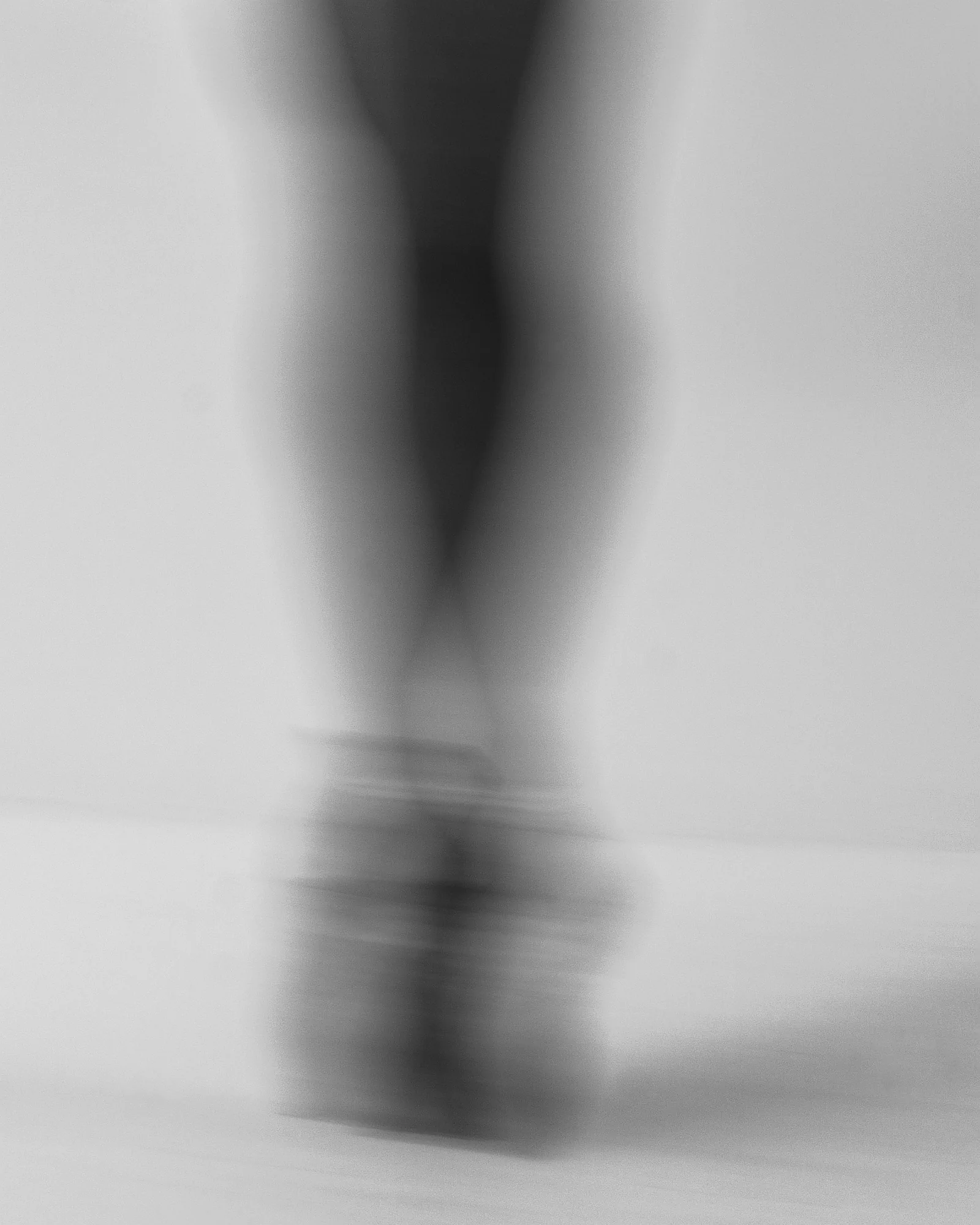
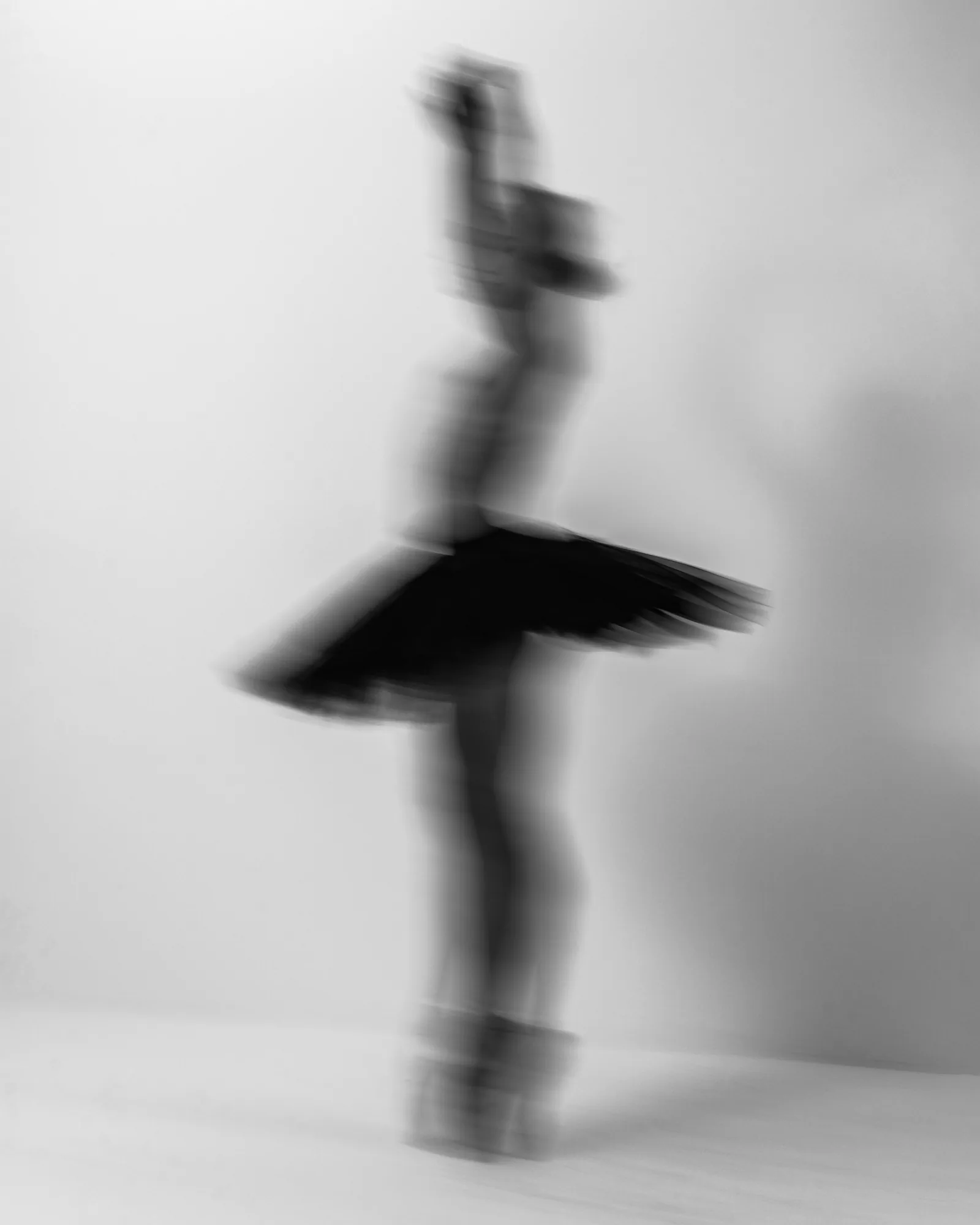
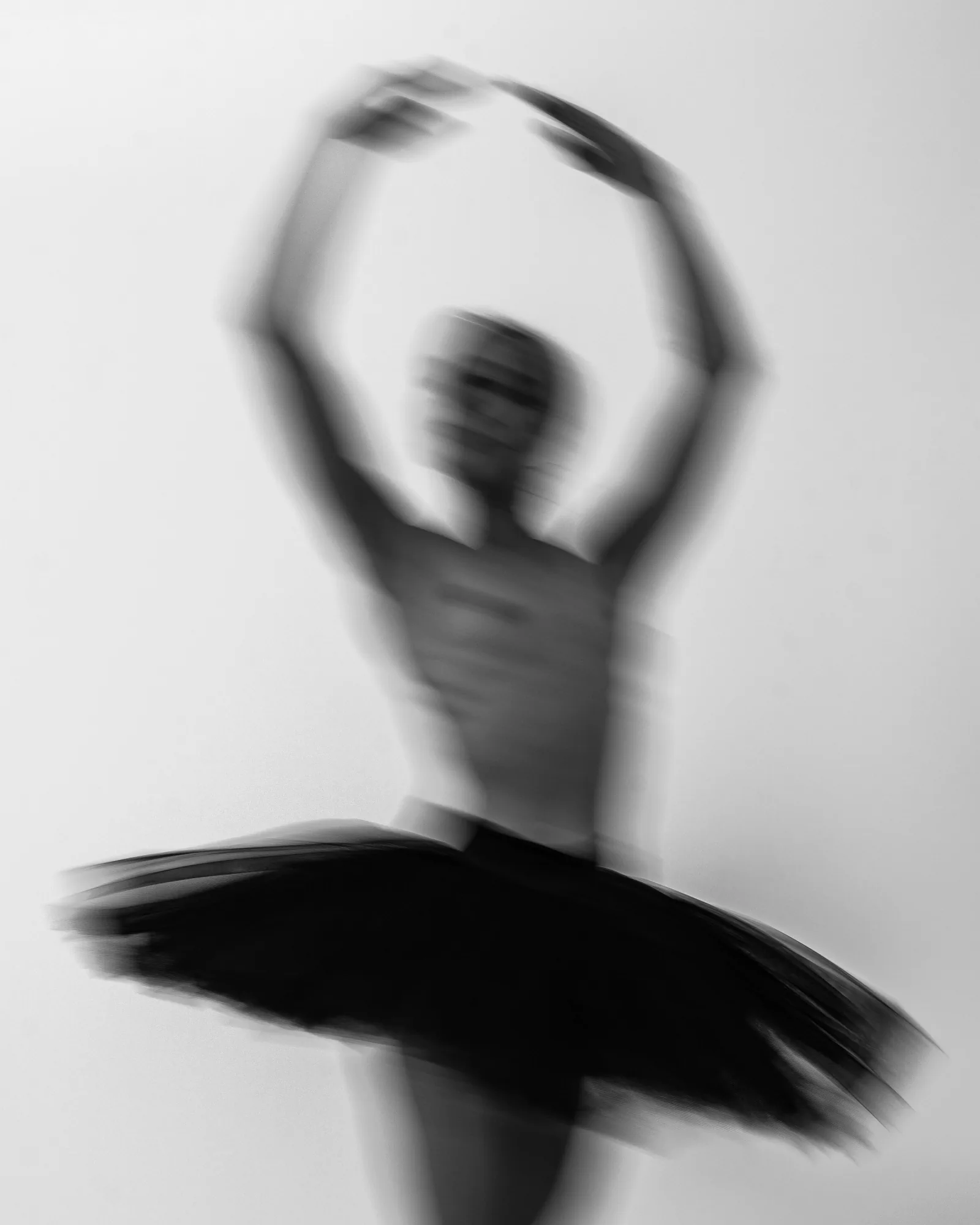
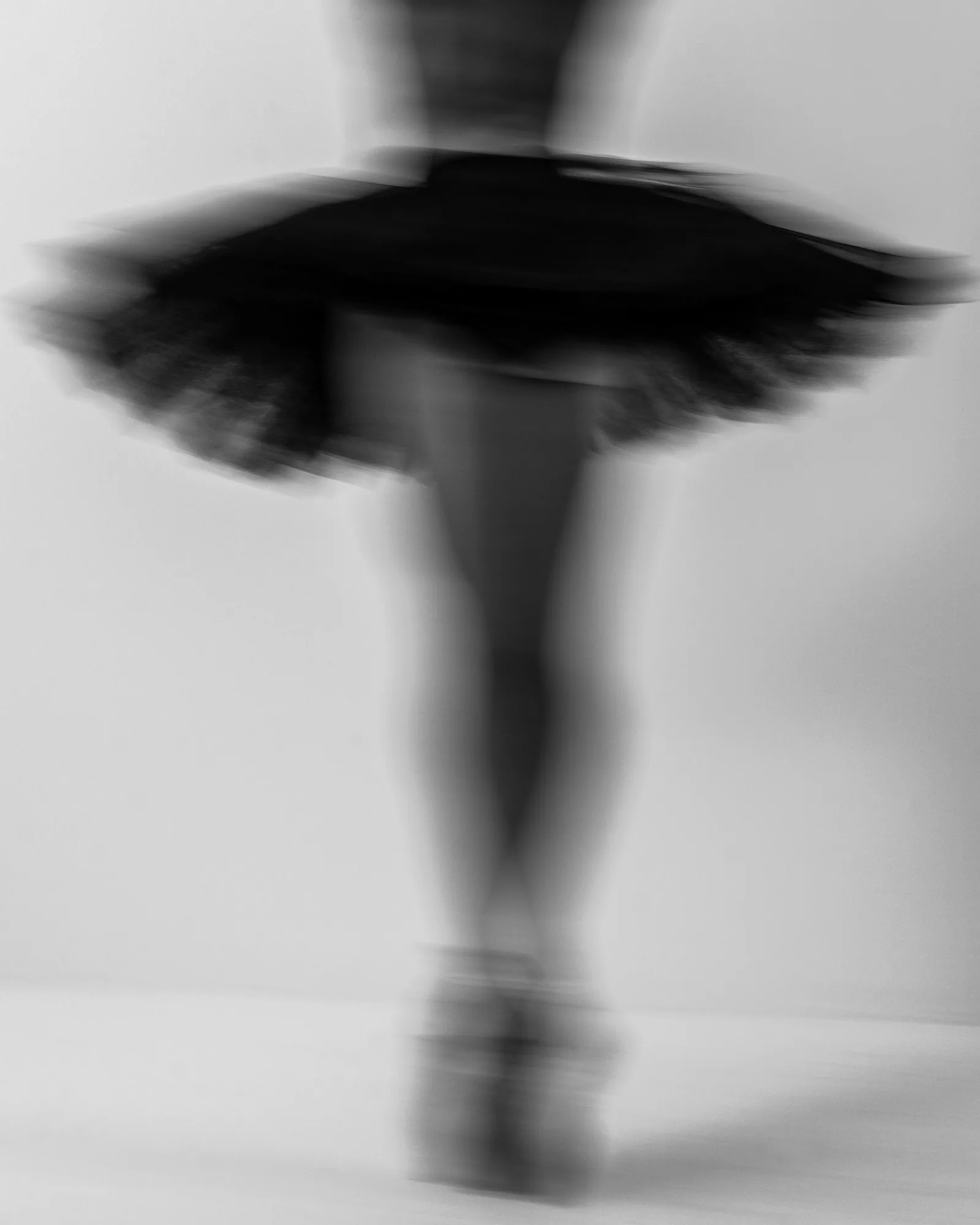
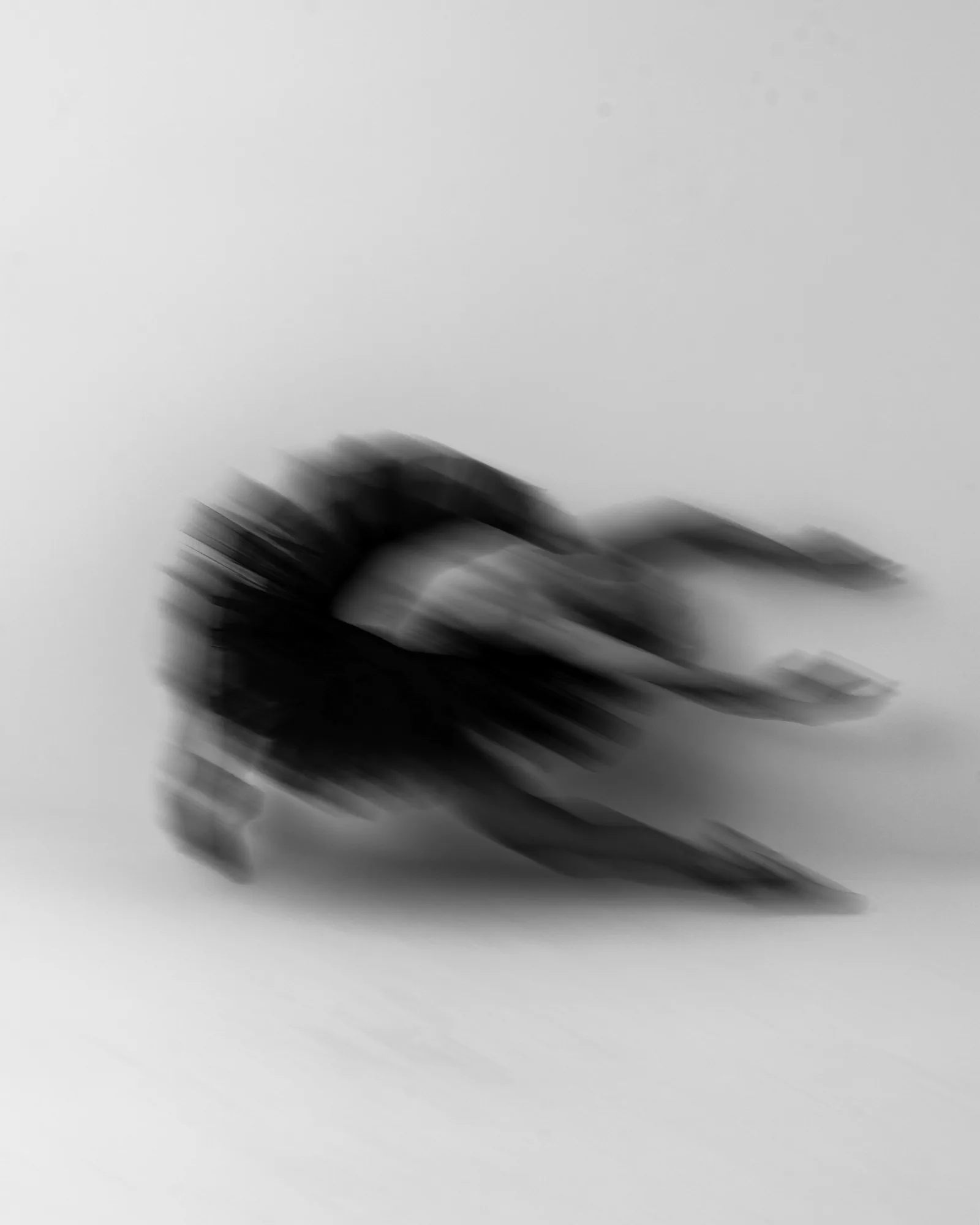
Using long exposures, intentional camera movement, and controlled studio light, Motus lets a gesture spread across the frame until movement and time take on the qualities of space. The body passes through that space and gradually dissolves into it, so that what remains is less a figure than the trace of its own motion.
In Latin, motus means movement, and in the phrase motus animi, a movement of the mind: an emotion. The title keeps both senses. A turn, a hesitation, a fall: each crosses the frame as a feeling as well as a motion, and the long exposure keeps the whole of it.
A torso turns in the dark and leaves itself behind in soft layers, hair streaming into the black like smoke. A dancer spins against a single warm light, her silhouette held at the centre while the edges of the movement burn away. A woman raises her arms against a dark wall and they open into translucent fans, as if the gesture had grown wings. In black and white, a ballet skirt becomes a spinning cloud above two blurred legs, and a falling dancer turns into a grey streak across a pale floor.
Dance exists only while it is happening. A conventional photograph keeps one position and discards everything between positions, which is where the dance actually lives. Motus keeps the passage. A dancer knows from the inside where each limb is at every moment; these photographs show the outside of that knowledge, everywhere the limbs have been. When the camera moves as well, the image carries two movements at once, the dancer's and the photographer's, and becomes a record of their timing together.
The reference is historical. In the 1880s, Étienne-Jules Marey recorded human and animal movement through chronophotography, placing a sequence of exposures on a single plate so that a figure could be seen walking, running, or jumping across one image. In the same period, Eadweard Muybridge used rows of cameras to break motion into discrete frames. Motus inherits their curiosity about what photography can reveal about movement but changes the method: where Marey's plates hold separate instants and Muybridge divided motion into stills, Motus lets the movement run continuously through a single exposure. The gesture stays whole; only its sharpness dissolves.
Hiroshi Sugimoto's theatre interiors, each exposed for the full length of a film, and his seascapes showed that time, more than light, could be the real subject of a photograph. Idris Khan's superimposed repetitions of canonical images showed that accumulation itself can carry emotional weight. Motus brings these ideas to the living body and its specific rhythm: how long it takes to turn, how weight shifts through a step, how a gesture decays.
Each image is made in-camera. No layers are combined in post-production; the blur, the multiplication, and the trailing light are captured in a single exposure. The photograph is a recording of movement: a physical trace, like a brushstroke, of a body's passage through time in front of the lens.
Two sub-series carry the same question in other directions. In In Haste, ballerinas appear without warning on the streets of Istanbul and dance for a moment in public space; the photographs record that brief performance, the trace of its movement, and the faces of those who stop, or do not stop, to watch. In Stills, five dancers respond to the same photograph of an everyday object, each through a different movement, and the camera holds the pose in which every response briefly settles.
Selected Works


FLUX