Motus
Il corpo come durata
Movement and time turned into space, and a body dissolving inside it.
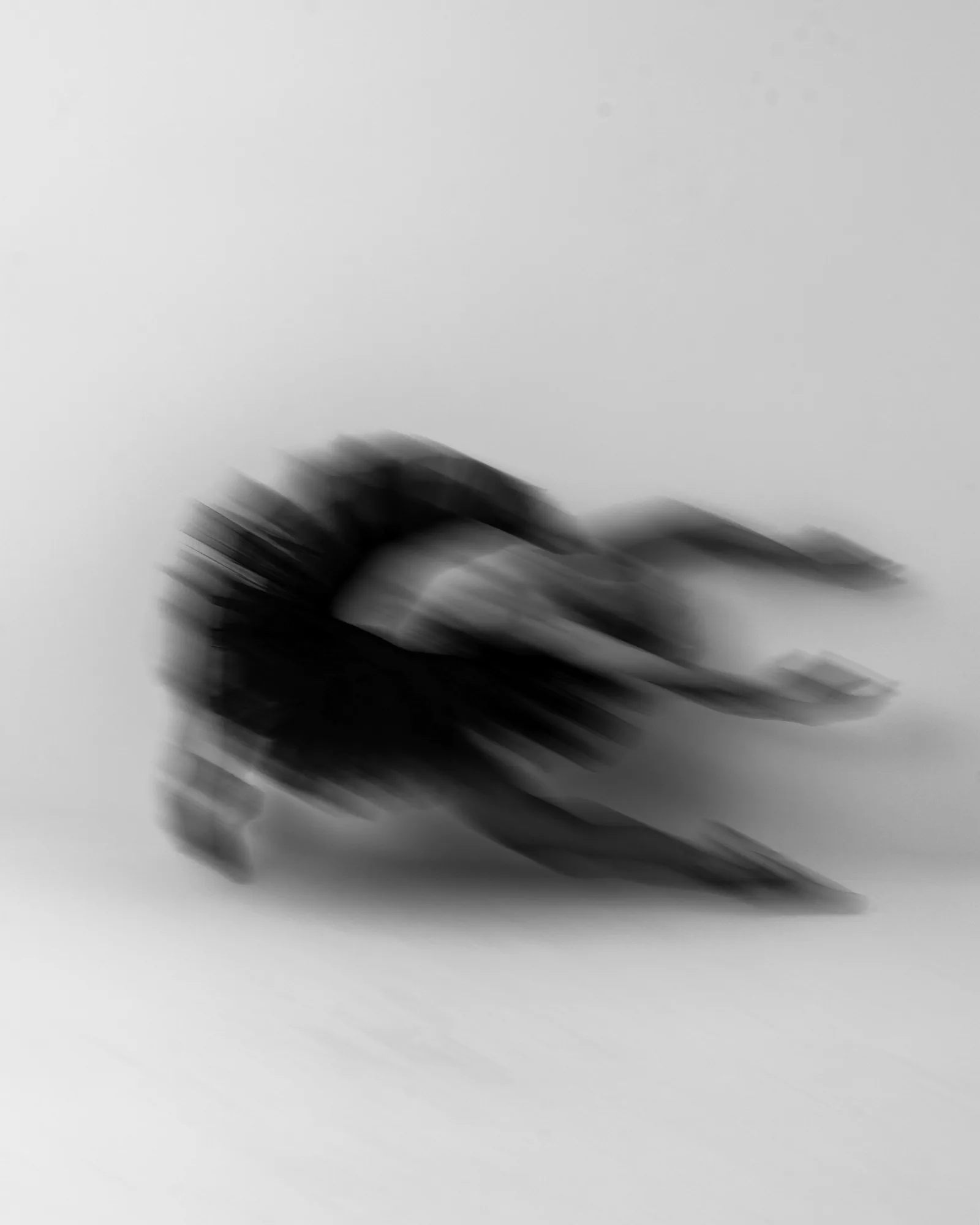
Using long exposures, intentional camera movement, and controlled studio light, Motus lets a gesture spread across the frame until movement and time take on the qualities of space. The body passes through that space and gradually dissolves into it, so that what remains is less a figure than the trace of its own motion.
In Latin, motore means movement, and in the phrase motus animi, a movement of the mind: an emotion. The title keeps both senses. A turn, a hesitation, a fall: each crosses the frame as a feeling as well as a motion, and the long exposure keeps the whole of it.
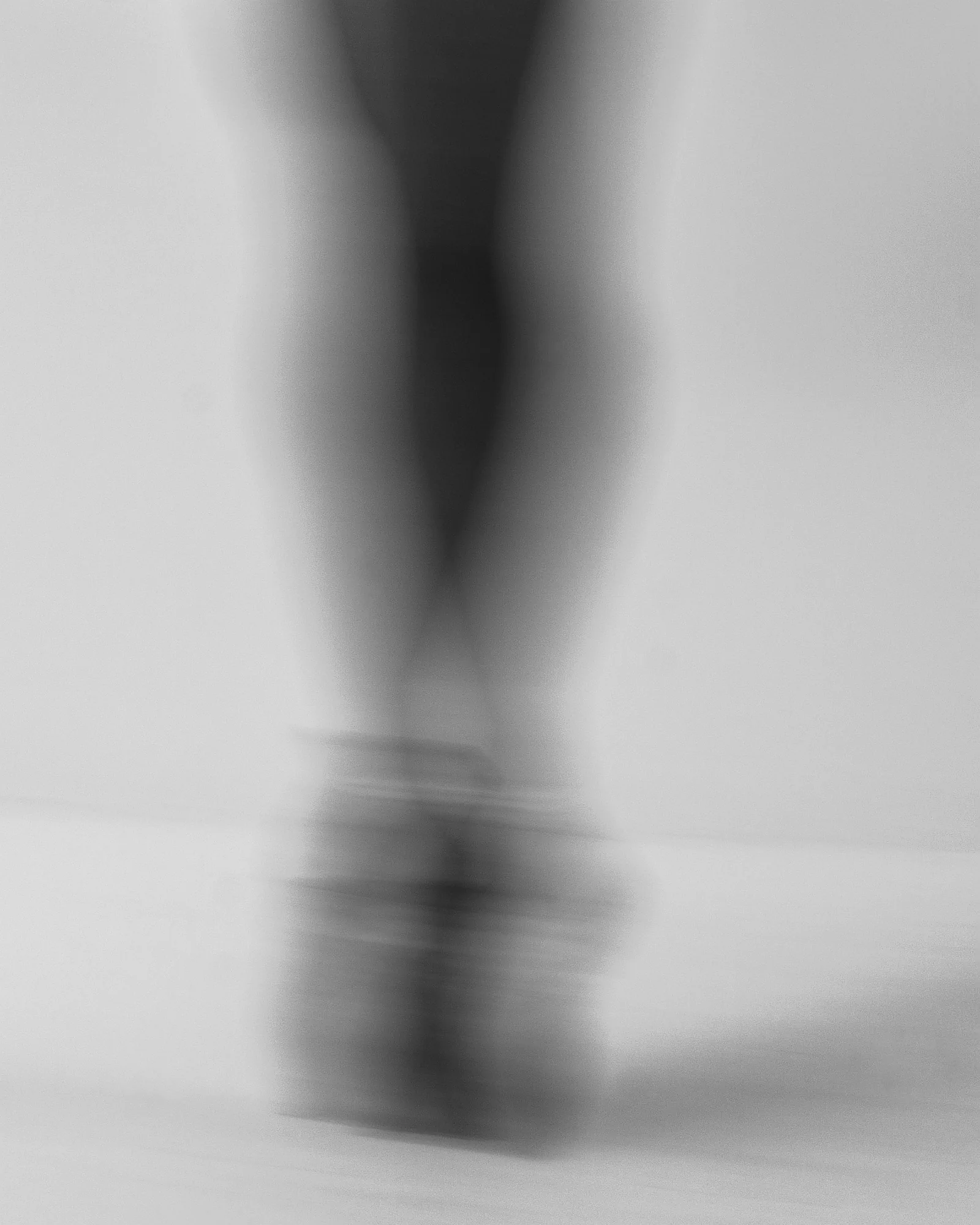
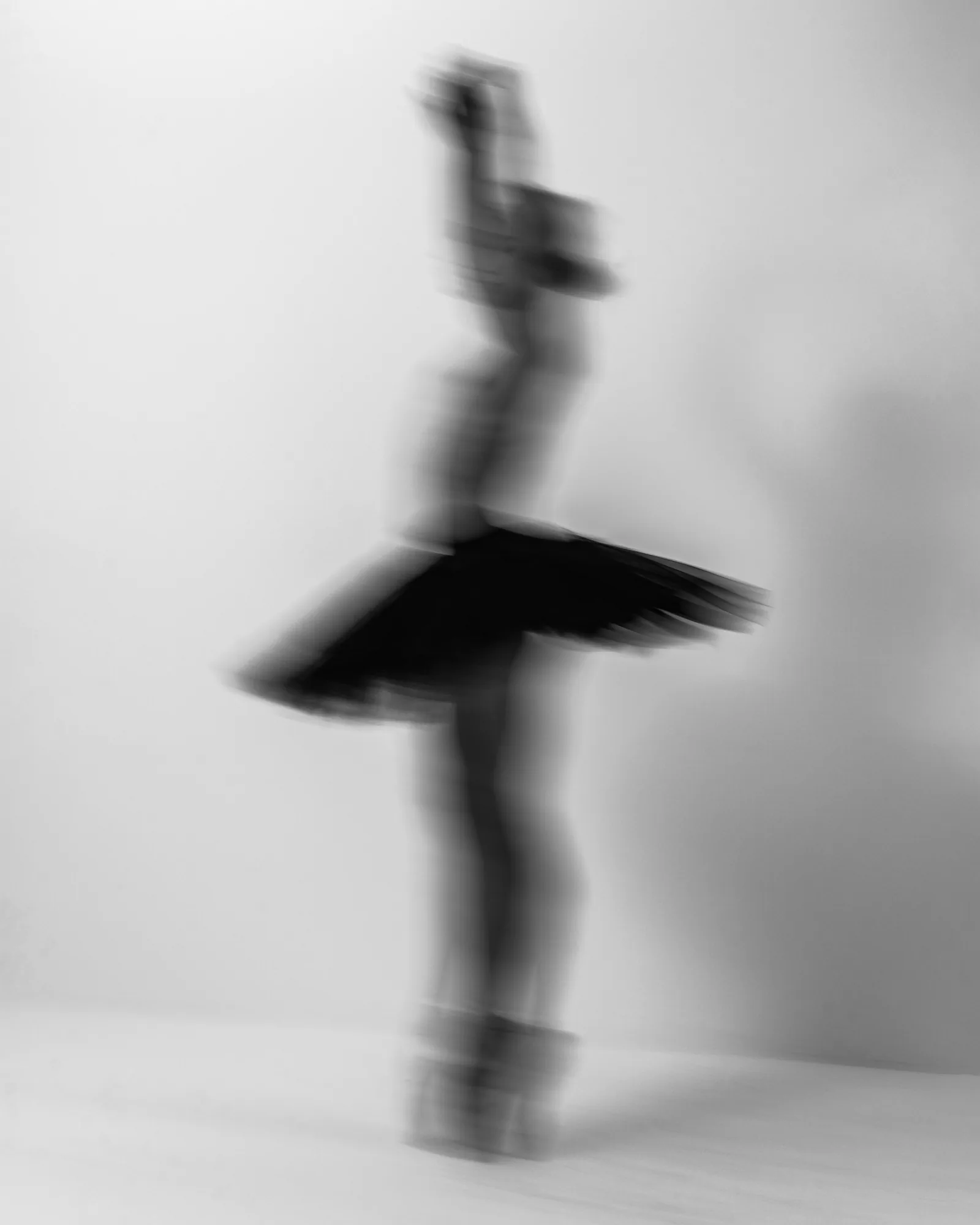
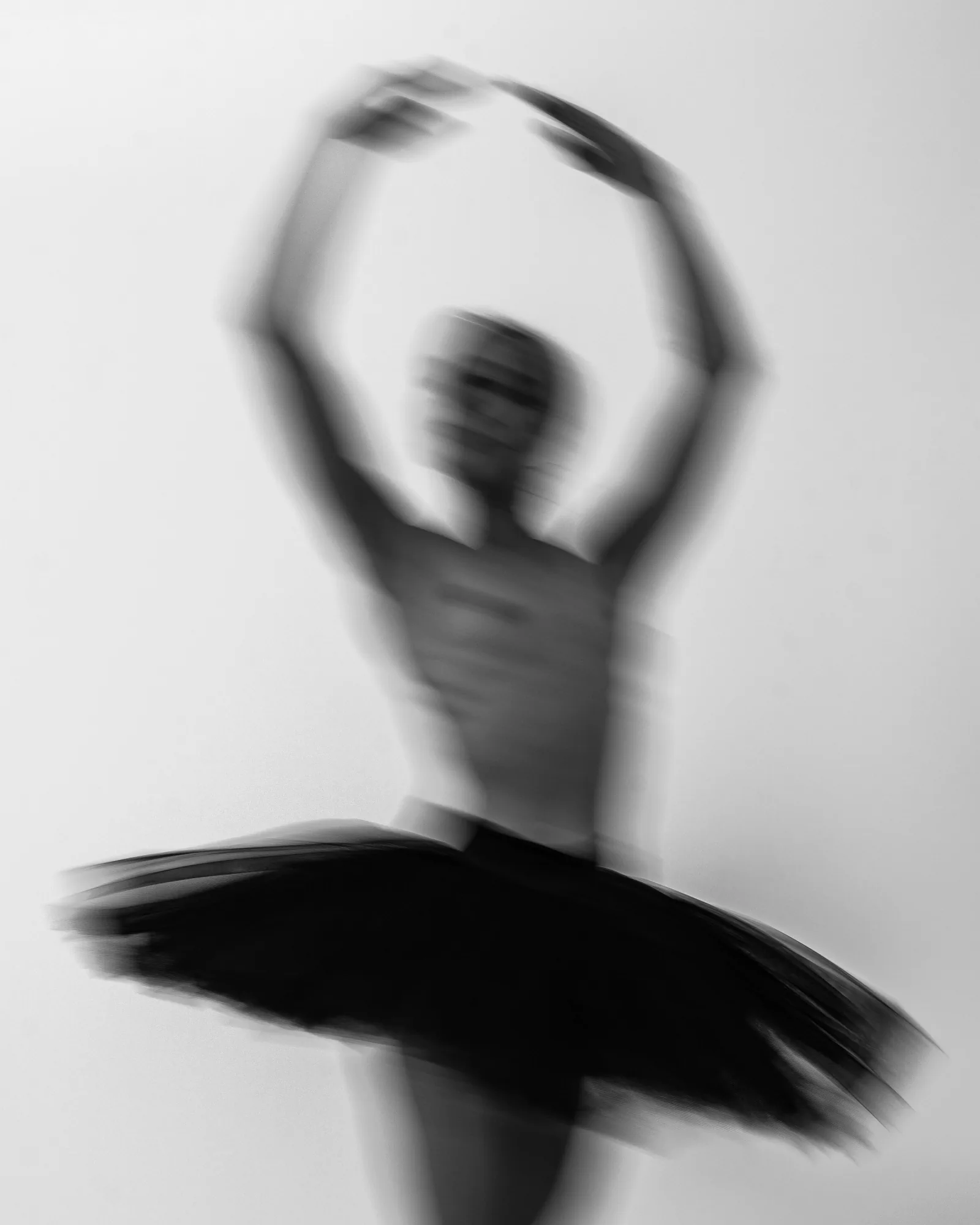
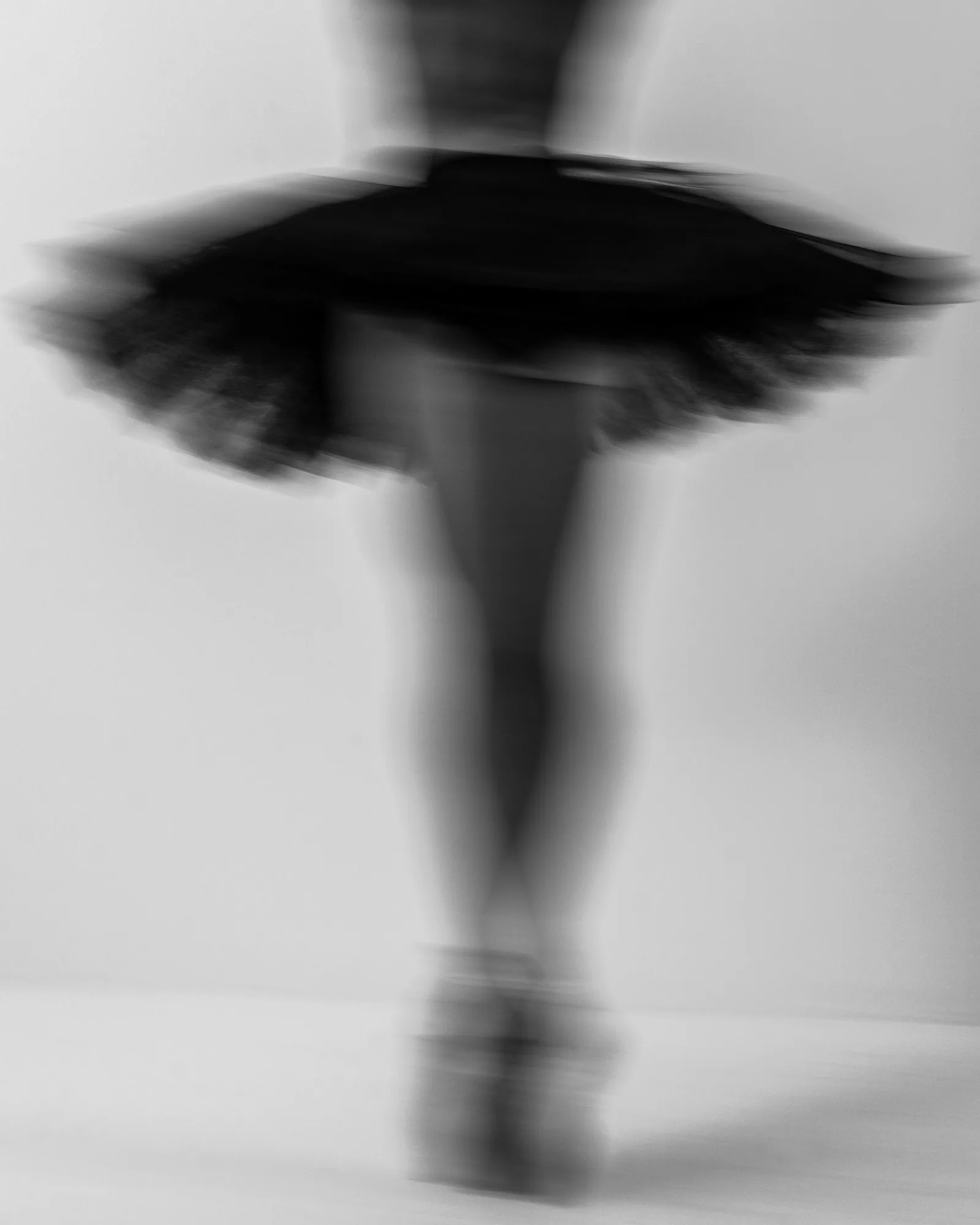
A torso turns in the dark and leaves itself behind in soft layers, hair streaming into the black like smoke. A dancer spins against a single warm light, her silhouette held at the centre while the edges of the movement burn away. A woman raises her arms against a dark wall and they open into translucent fans, as if the gesture had grown wings. In black and white, a ballet skirt becomes a spinning cloud above two blurred legs, and a falling dancer turns into a grey streak across a pale floor.
Dance exists only while it is happening. A conventional photograph keeps one position and discards everything between positions, which is where the dance actually lives. Motus keeps the passage. A dancer knows from the inside where each limb is at every moment; these photographs show the outside of that knowledge, everywhere the limbs have been. When the camera moves as well, the image carries two movements at once, the dancer's and the photographer's, and becomes a record of their timing together.
Il riferimento è storico. Negli anni ottanta del XIX secolo, Étienne-Jules Marey registrò i movimenti di esseri umani e animali attraverso la cronofotografia, disponendo una sequenza di esposizioni su un’unica lastra in modo che fosse possibile vedere una figura camminare, correre o saltare nell’arco di un’unica immagine. Nello stesso periodo, Eadweard Muybridge utilizzò file di macchine fotografiche per scomporre il movimento in fotogrammi distinti. Motus ne eredita la curiosità riguardo a ciò che la fotografia può rivelare sul movimento, ma ne modifica il metodo: mentre le lastre di Marey immortalano istanti distinti e Muybridge suddivideva il movimento in fotogrammi, Motus permette al movimento di svolgersi ininterrottamente nell’arco di una singola esposizione. Il gesto rimane integro; solo la sua nitidezza si dissolve.
Hiroshi Sugimoto's theatre interiors, each exposed for the full length of a film, and his seascapes showed that time, more than light, could be the real subject of a photograph. Idris Khan's superimposed repetitions of canonical images showed that accumulation itself can carry emotional weight. Motus traspone queste idee nel corpo vivente e nel suo ritmo specifico: quanto tempo ci vuole per compiere una rotazione, come si sposta il peso durante un passo, come si esaurisce un gesto.
Each image is made in-camera. No layers are combined in post-production; the blur, the multiplication, and the trailing light are captured in a single exposure. The photograph is a recording of movement: a physical trace, like a brushstroke, of a body's passage through time in front of the lens.
Due sottoserie approfondiscono la stessa questione da altre prospettive. In In fretta e furia, le ballerine compaiono all’improvviso per le strade di Istanbul e danzano per un attimo negli spazi pubblici; le fotografie immortalano quella breve esibizione, la traccia del loro movimento e i volti di chi si ferma, o non si ferma, a guardare. In Stills, five dancers respond to the same photograph of an everyday object, each through a different movement, and the camera holds the pose in which every response briefly settles.
Opere selezionate


FLUX