Altrove
Il nudo nello spazio pubblico
Un corpo collocato in un luogo in cui non ha il permesso di trovarsi, e il momento in cui semplicemente si trova lì.
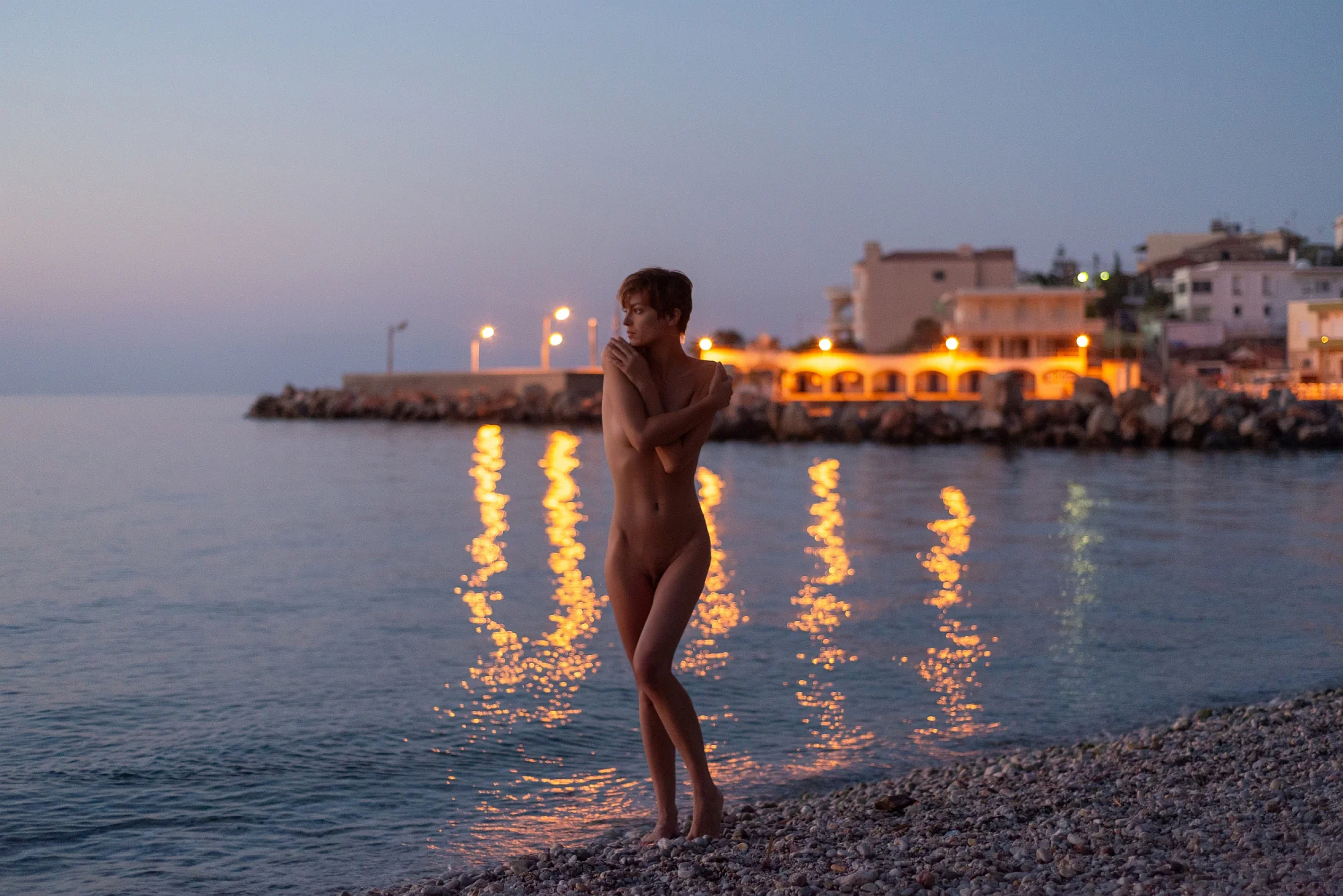
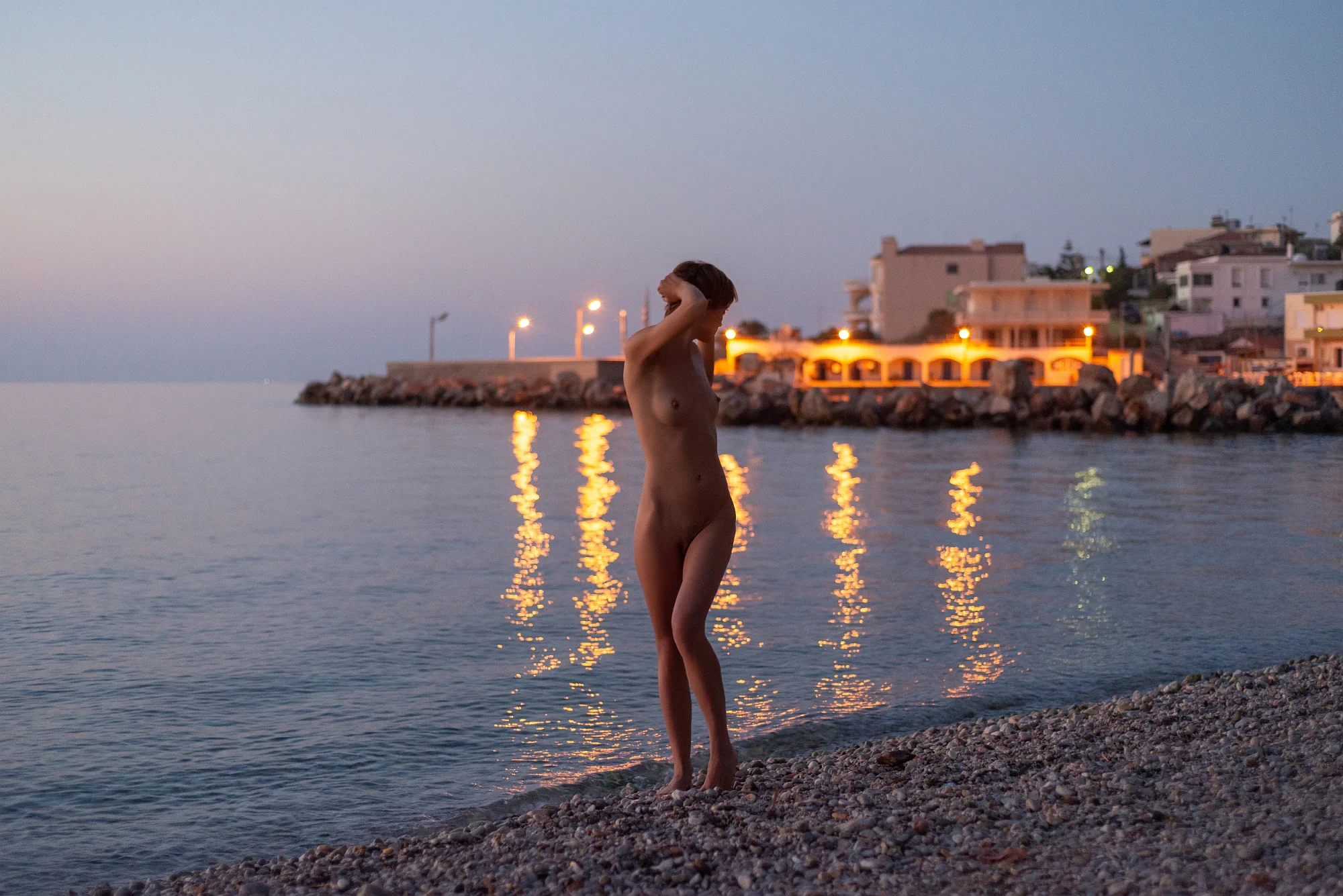
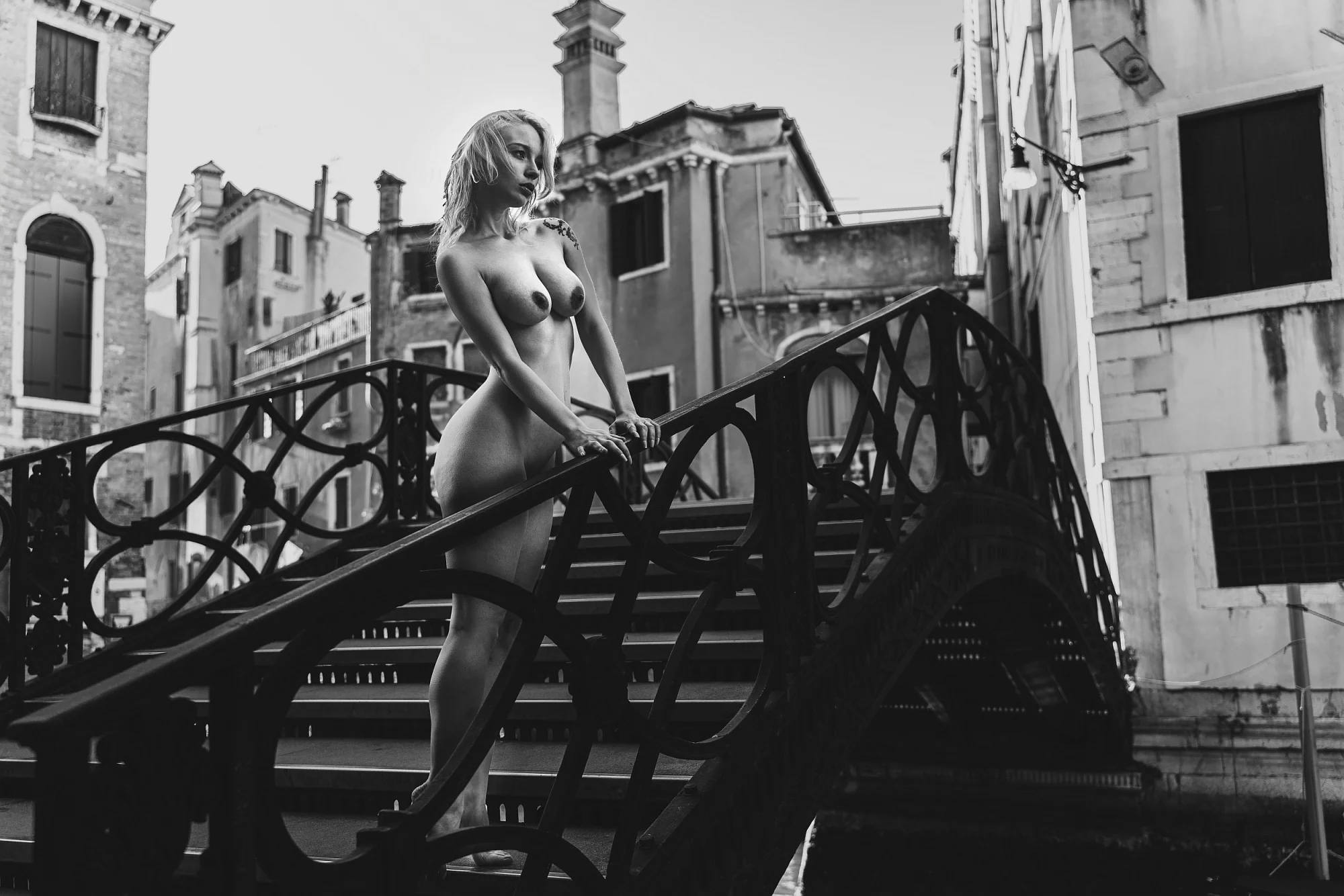
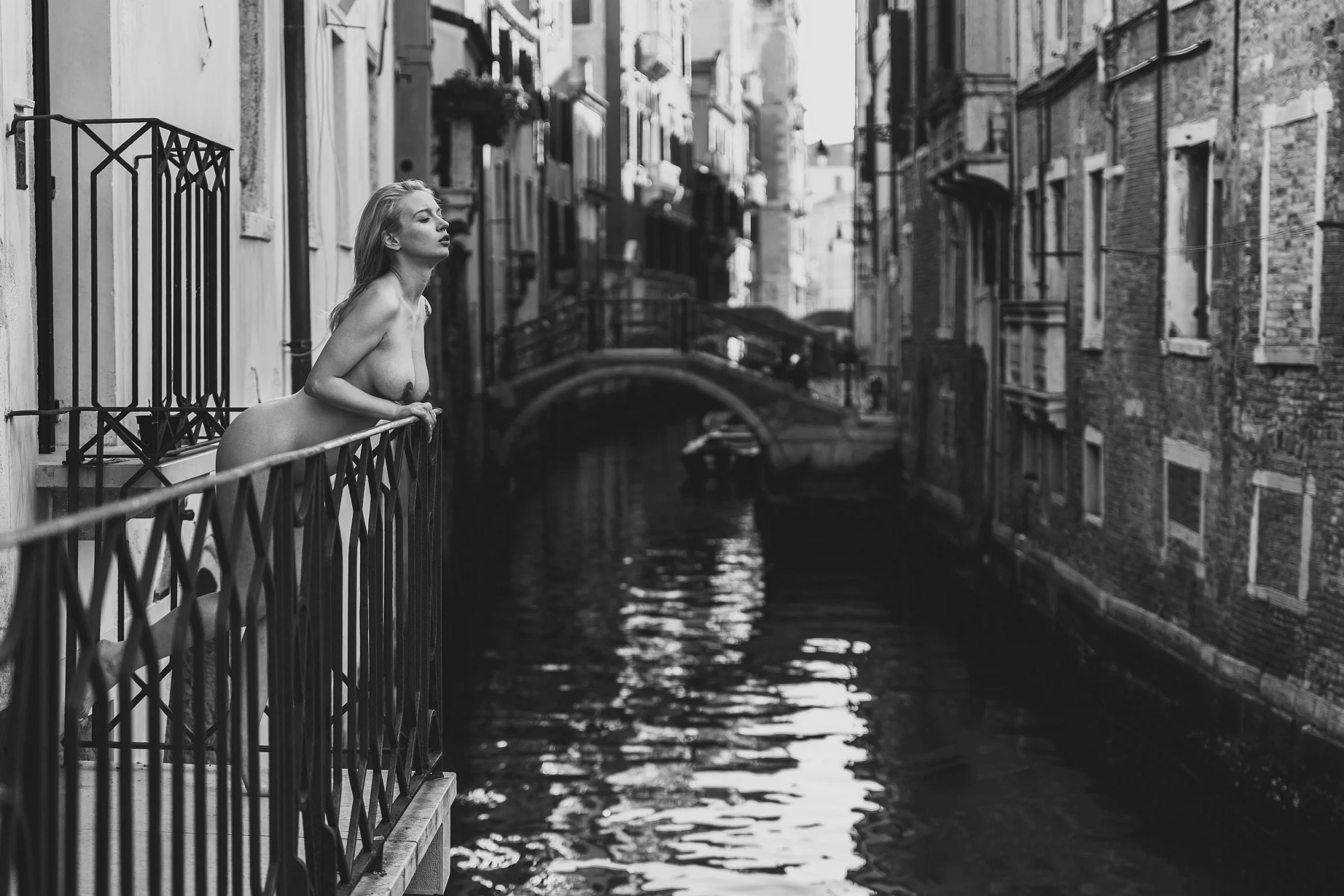
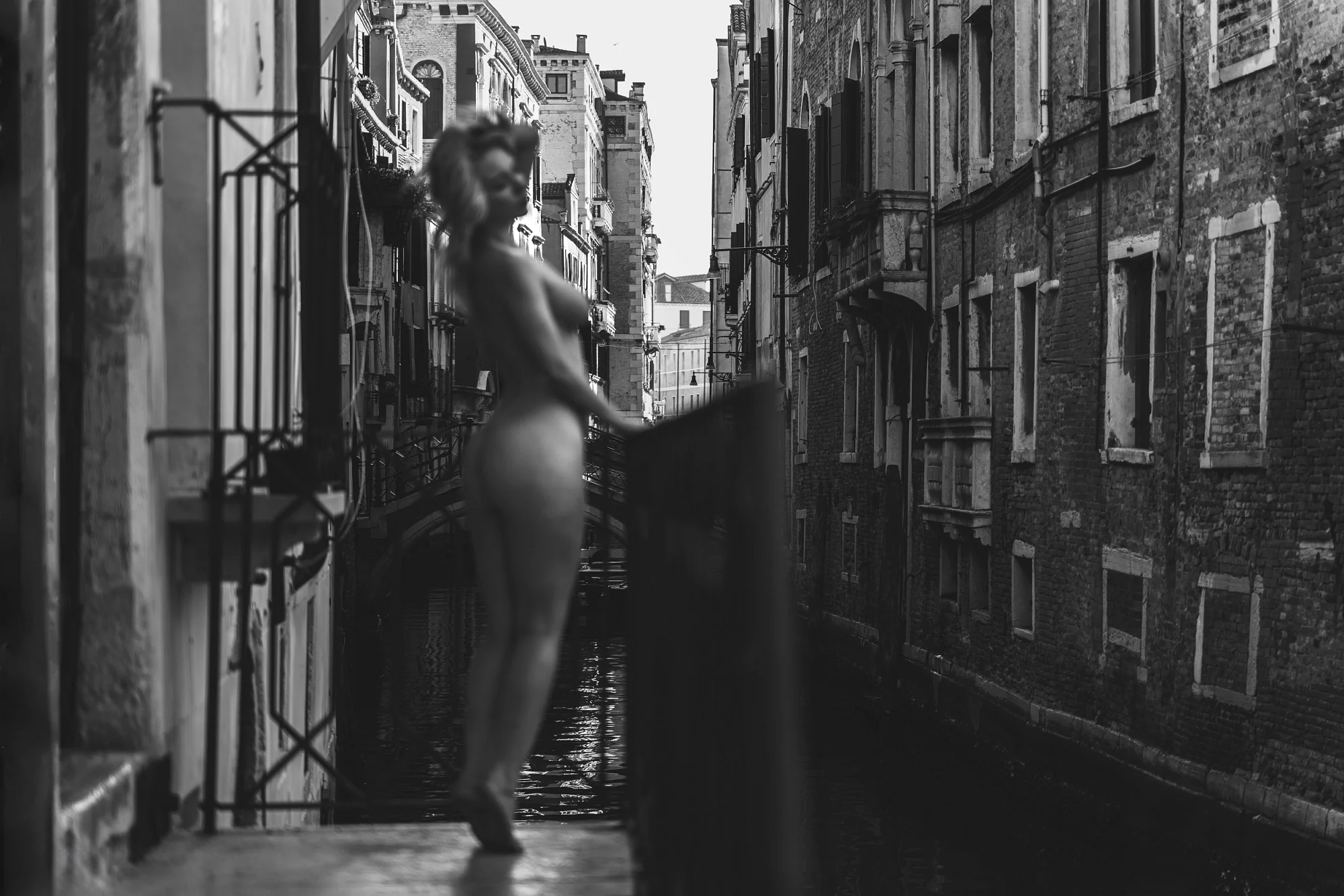
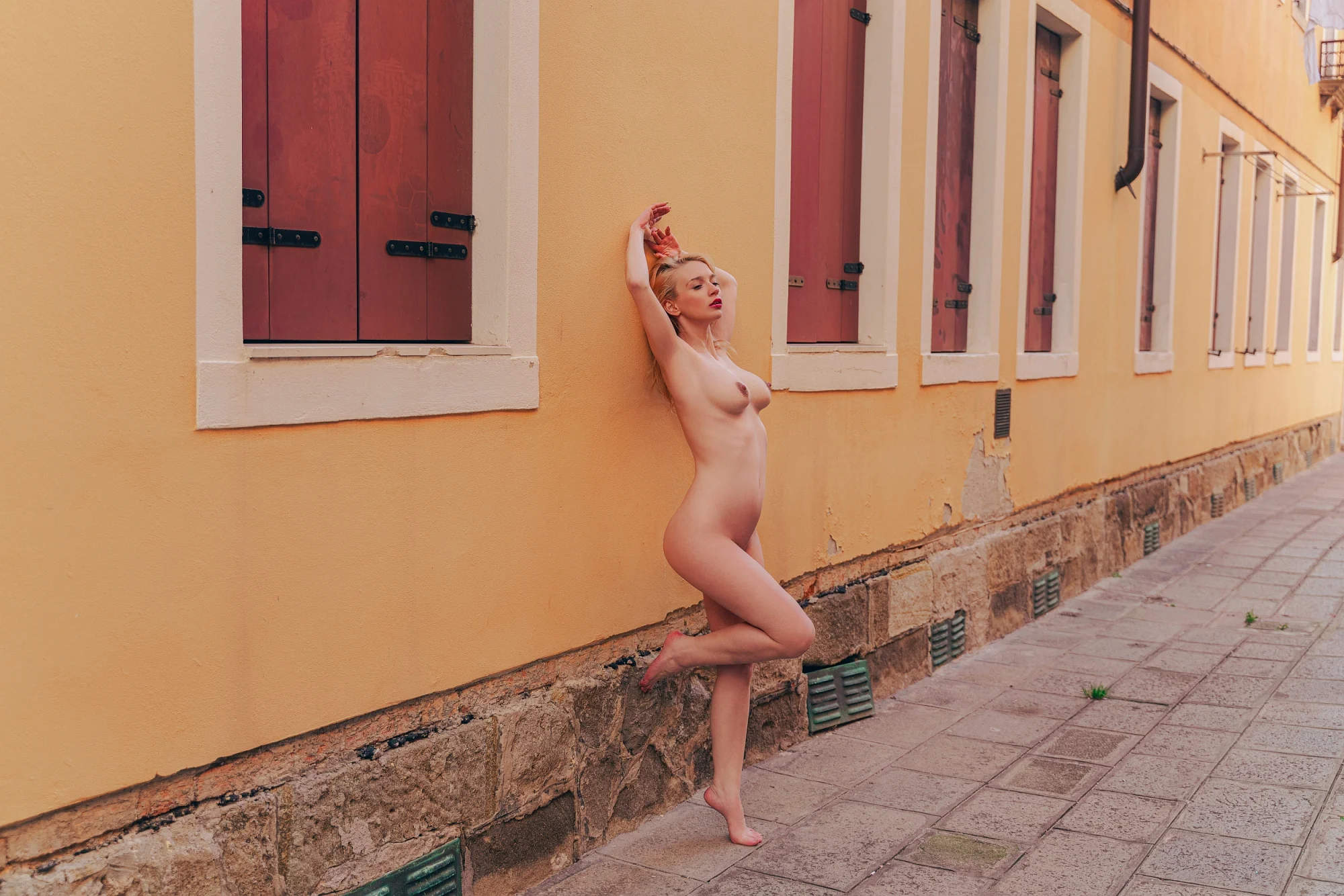
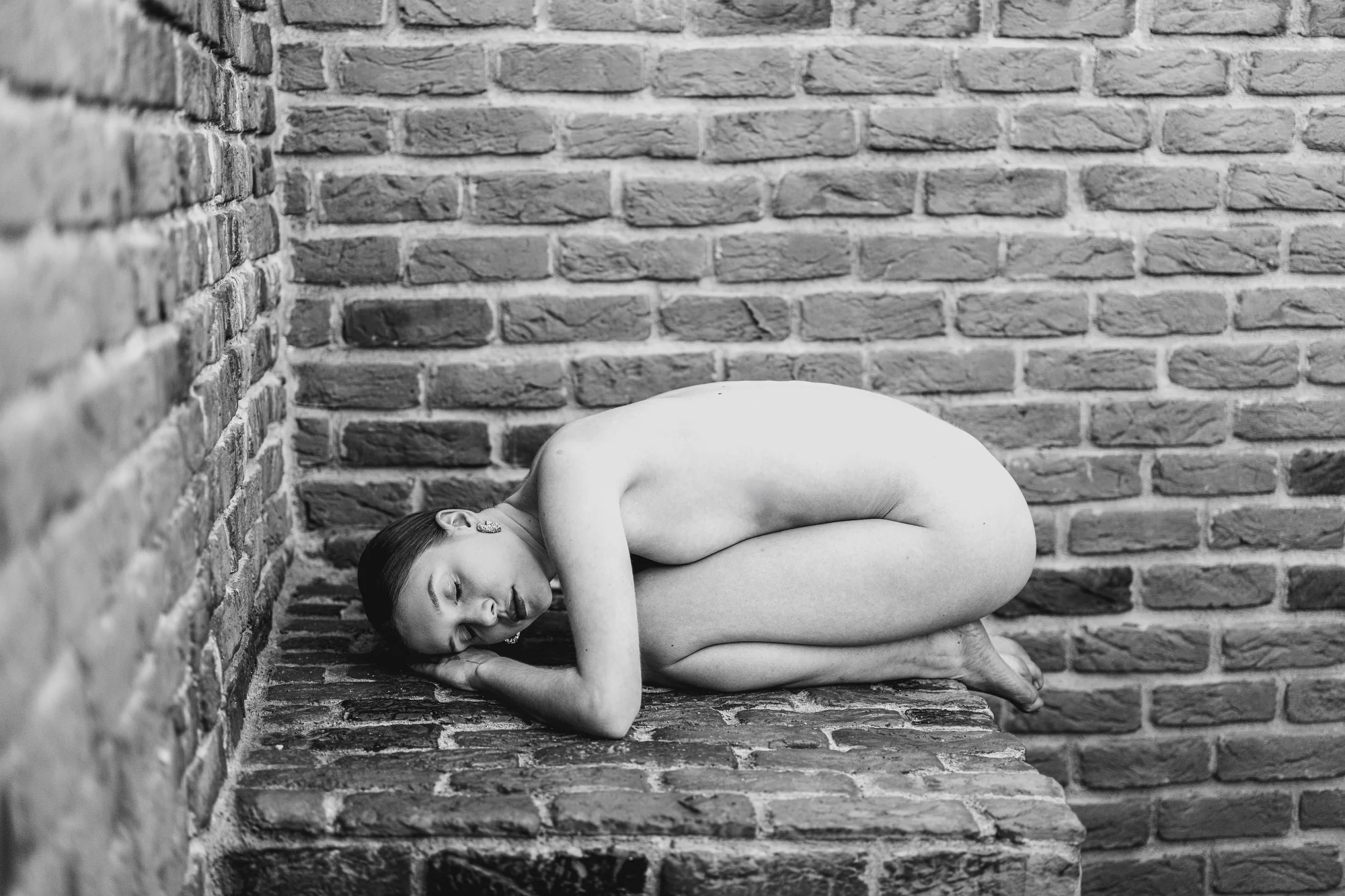
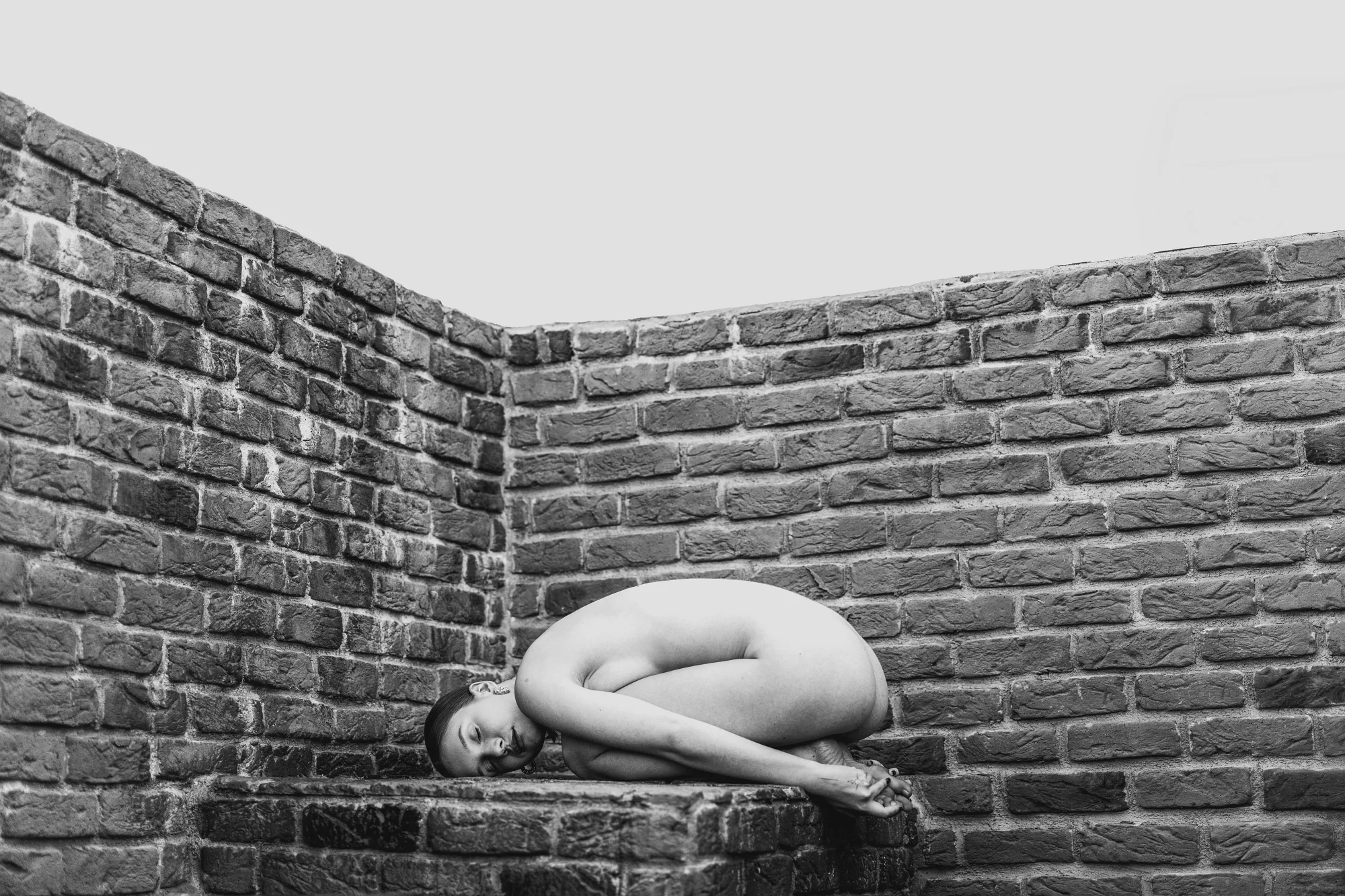
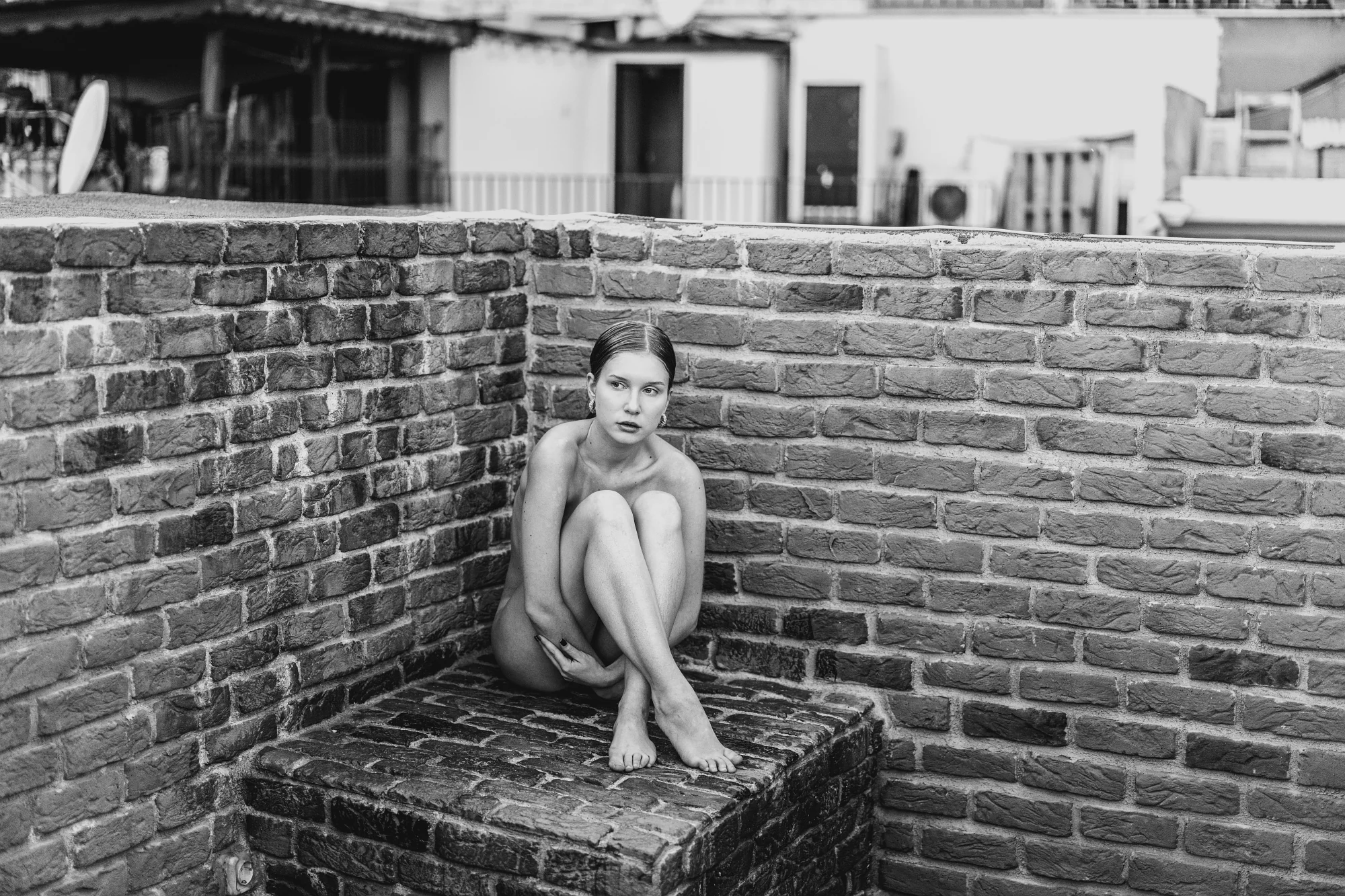
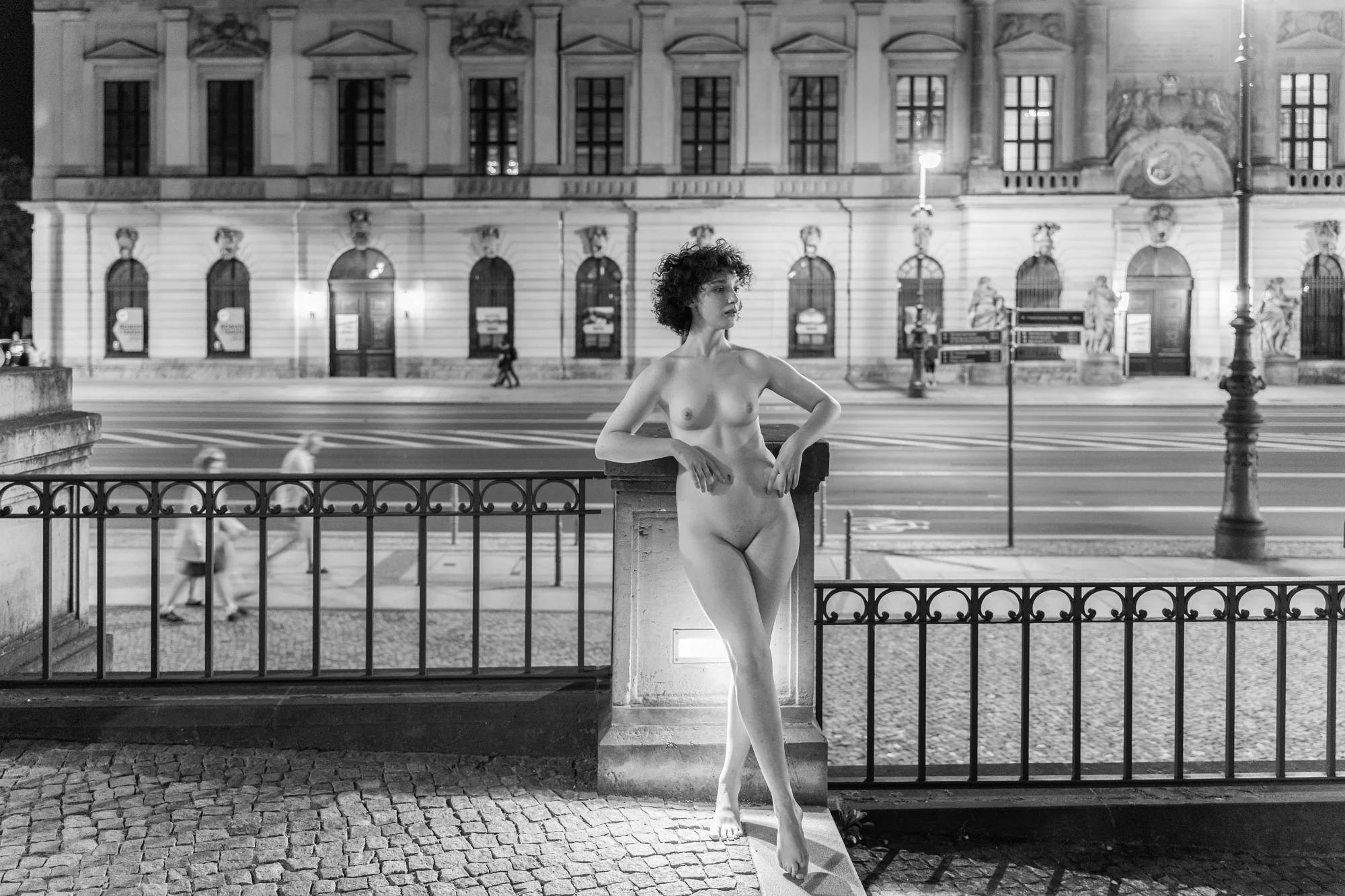
Altrove fotografa il corpo nudo nello spazio pubblico: vicoli, ponti sui canali, strade deserte al crepuscolo, un balcone affacciato su una strada, gli angoli delle città e dei villaggi dove pubblico e privato si incontrano senza preavviso. La serie pone una semplice domanda sull’esistenza: cosa significa per un corpo trovarsi lì, senza veli, in uno spazio condiviso con gli altri? Non si tratta di performance o interventi in senso attivista. Sono momenti più discreti: brevi istanti in cui un corpo che non appartiene a quel luogo viene trattenuto, fotografato e poi restituito alla città.
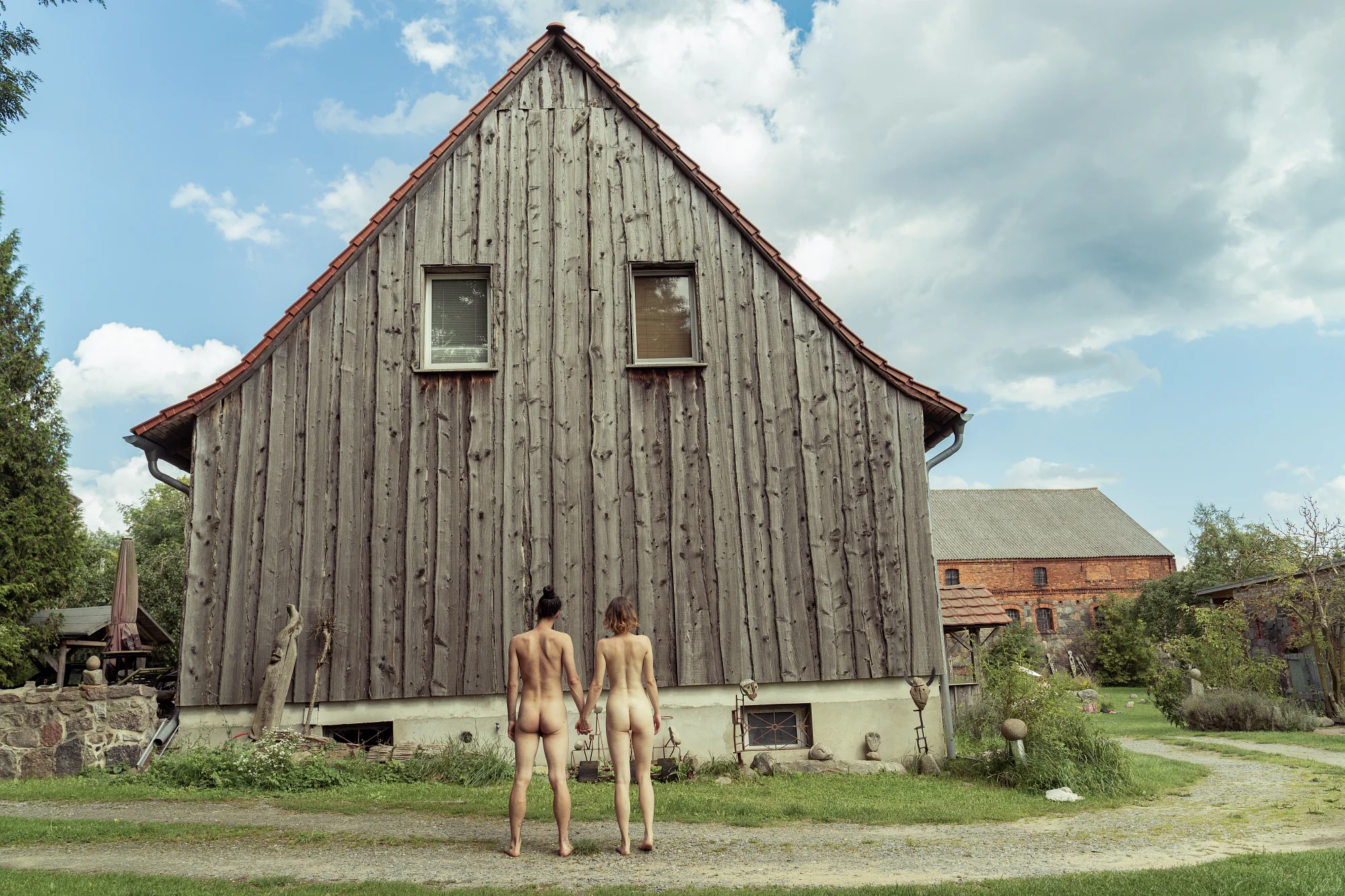
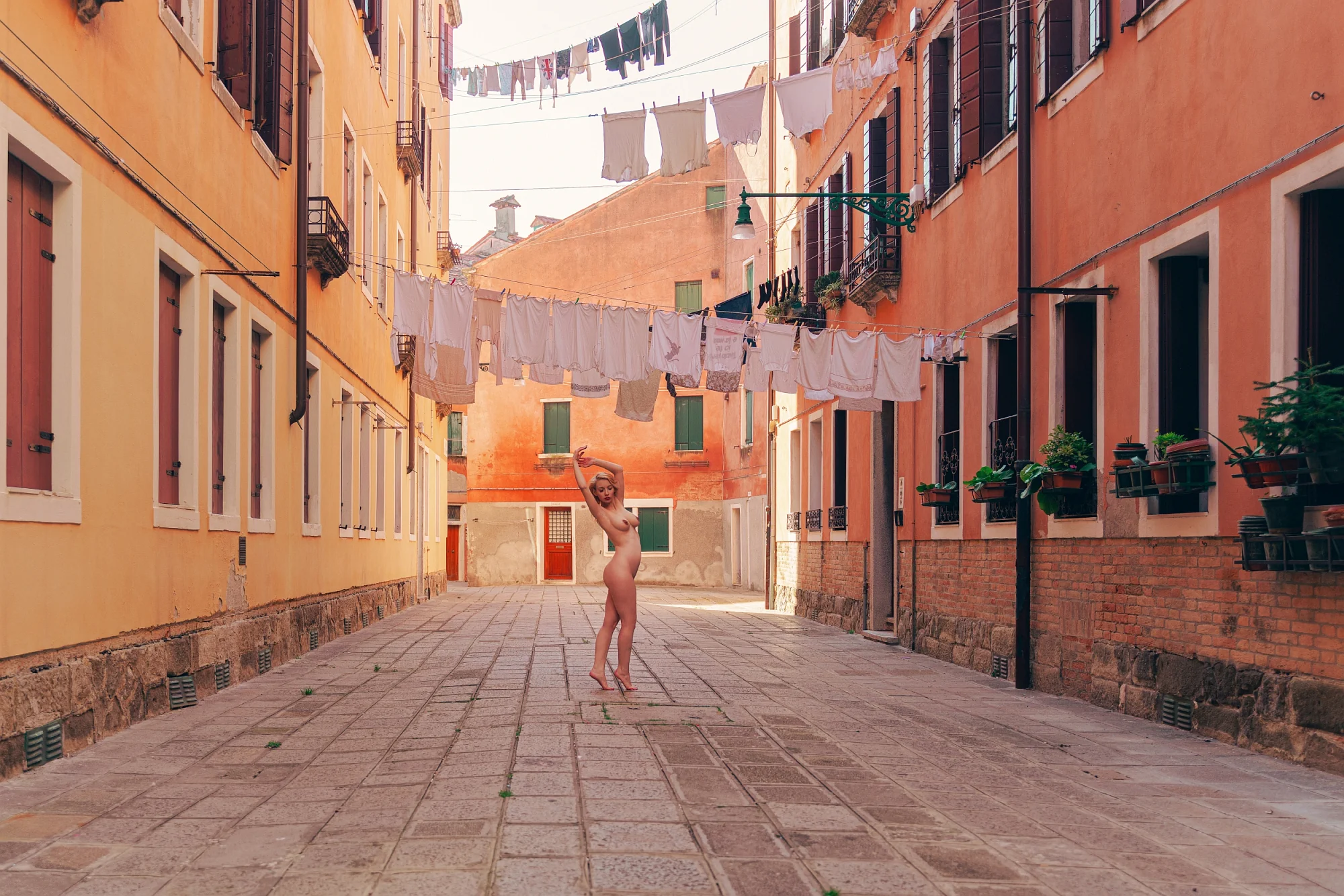
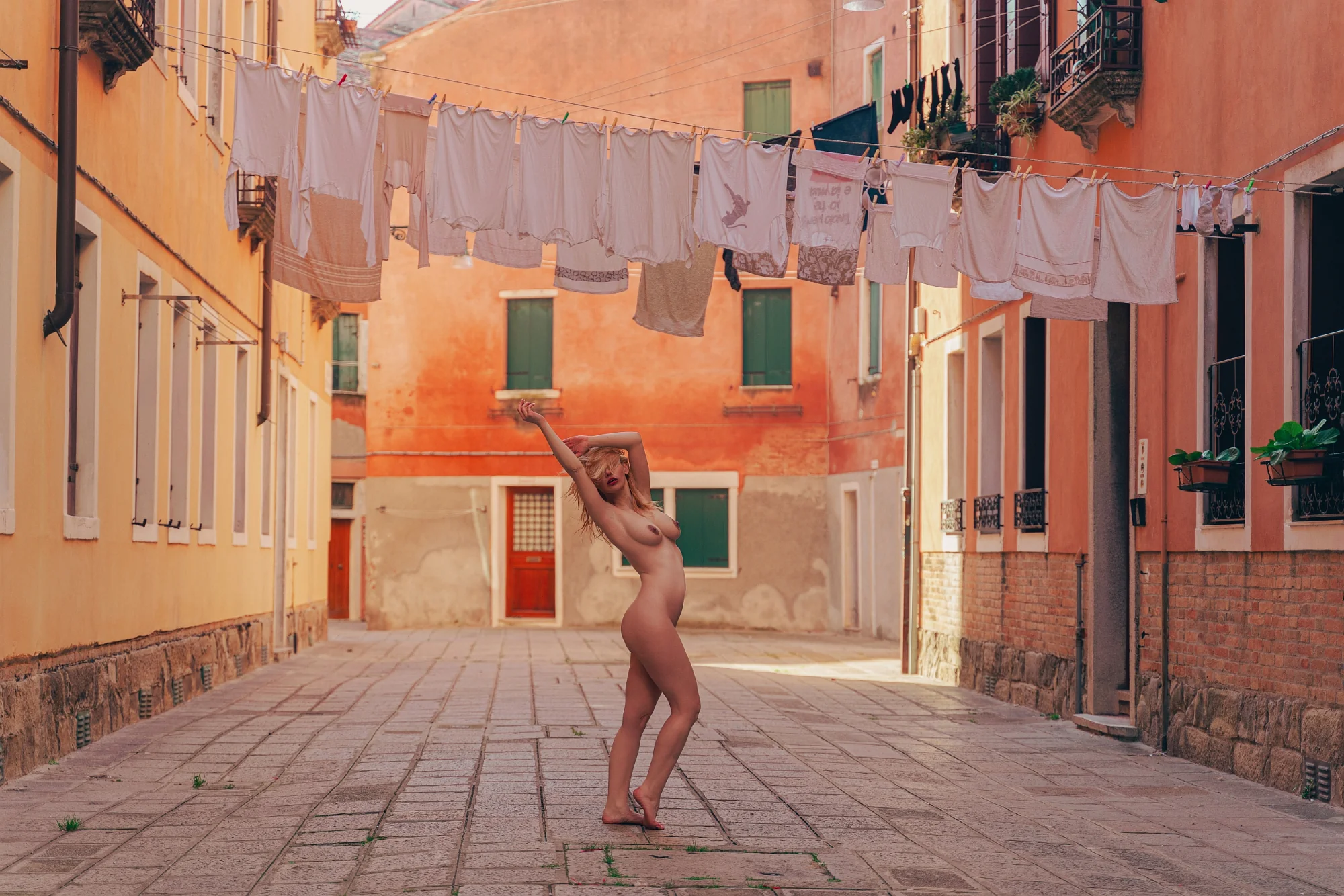
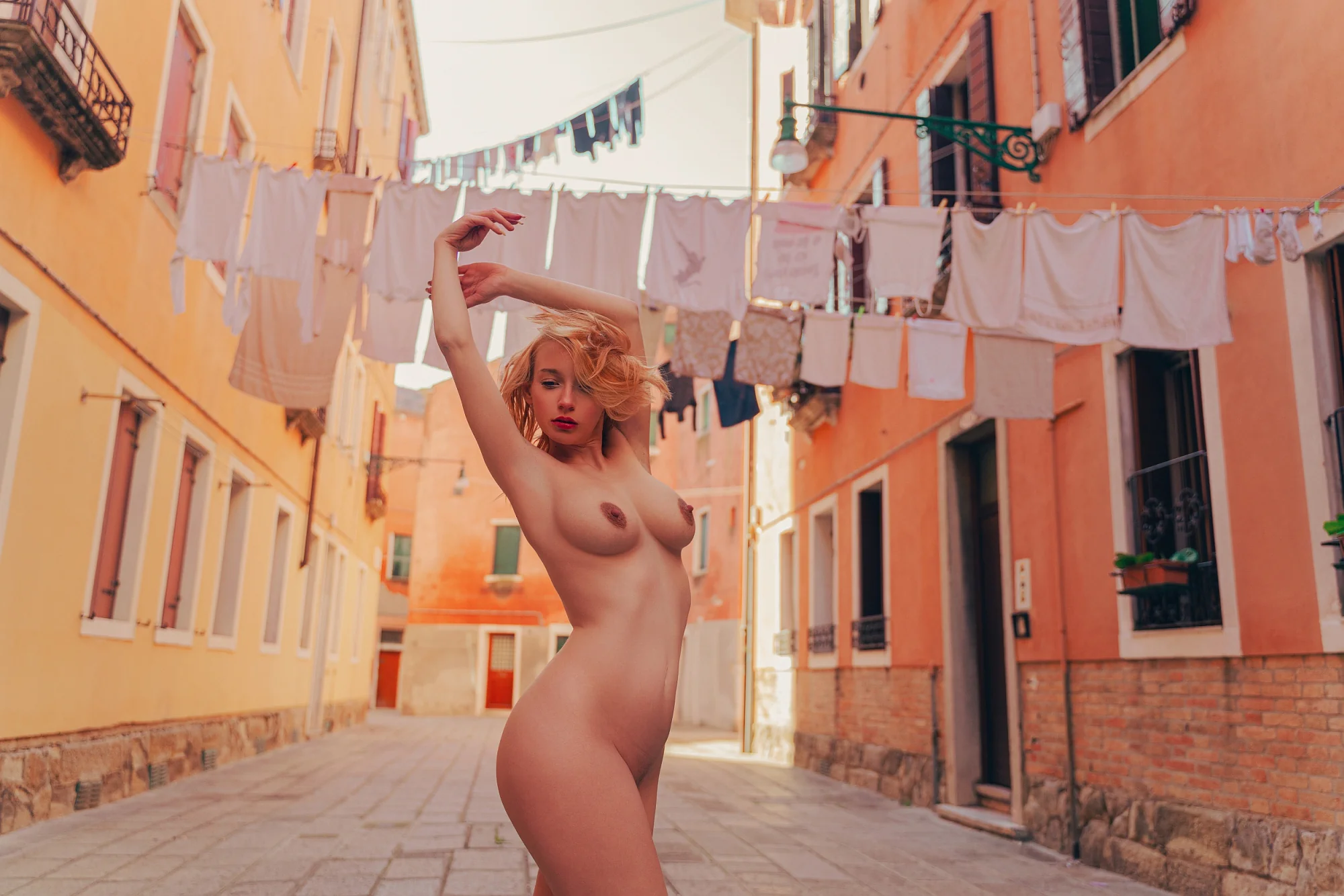
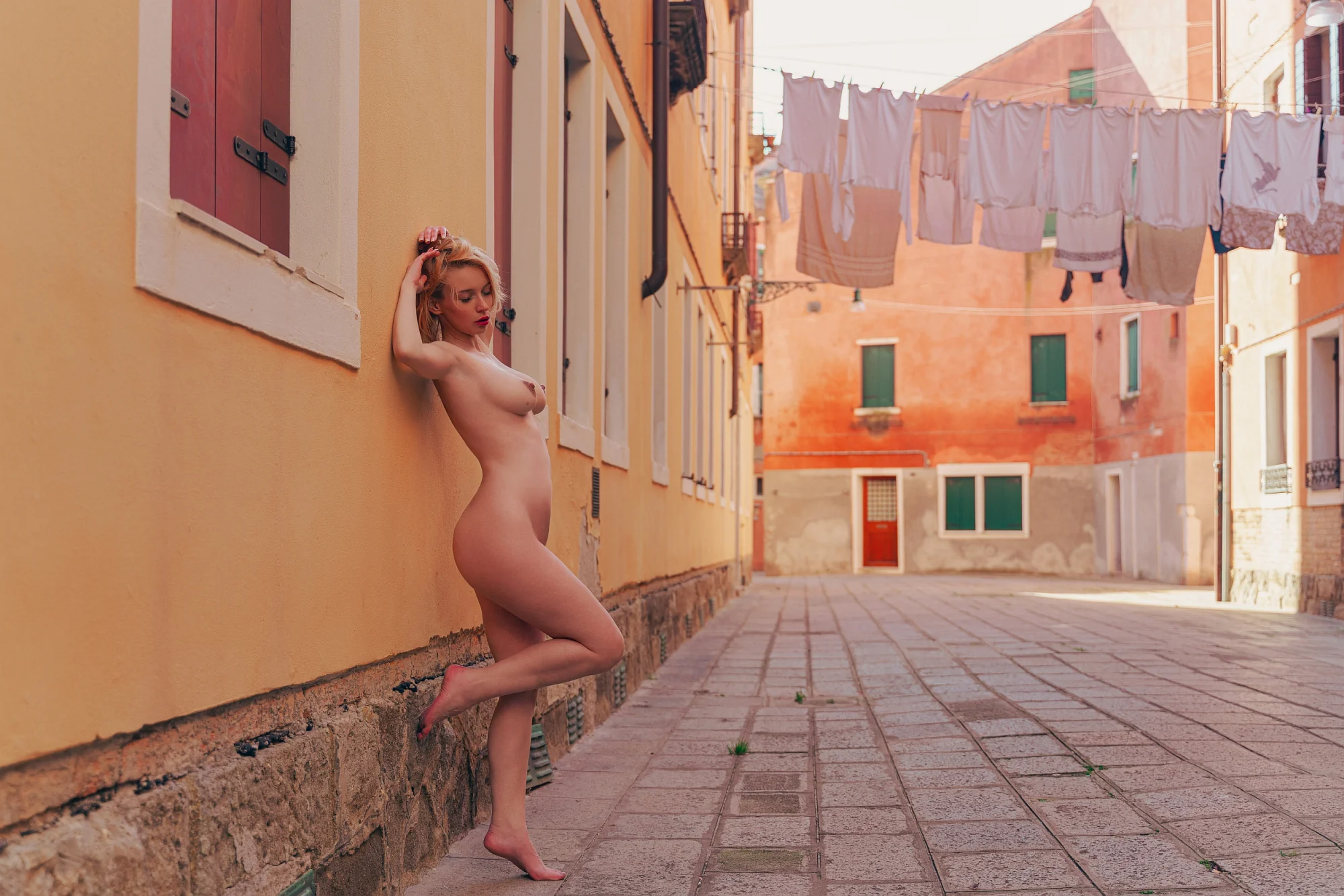
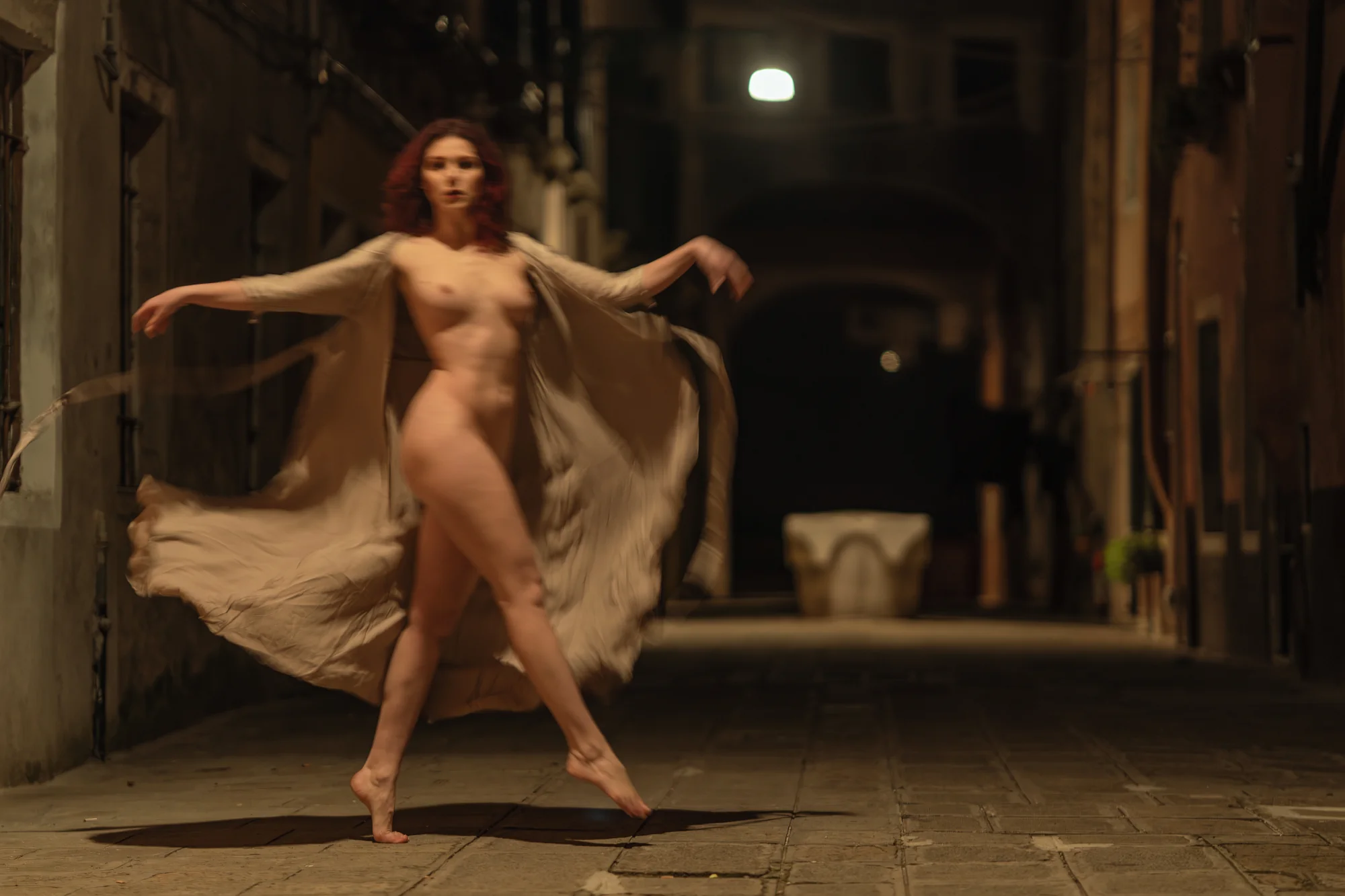
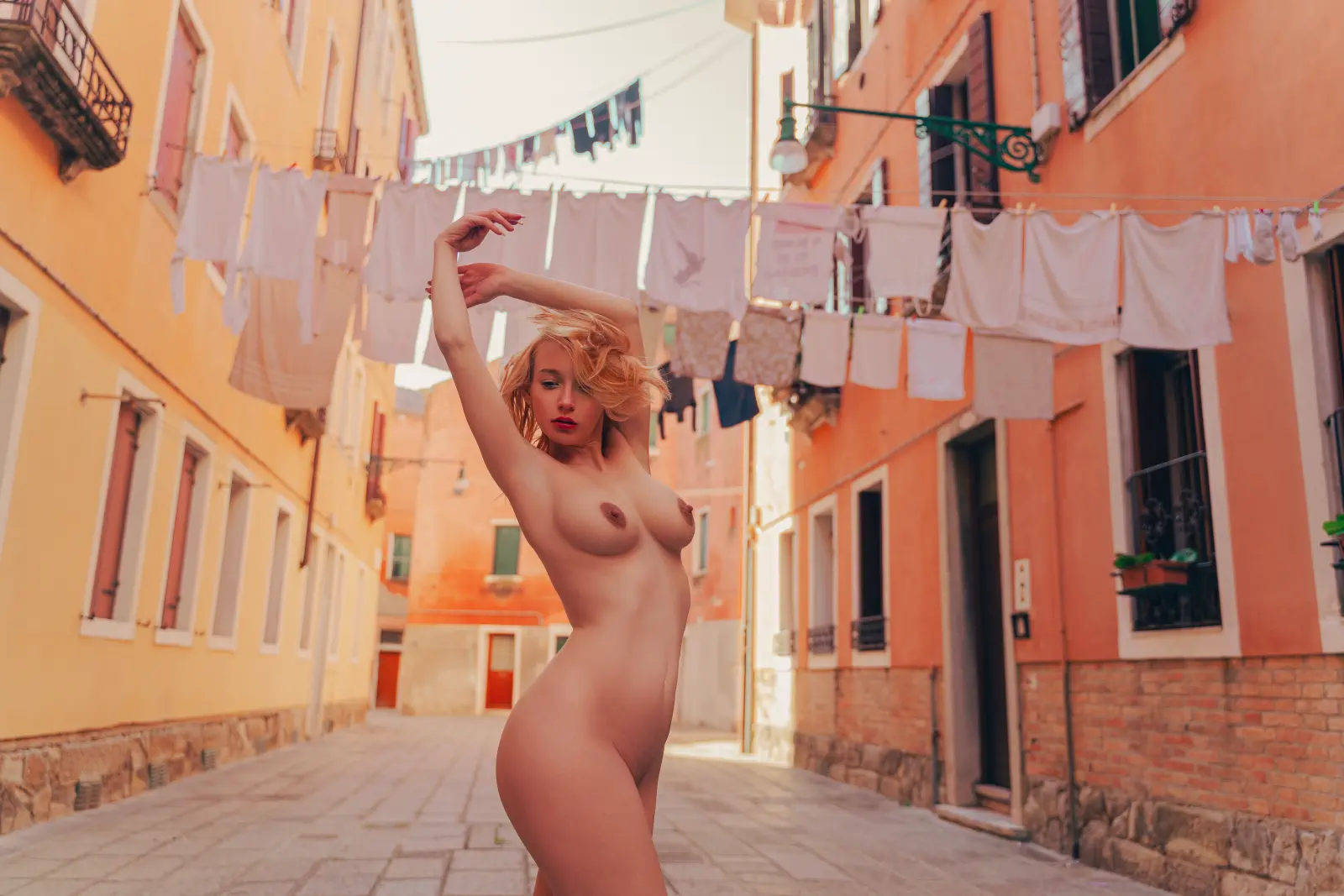
One photograph places a woman at the centre of a narrow street beneath lines of hanging laundry, arms raised as if she had begun to dance, alone between two rows of shuttered windows. Another shows a couple with their backs to the camera, holding hands before the weathered gable of a farmhouse, small and quiet under a wide sky. At night, a figure strides barefoot along a lamplit pavement, a sheer cape lifting behind her, while a passerby continues down the street. At dusk on a shoreline, a woman folds her arms around herself as the lights of the town come on across the water. Freedom, tenderness, exposure, and self-protection sit side by side: the body is present in each image, and the way it is present changes with the place.
Public space runs on rules that are rarely written down: how close strangers stand, where eyes may rest, which parts of a body a street agrees to see. An unclothed body makes all of them visible at once and changes the meaning of everything around it. A pavement becomes a border, a window becomes a witness, a passerby becomes part of the photograph's tension.
La serie eredita dalla tradizione del flâneur, the figure who walks the city without destination, reading its surfaces, but it inverts the flâneur's politics. Baudelaire's and Benjamin's flâneur observes from the safety of clothing and class. That figure was also a man. In the nineteenth-century city, a woman walking alone and without purpose risked being taken for a "public woman", the polite name for a prostitute, and the freedom to wander and look was largely a male one. The subject of Altrove is exposed: literally, and to the quiet violence of being seen where seeing is not expected. When the body in the street is a woman's, that history is in the frame. The series stays inside this exposure.
The photographs are staged with care, and most are made quickly, so as not to disturb people passing by. Every session rests on the participant's consent, with the freedom to stop at any moment. Locations are chosen for their architectural specificity: the narrow cut of a pastel-walled street, the geometry of a canal embankment, the symmetry of a courtyard passage. The body enters these spaces and takes a posture that is neither decorative nor defiant. A nude figure in public space produces a different kind of photograph from a nude in the studio: the environment becomes a collaborator, and sometimes an adversary.
I riferimenti abbracciano diverse correnti. Le opere di Spencer Tunick, che ritraggono gruppi di persone nude in pubblico, trattano il corpo come un segno politico collettivo; Altrove opera su una scala opposta, con uno o due corpi, una strada e nessun effetto spettacolare. Francesca Woodman fotografava il nudo in stanze abbandonate, con corpi quasi cancellati dalla lunga esposizione; Altrove trasporta parte di quella atmosfera spettrale all’esterno, nelle strade popolate. Guy Debord’s partenza, la pratica situazionista della deriva urbana è alla base del metodo, anche se in questo caso la deriva giunge a un corpo che si trova semplicemente lì, in un luogo dove non ci si aspetta di trovarlo.
La fotografia trasmette una sensazione di calma; il momento in cui è stata scattata, invece, non lo era affatto. Dietro ogni figura si percepisce il ritmo di una città che avrebbe potuto cambiare direzione da un momento all’altro, e quel ritmo rimane nell’immagine anche dopo che è svanito.
Opere selezionate