Ailleurs
Le nu dans l'espace public
Un corps placé là où il n'a pas le droit d'être, et le simple fait qu'il s'y trouve.
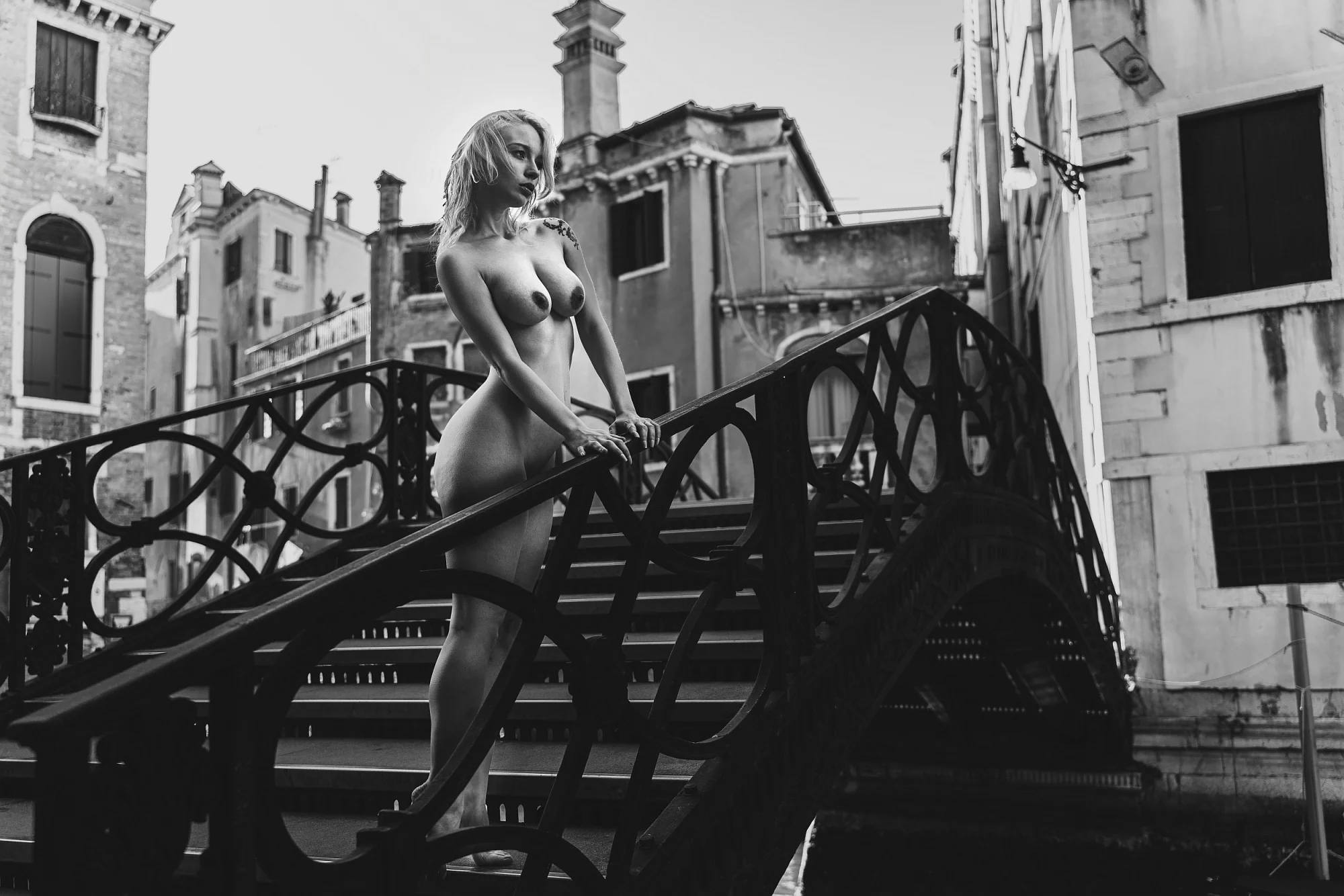
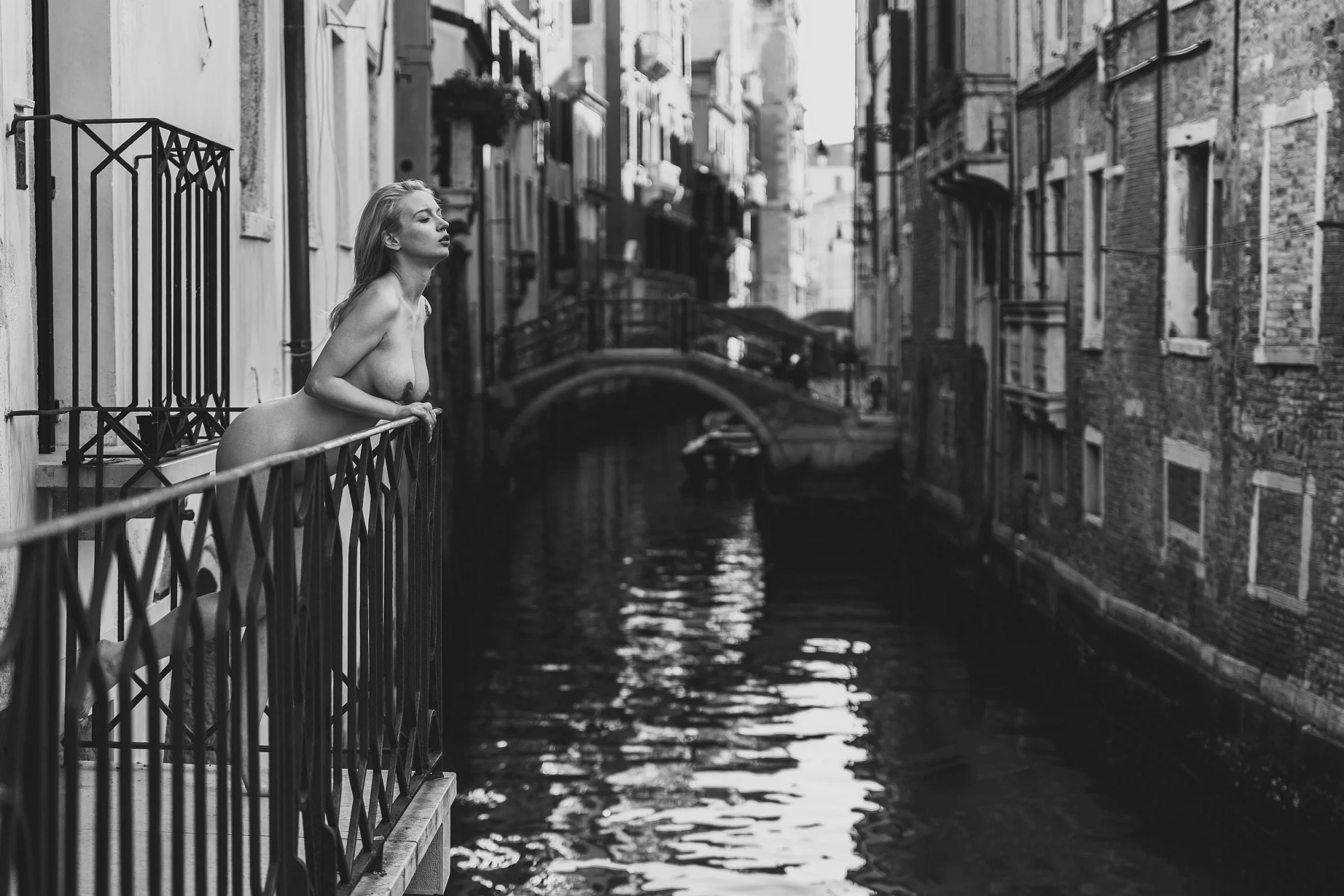
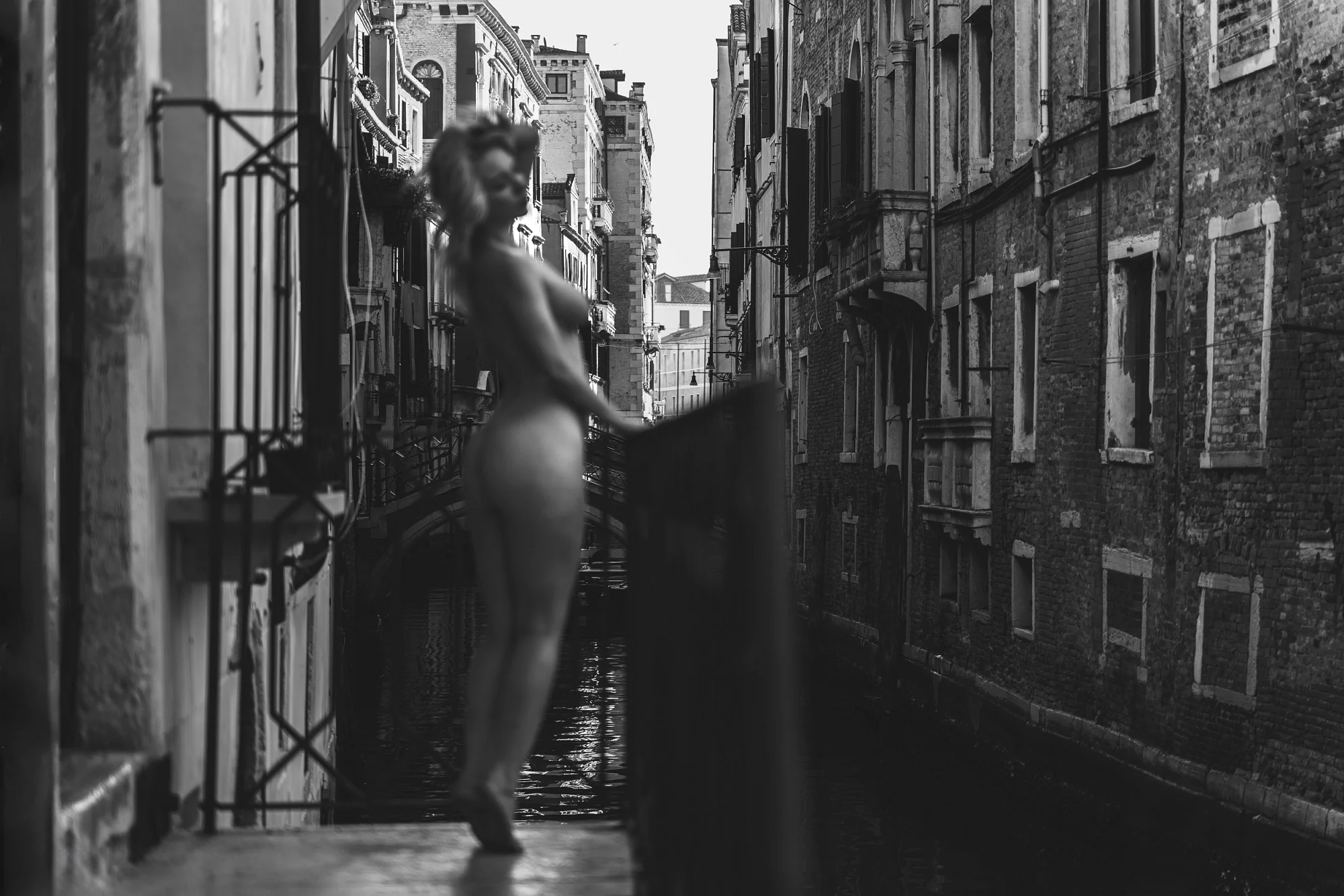
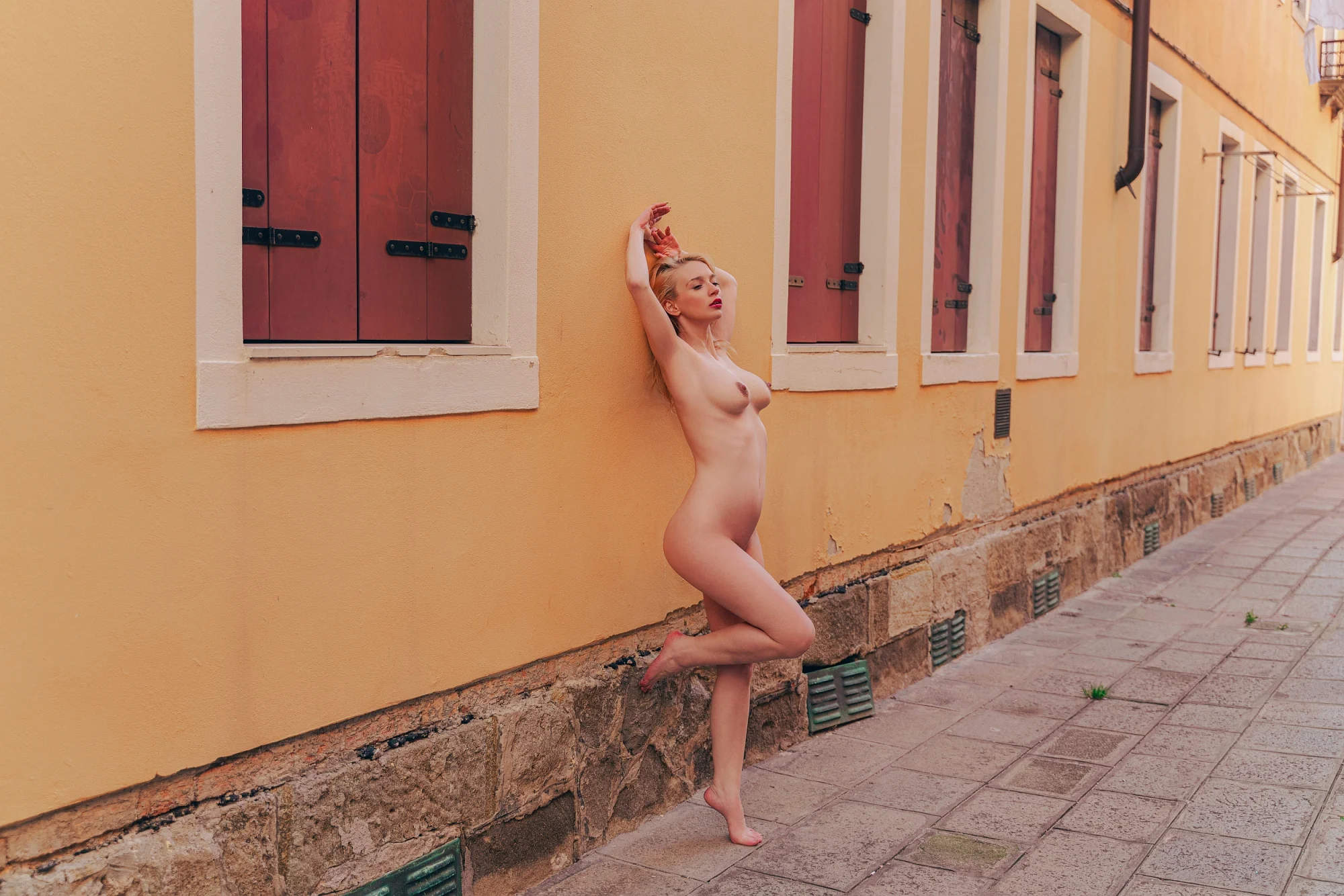
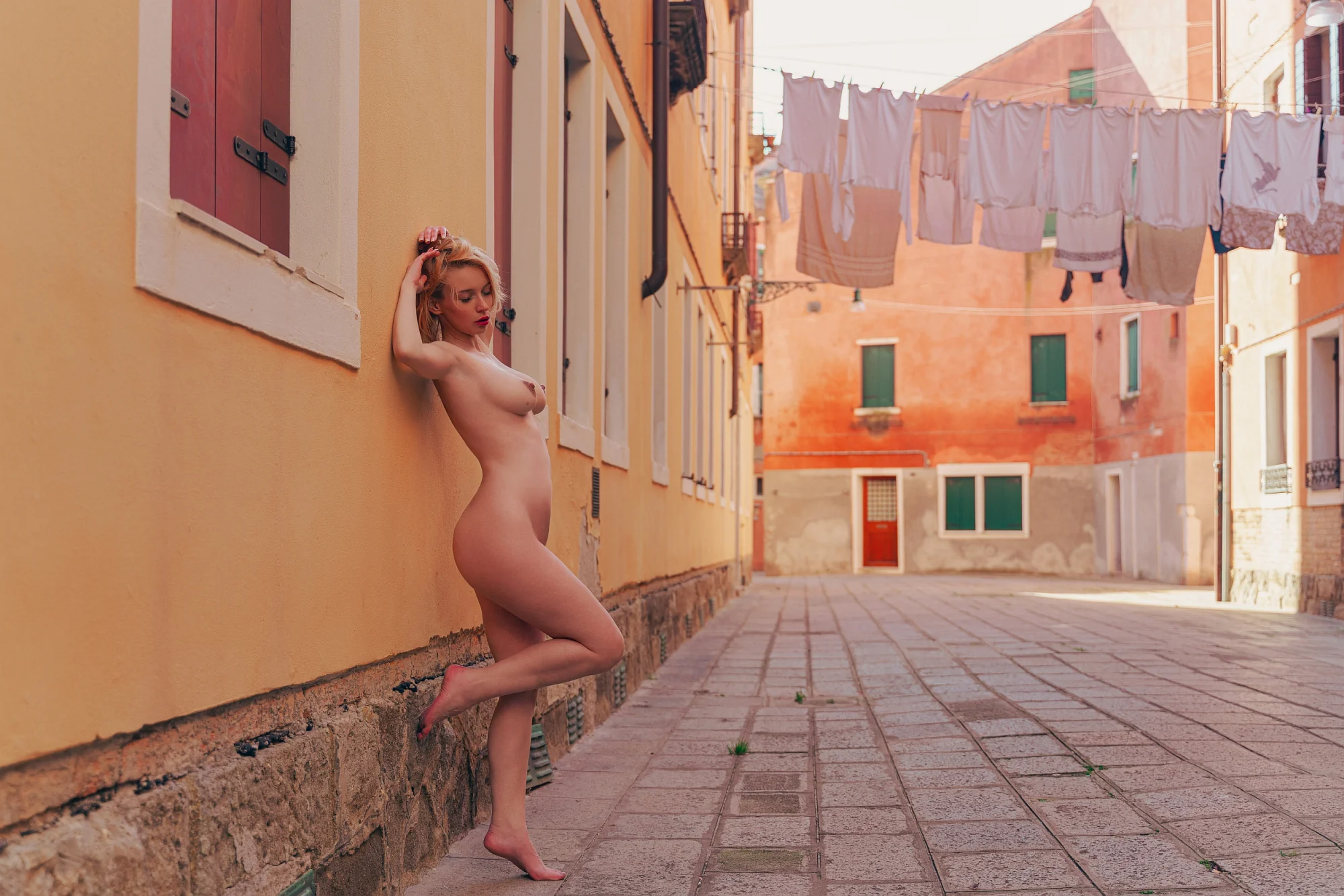
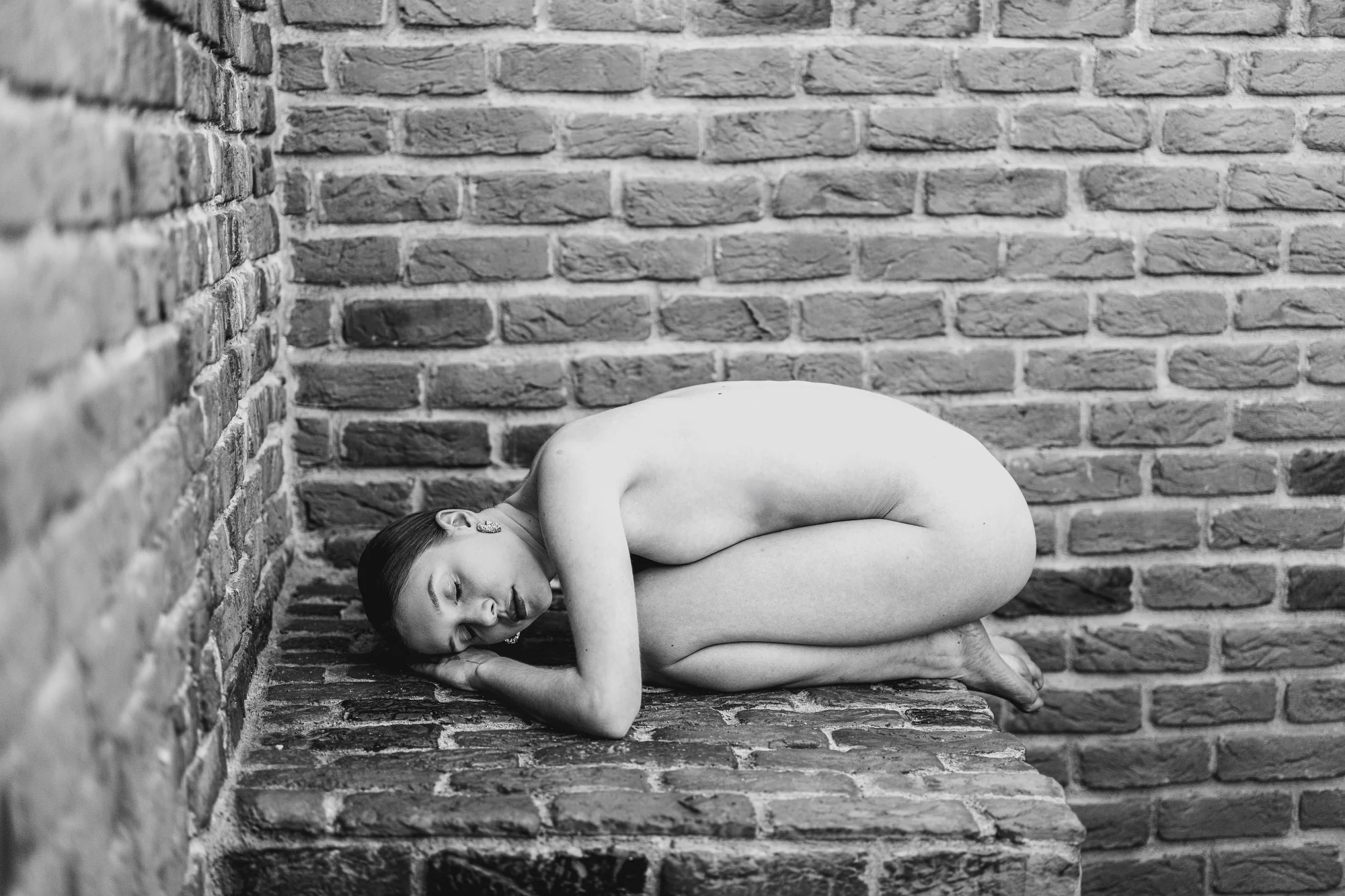
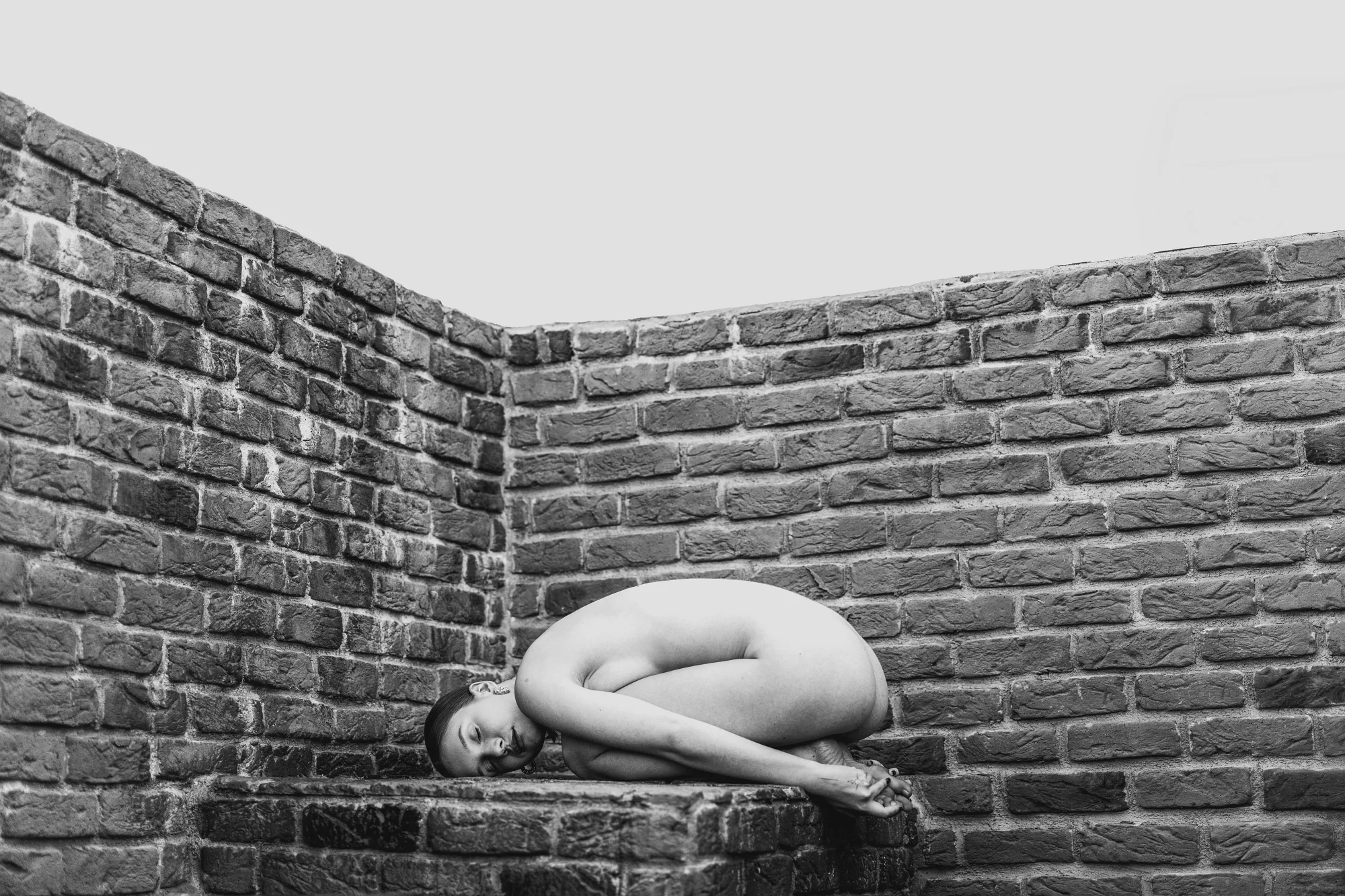
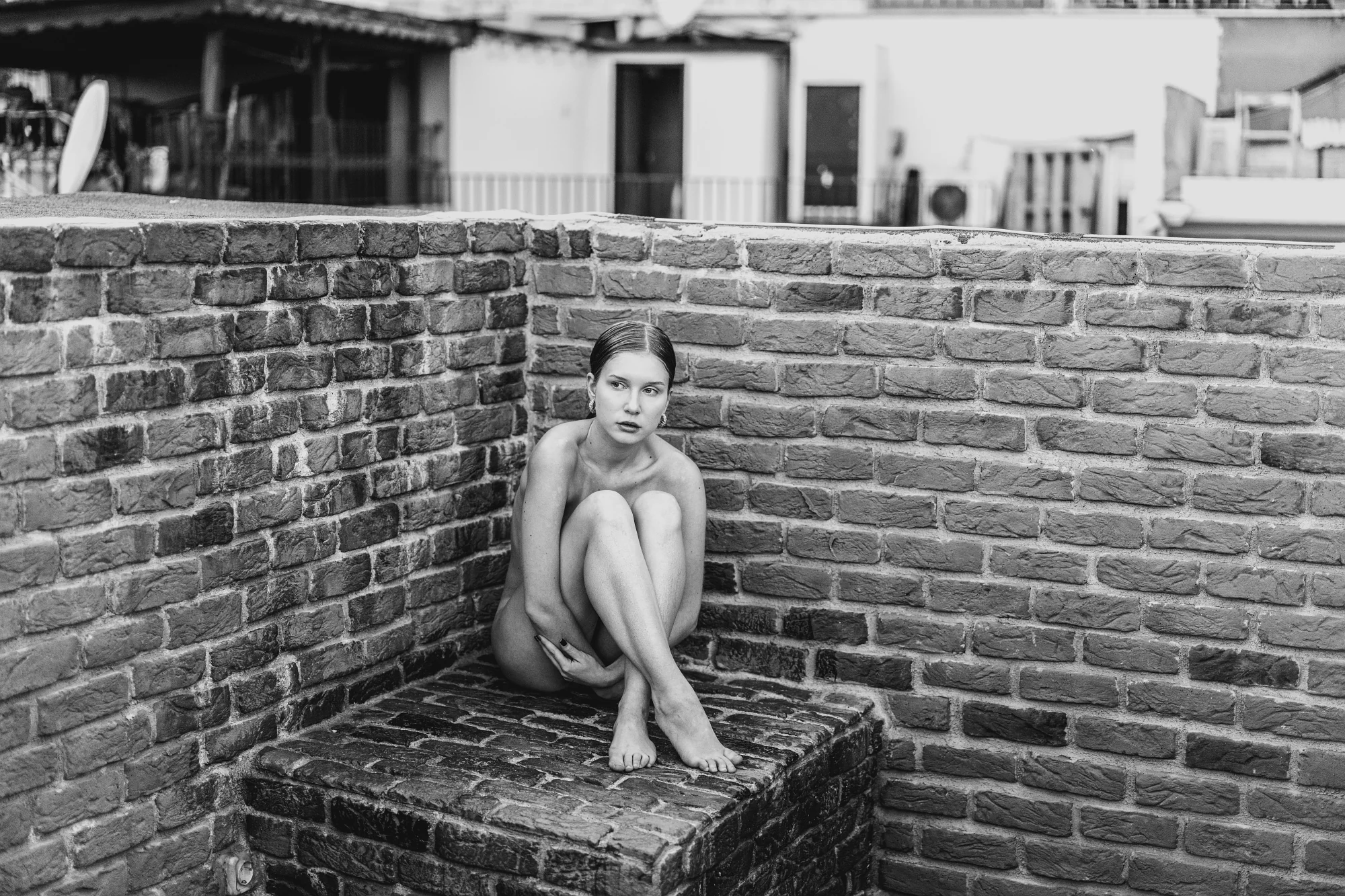
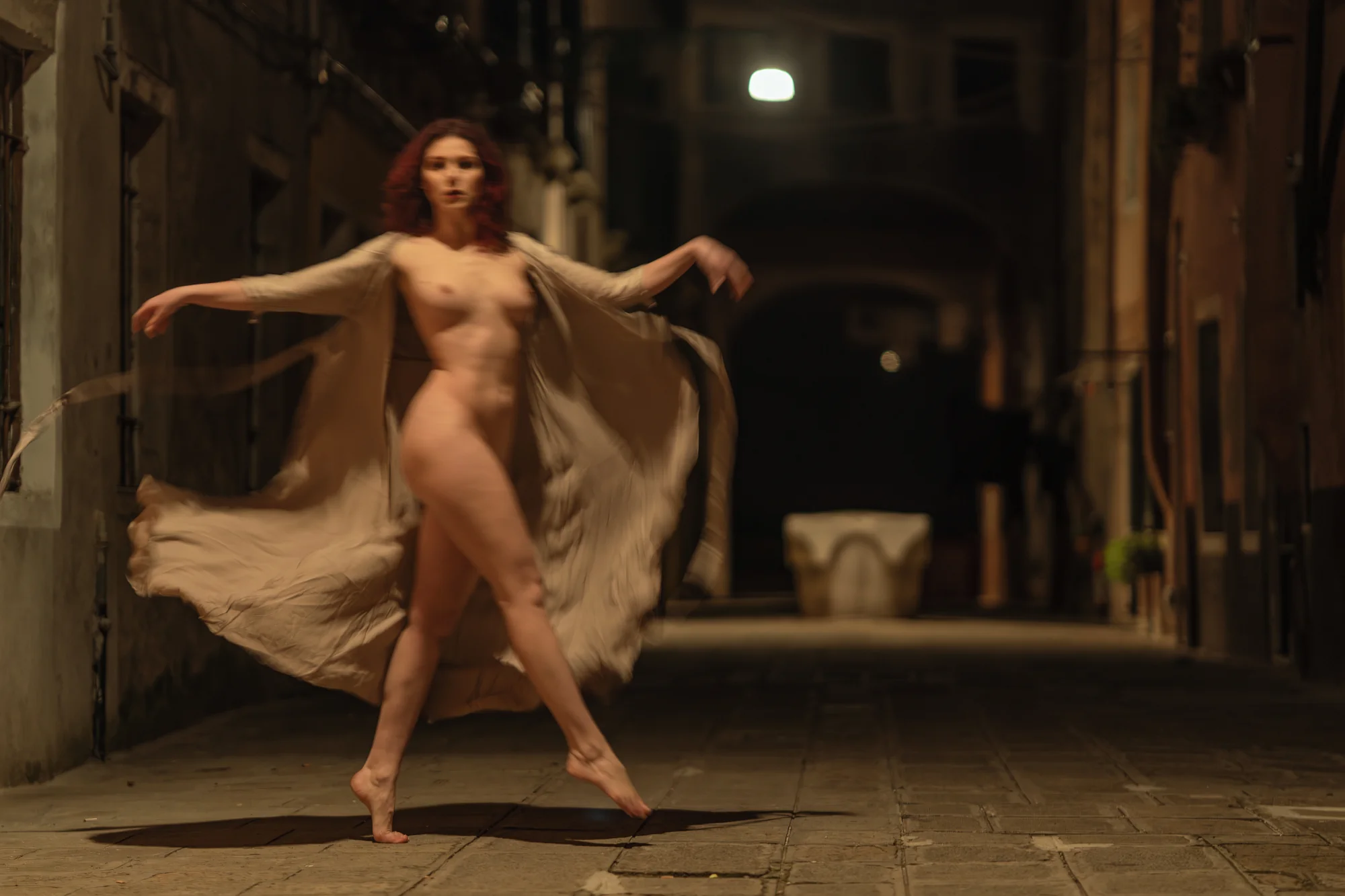
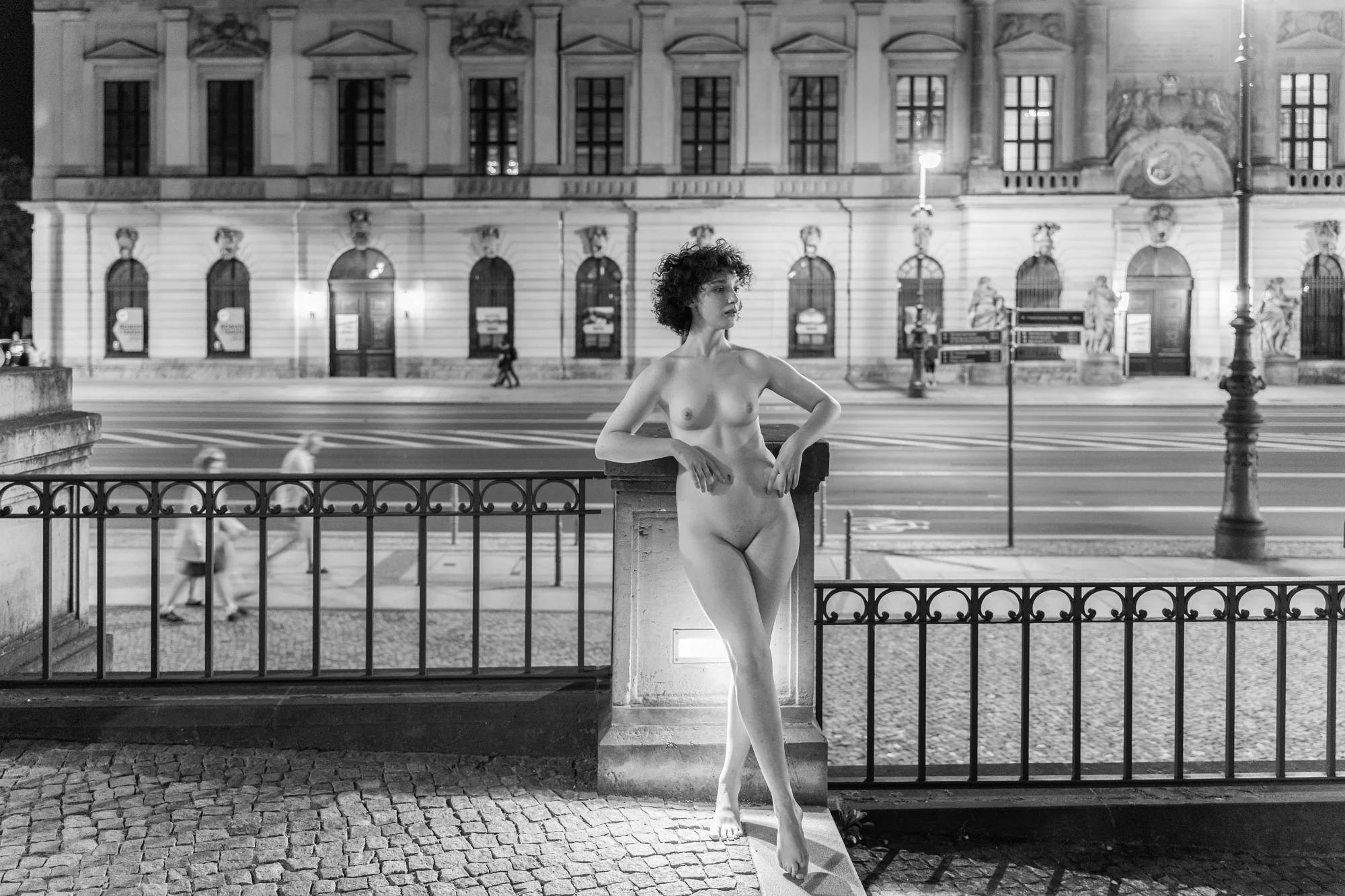
Ailleurs photographie le corps nu dans l’espace public : ruelles, ponts sur les canaux, rues désertes au crépuscule, balcon surplombant une rue, coins de villes et de villages où le public et le privé se rencontrent sans crier gare. La série pose une question simple sur l’existence : que signifie pour un corps d’être là, dénudé, dans un espace partagé avec d’autres ? Il ne s’agit pas de performances ni d’interventions au sens militant du terme. Ces moments sont plus discrets : de brefs instants durant lesquels un corps qui n’a pas sa place est retenu, photographié, puis relâché dans la ville.
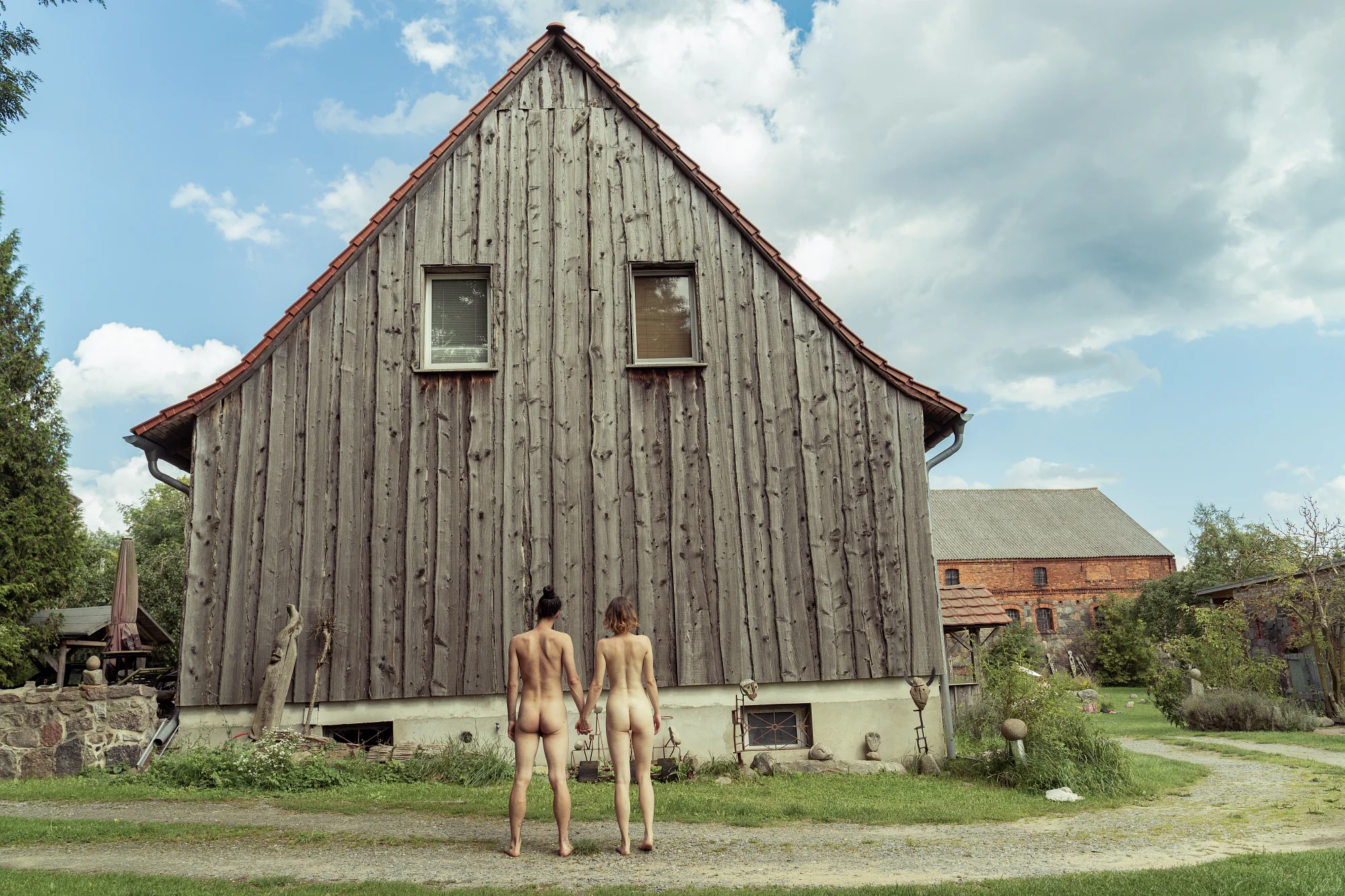
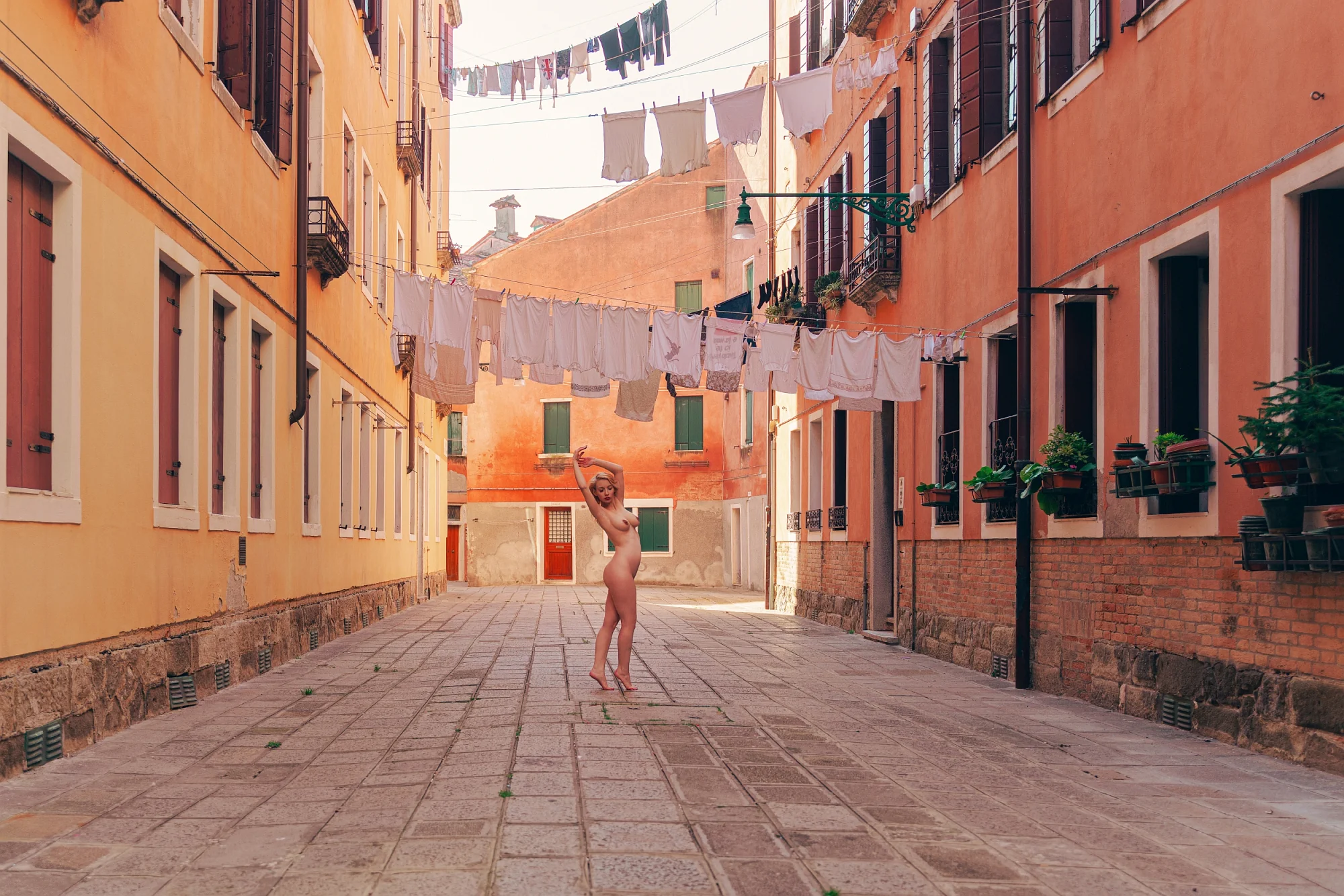
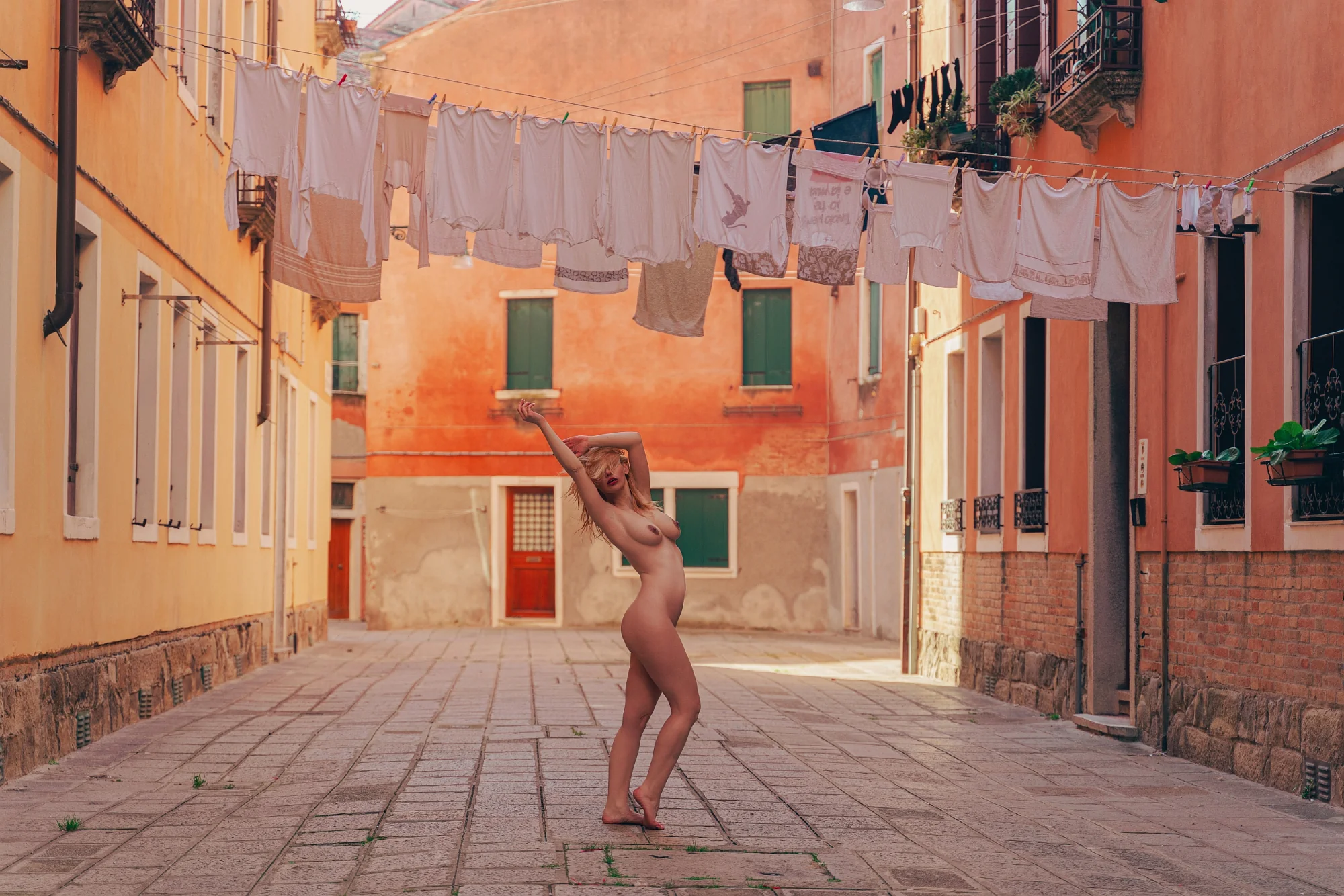
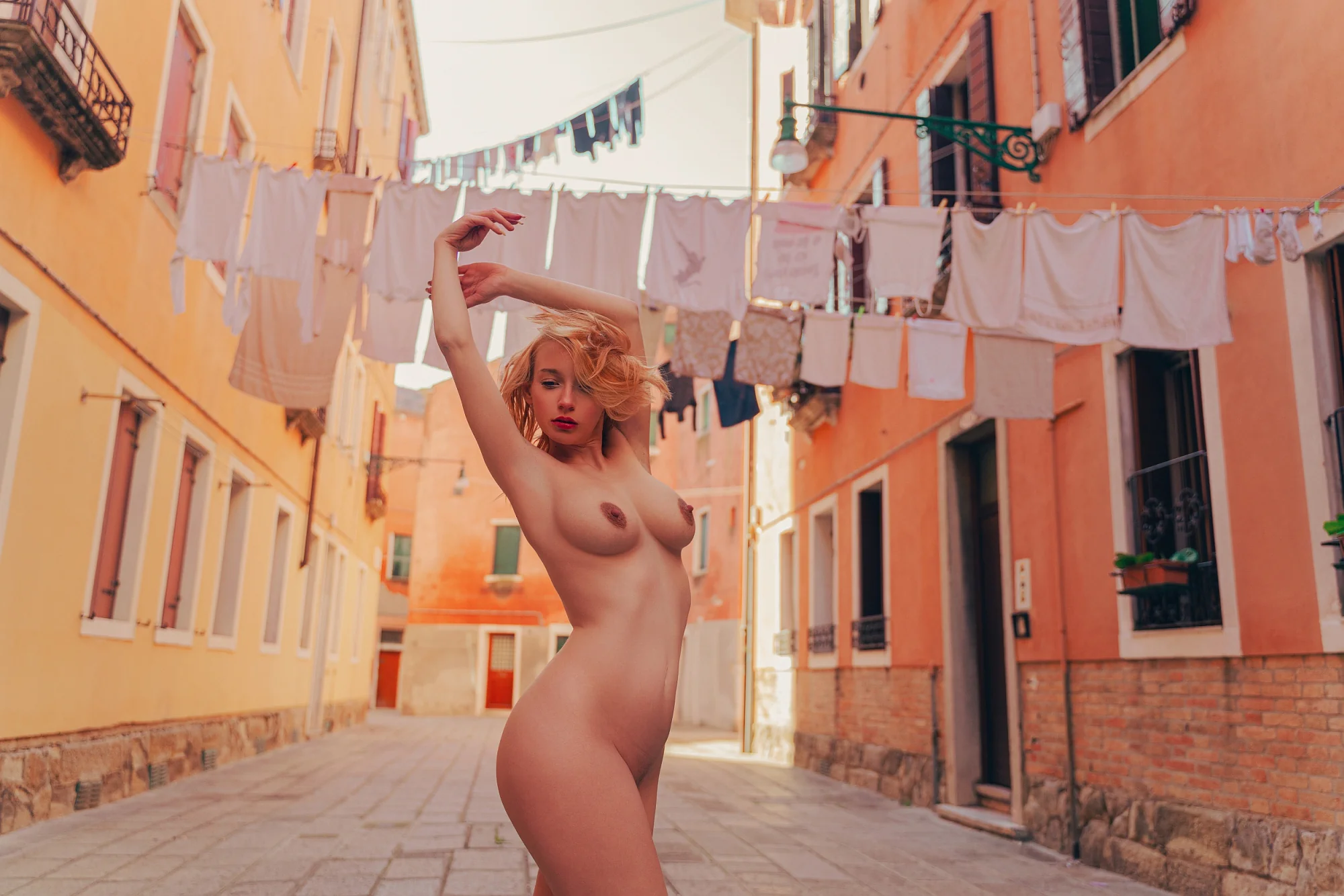
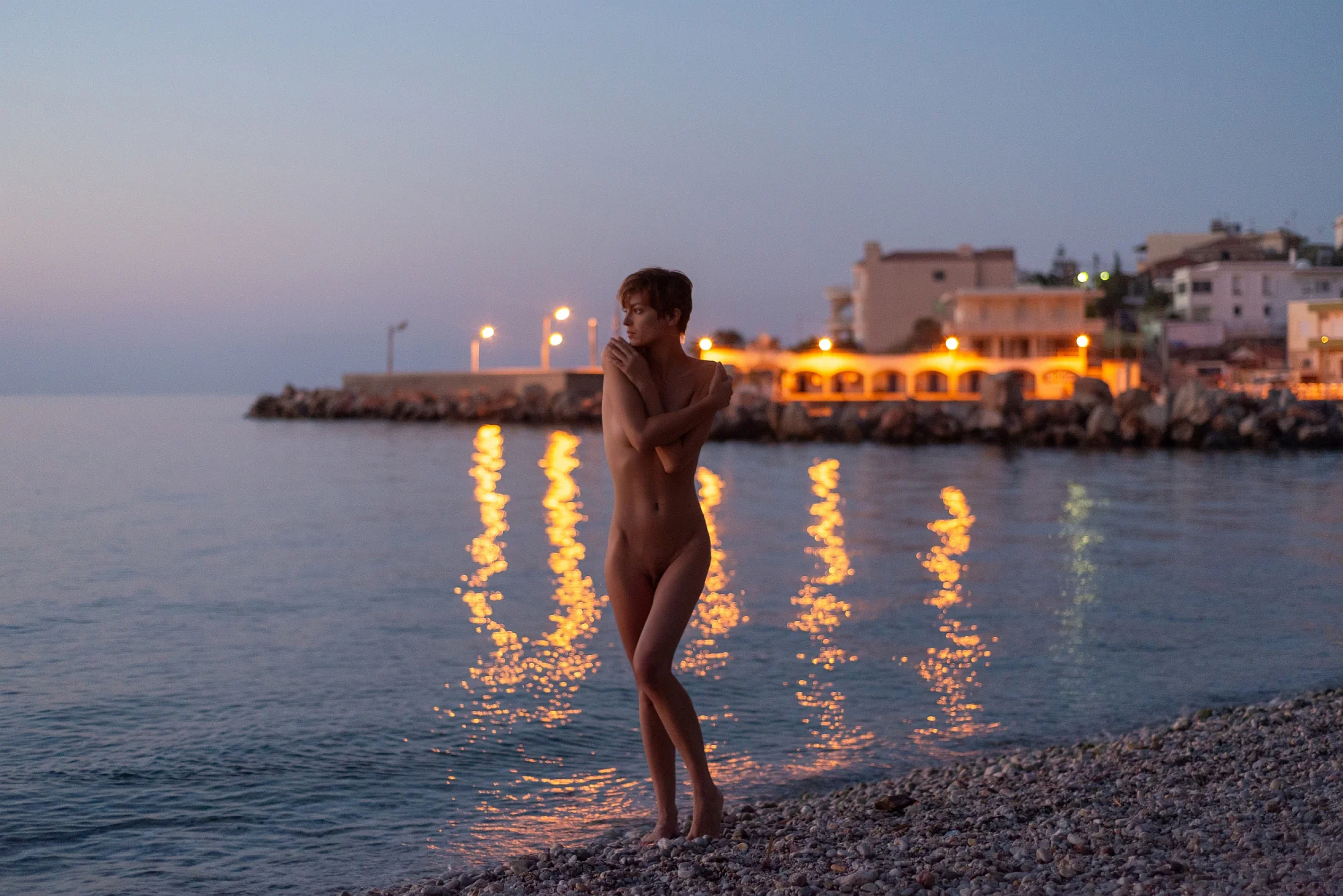
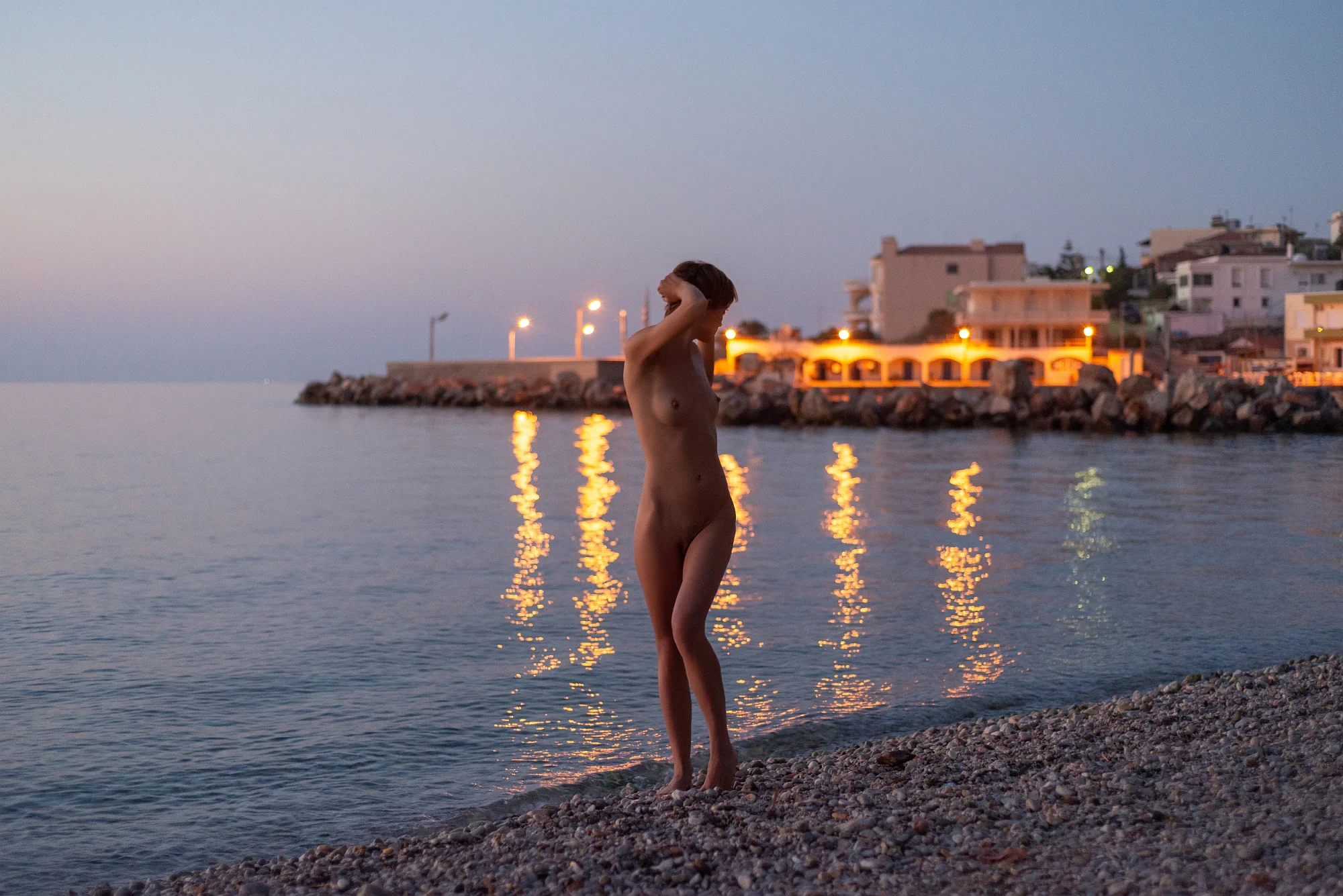
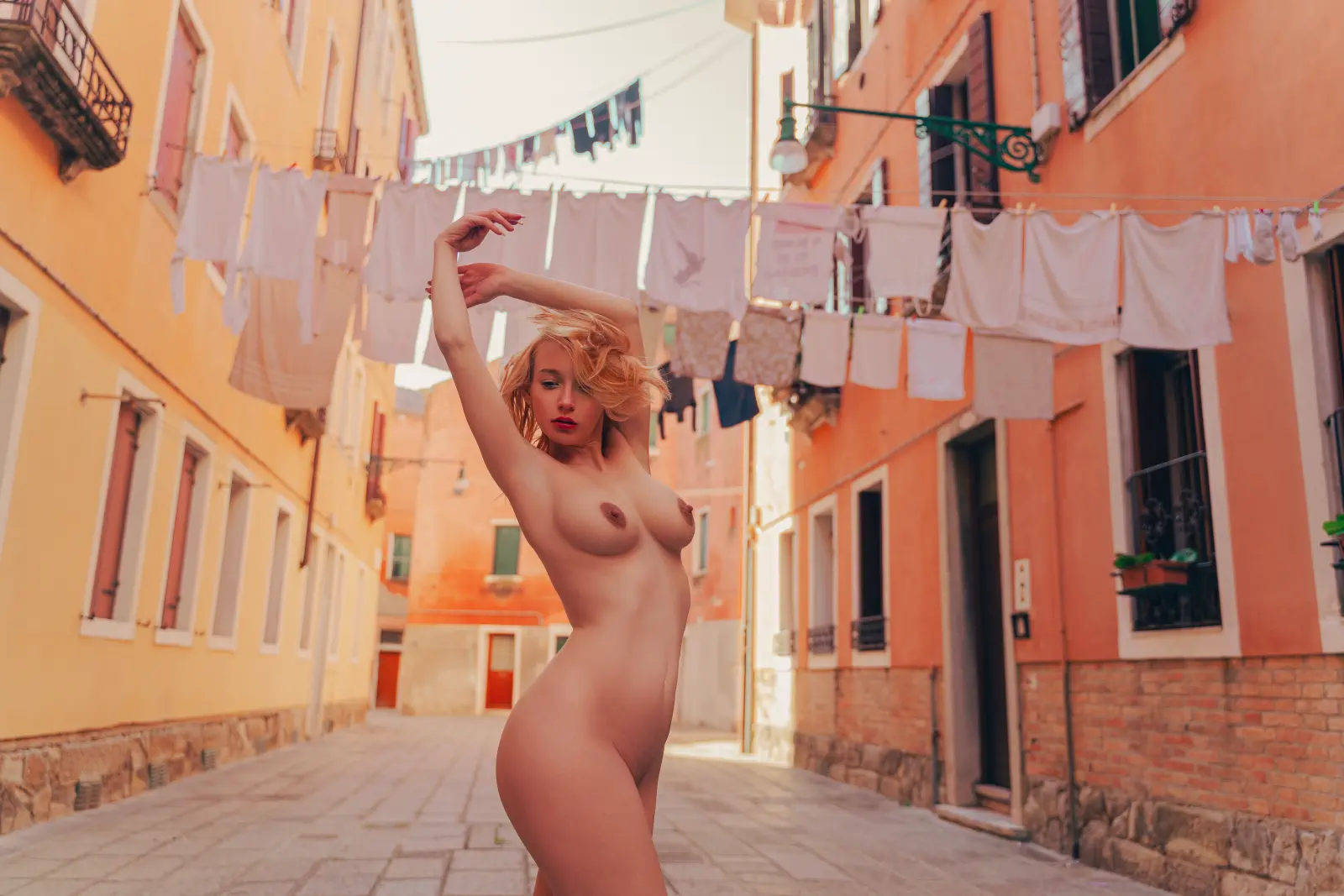
One photograph places a woman at the centre of a narrow street beneath lines of hanging laundry, arms raised as if she had begun to dance, alone between two rows of shuttered windows. Another shows a couple with their backs to the camera, holding hands before the weathered gable of a farmhouse, small and quiet under a wide sky. At night, a figure strides barefoot along a lamplit pavement, a sheer cape lifting behind her, while a passerby continues down the street. At dusk on a shoreline, a woman folds her arms around herself as the lights of the town come on across the water. Freedom, tenderness, exposure, and self-protection sit side by side: the body is present in each image, and the way it is present changes with the place.
Public space runs on rules that are rarely written down: how close strangers stand, where eyes may rest, which parts of a body a street agrees to see. An unclothed body makes all of them visible at once and changes the meaning of everything around it. A pavement becomes a border, a window becomes a witness, a passerby becomes part of the photograph's tension.
La série s'inscrit dans la tradition de la flâneur, the figure who walks the city without destination, reading its surfaces, but it inverts the flâneur's politics. Baudelaire's and Benjamin's flâneur observes from the safety of clothing and class. That figure was also a man. In the nineteenth-century city, a woman walking alone and without purpose risked being taken for a "public woman", the polite name for a prostitute, and the freedom to wander and look was largely a male one. The subject of Ailleurs is exposed: literally, and to the quiet violence of being seen where seeing is not expected. When the body in the street is a woman's, that history is in the frame. The series stays inside this exposure.
The photographs are staged with care, and most are made quickly, so as not to disturb people passing by. Every session rests on the participant's consent, with the freedom to stop at any moment. Locations are chosen for their architectural specificity: the narrow cut of a pastel-walled street, the geometry of a canal embankment, the symmetry of a courtyard passage. The body enters these spaces and takes a posture that is neither decorative nor defiant. A nude figure in public space produces a different kind of photograph from a nude in the studio: the environment becomes a collaborator, and sometimes an adversary.
Ces références s'inscrivent dans plusieurs courants. Les séances de nu collectif organisées par Spencer Tunick considèrent le corps comme un signe politique collectif ; Ailleurs son travail se situe à l'échelle inverse, avec un ou deux corps, une rue, et sans spectacle. Francesca Woodman photographiait le nu dans des pièces abandonnées, des corps à demi effacés par une longue exposition ; Ailleurs transpose une partie de cette atmosphère fantomatique à l'extérieur, dans les rues animées. Guy Debord, dans son dérive, la pratique situationniste de la dérive urbaine sous-tend cette méthode, bien qu’ici la dérive vienne se poser sur un corps qui est simplement là, dans un lieu où on ne l’attend pas.
La photographie dégage une impression de calme ; pourtant, le moment où elle a été prise ne l'était pas. Derrière chaque personnage se cache le rythme d'une ville qui aurait pu prendre un tournant à tout moment, et ce rythme persiste dans l'image même après sa disparition.
Œuvres choisies