Mélancolie
Le corps dans le poids de la lumière lente
Melancholy as a weight the body carries.
Mélancolie Elle photographie une température particulière de la vie intérieure et la déchiffre à travers le corps. Le deuil et la dépression ont leurs propres langages visuels et leurs propres photographes. La mélancolie est plus discrète et plus ancienne : un état dans lequel le corps devient plus lent, plus lourd, plus attentif aux surfaces qui l’entourent. Dans cette série, ce poids façonne la posture. Les têtes s’abaissent, les yeux se ferment ou se détournent, les membres se replient sur eux-mêmes, et le corps s’appuie sur tout ce qui se trouve à proximité, comme s’il ne pouvait plus se porter tout seul.
Grief usually has an occasion and a direction: something has been lost, and mourning moves, however slowly, toward an end. Melancholy has duration without an event. It needs no cause to begin and gives no sign of when it will finish, so it settles into rooms, afternoons, and habits. For a medium built on the instant, it is one of the hardest states to photograph.
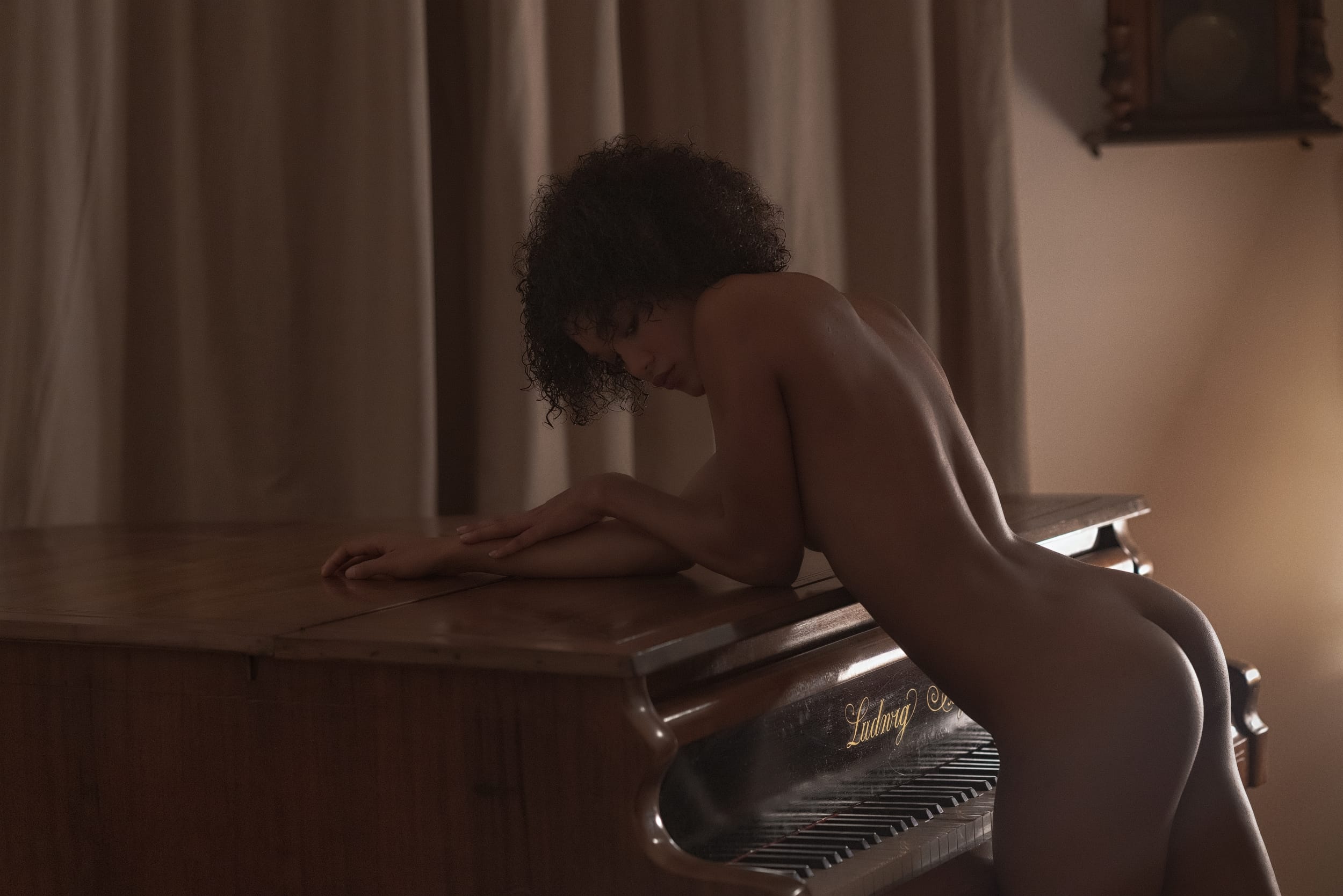
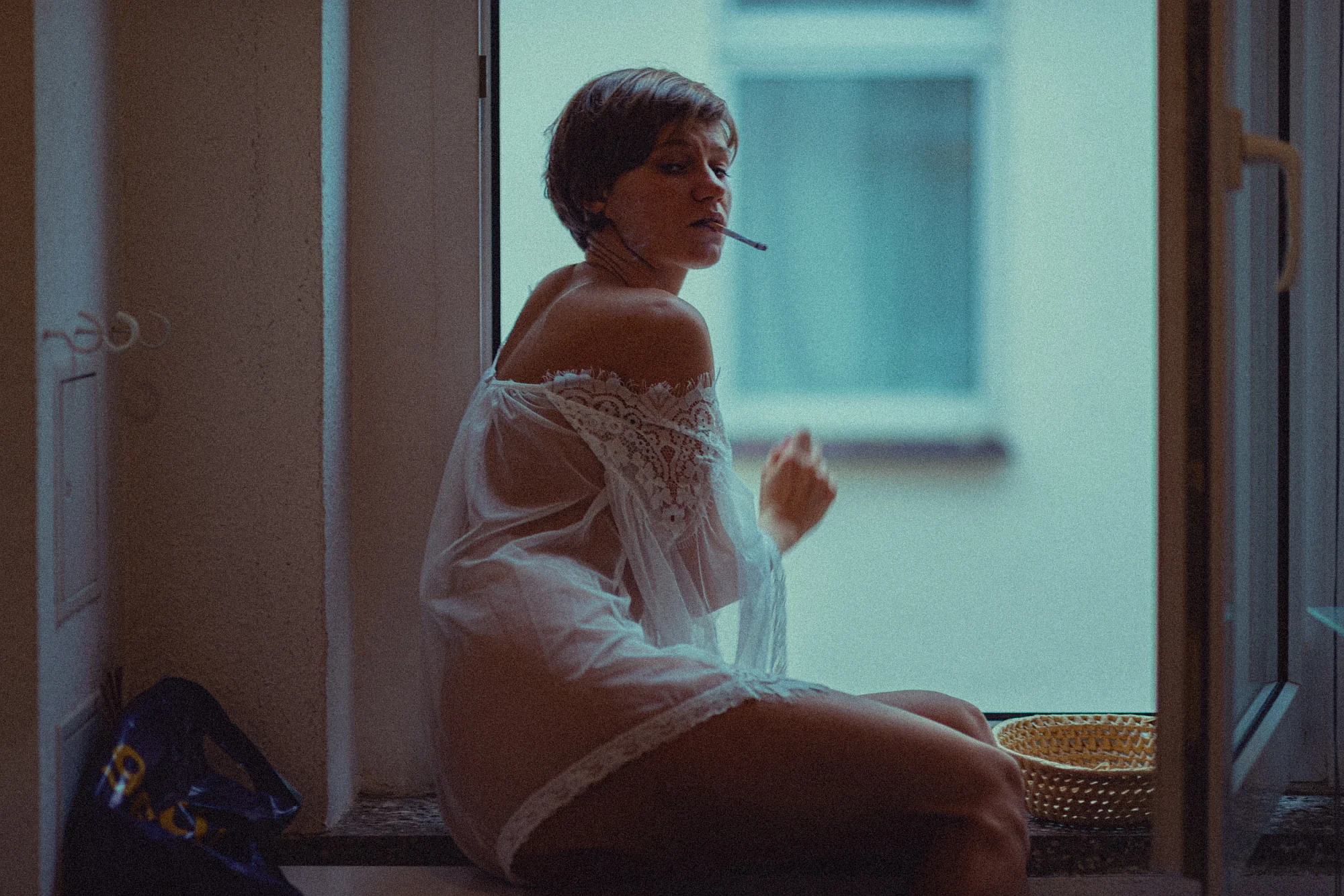
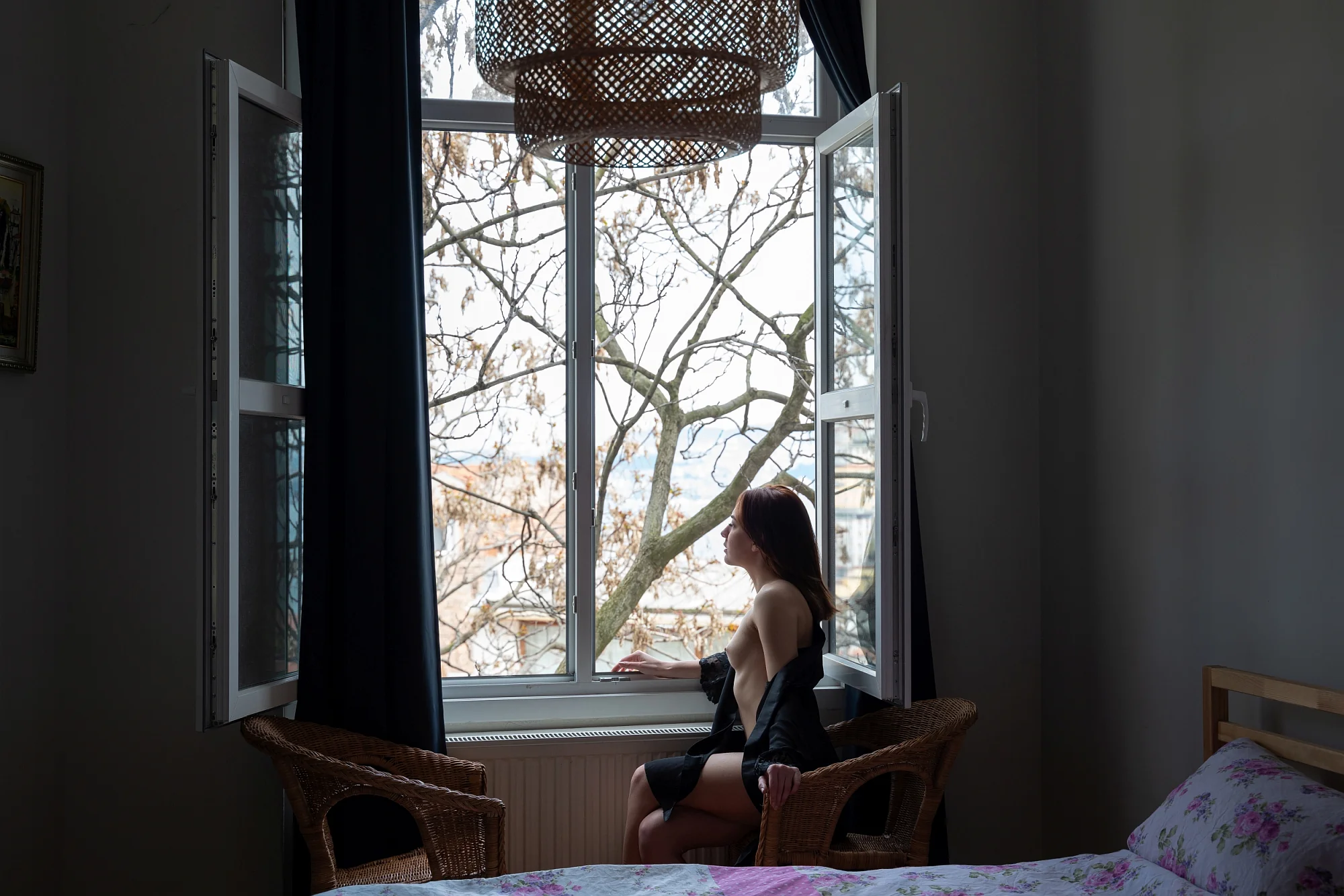
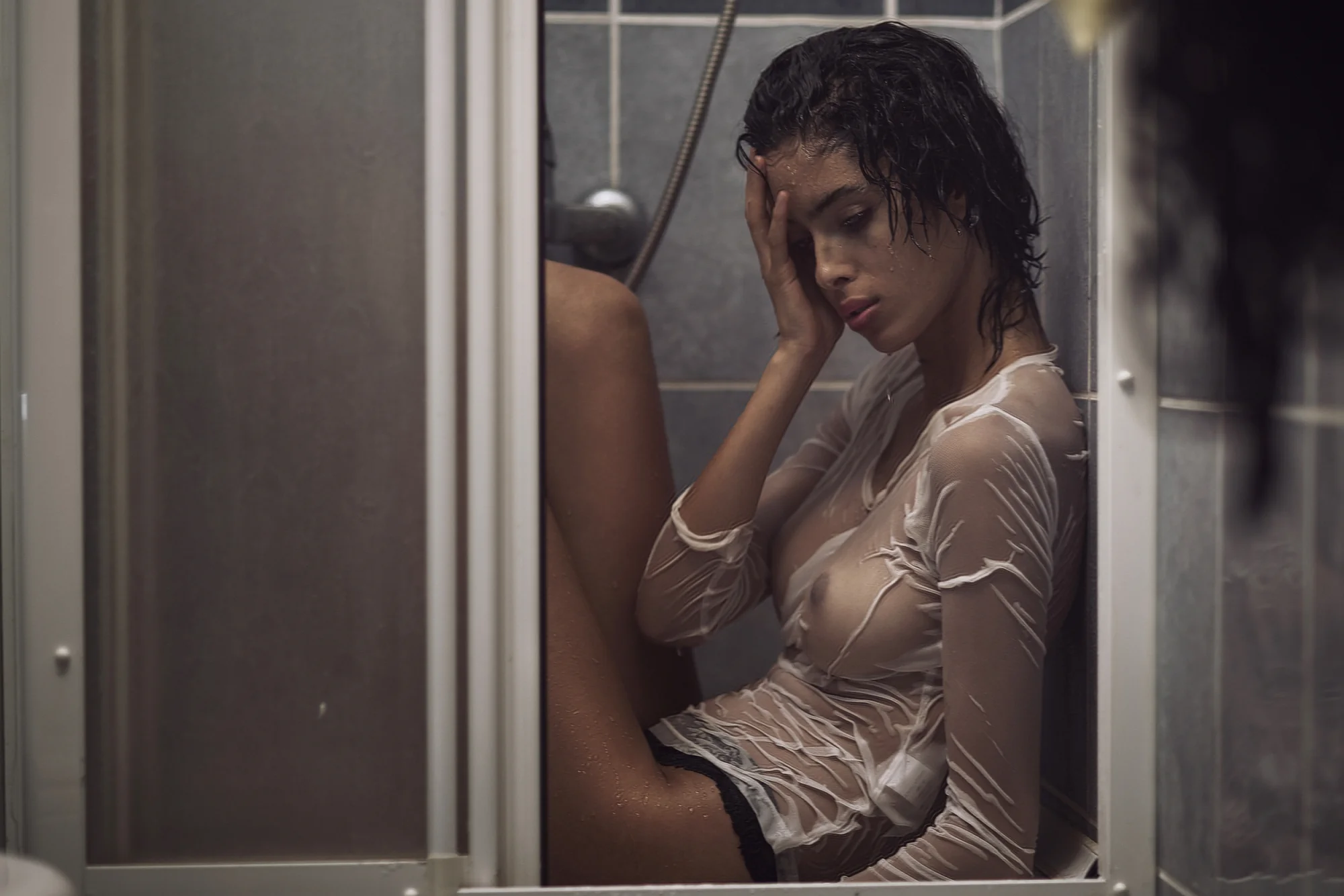
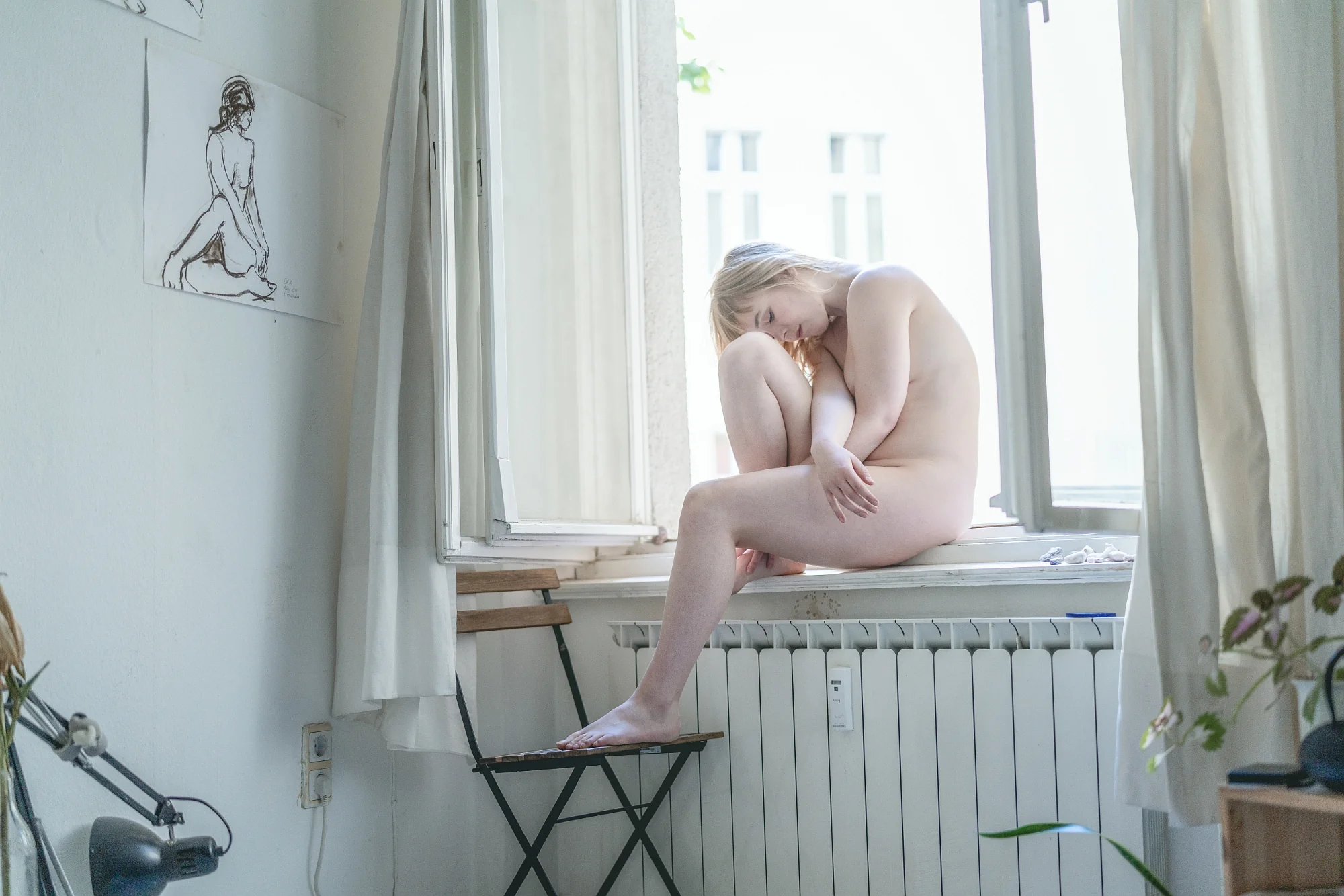
Sur une photographie, une femme est assise, recroquevillée sur le rebord d’une fenêtre, dans la pâle lumière du jour, la joue posée sur son genou et les yeux fermés, tandis que la rue, dehors, continue de vivre sans elle. Sur une autre, une femme est penchée au-dessus d’un piano, la tête baissée, comme si l’instrument la soutenait. Une personne est assise sur le sol d’une douche, un t-shirt mouillé collé à la peau, le regard perdu dans le vide. Sur un vieux lit en fer, une femme est allongée, les bras derrière la tête et le regard tourné vers la fenêtre. La nuit, une femme est adossée à un mur dans une rue déserte, les yeux fermés, une main pressée contre sa poitrine.
La tradition iconographique remonte à très loin. L'œuvre d'Albrecht Dürer, Melencolia I (1514) gave Western art its most familiar image of the melancholic temperament: a seated figure surrounded by the tools of geometry and making, all of them left idle. Renaissance thought, following Marsilio Ficino, also linked melancholy with intellectual and creative gifts. Sigmund Freud's essay Deuil et mélancolie (1917) en a fait une approche psychanalytique, un moyen de s'accrocher à ce qui a été perdu. Julia Kristeva, dans Soleil noir (1987), une mélancolie à la limite du langage, là où la parole s'enlise et où l'art prend le relais pour nommer la perte. Mélancolie belongs to this long tradition without illustrating it. Its argument is made in posture and expression: the head Dürer's figure rests on her fist, returned to living bodies.
En Mélancolie the stillness belongs to the figure, turned inward and keeping its weight to itself. The viewer is admitted to a mood and offered nothing more.
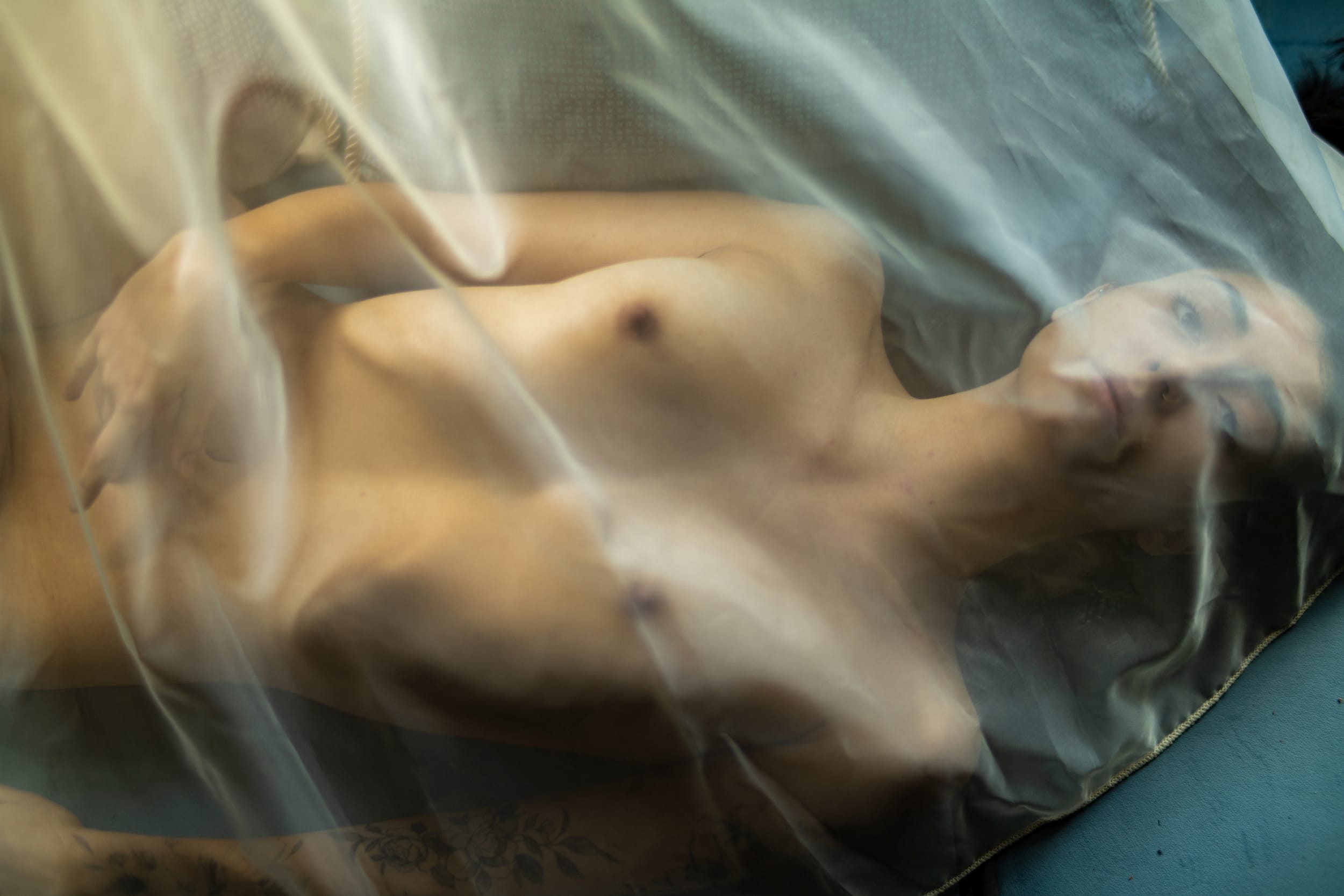
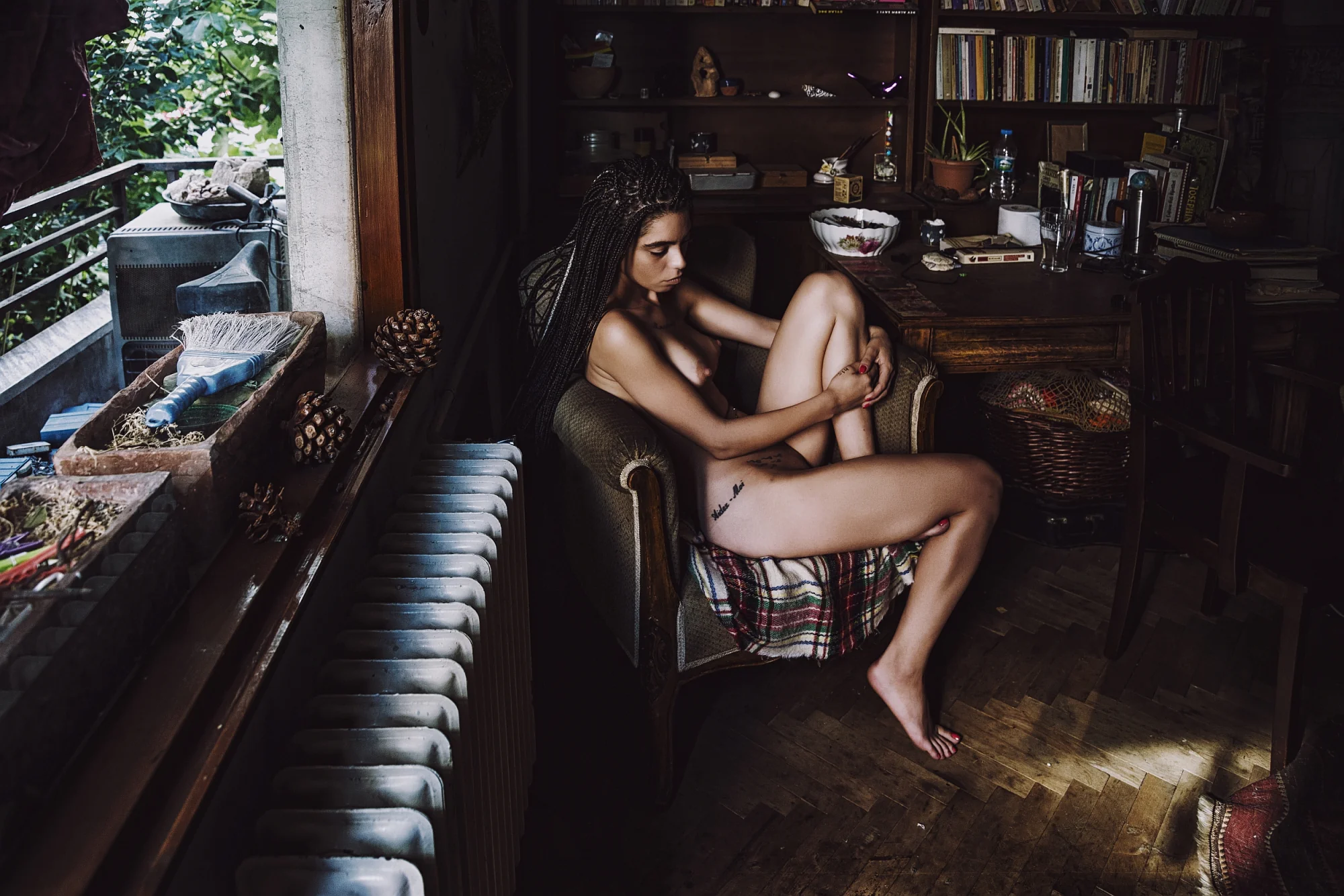
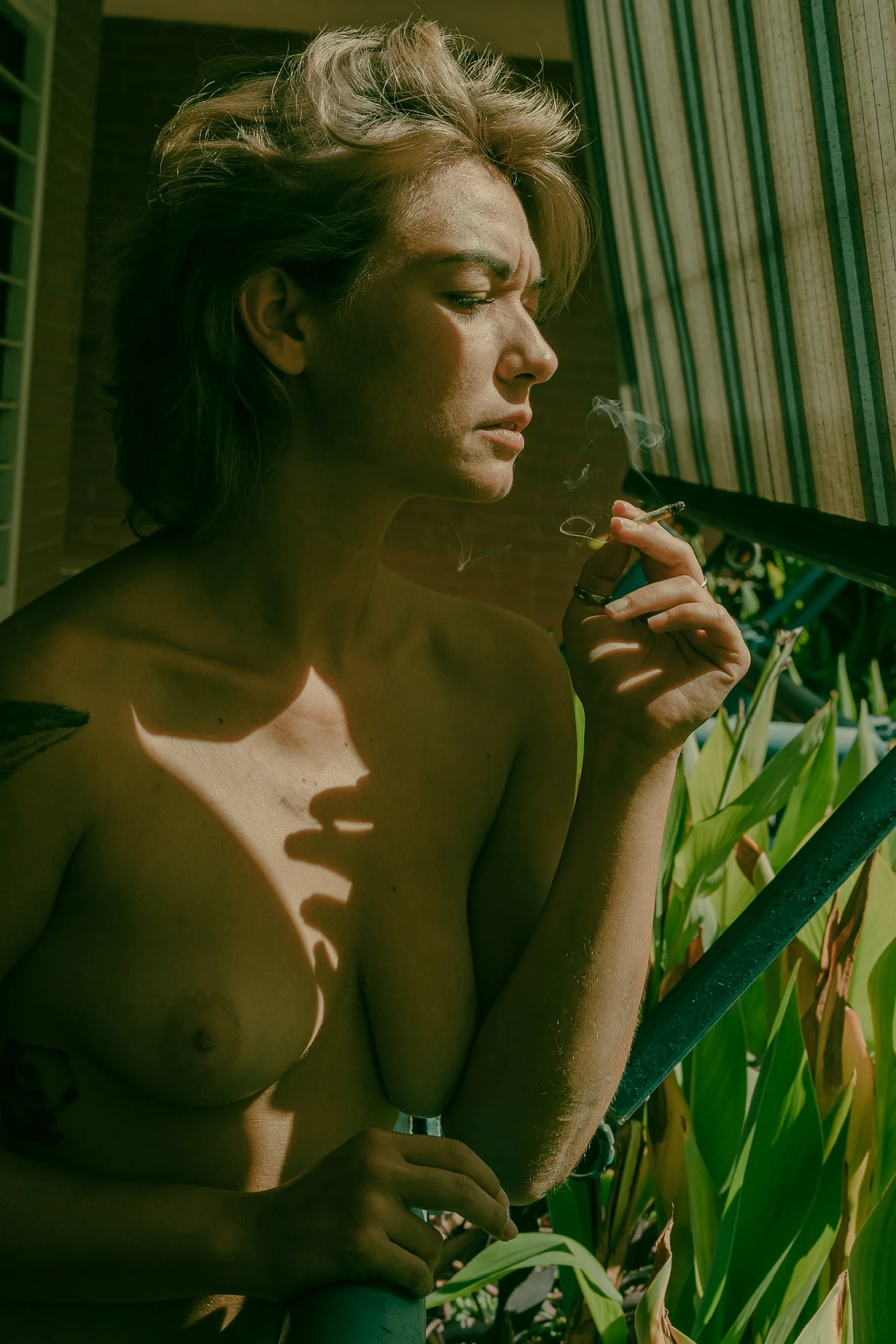
The visual grammar of the series depends on slow light: late afternoon light slipping past heavy curtains, lamp light in a room no one has fully entered, smoke from a single source catching a sliver of daylight, the distant glow of a street at night. The light seems to have arrived reluctantly. The approach is closer to Vilhelm Hammershøi's Copenhagen interiors or Edward Hopper's hotel rooms than to the drama of chiaroscuro: light that describes time more than form, and makes a place feel as if it has been waiting.
The melancholic body has withdrawn from the economy of gesture. Clothing would give it a direction, a social context, an errand; in the shower photograph, the wet shirt no longer serves any of them. Draped fabric, smoke, a piano's dark wood, an empty corner: these surround the figure as the material conditions of the mood, not as props.
The expressions in these photographs arrive slowly, out of long sessions in which very little happens. A subject adjusts a shoulder, shifts a glance, breathes out.
Œuvres choisies