Melancholia
The Body in the Weight of Slow Light
Melancholy as a weight the body carries.
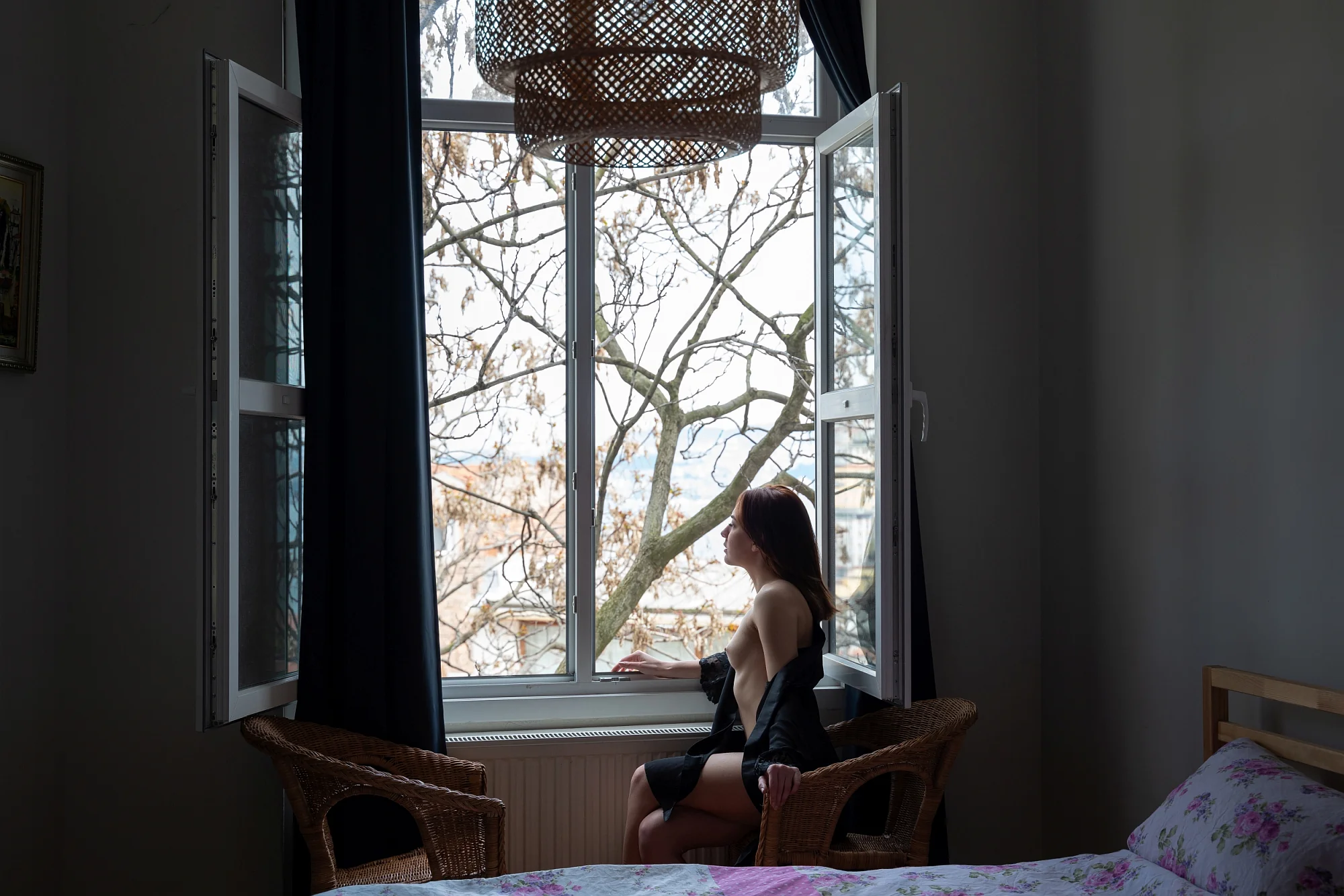
Melancholia photographs a specific temperature of interior life, and reads it in the body. Grief and depression have their own visual languages and their own photographers. Melancholy is quieter and older: a condition in which the body becomes slower, heavier, more attentive to the surfaces around it. The series lets that weight shape the posture. Heads lower, eyes close or turn away, limbs fold inward, and the body leans on whatever is near, as if it could no longer carry itself alone.
Grief usually has an occasion and a direction: something has been lost, and mourning moves, however slowly, toward an end. Melancholy has duration without an event. It needs no cause to begin and gives no sign of when it will finish, so it settles into rooms, afternoons, and habits. For a medium built on the instant, it is one of the hardest states to photograph.
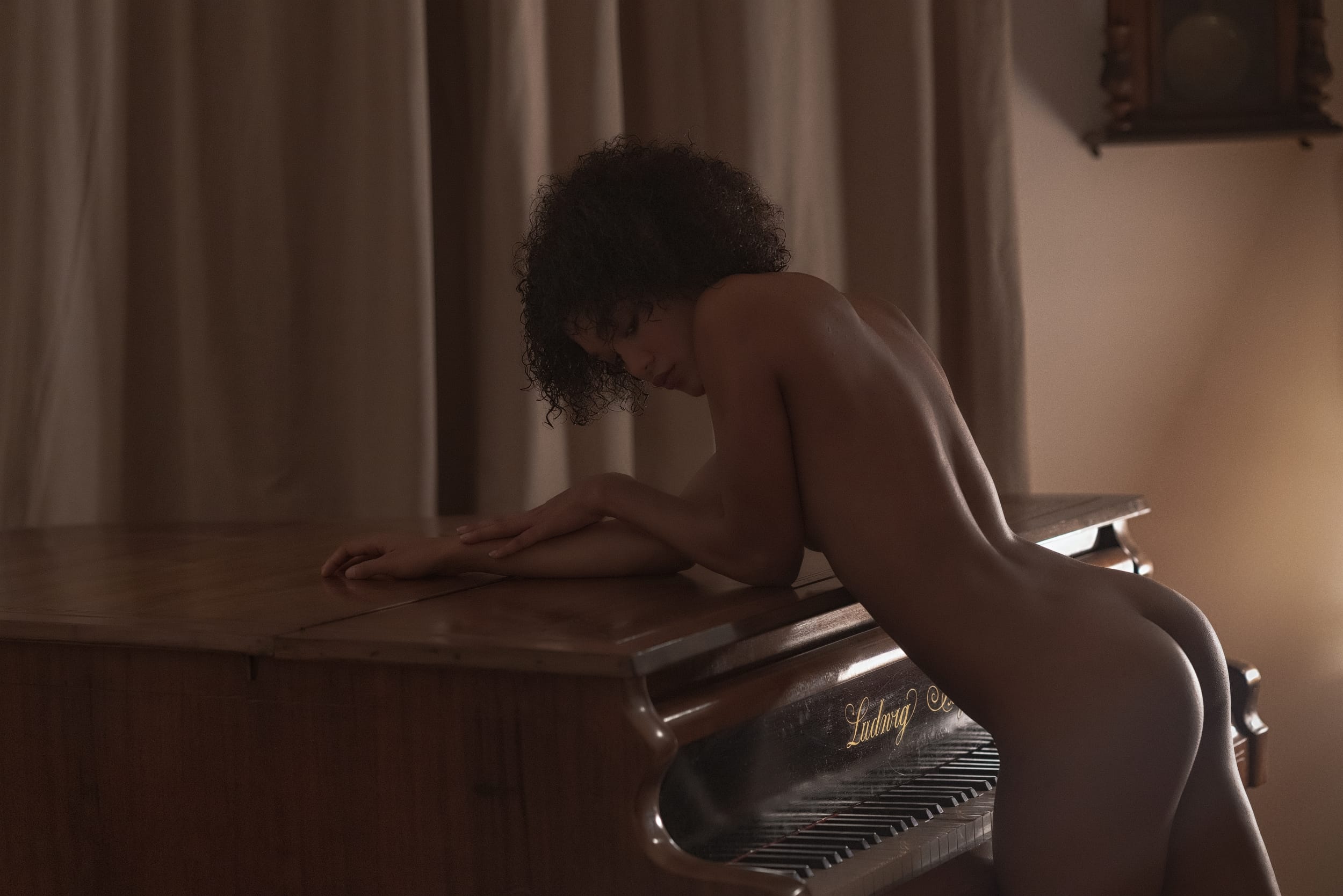
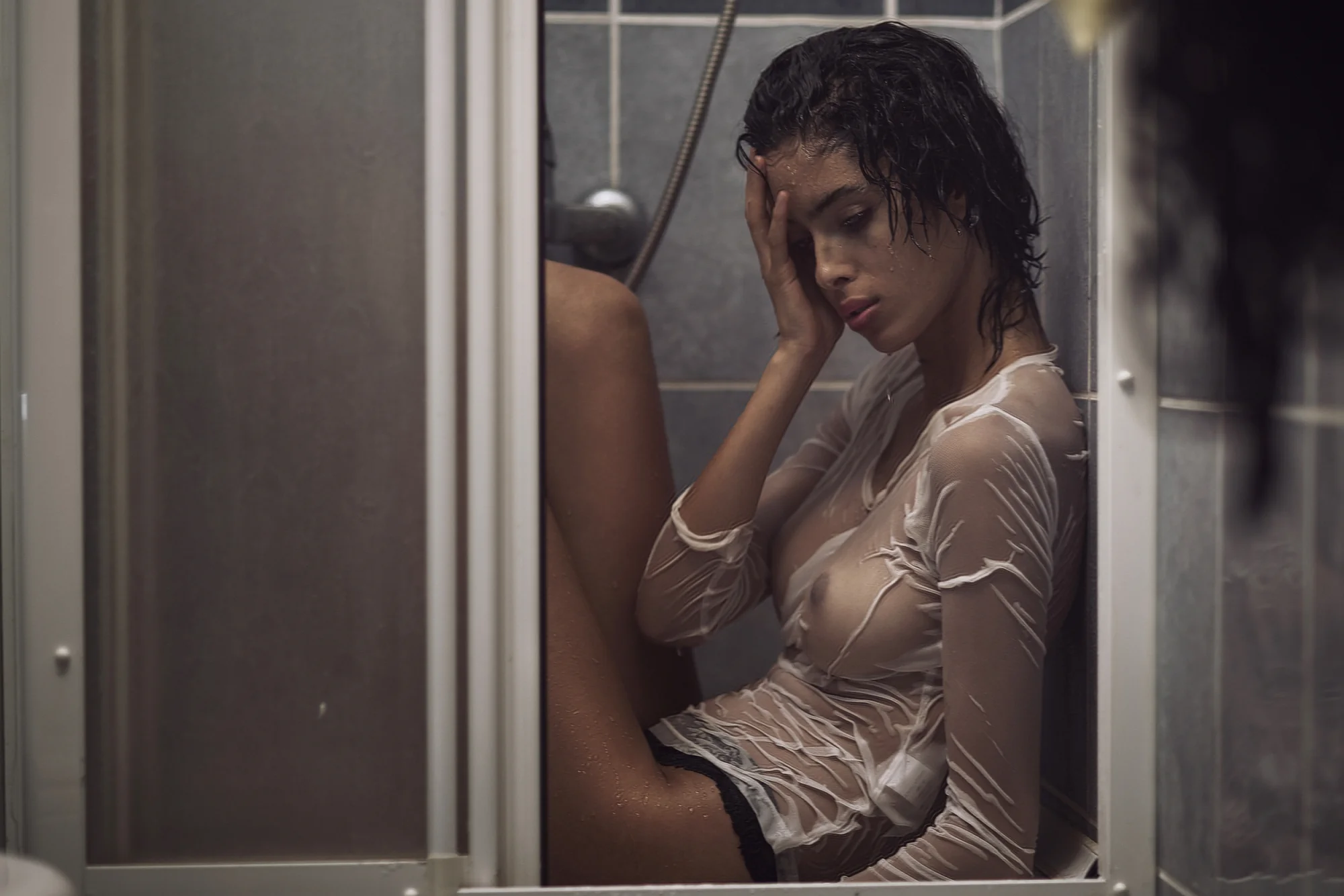
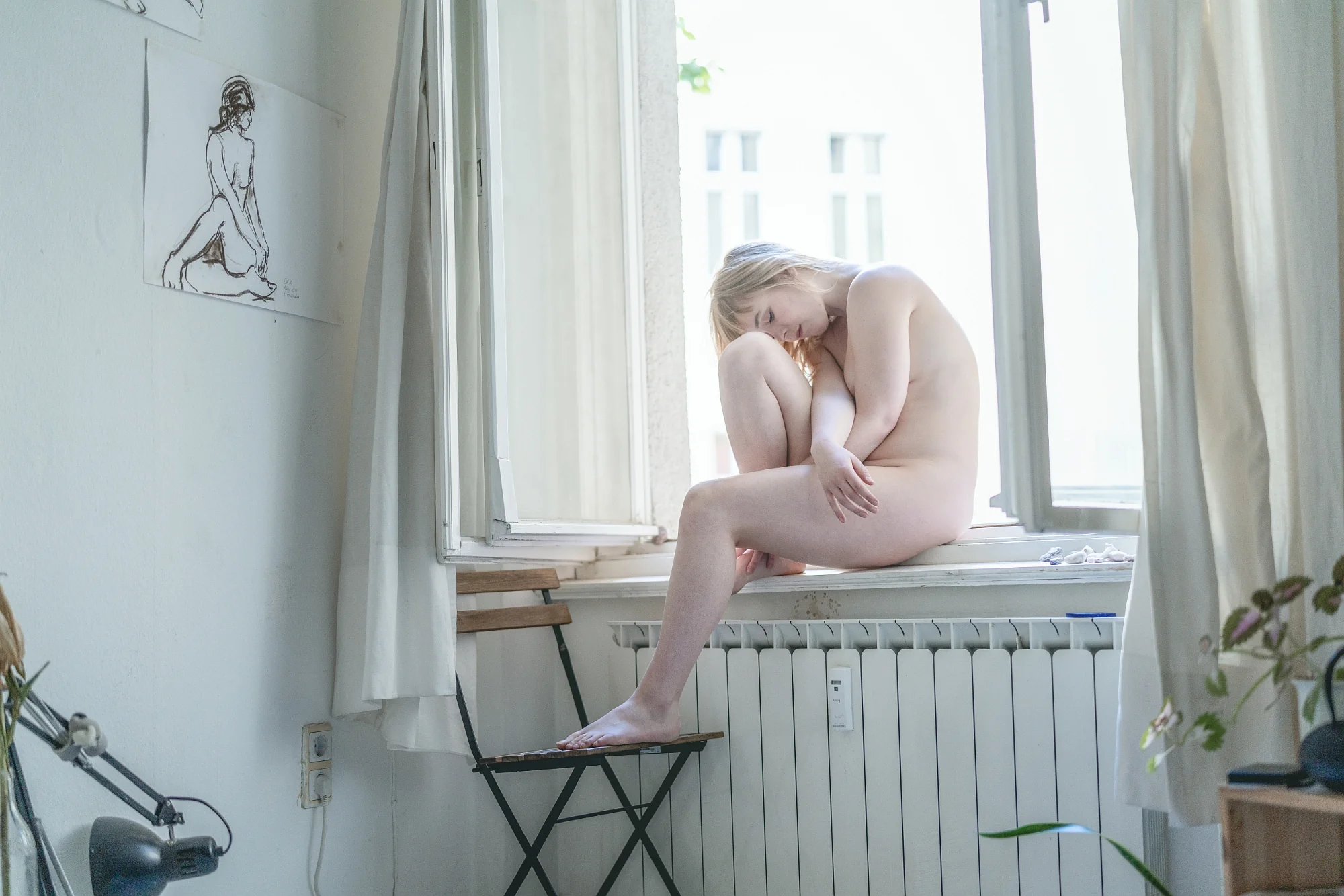
In one photograph, a woman sits curled on a windowsill in pale daylight, her cheek resting on her knee and her eyes closed, while the street outside carries on without her. In another, a woman leans across a piano with her head bowed, as if the instrument were holding her up. Someone sits on a shower floor, a wet shirt clinging to her skin, looking down at nothing in particular. On an old iron bed, a woman lies with her arms behind her head and her eyes on the window. At night, a woman leans back against a wall in an empty street, eyes closed, one hand pressed to her chest.
The iconographic lineage runs deep. Albrecht Dürer's Melencolia I (1514) gave Western art its most familiar image of the melancholic temperament: a seated figure surrounded by the tools of geometry and making, all of them left idle. Renaissance thought, following Marsilio Ficino, also linked melancholy with intellectual and creative gifts. Sigmund Freud's essay Mourning and Melancholia (1917) made it psychoanalytic, a way of holding on to what has been lost. Julia Kristeva, in Black Sun (1987), read melancholy at the limit of language, where speech falters and art takes up the work of naming loss. Melancholia belongs to this long tradition without illustrating it. Its argument is made in posture and expression: the head Dürer's figure rests on her fist, returned to living bodies.
In Melancholia the stillness belongs to the figure, turned inward and keeping its weight to itself. The viewer is admitted to a mood and offered nothing more.
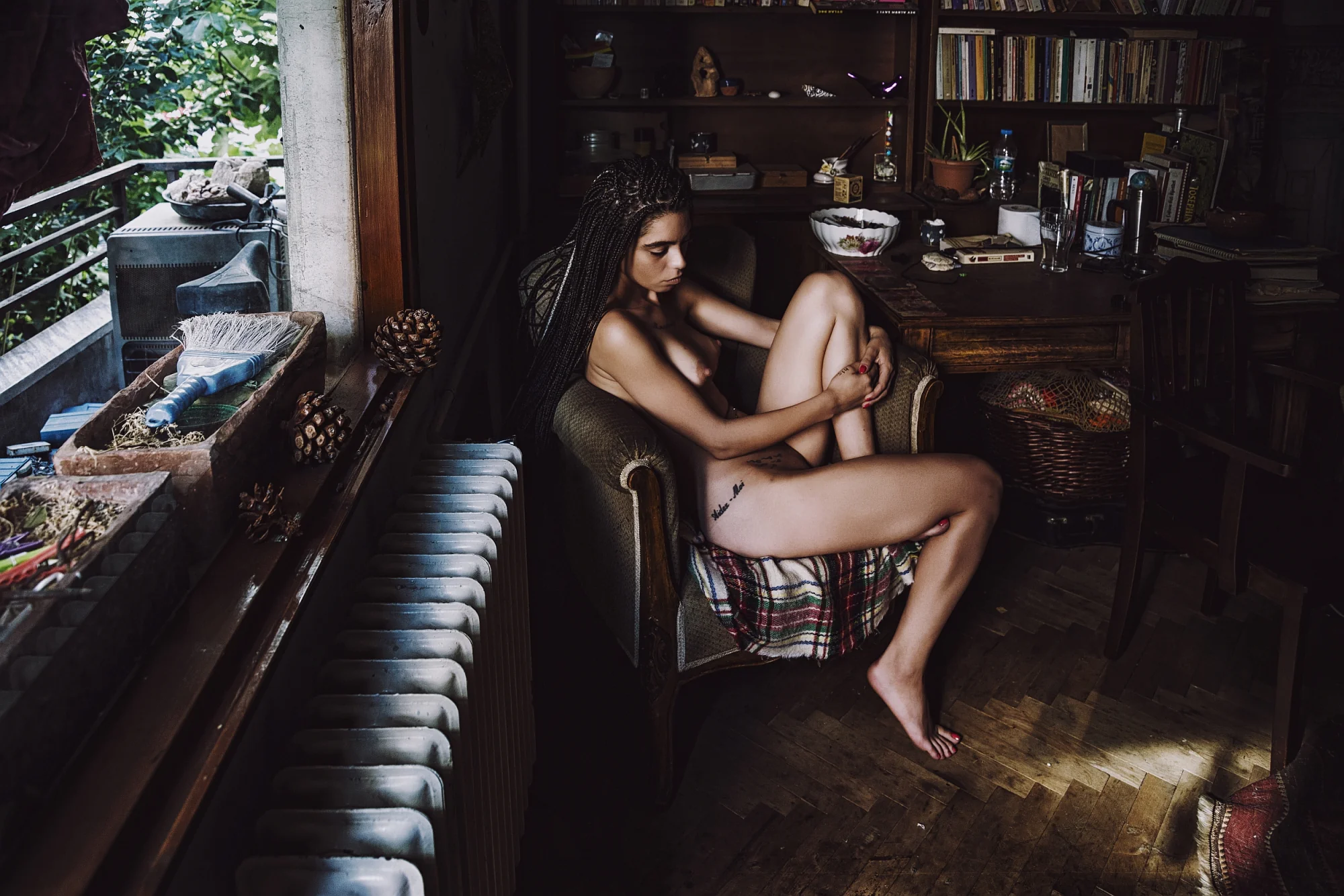
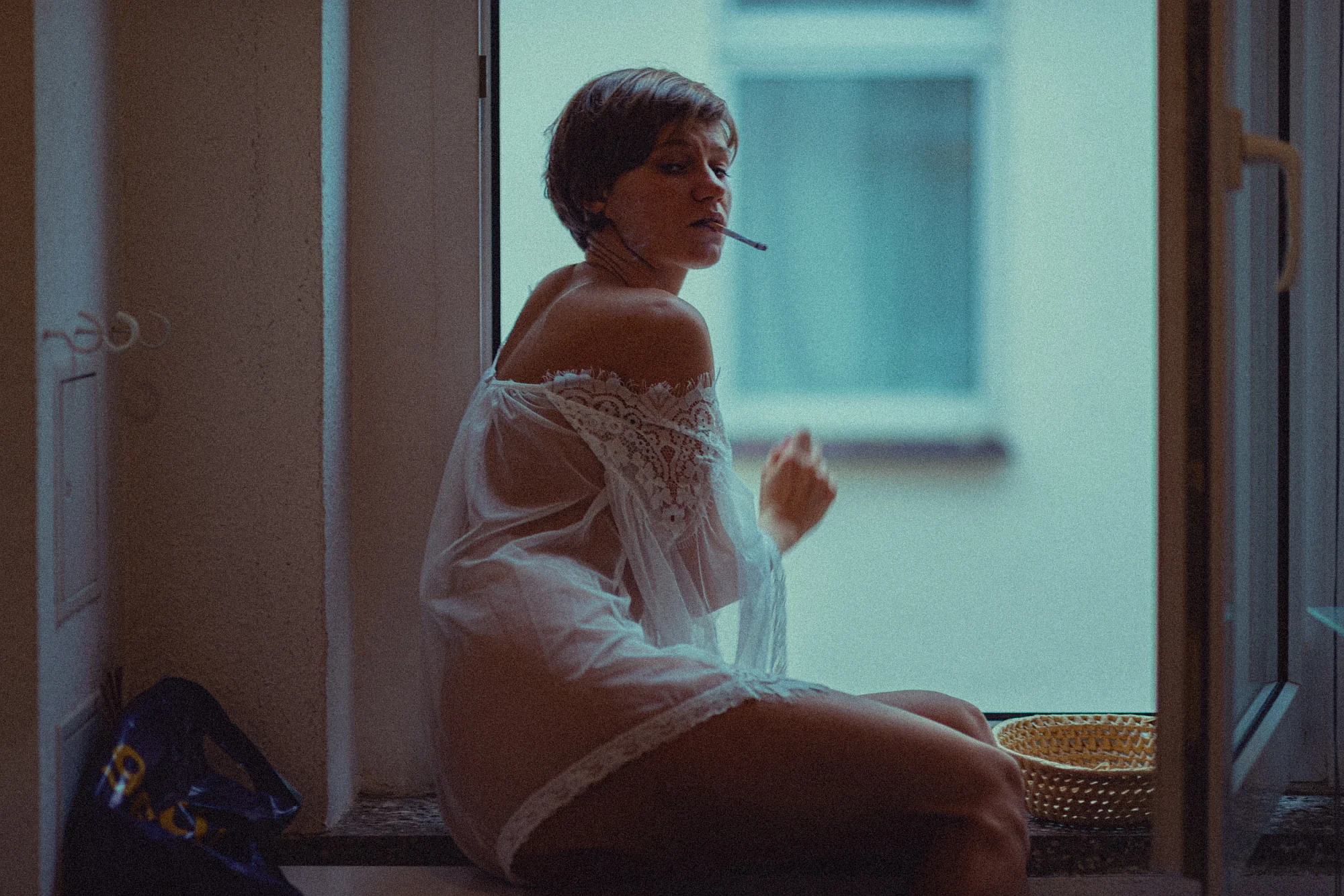
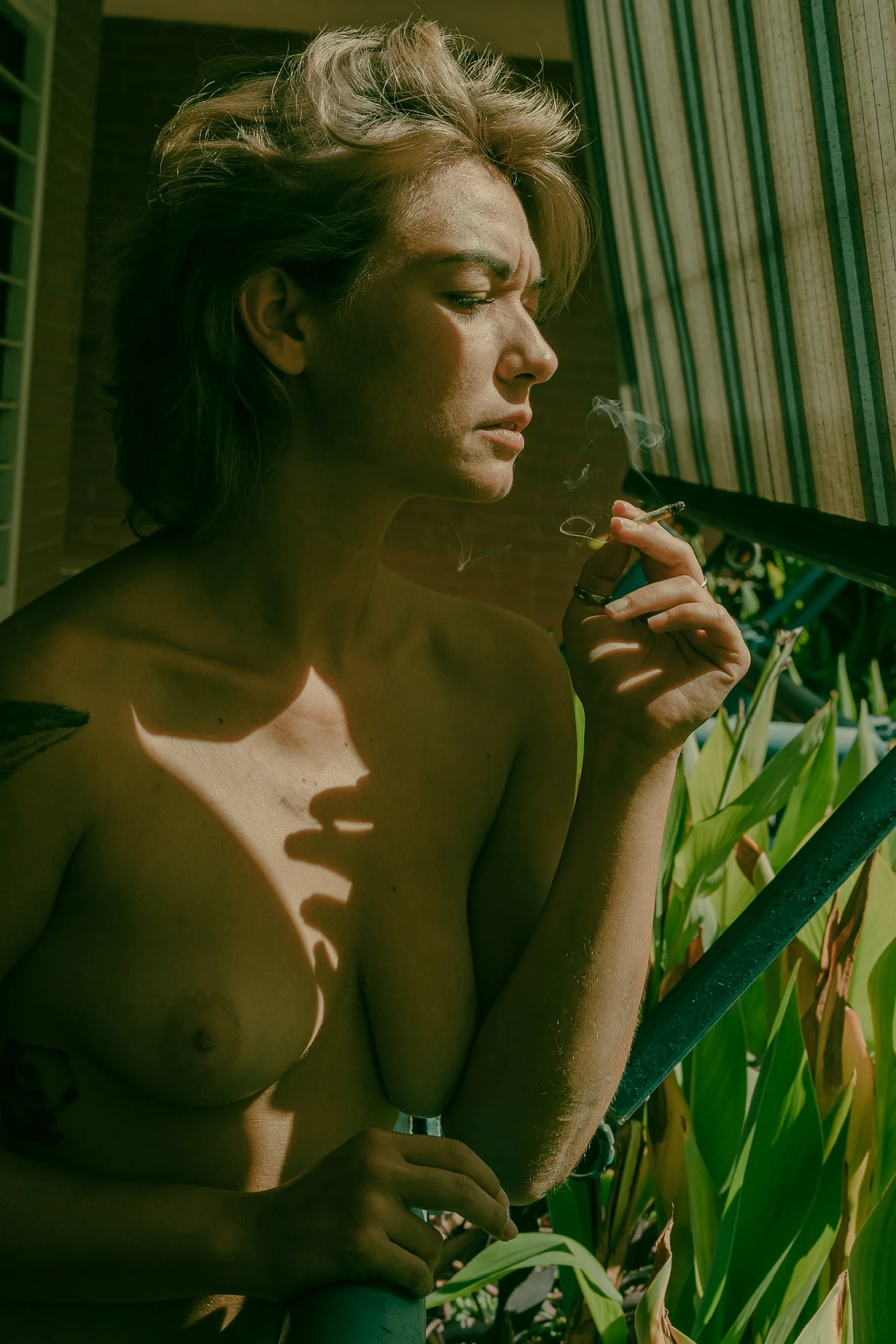
The visual grammar of the series depends on slow light: late afternoon light slipping past heavy curtains, lamp light in a room no one has fully entered, smoke from a single source catching a sliver of daylight, the distant glow of a street at night. The light seems to have arrived reluctantly. The approach is closer to Vilhelm Hammershøi's Copenhagen interiors or Edward Hopper's hotel rooms than to the drama of chiaroscuro: light that describes time more than form, and makes a place feel as if it has been waiting.
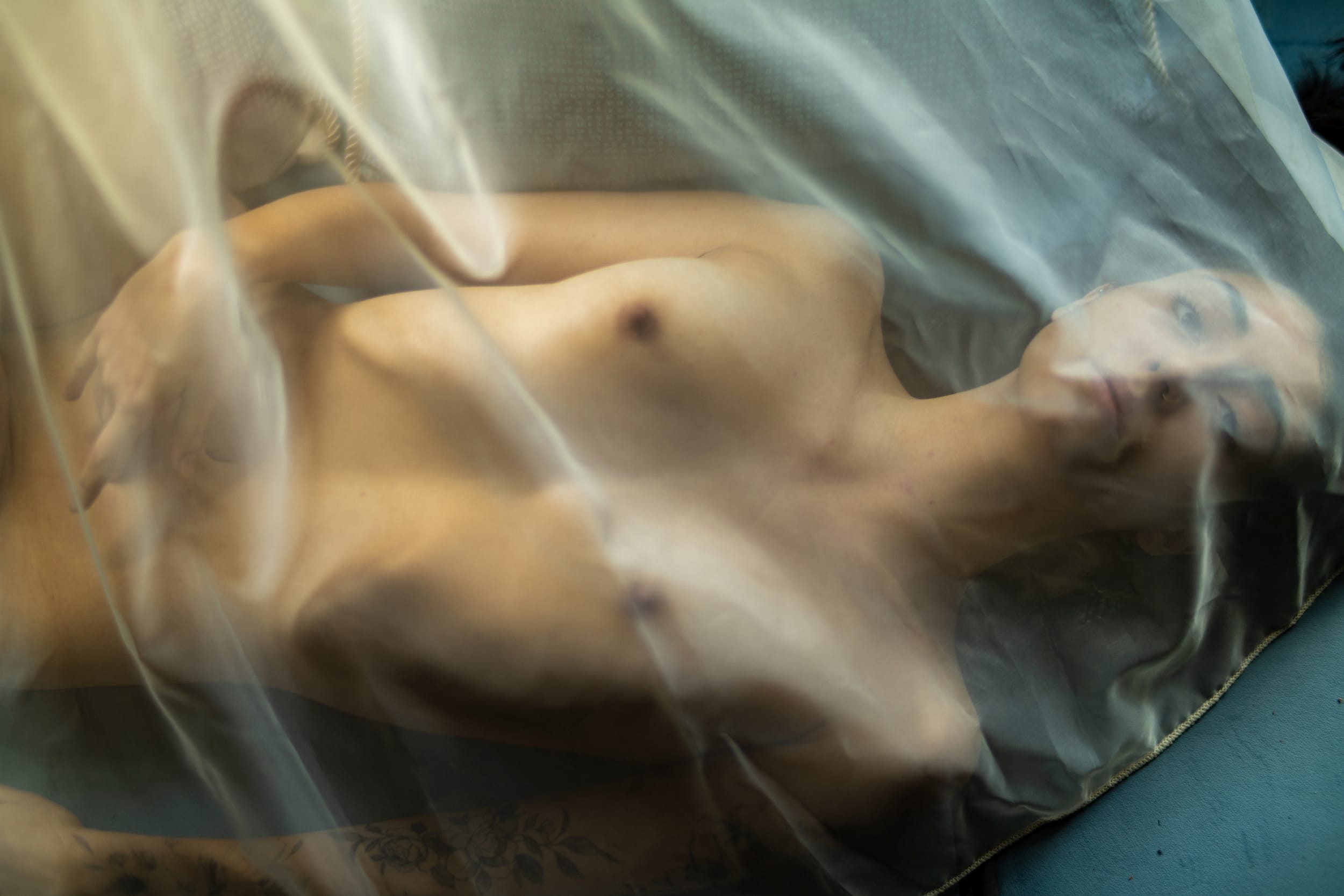
The melancholic body has withdrawn from the economy of gesture. Clothing would give it a direction, a social context, an errand; in the shower photograph, the wet shirt no longer serves any of them. Draped fabric, smoke, a piano's dark wood, an empty corner: these surround the figure as the material conditions of the mood, not as props.
The expressions in these photographs arrive slowly, out of long sessions in which very little happens. A subject adjusts a shoulder, shifts a glance, breathes out.
Selected Works