Craquer
Le corps entre chaleur et distance
Le désir comme appétit : la chaleur, le toucher, le goût et le regard qui les accompagne.
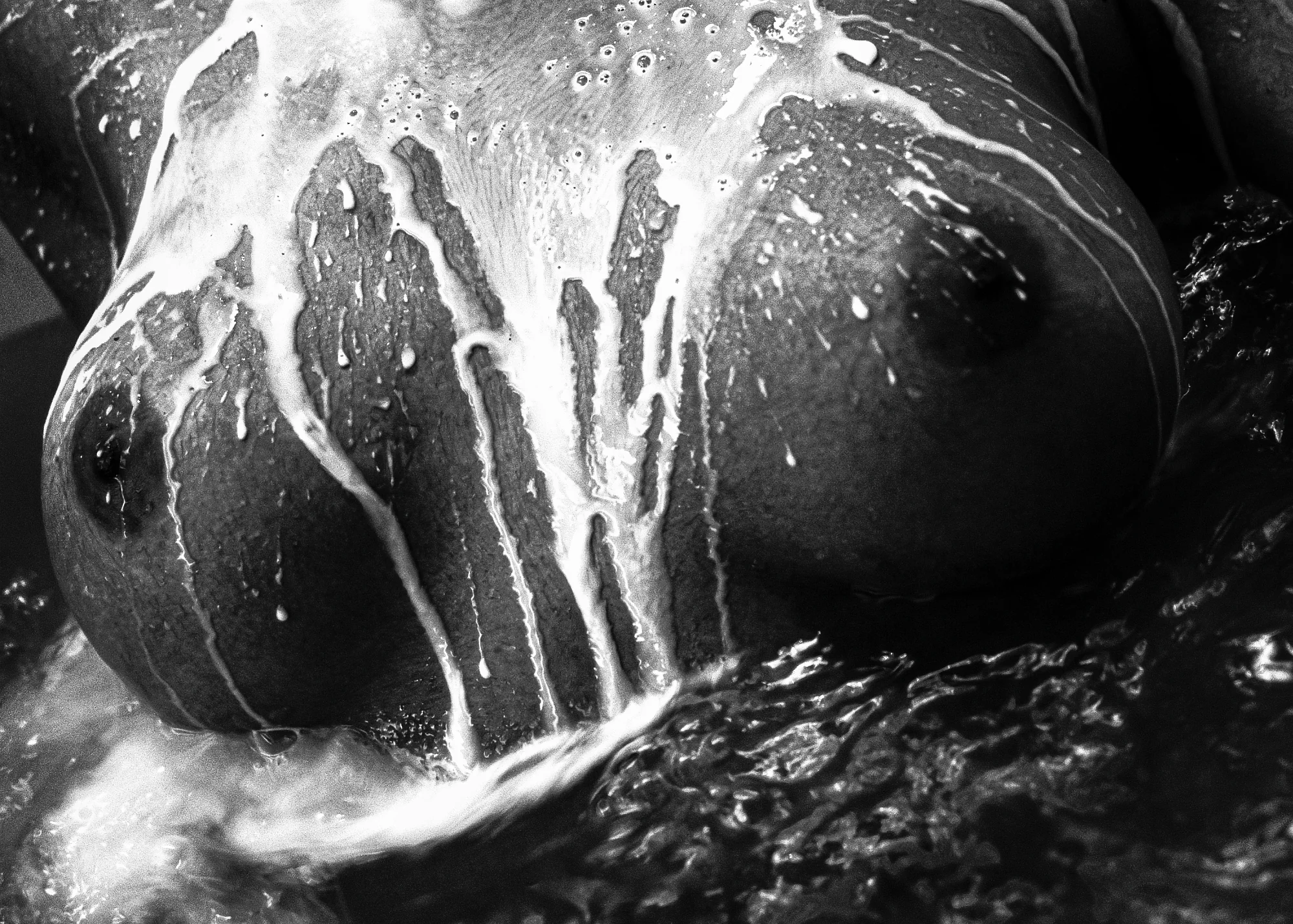
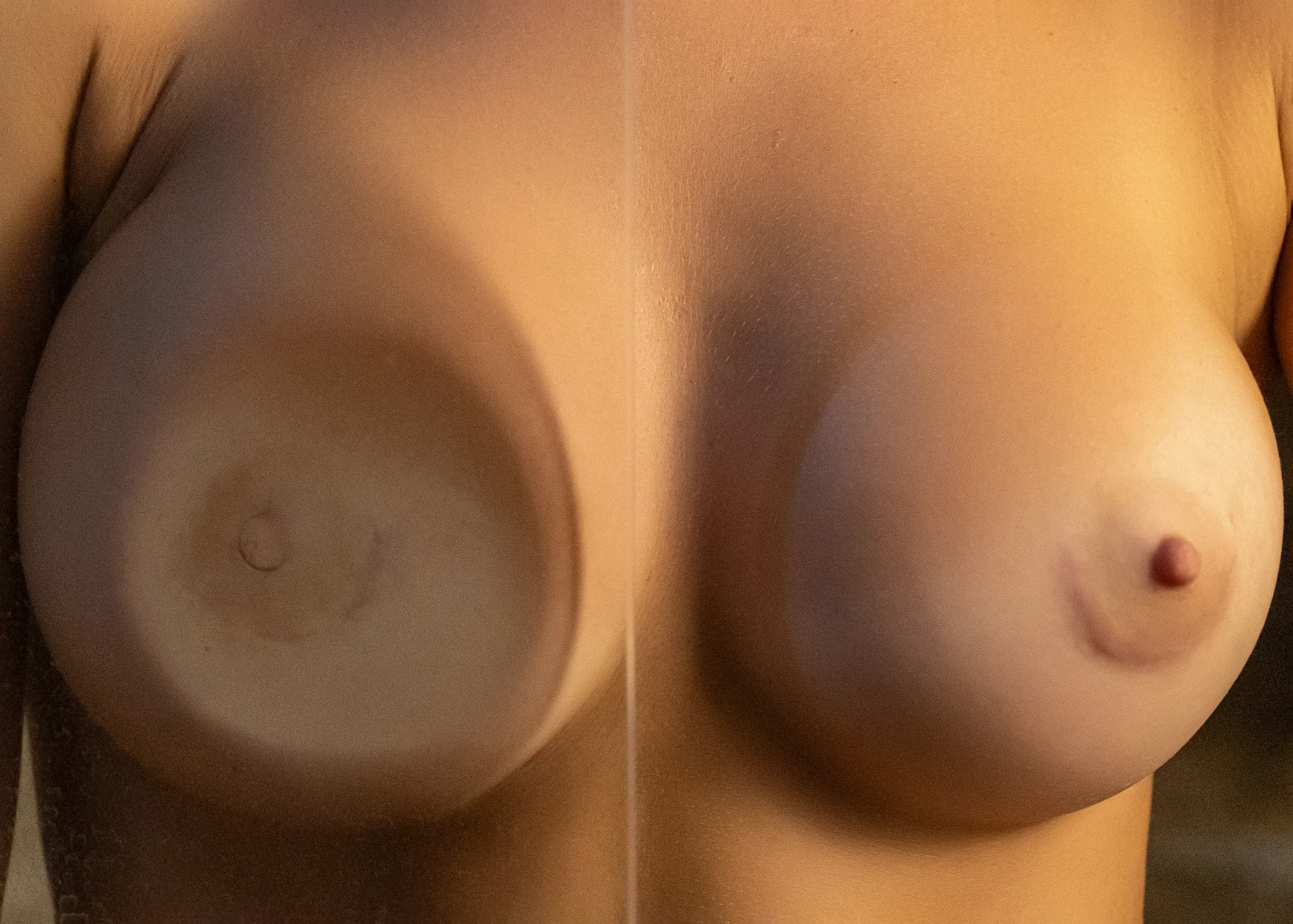
Craquer traite de l'appétit. La série photographie le plaisir érotique à travers les sens : la chaleur de la peau, le poids lent d'un liquide qui glisse sur elle, une bouche ouverte, un regard qui se pose sur le spectateur. Dans Le plaisir du texte (1973), Roland Barthes a distingué plaisir, ce plaisir qui réconforte, tiré de jouissance, ce bonheur qui trouble. Craquer moves between the two. The camera comes close, close enough for the body to become texture and heat.
The nude has long been a genre of distance: the body seen whole, from far enough away to be judged. Craquer gives up that distance. At this range the eye stops surveying and begins to work like the other senses. This kind of looking starts in the body before it reaches thought.
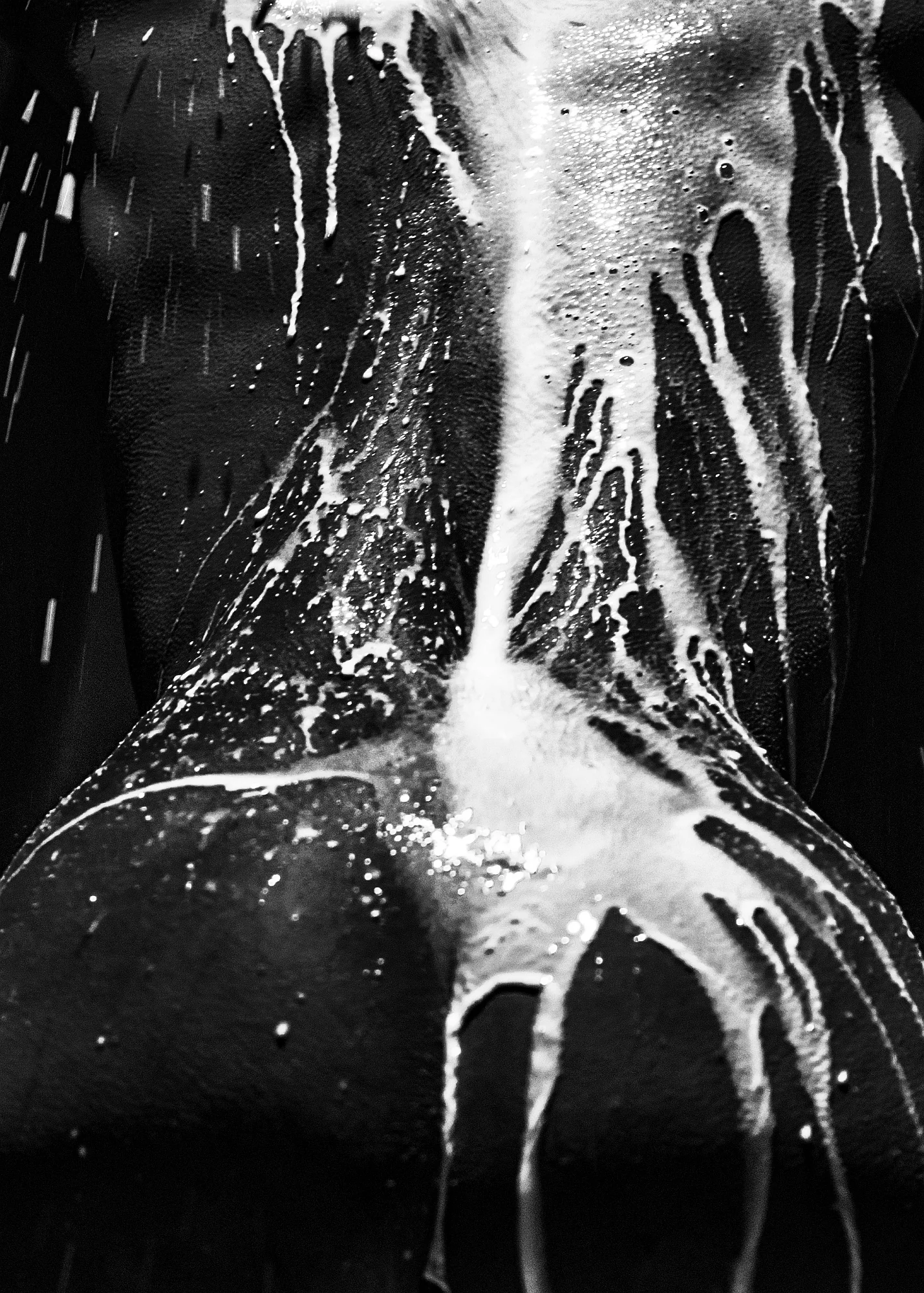
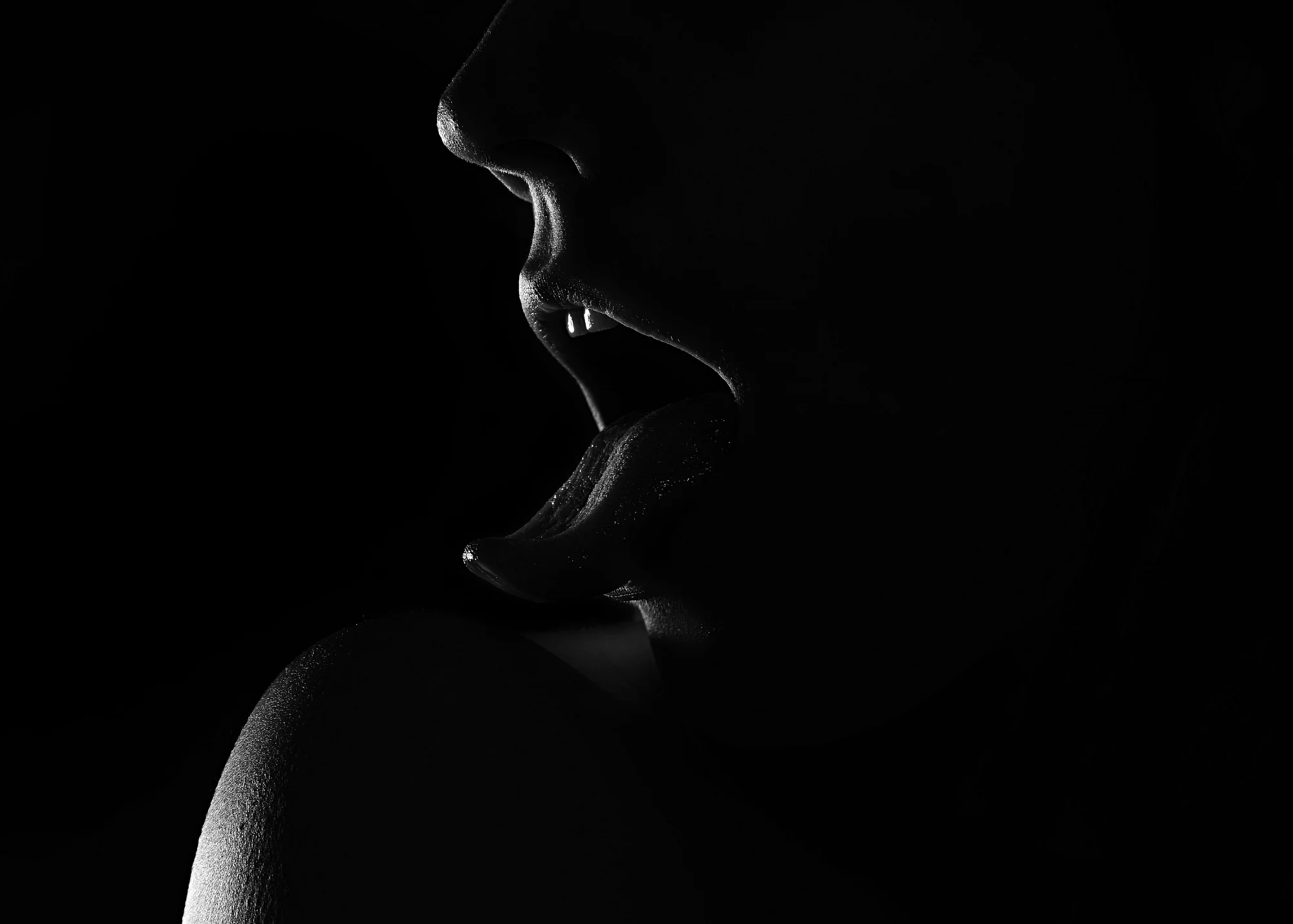
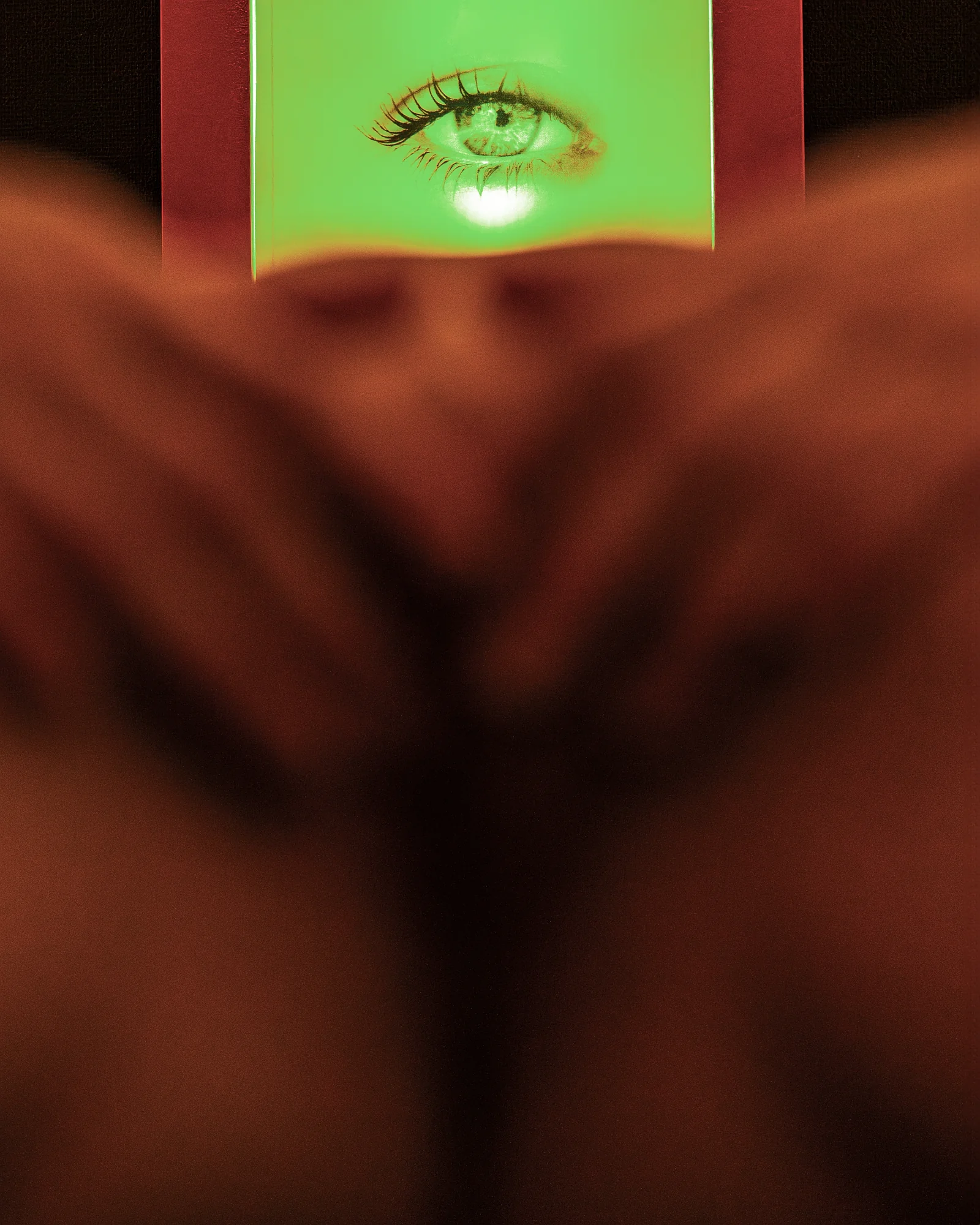
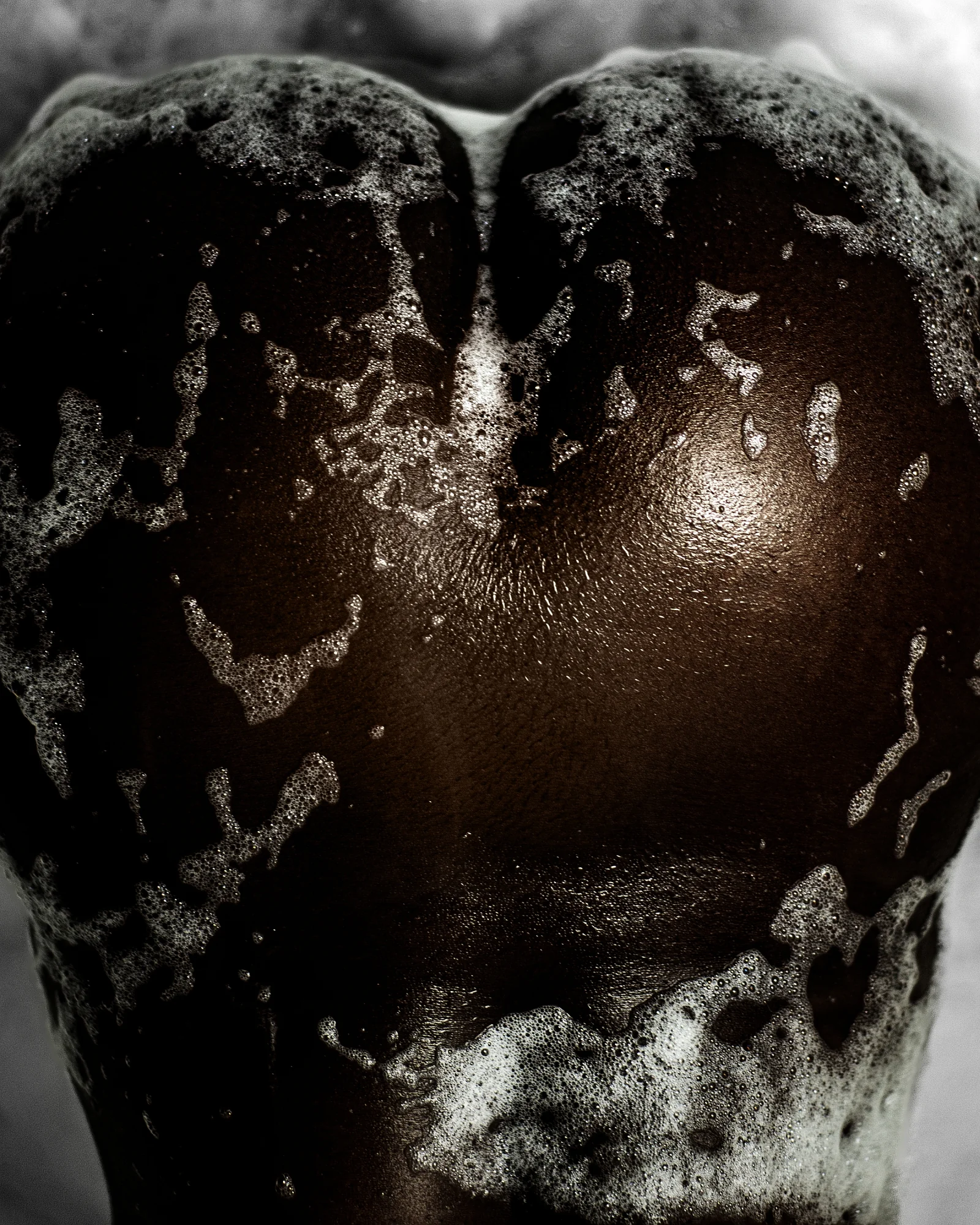
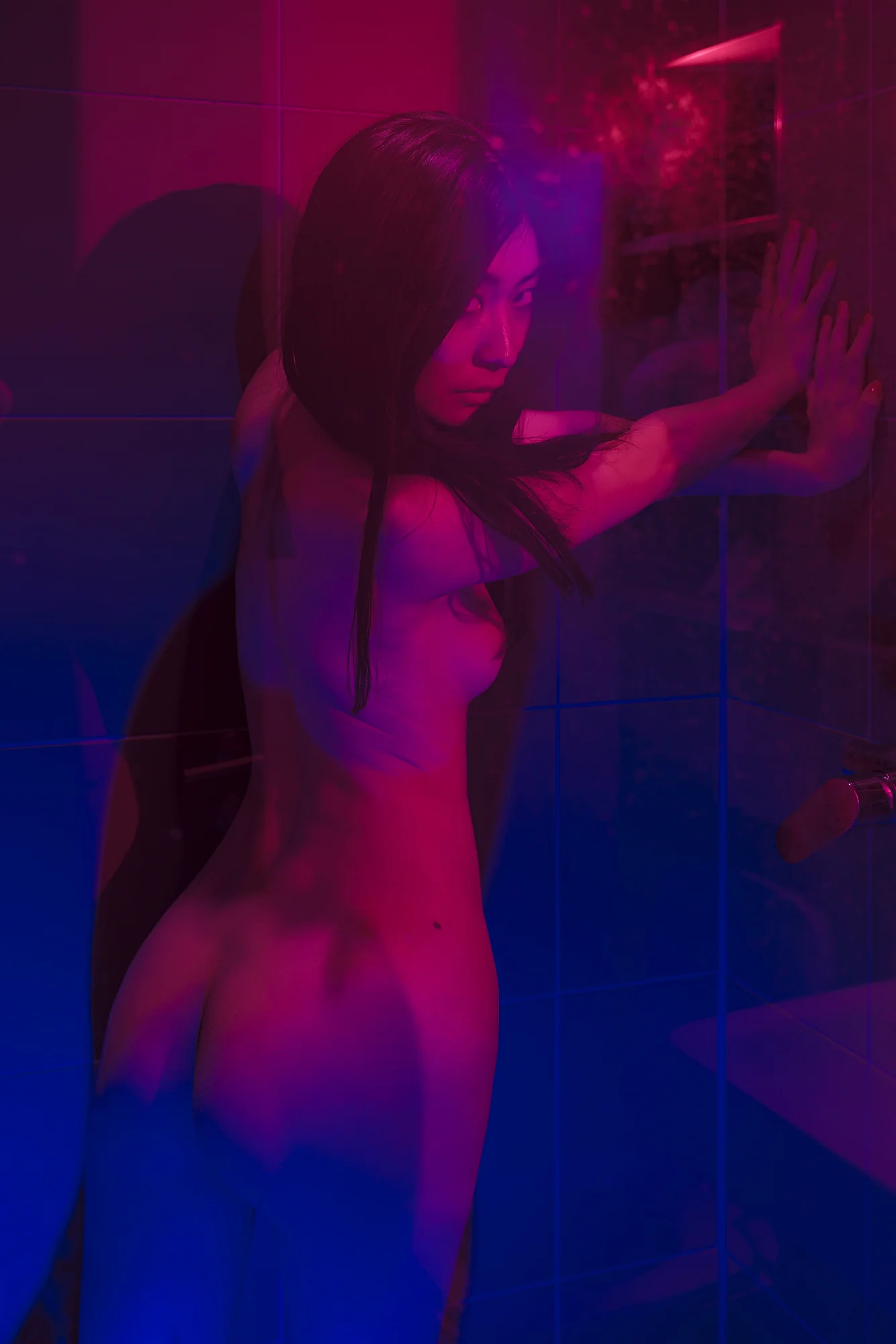
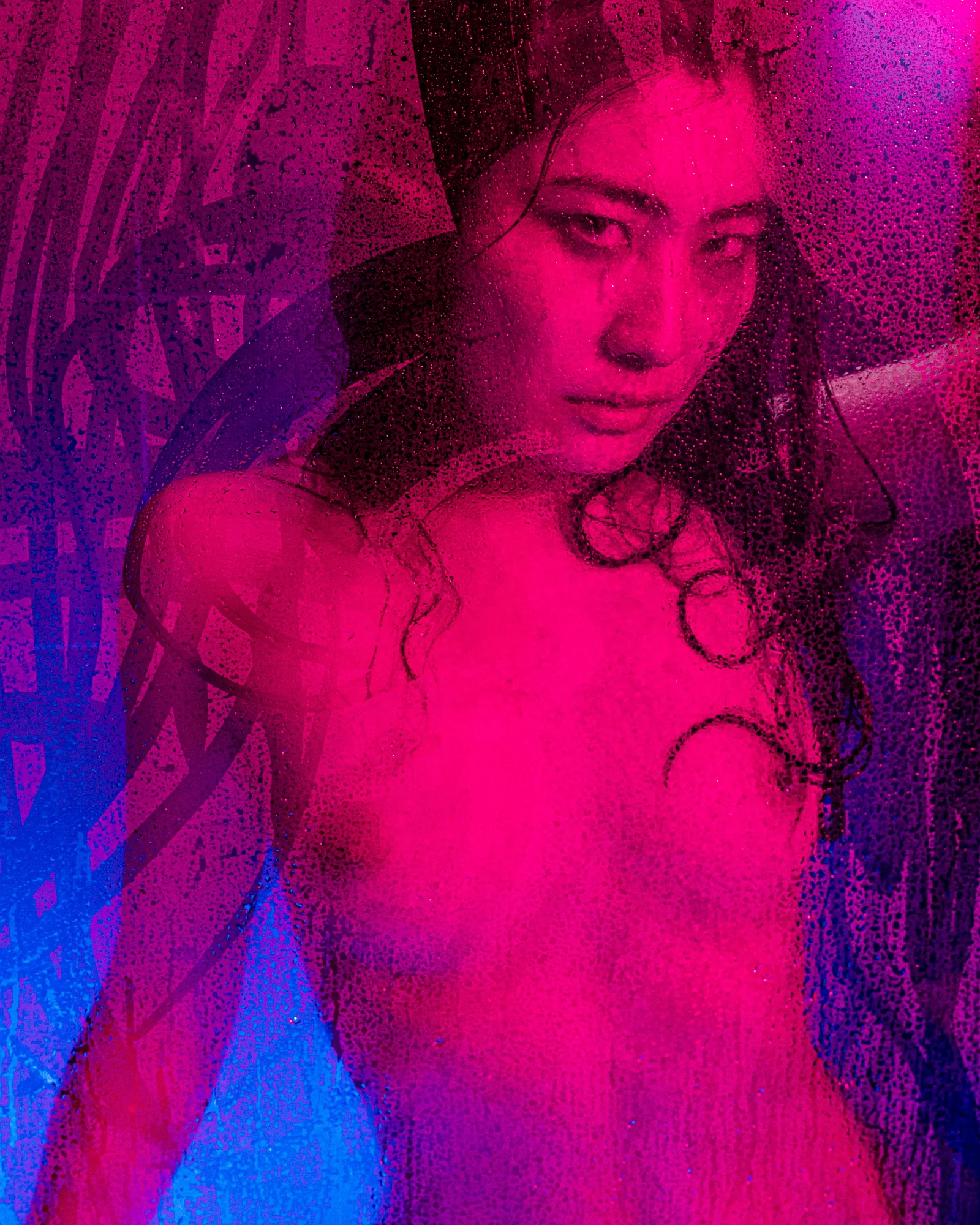
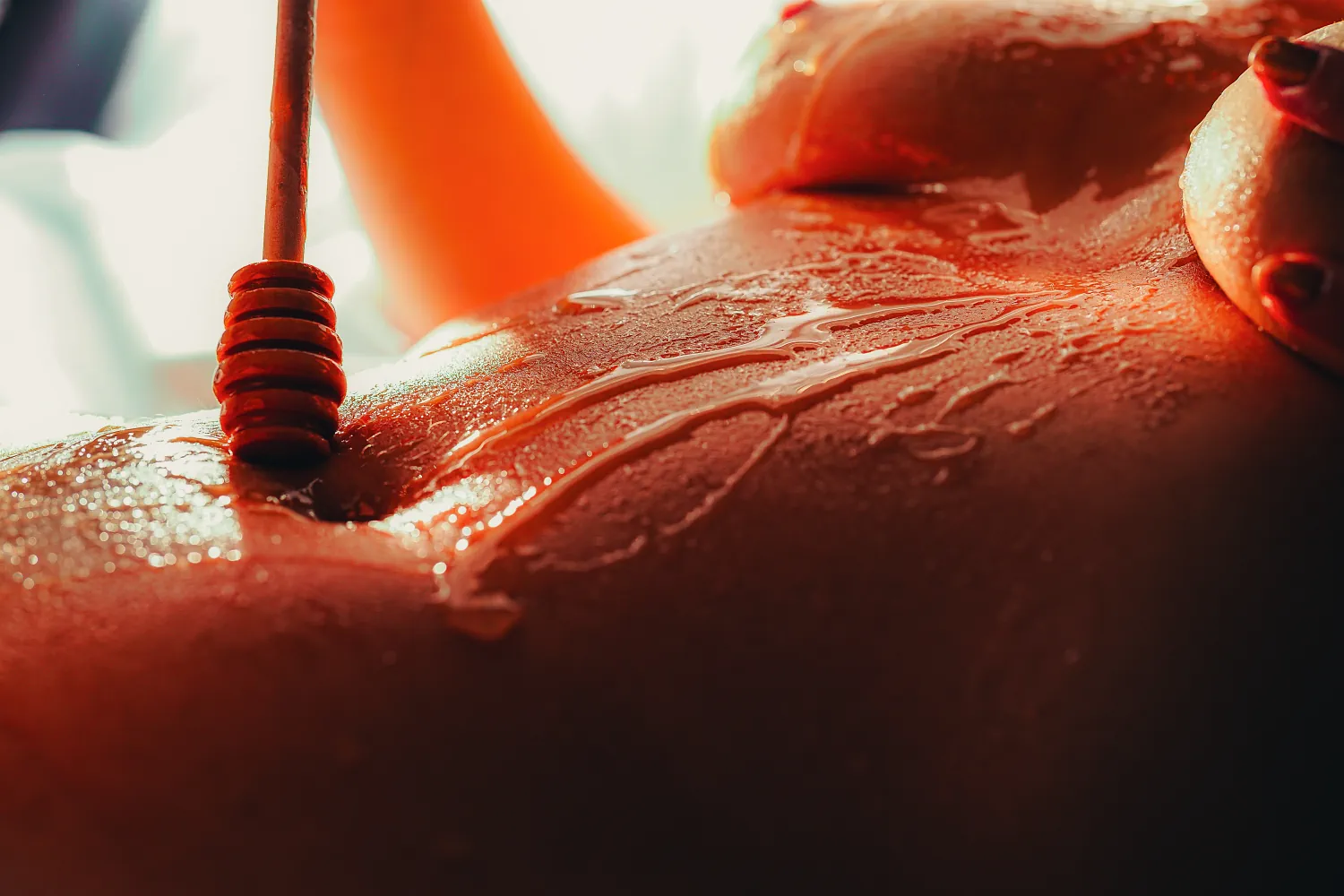
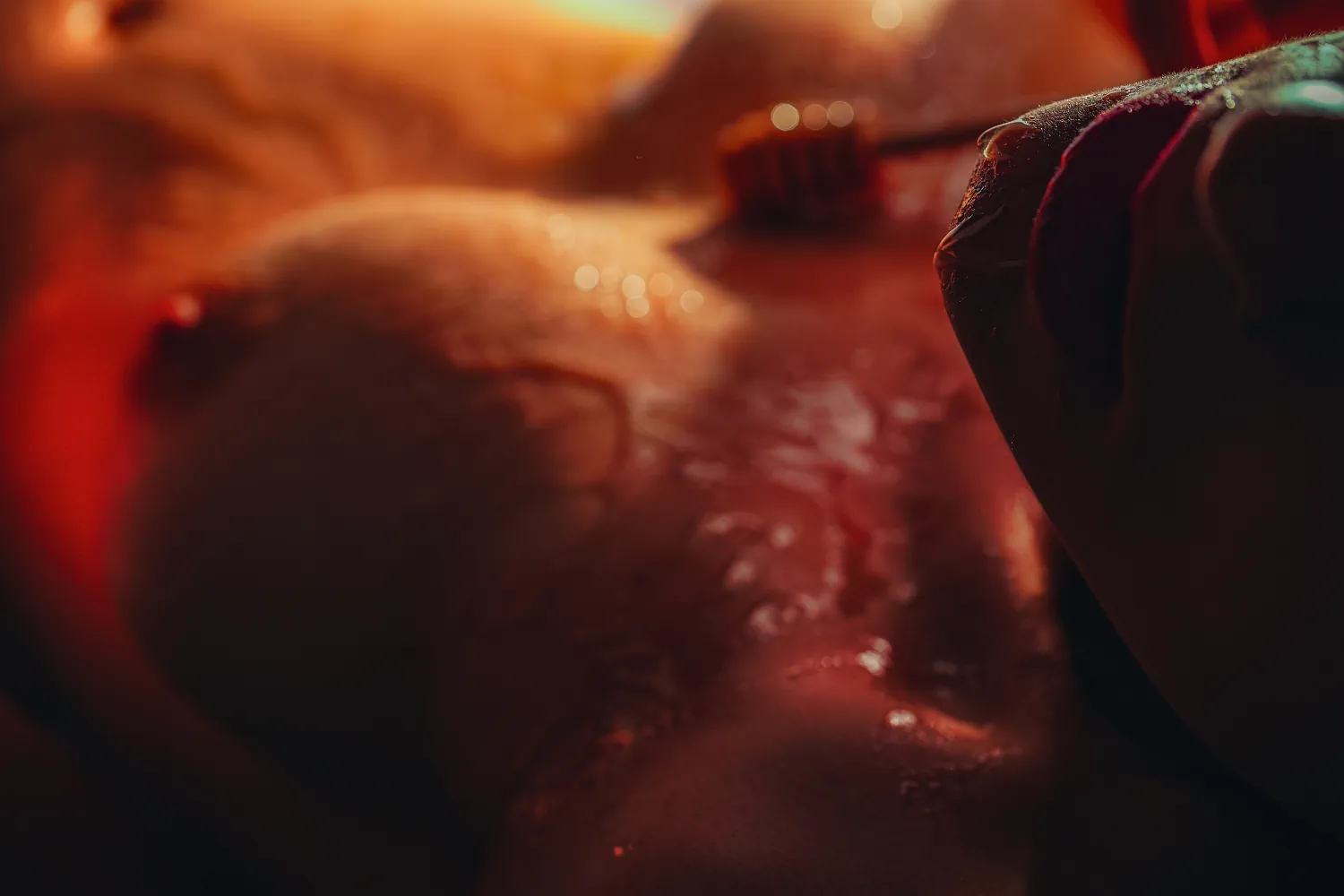
Honey falls from a wooden dipper and gathers in the hollow of a belly, the whole frame glowing amber. A pale liquid runs down a back and over the curve of the hips, caught in hard black-and-white light like rain on stone. An open mouth surfaces from total darkness. A woman leans against a wall bathed in violet light while her reflection in the mirror turns and looks straight at the viewer. An eye watches from a small green screen above a body softened into blur.
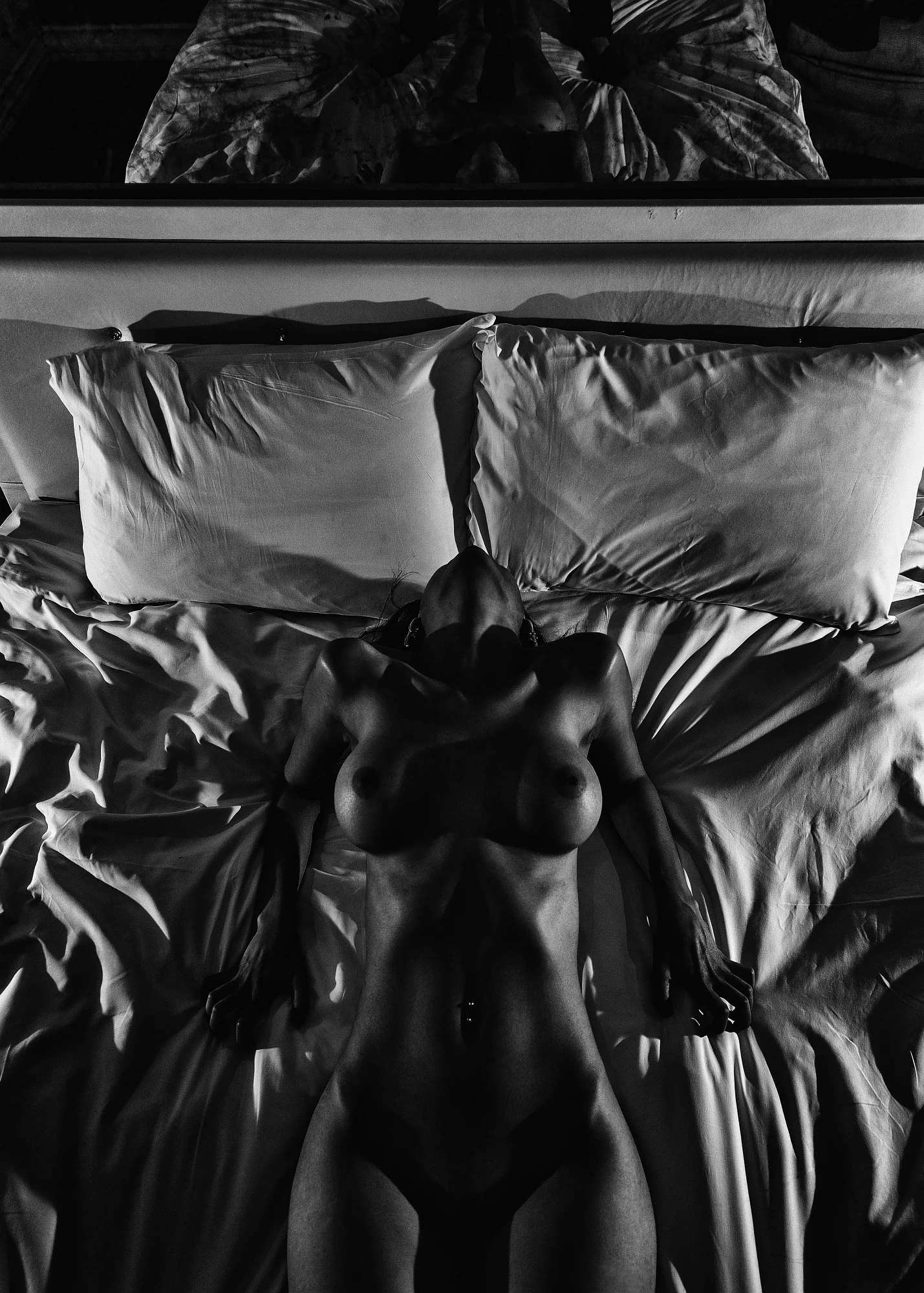
Craquer draws on two traditions. One is the chiaroscuro of baroque intimacy, where skin emerges from darkness into a single source of light and flesh and shadow carve each other. The other is the chromatic photography that followed Nan Goldin and Wolfgang Tillmans, where colour itself carries the mood. In Craquer Les deux se rencontrent : des ambres et des rouges aux reflets miel, la lueur artificielle du violet et du vert, ainsi que le noir et blanc qui transforment la peau et le liquide en un contraste pur. Le cadrage reste serré, limitant le corps à l’endroit même où naît la sensation.
Georges Bataille, dans Érotisme (1957), décrivait l’érotisme comme le moment où un corps échappe brièvement à sa propre séparation. Audre Lorde, dans " Uses of the Erotic " (1978), affirmait que l’érotisme était une source de savoir et de pouvoir, quelque chose auquel il fallait faire confiance plutôt que de le cacher. Entre ces deux positions, Craquer considère le plaisir comme un moyen de découvrir son corps de l'intérieur, à travers le goût, le toucher et le regard.
Desire also lives in what stands in its way. In other images, smoke, fogged glass, and coloured light slip between two bodies, and the photographer becomes a witness arriving a moment too late, catching the heat of something that has just happened, or is about to. In Barthes's Discours d'un amoureux, le désir réside dans l'attente : un rapport à ce qui est sur le point d'arriver, mais qui n'arrive pas tout à fait.
The gaze matters as much as the touch. For most of its history the nude was made for a viewer who could look without being seen. When a figure in Craquer looks straight into the lens, or a reflection turns to meet the viewer's eye, that arrangement breaks: looking becomes mutual, and the viewer becomes one of the people in the room.
Susan Sontag a conclu Contre l'interprétation (1964) en prônant " une érotique de l'art "." Craquer takes her at her word: it asks to be felt before it is explained.
Œuvres choisies