Ecotone
作为过渡区的身体
Where skin ends and environment begins, and the impossibility of drawing that line.
在生态学中,一个 生态区 is a transition zone between two ecological communities: the strip of ground where forest becomes meadow, where fresh water meets salt. Such edges are often richer than either side. Species from both communities meet there, and some live nowhere else. Ecotone photographs the body as this kind of zone. The series returns the body to where it came from, as a part of nature rather than a figure placed in front of it, until the line between skin and world begins to fade.
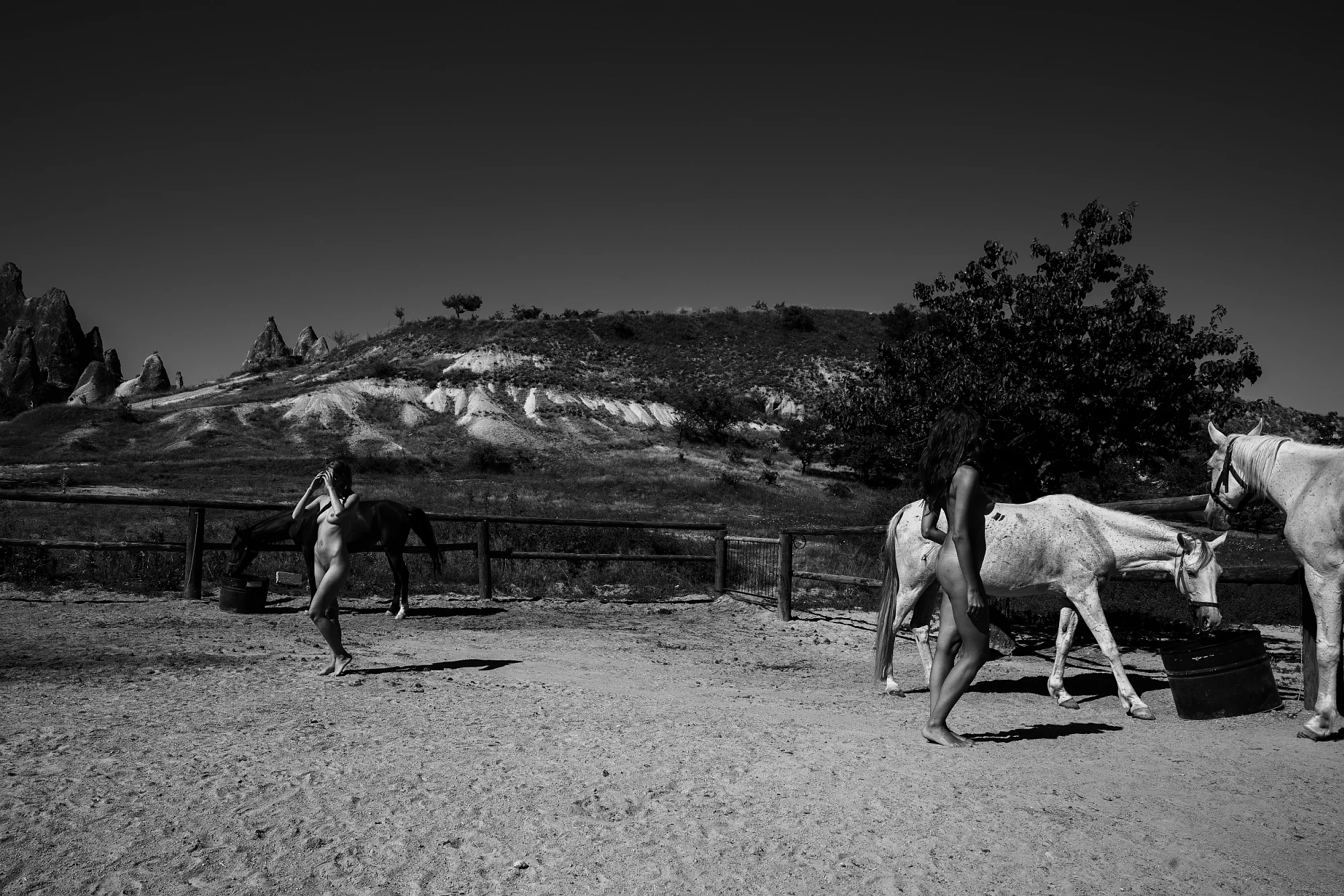
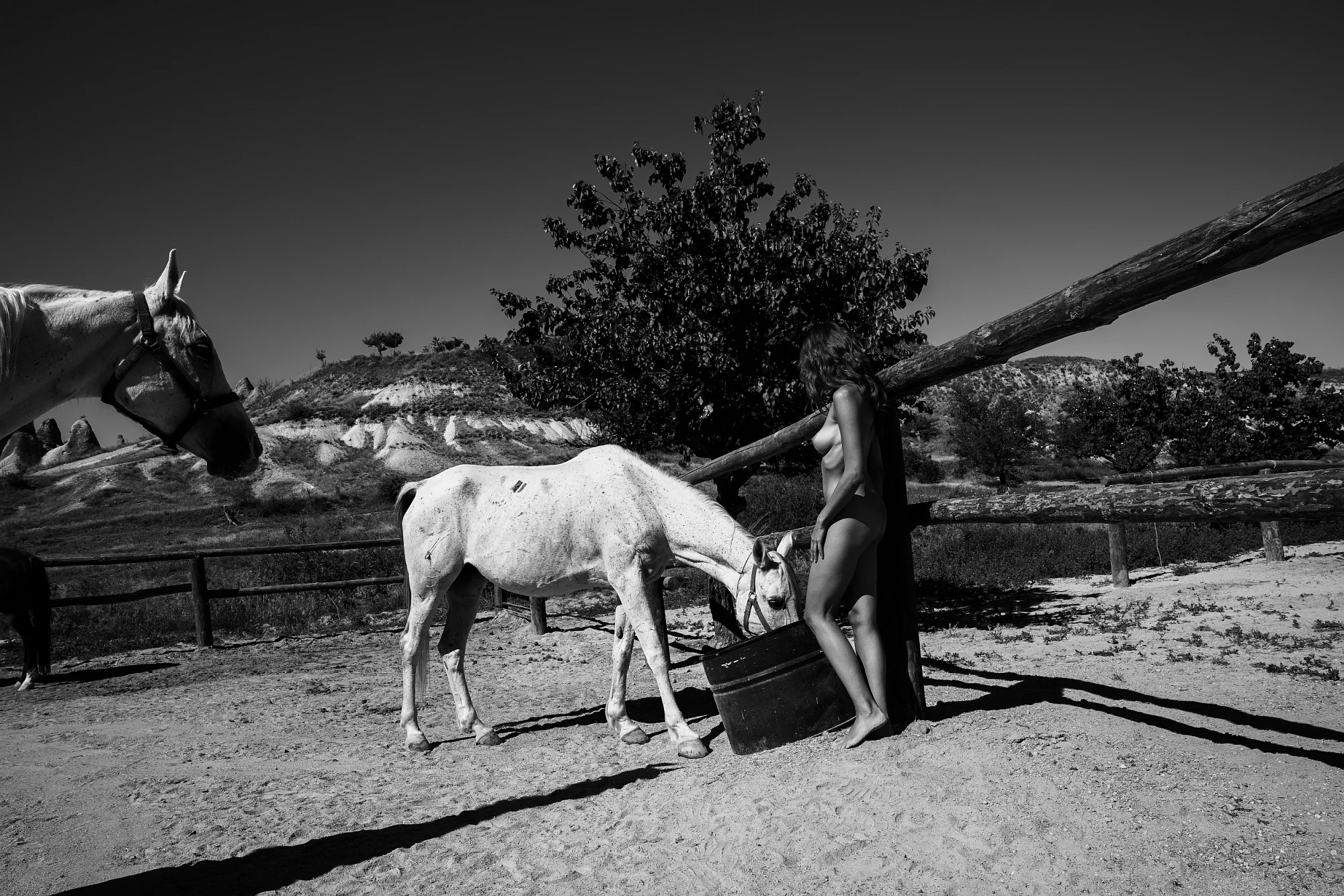
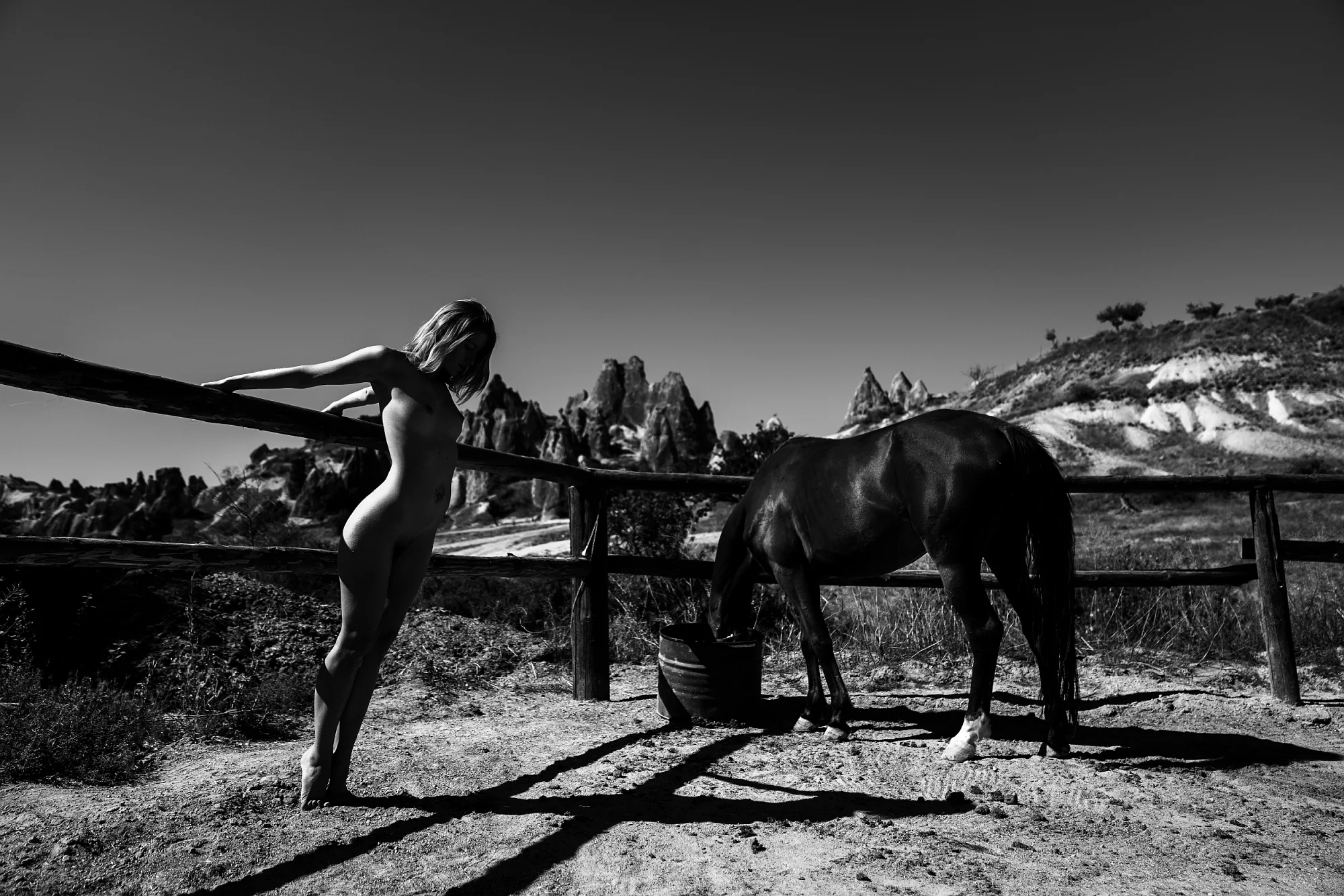
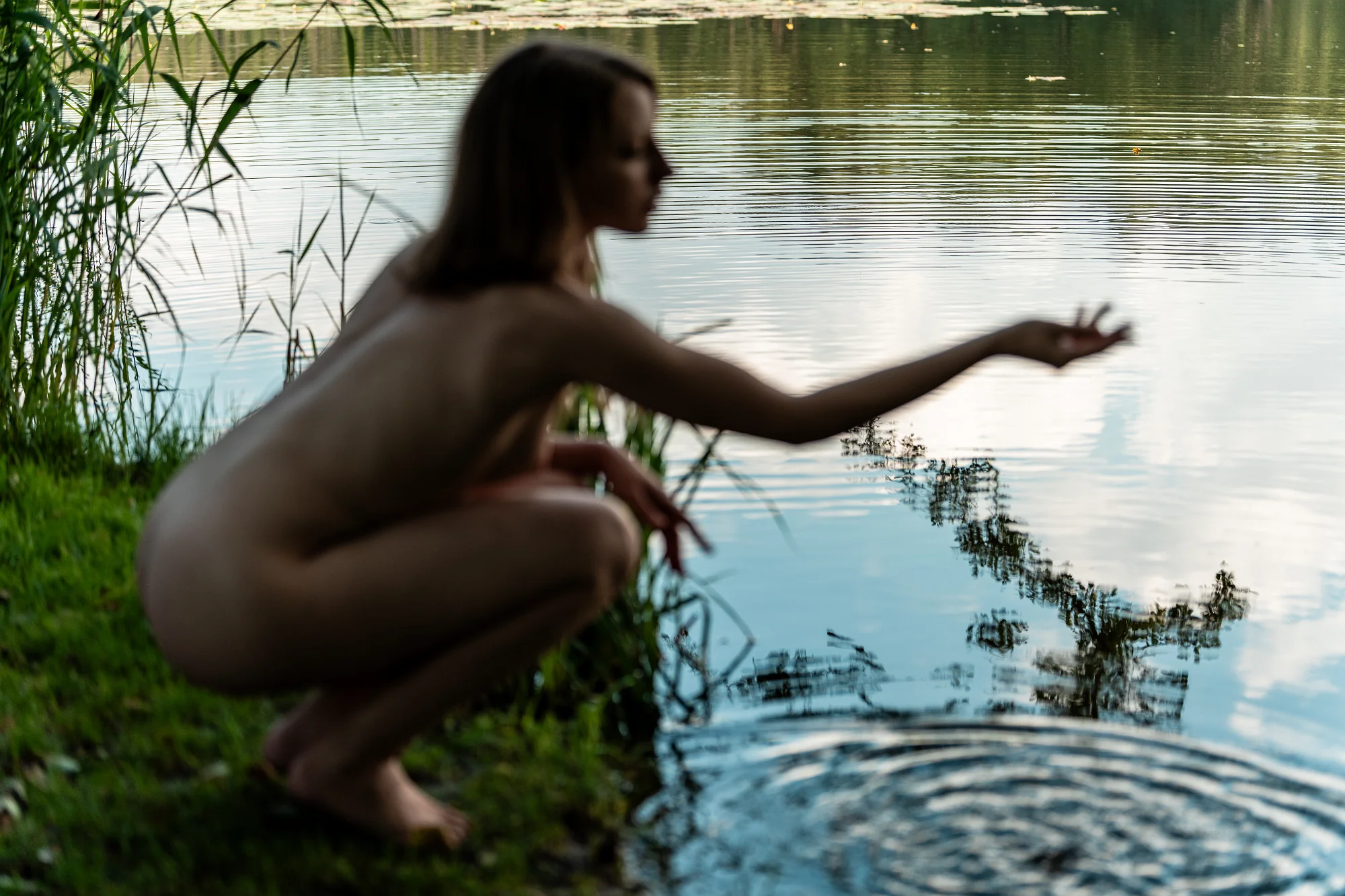
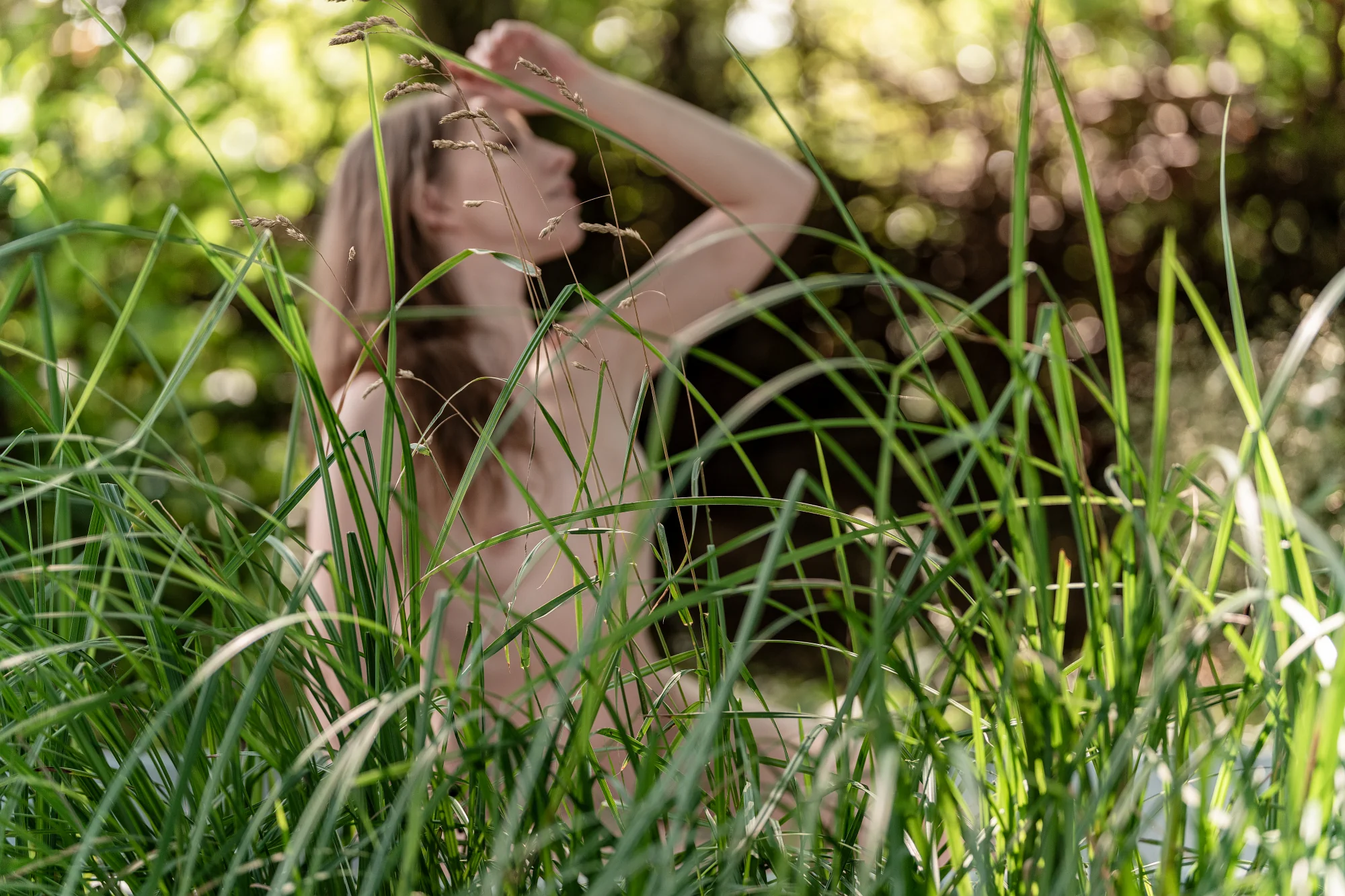
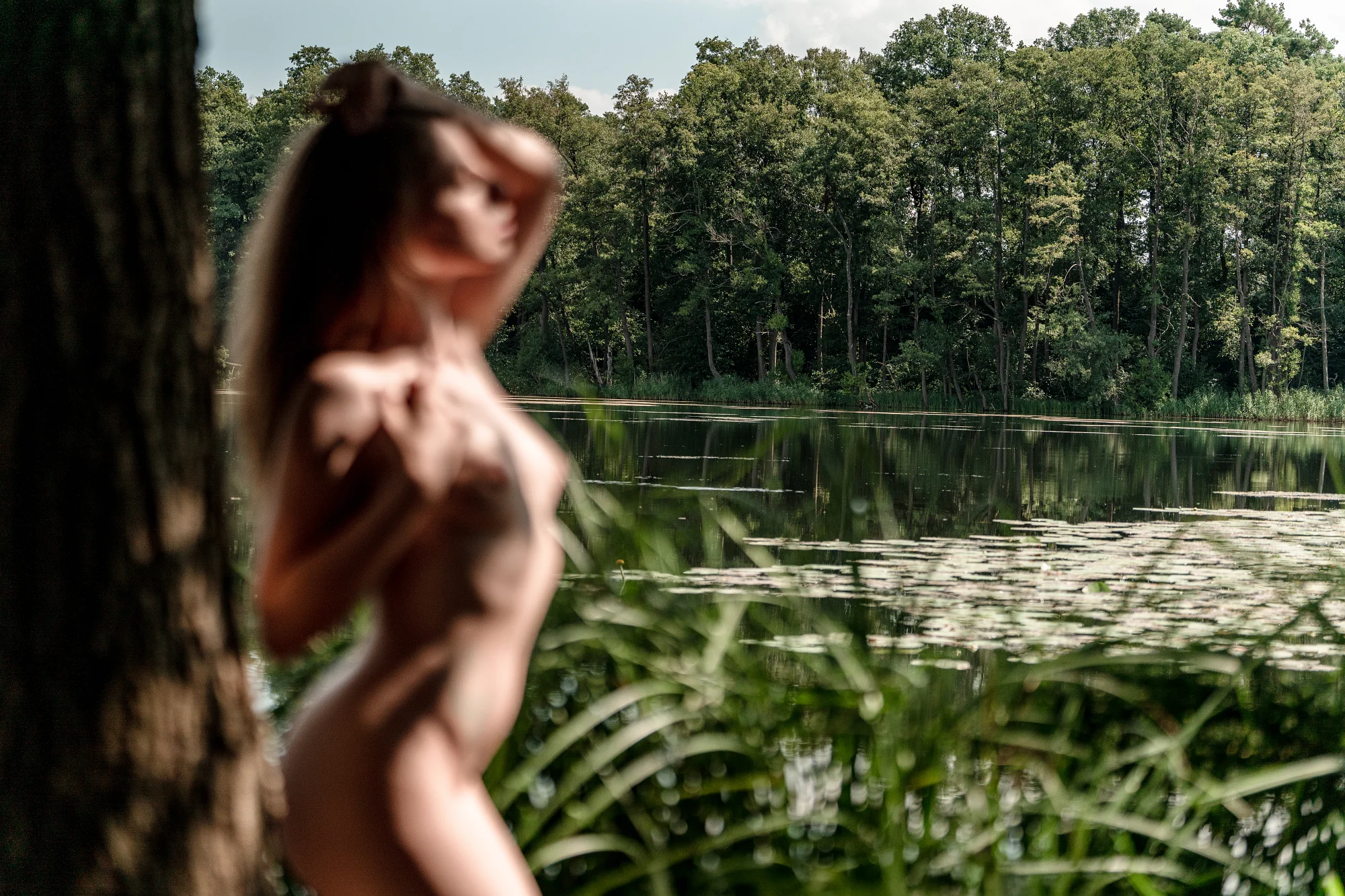
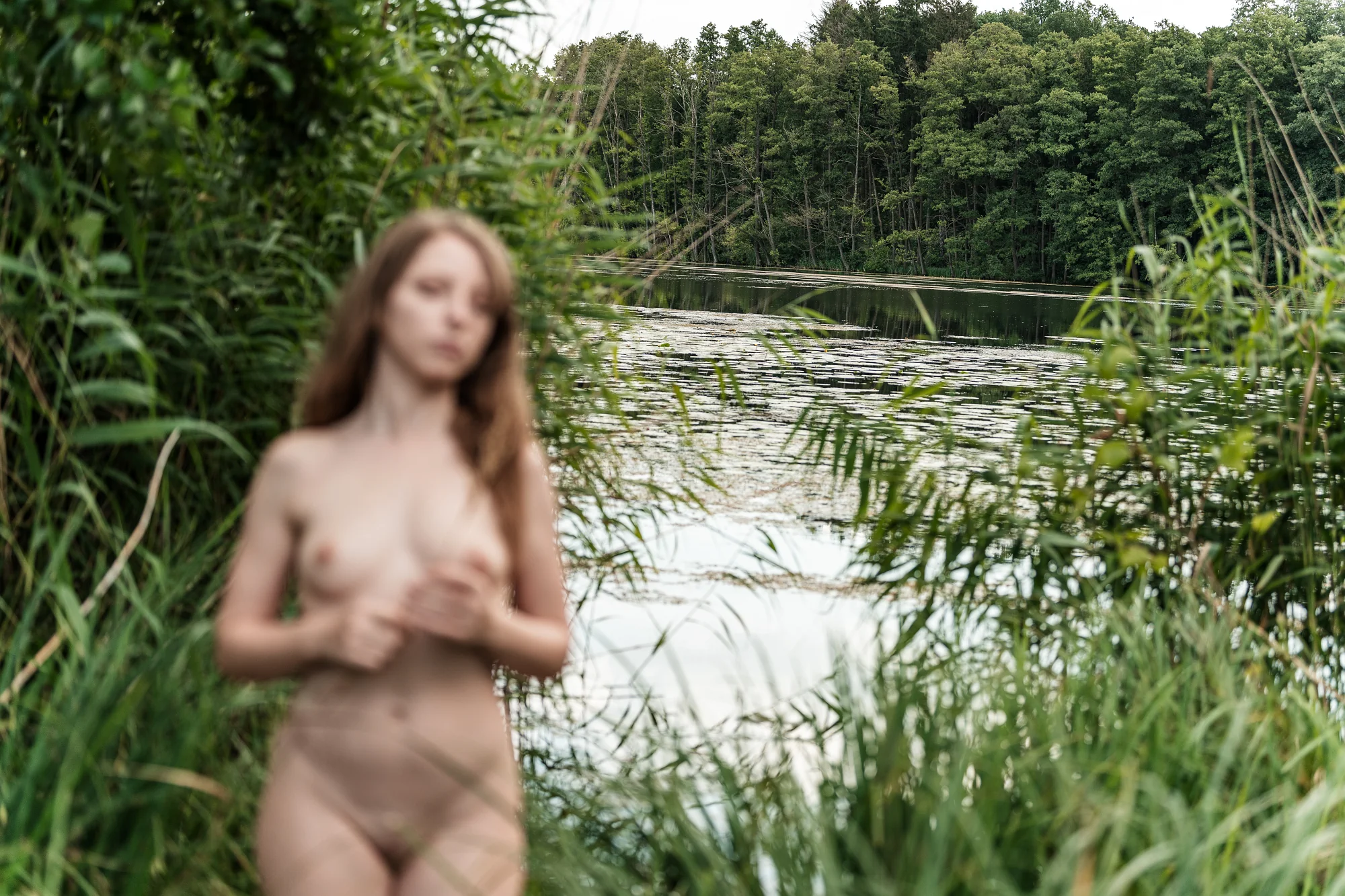
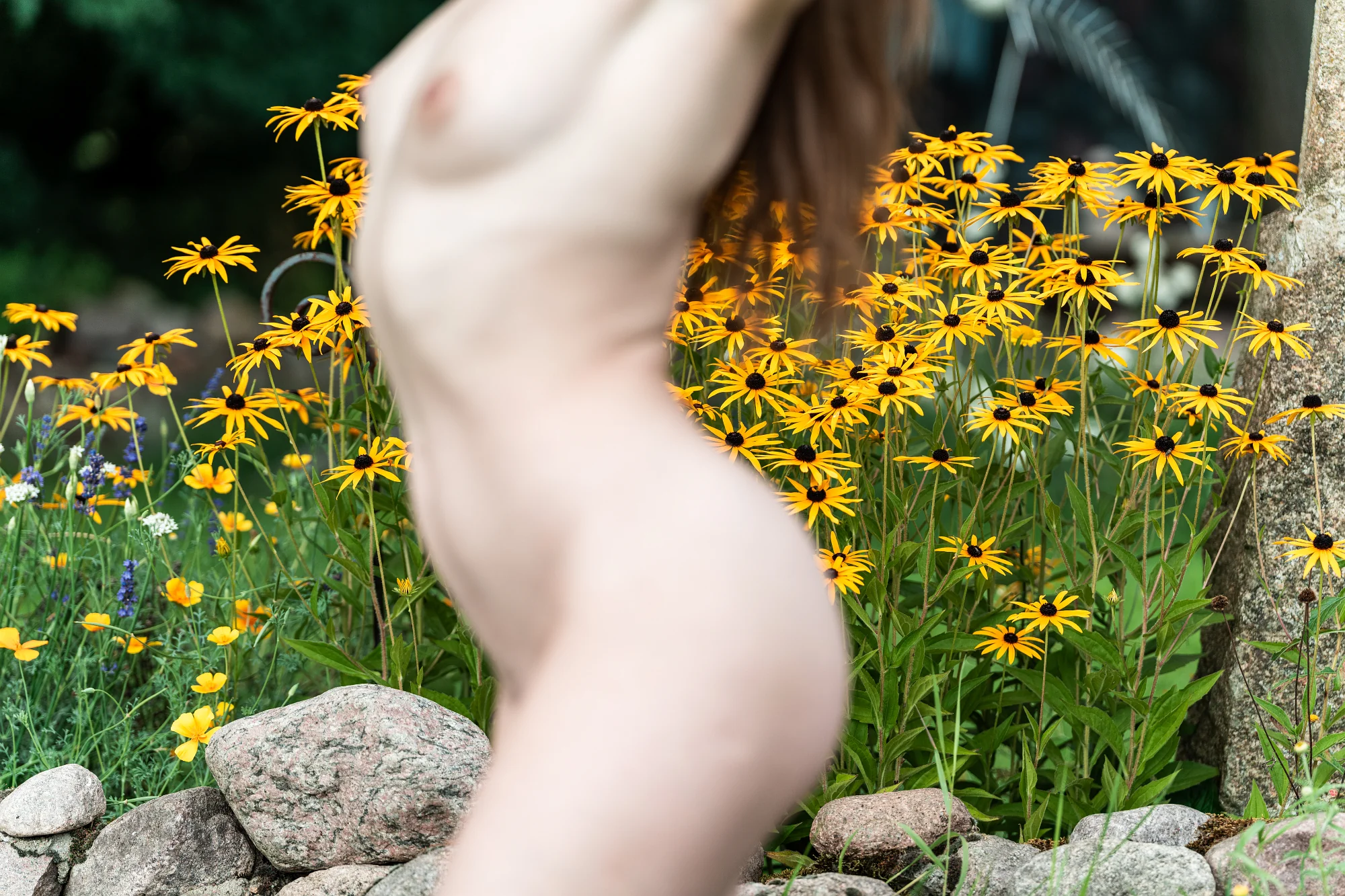
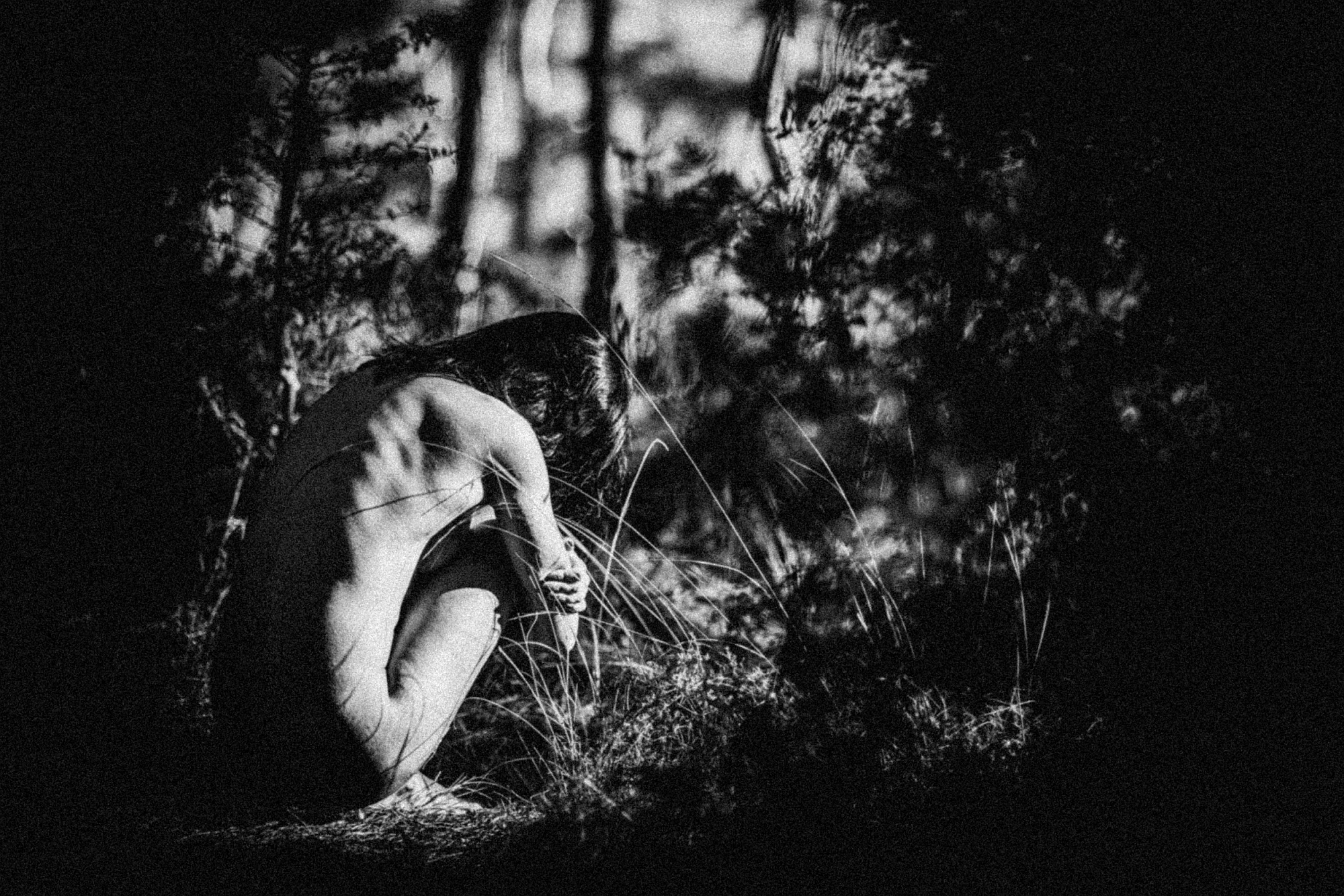
In one photograph, a pale torso presses against the trunk of an old tree, and the twists of the body repeat the twists of the weathered wood. In another, a woman stands among tall reeds whose blades cross her skin until she is only partly visible, one more vertical among many. A figure leans on a wooden fence beside a grazing horse, the arch of her back answering the curve of the animal's, both cut out by the same hard sun. Against a low evening sun, a body becomes a dark shape like the grasses beneath it, and the light passes through the gap between arm and chest. Elsewhere, the body turns soft and out of focus in the foreground while the lake and forest beyond it stay sharp.
Across colour and black and white, the series looks for the moment when the body stops being the subject of the landscape and becomes part of it, taking on its texture, its rhythm, and its light.
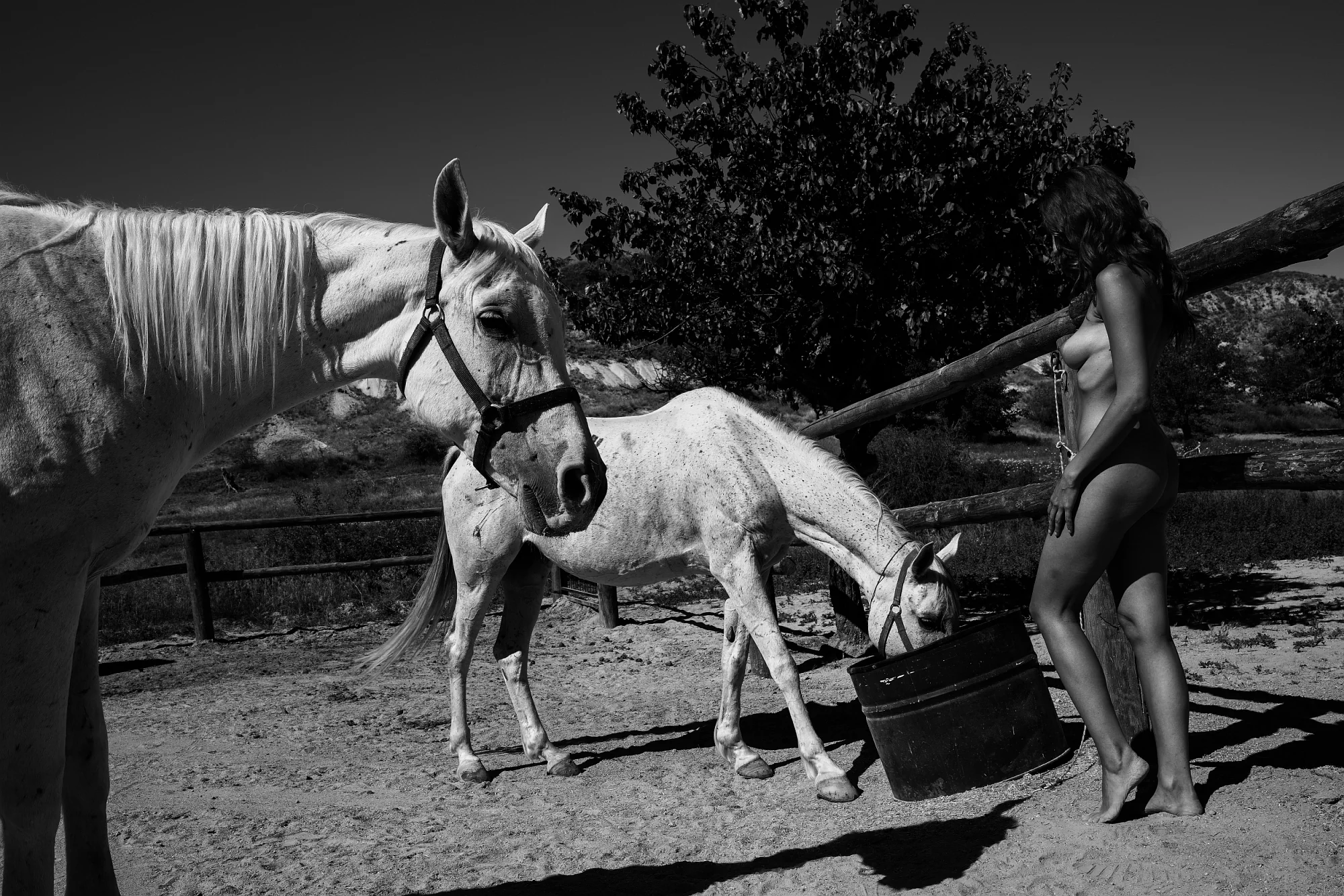
The theoretical ground for the series is Donna Haraway's concept of 自然文化: the recognition that nature and culture are not opposites. In this view, every meadow is partly human work, and every human body is partly made of other species. The horses make the idea concrete. Many meadows exist only because animals graze them or people mow them; left alone, they turn to scrub and then to forest. A landscape that looks wild is often a long collaboration. Tim Ingold's anthropology of walking, Anna Tsing's writing on contaminated landscapes, and Val Plumwood's ecofeminism are the frames within which the series has developed. All three refuse the picturesque tradition, in which "nature" exists as an untouched backdrop for human presence. In Ecotone, there is no backdrop. The body and the environment share the same image and the same ontological level.
This puts the series in tension with a long art-historical lineage it could be mistaken for: the pastoral nude. From Titian's Bacchanal of the Andrians to Anne Brigman's Pictorialist nudes in the Sierra Nevada, the nude in landscape has produced images of harmony, nostalgia, or transcendence. Ecotone keeps these images and sets harder work beside them: figures among rocks, bodies walking into coastal wind, subjects whose presence belongs to a working landscape rather than a romantic one.
Animals, when they appear, are fellow subjects, not symbols or props. The horses in particular share the frame without being subordinated to the human figure. An animal cannot be directed the way a model can, so each of these images also accepts a decision the photographer did not make. The compositions are built to refuse the hierarchy that usually separates figure from ground.
The pandemic sub-series 当一切都远去时,只有你近在咫尺 forms a separate chapter within Ecotone.
作品选
Ecotone - 画廊