
Niche
The Body in Domestic Space
The hollow a body feels when it is left alone in a room, and the moment it begins to dissolve into that room.
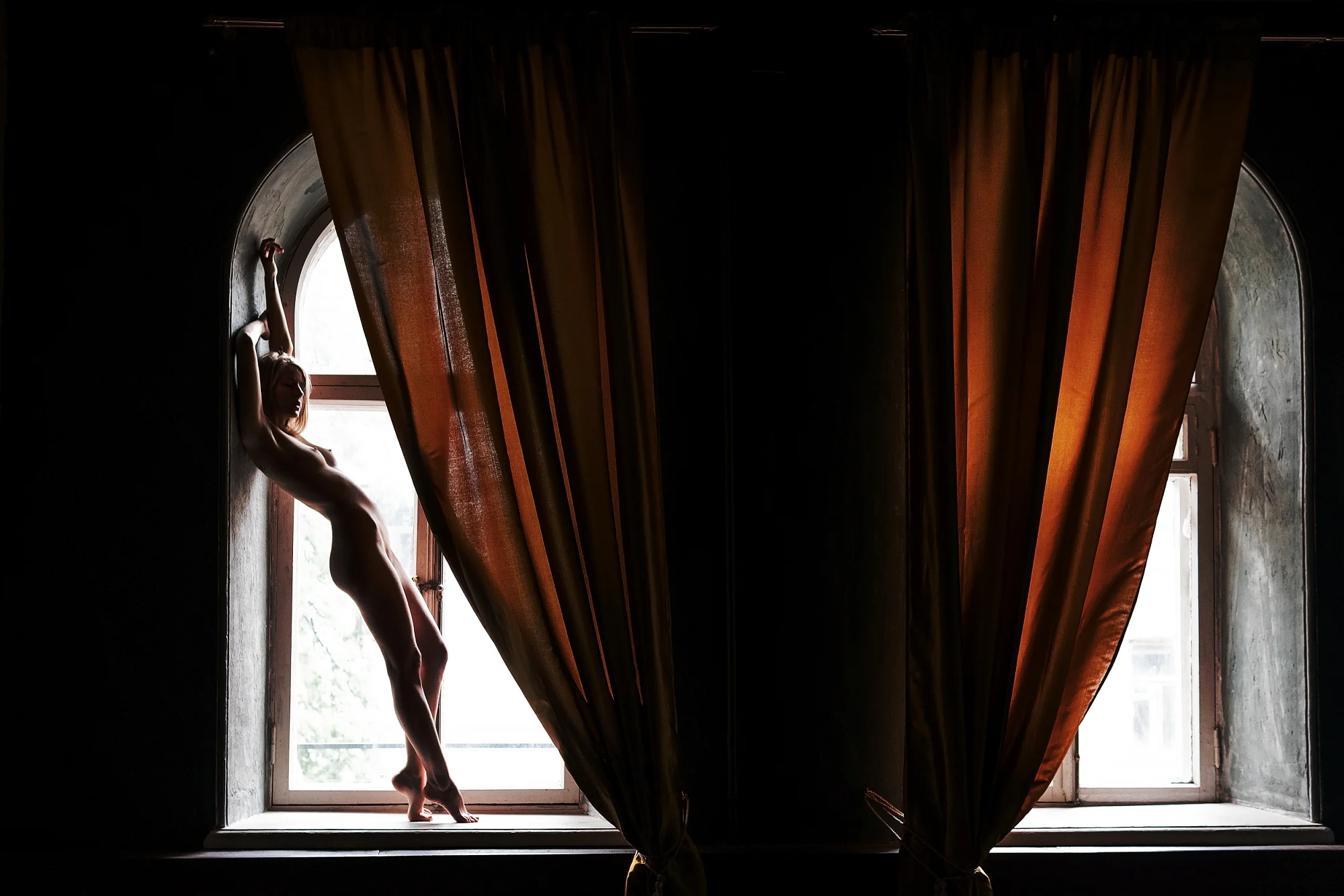
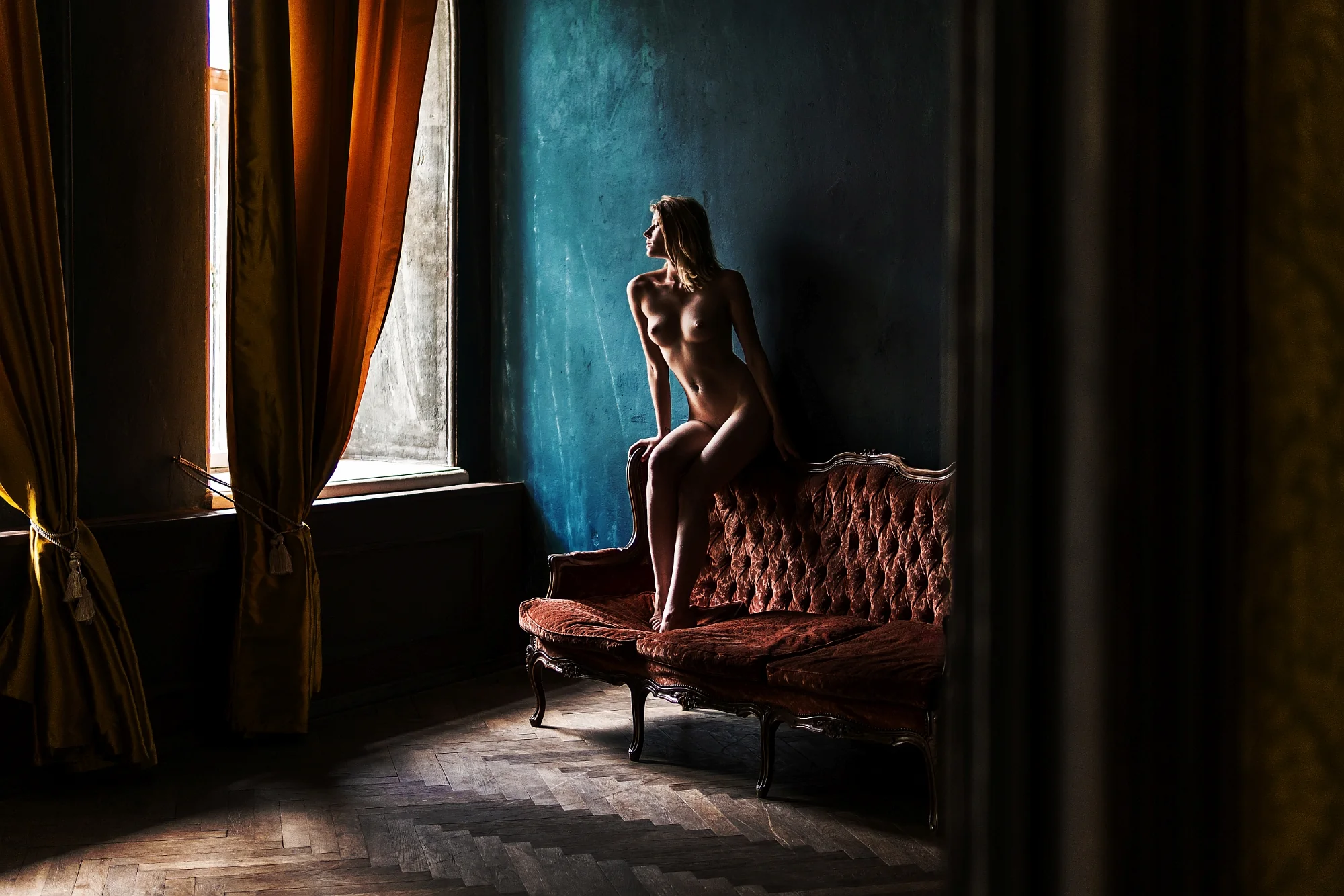
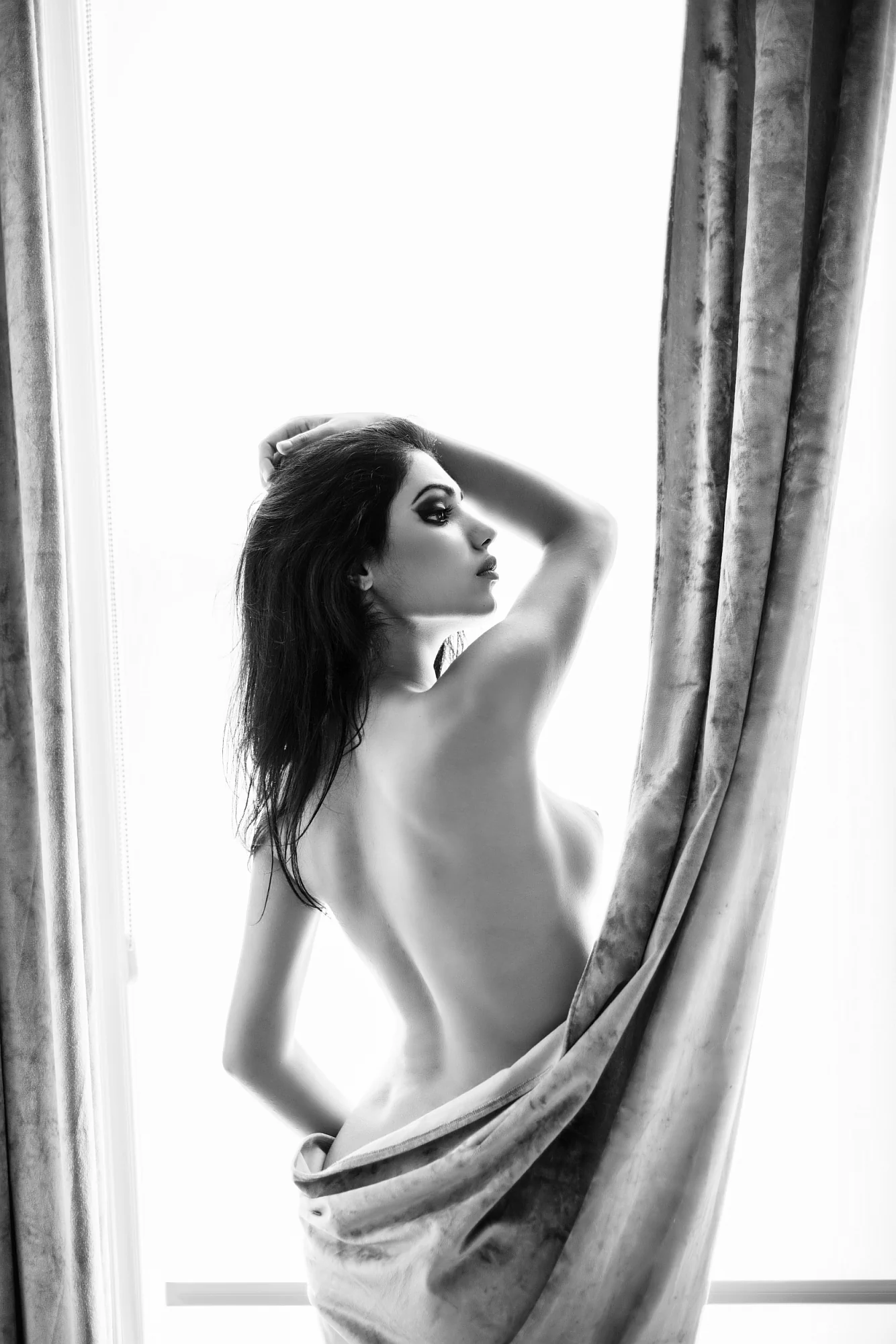
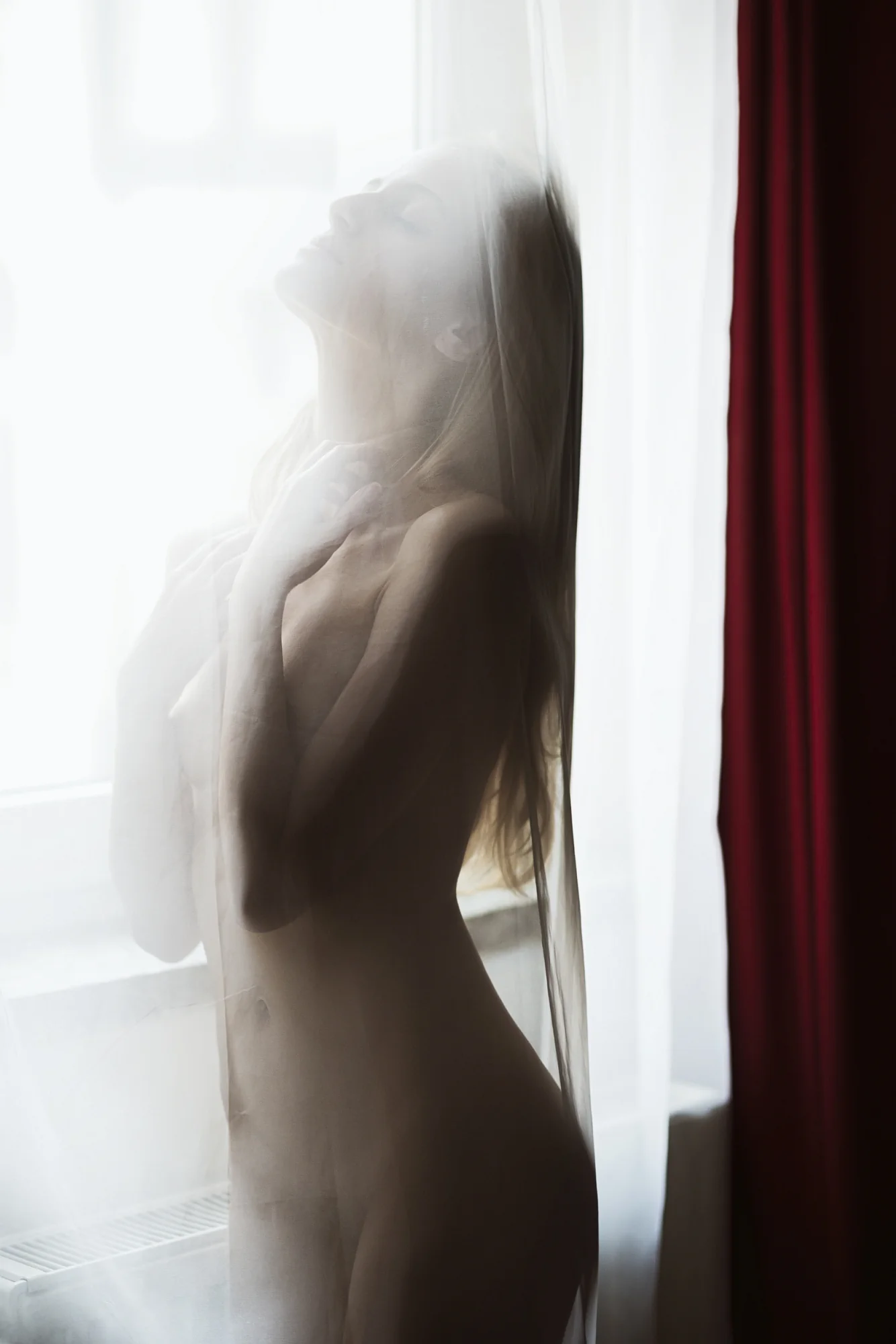
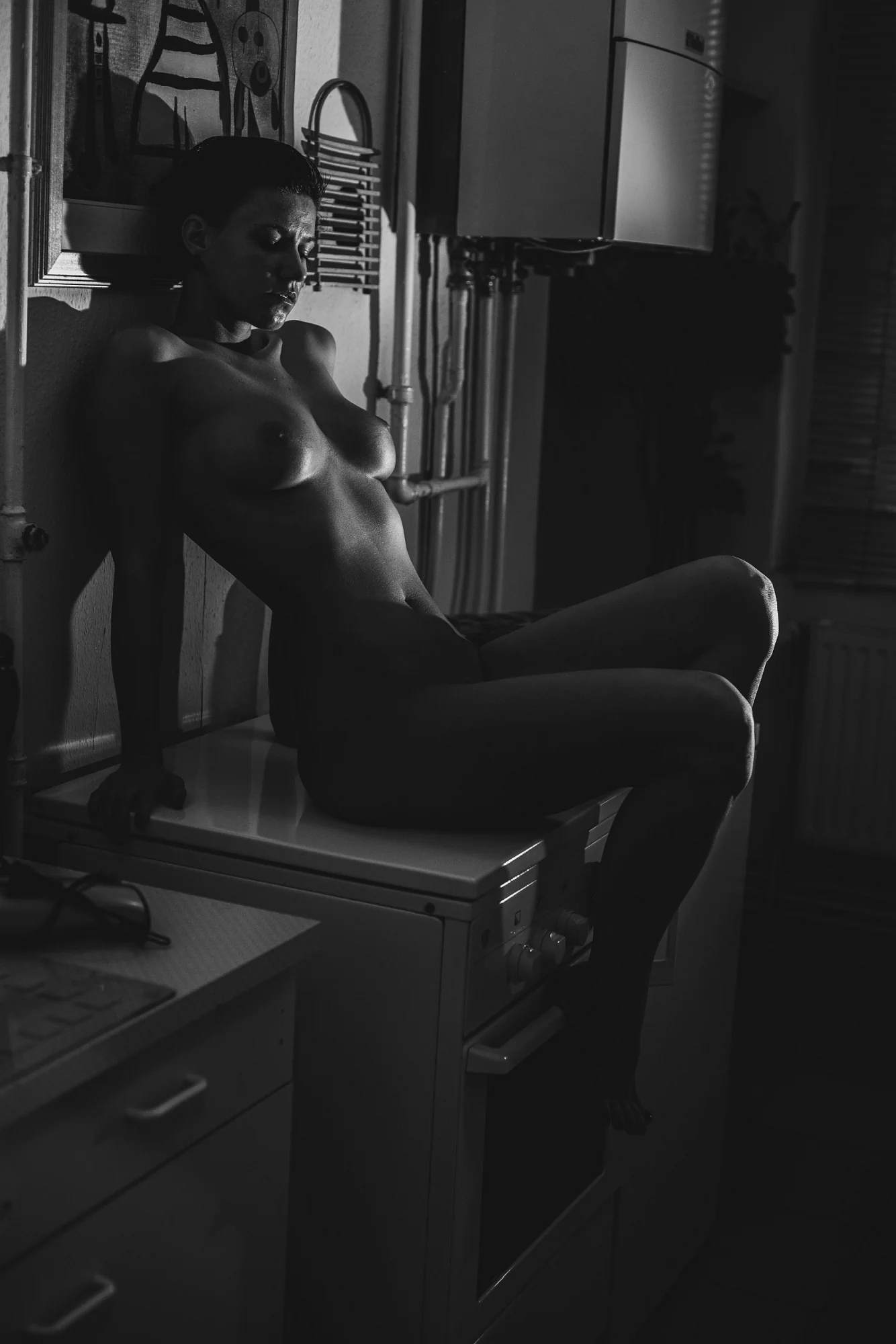
A niche is a hollow in a wall: a space shaped for something that is not yet there. Niche takes this as its starting point. The series photographs the emptiness a body feels when it is left alone in a room, the hollow that opens around a person once everyone else has gone. A woman leans into a curtain, curls around the arm of a chair, rests in the light between two rooms. The camera stays outside this solitude and records what happens when the body has nowhere else to be.
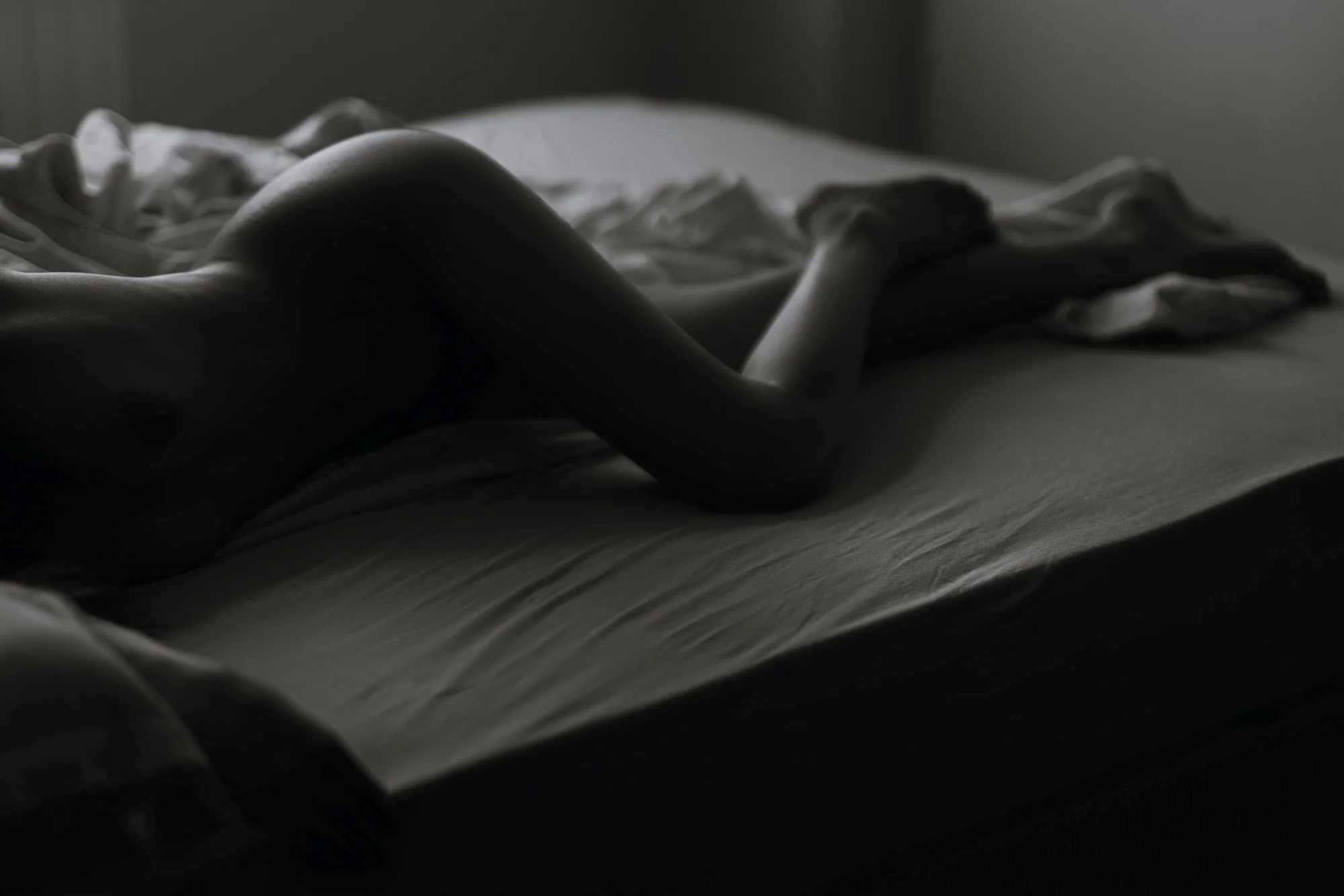
Rooms are made to the measure of bodies. A chair keeps the angle of a back, a bed the length of a sleeper, a doorway the height of someone walking through, so that even an empty room describes the people it was built for. Left alone, a person begins to fit into the shapes the room has kept. A corner is the smallest shelter a room can offer: two walls meeting, enough to hold a body that wants to be held.
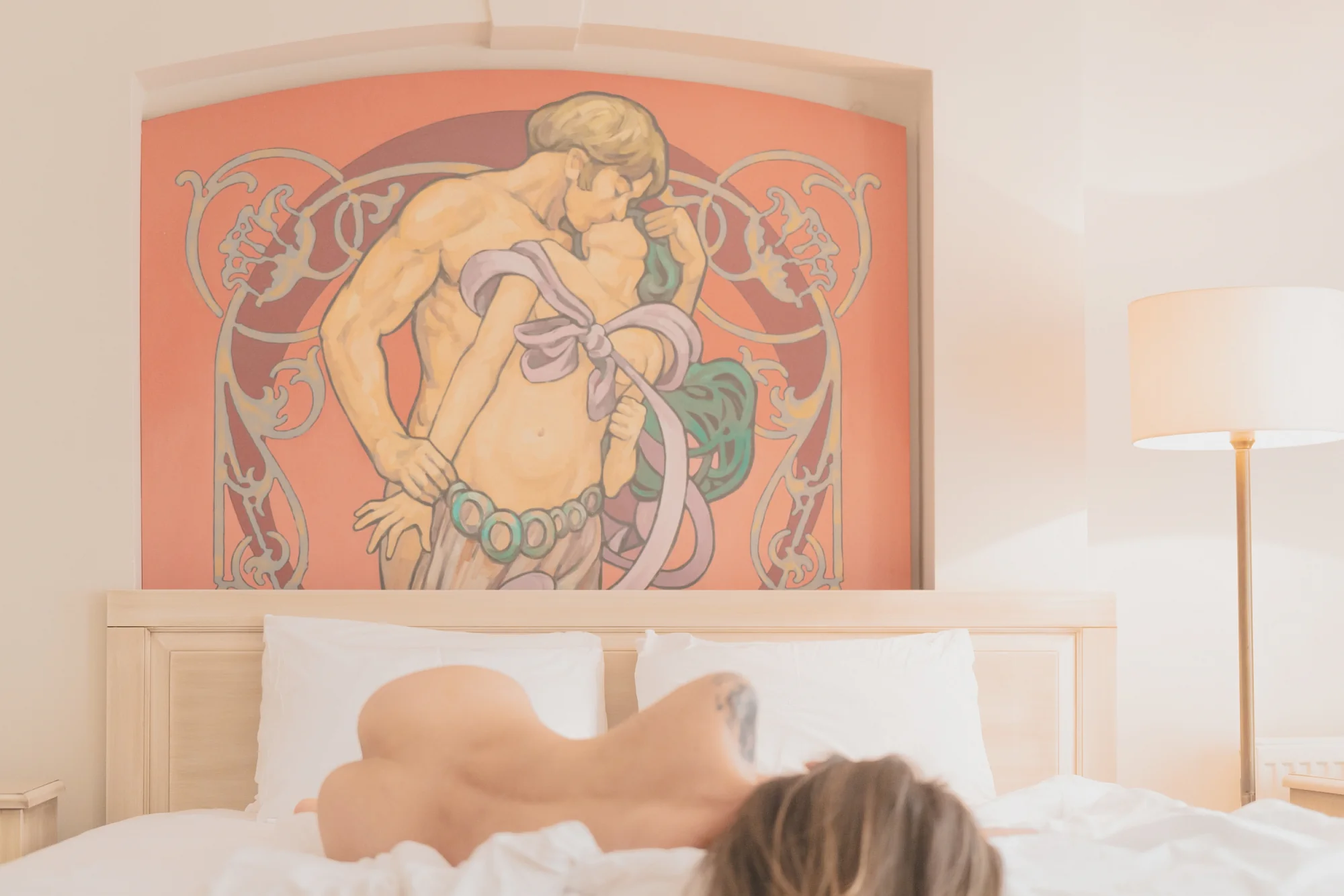
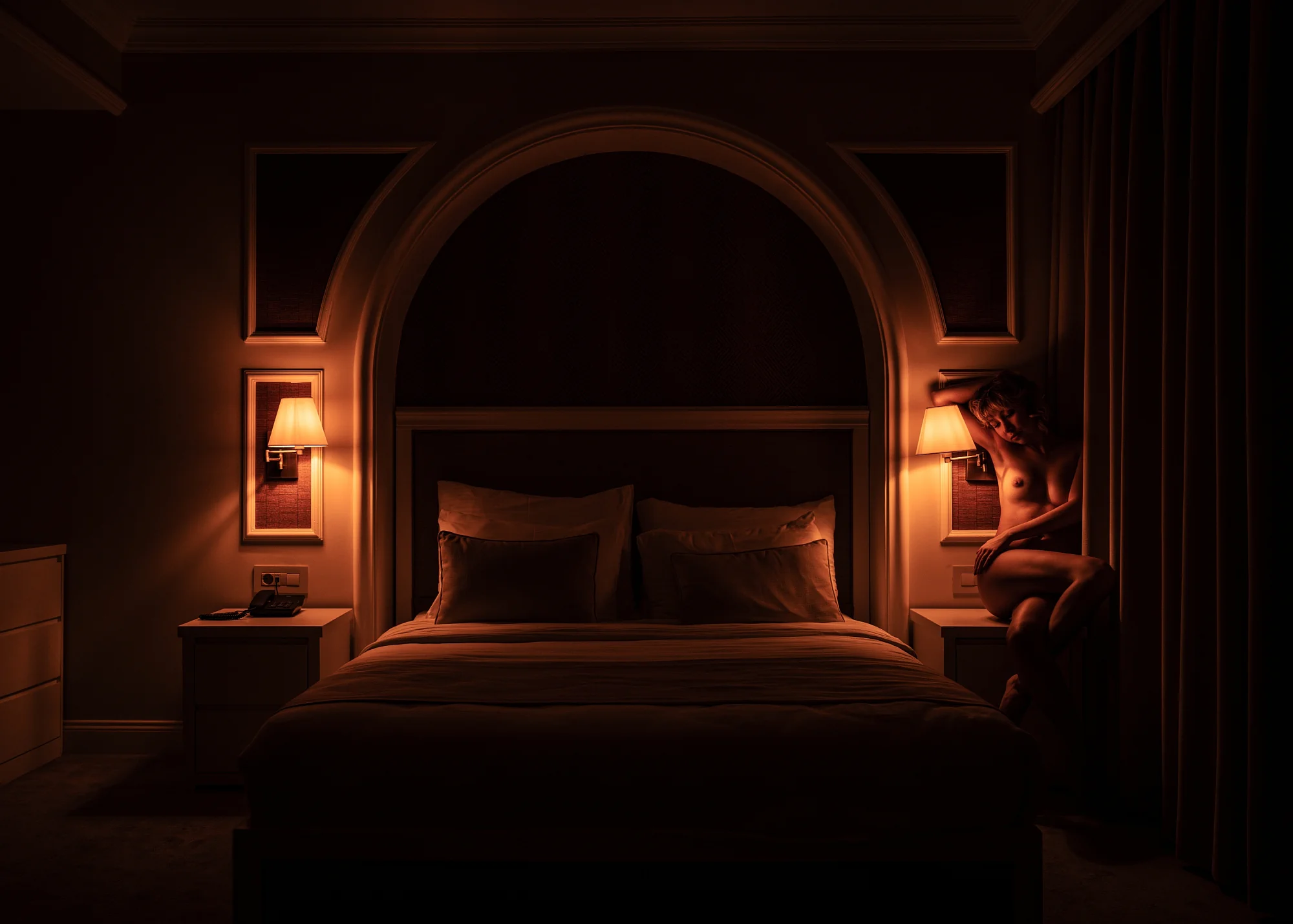
In one photograph, a hotel room is arranged in strict symmetry around an empty double bed, set inside an arched recess. Two wall lamps burn on either side. The woman sits curled at the far edge of the frame, beside the curtain, her skin taking on the same amber as the walls. The centre of the image belongs to absence; the body waits at its margin. In another, a figure stands in profile at the foot of a staircase, one arm raised against a doorframe. A narrow blade of side light finds her shoulder and hip, and the rest of her sinks into the dark wood around her, the curve of her back repeating the curves of the stained-glass door behind.
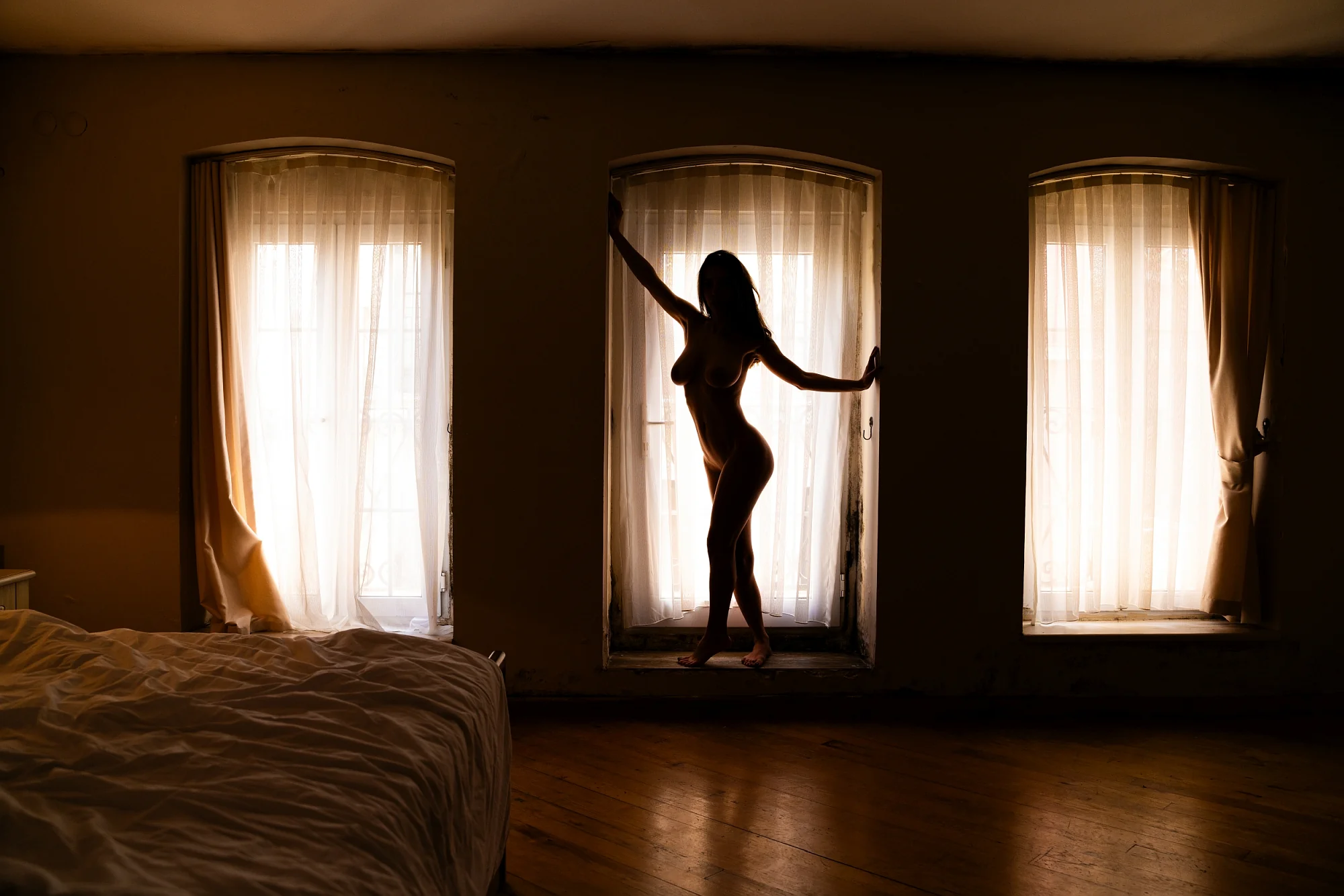
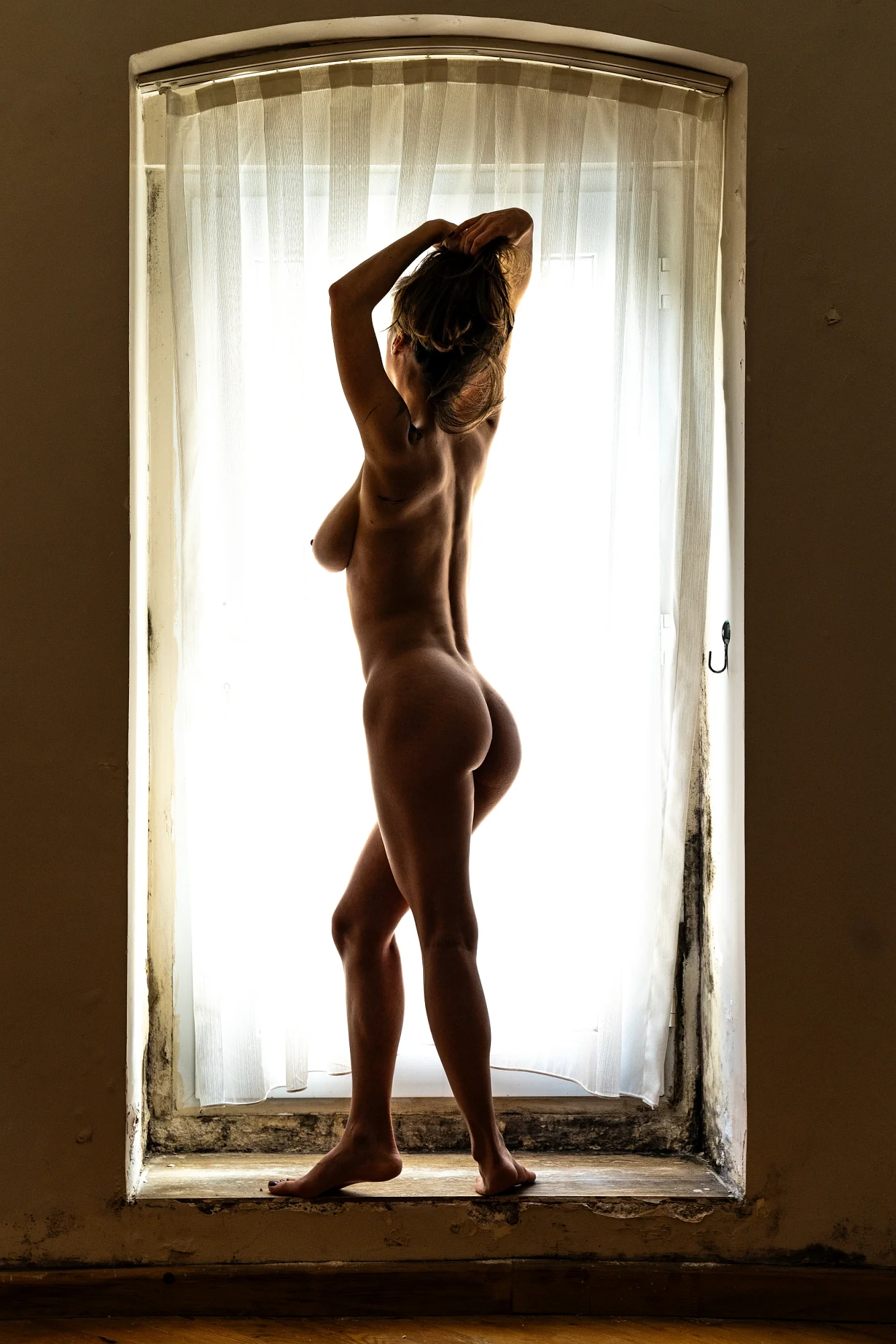
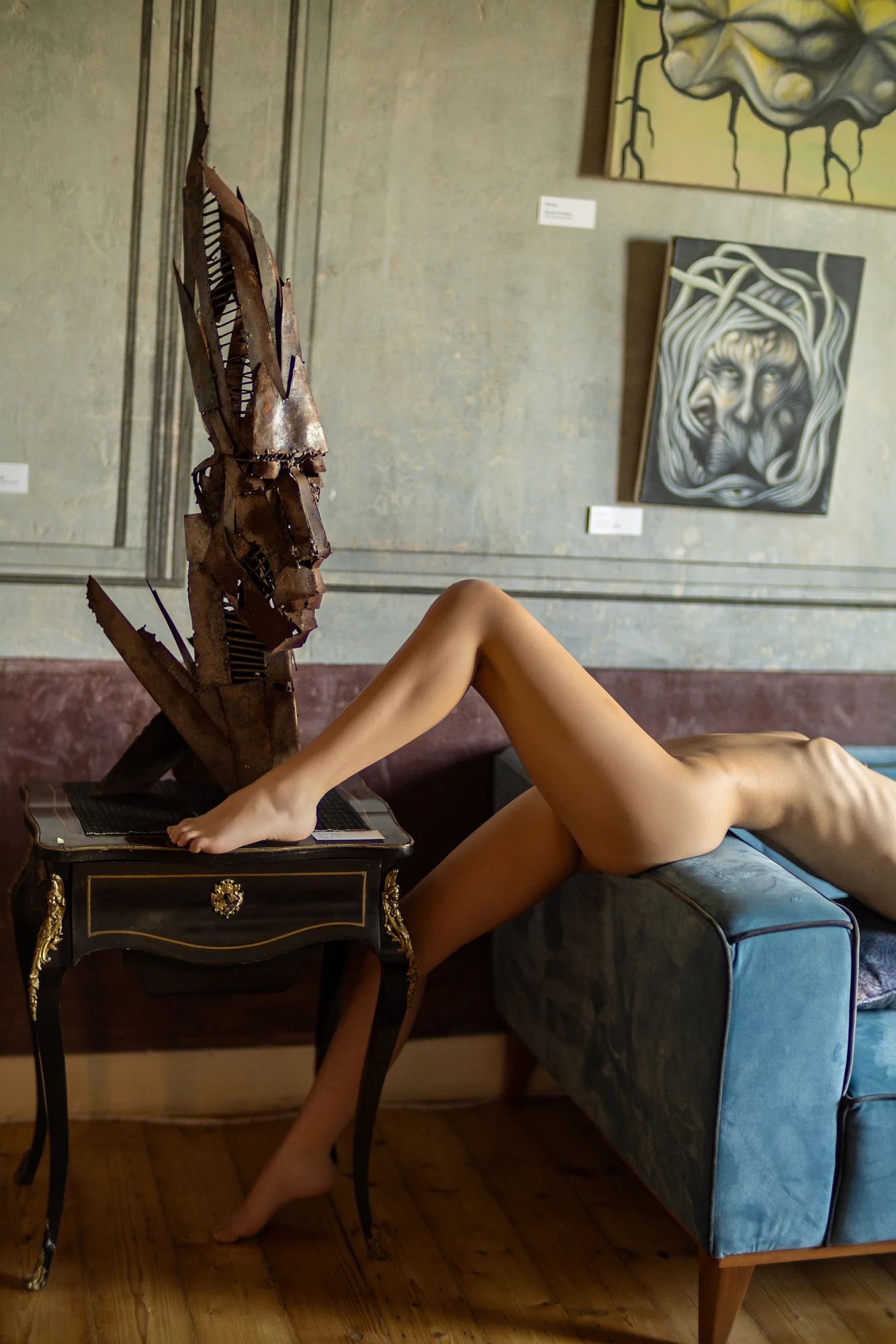
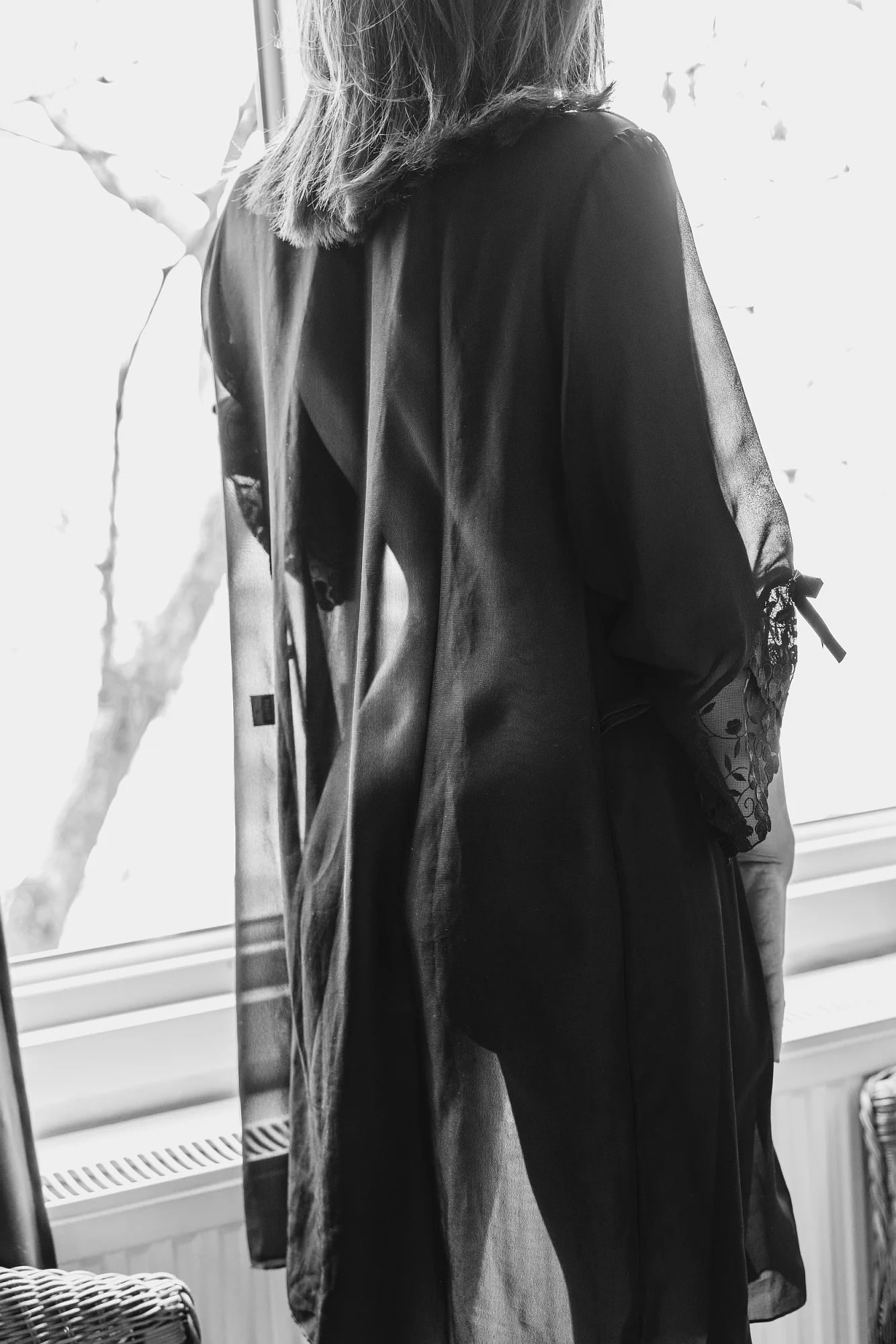
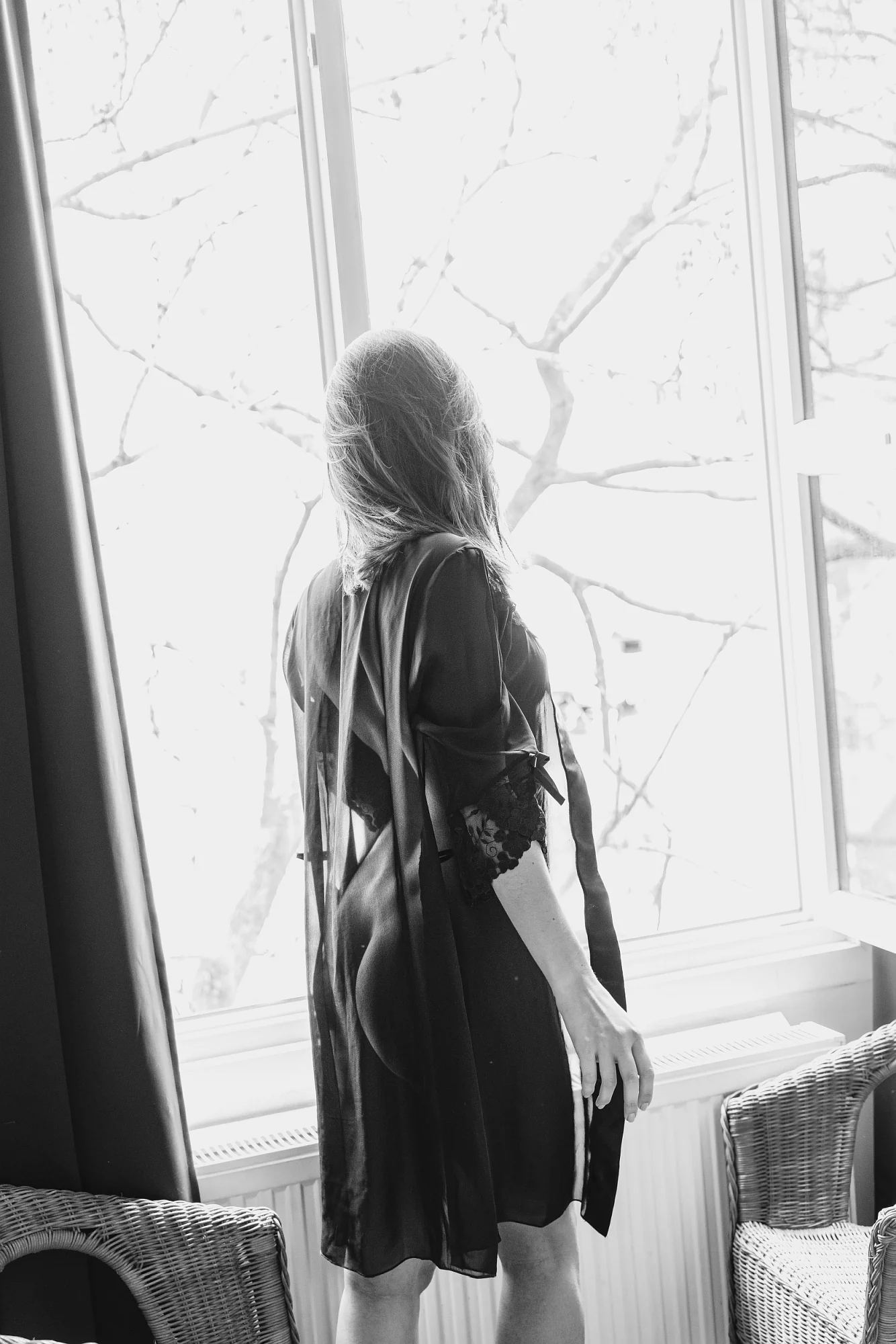
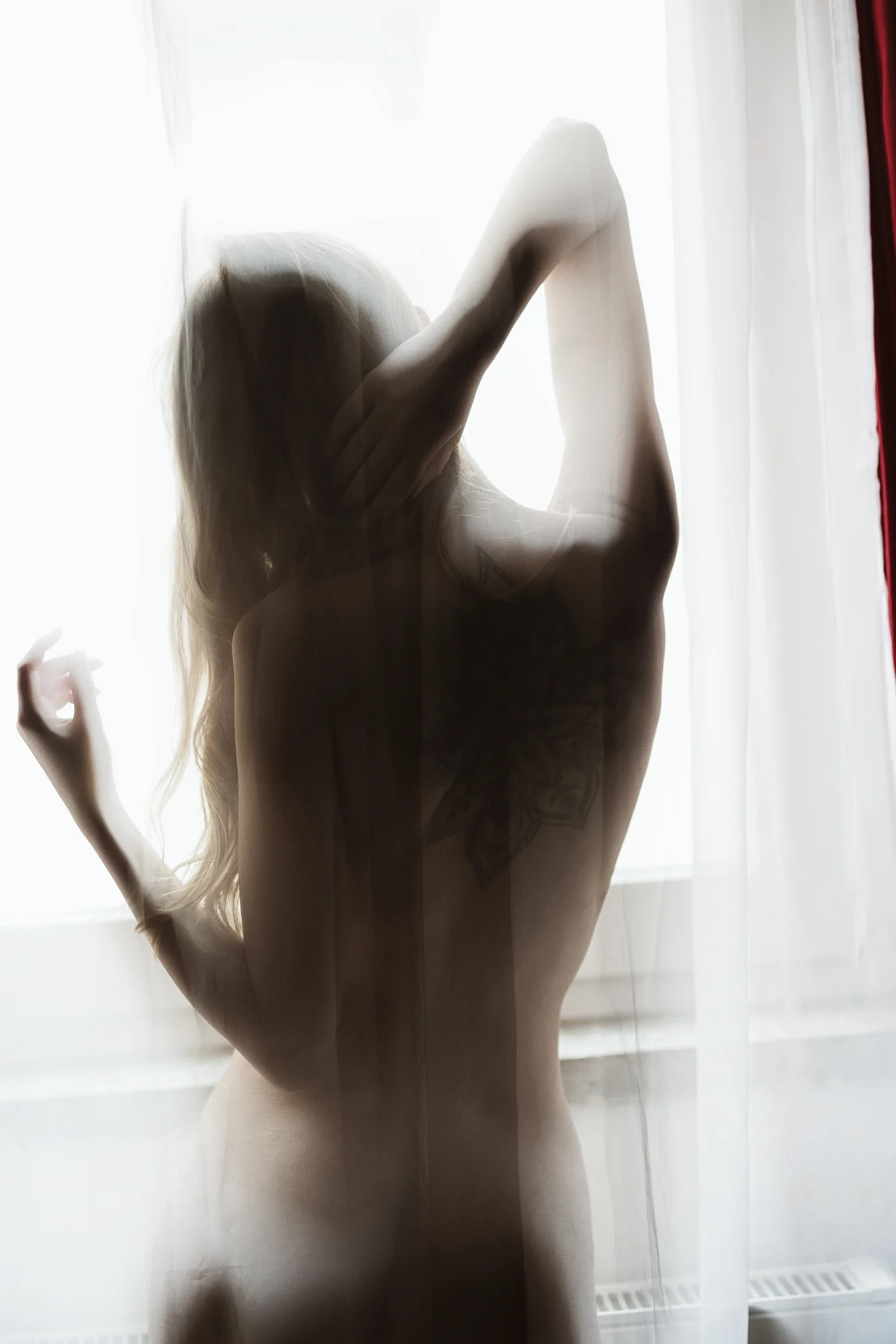
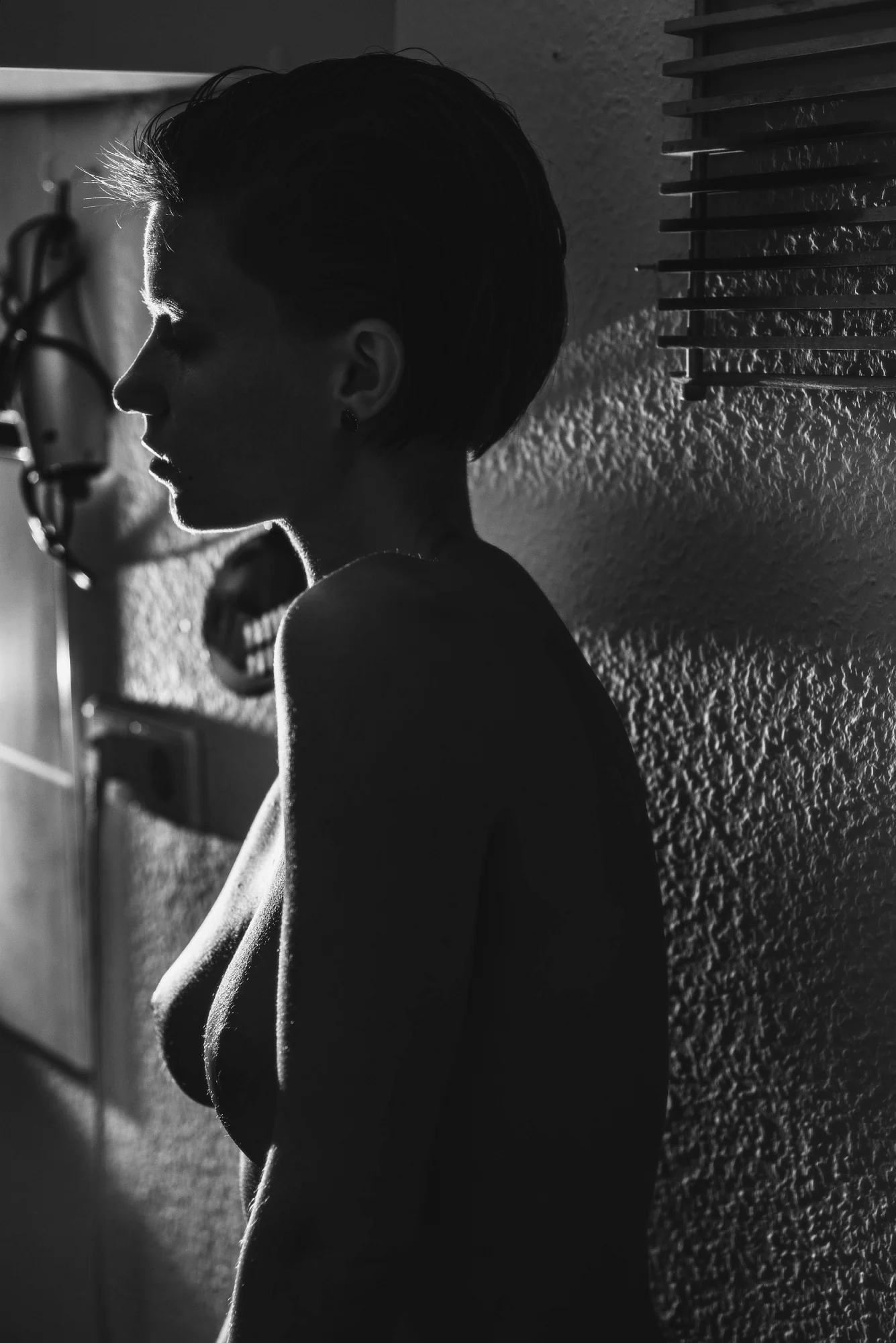
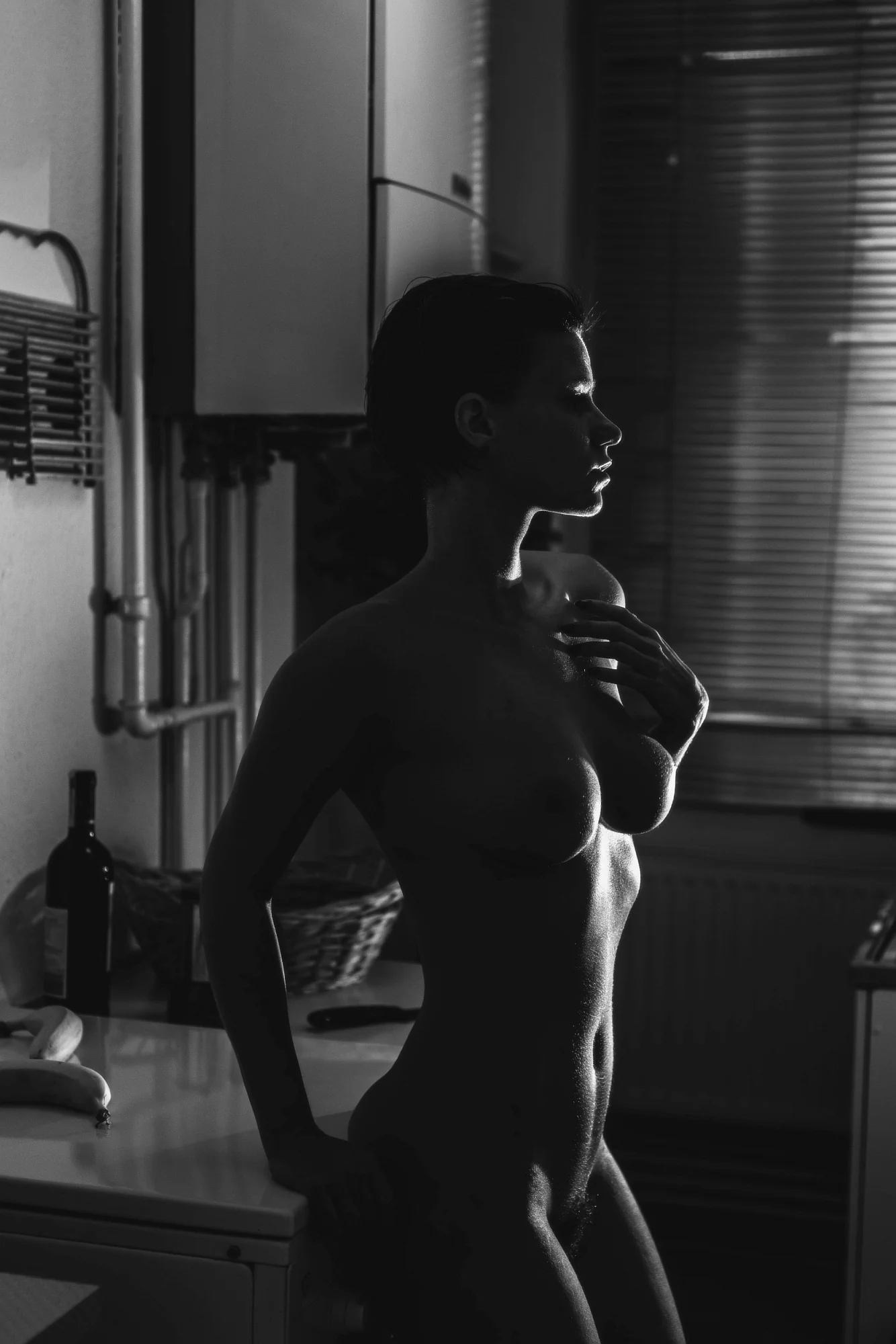
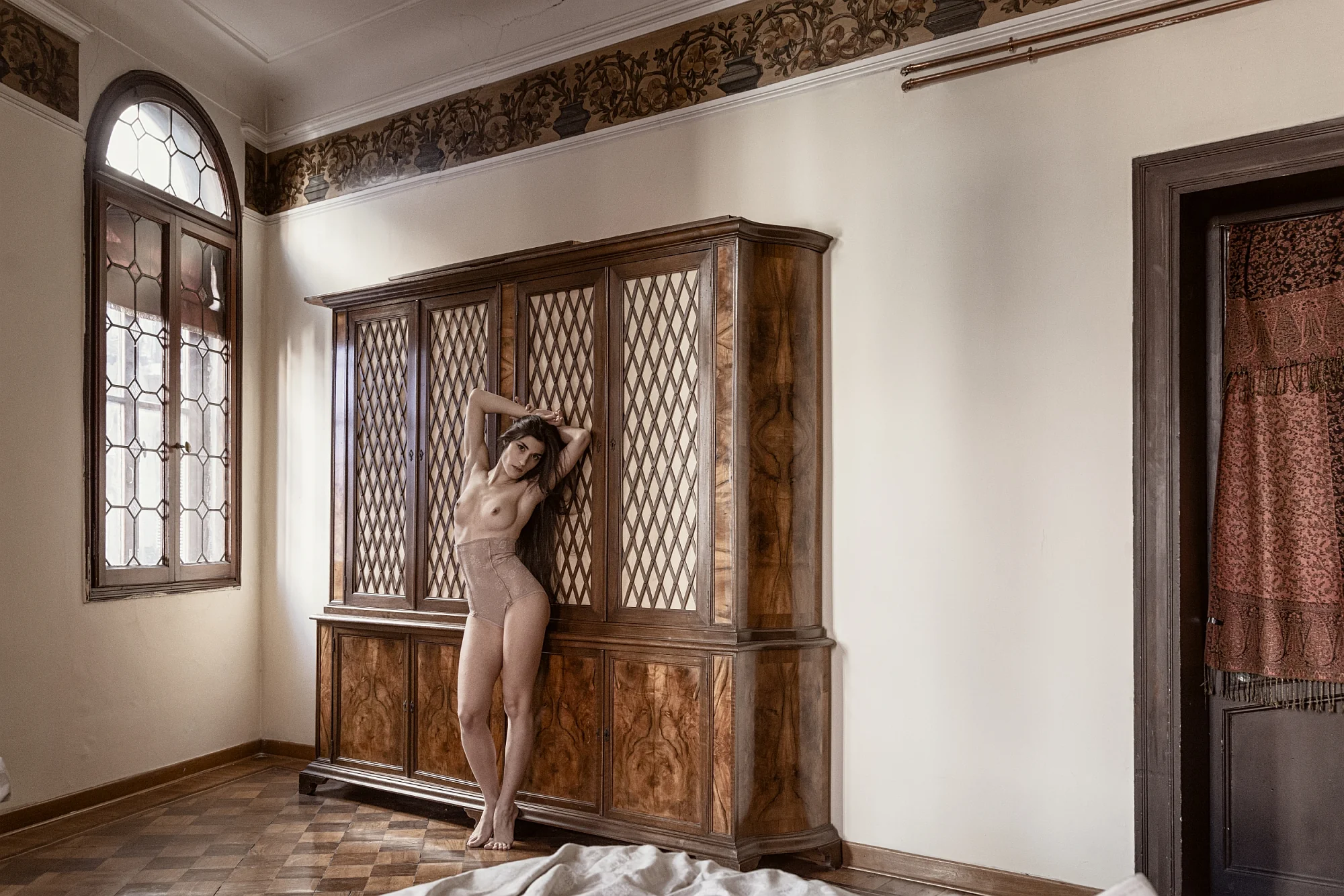
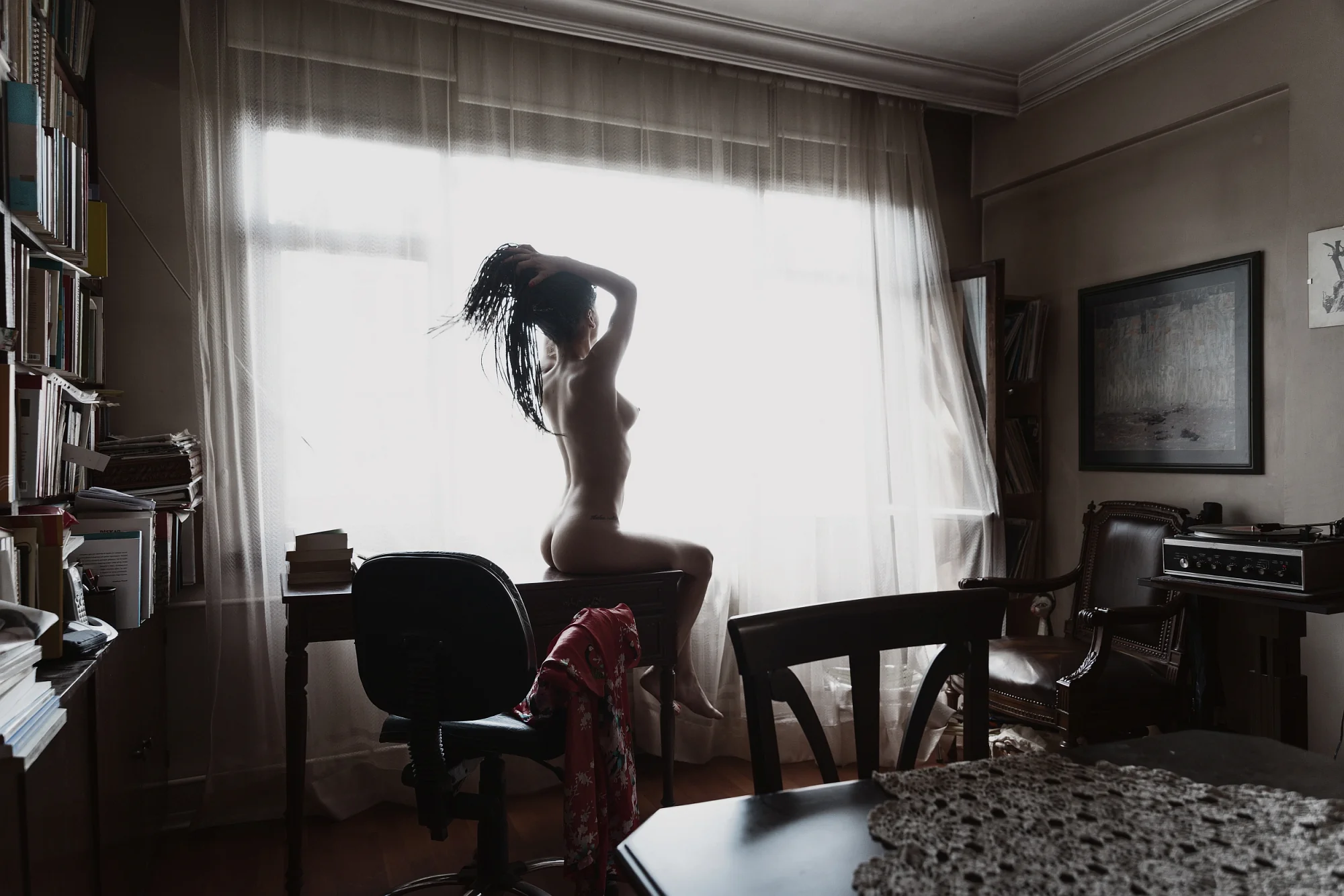
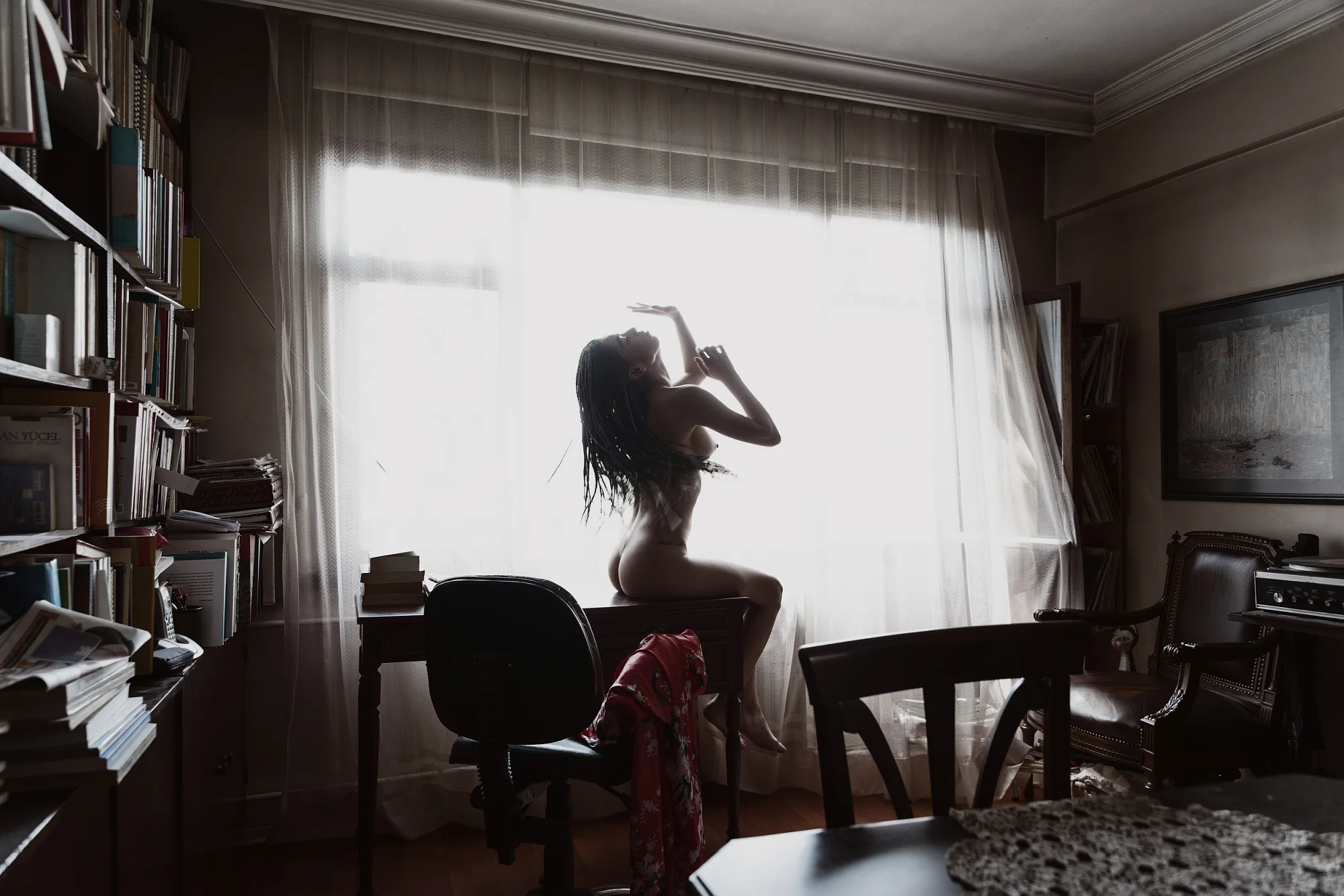
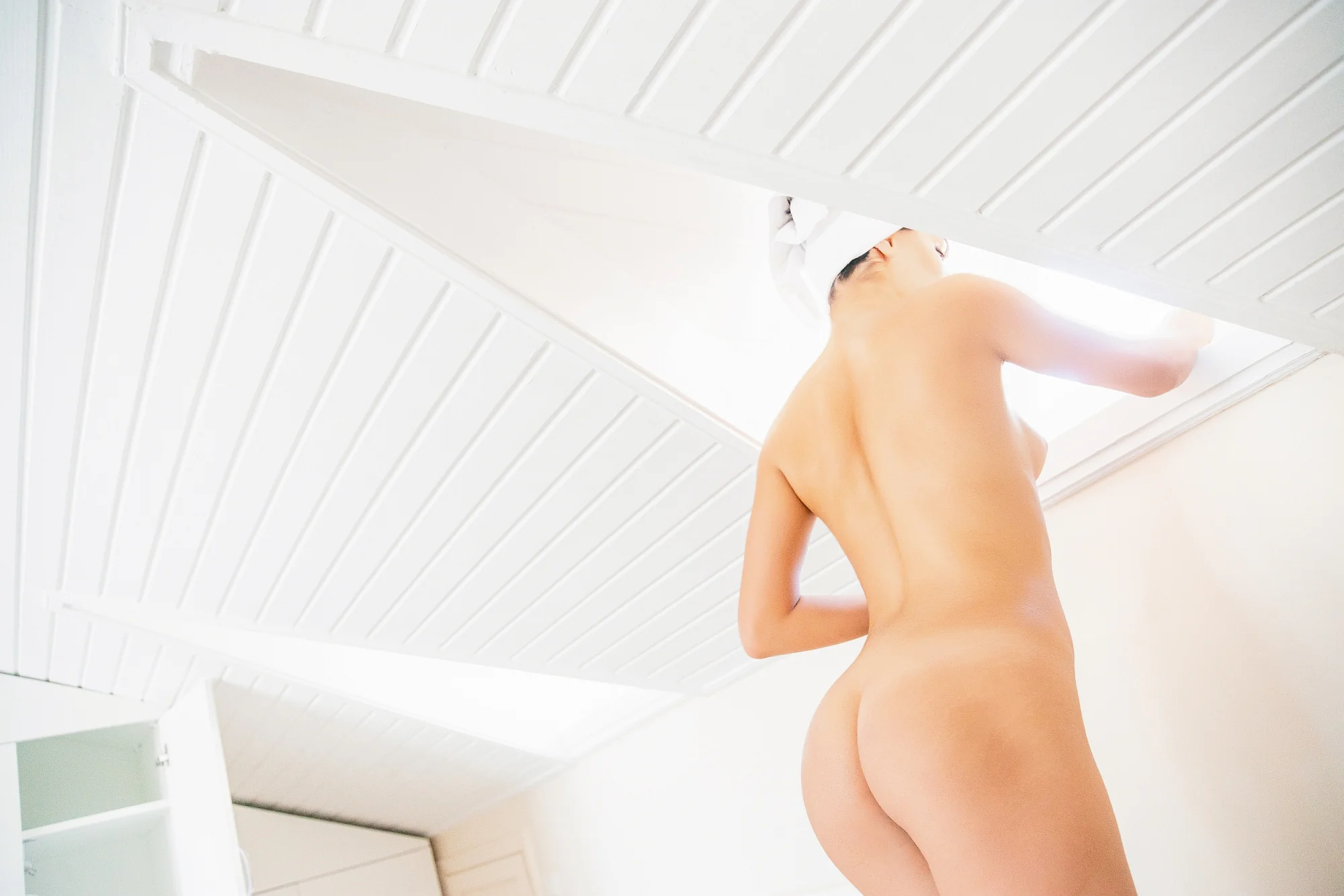
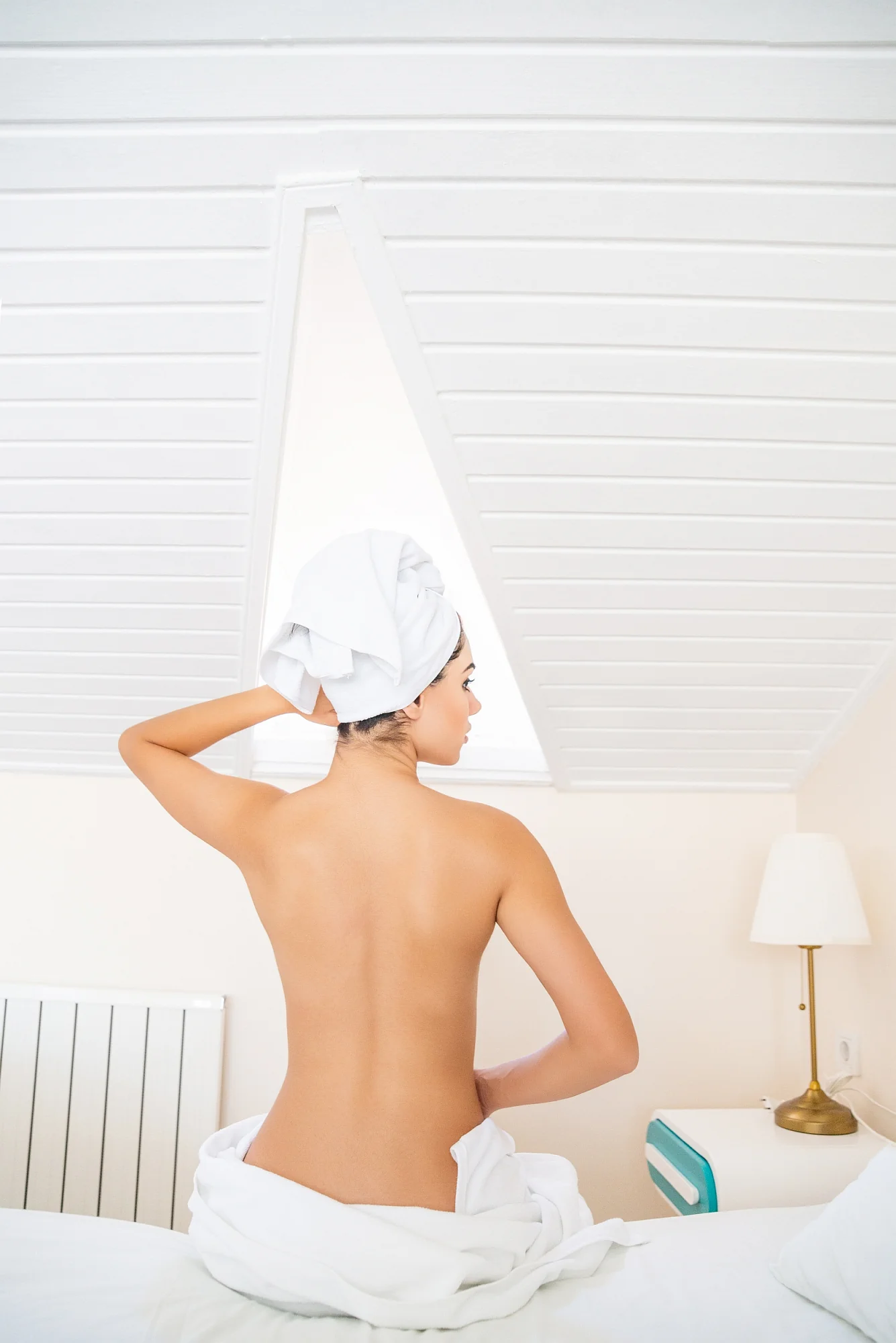
The figures occupy the room's own hollows: the inside of an ornate wooden cabinet, the depth of a window embrasure, the shadow beneath a skylight. They fold themselves into corners as if the room had made space for them. Slowly, the boundary between body and room loosens. Against a bright window, a figure becomes a dark contour, one more shape in the architecture; in a pale room, skin and linen share the same light; in a dark one, the body sinks back into the shadow around it.
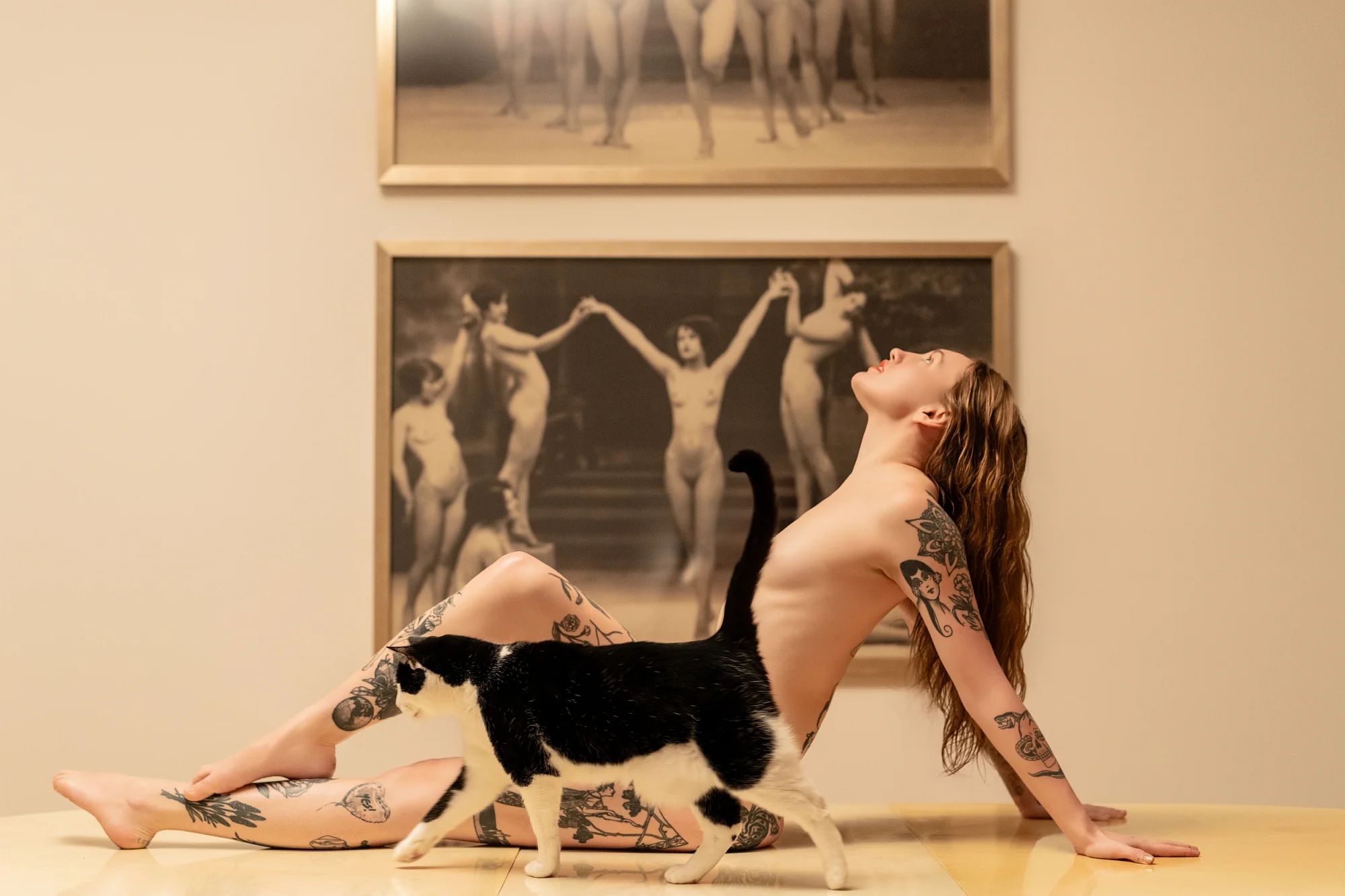
Colour and material carry this merging. Heavy curtains in burgundy and brown fall around the figures like stage drapes; velvet armchairs hold bodies the way hands hold faces. Warm ambers and rusts, cooler notes of teal and deep blue, rooms washed almost white: the palette of the room becomes the palette of the skin. Cats appear in several photographs, curled nearby, walking past, watching: silent witnesses to private hours.
On the walls, art answers back: Alphonse Mucha's sinuous figures, classical drawings of draped women, photographs of nudes. These images-within-images form a mise en abyme in which the photographed body echoes the bodies already hanging in the room.
The work sits in dialogue with Johannes Vermeer's interiors, where light enters through leaded windows and figures are held between action and stillness. The rooms of Niche are more worn and lived-in: apartments with radiators and winter trees visible through the glass, villas with cracked plaster, anonymous hotel rooms beneath Art Nouveau headboards. Nan Goldin's domestic photographs register here too, though in a softer, less confessional key.
Painting has often shown a woman alone in her room as if through a keyhole, unaware of being watched, her privacy offered to the viewer as a reward. Niche keeps the distance of the doorway and drops the pretence of secrecy. The figure knows the camera is there. The solitude in the frame belongs to the person in it, who decides how much of it to show.
Burak's most recent works convey portions of female body parts with extreme high contrast and in fusion with texture; however, his works showing full female figures in interiors convey a sense of psychological and theatrical strategy towards understanding the relationship between figures and space.— Michael Hanna, Curator, Aedra Fine Arts (full review)
Selected Works





Editions
Archival pigment prints are released in limited editions of 5 + 1 Artist Proof, printed on Hahnemühle Photo Rag and Baryta papers. Selected works are represented on Artsper, Saatchi Art, and Artmajeur. For direct inquiries, exhibition loans, or collector pricing: print@burakbulut.org.Burak’s most recent works convey portions of female body parts with extreme high contrast and in fusion with texture, however his works showing full female figures in interiors convey a sense of psychological and theatrical strategy towards understanding the relationship between figures and space.Aedra Fineart - Michael Hanna. Full Article: https://www.pointpleasantpublishing.net/single-post/burak-bulut-yildirim