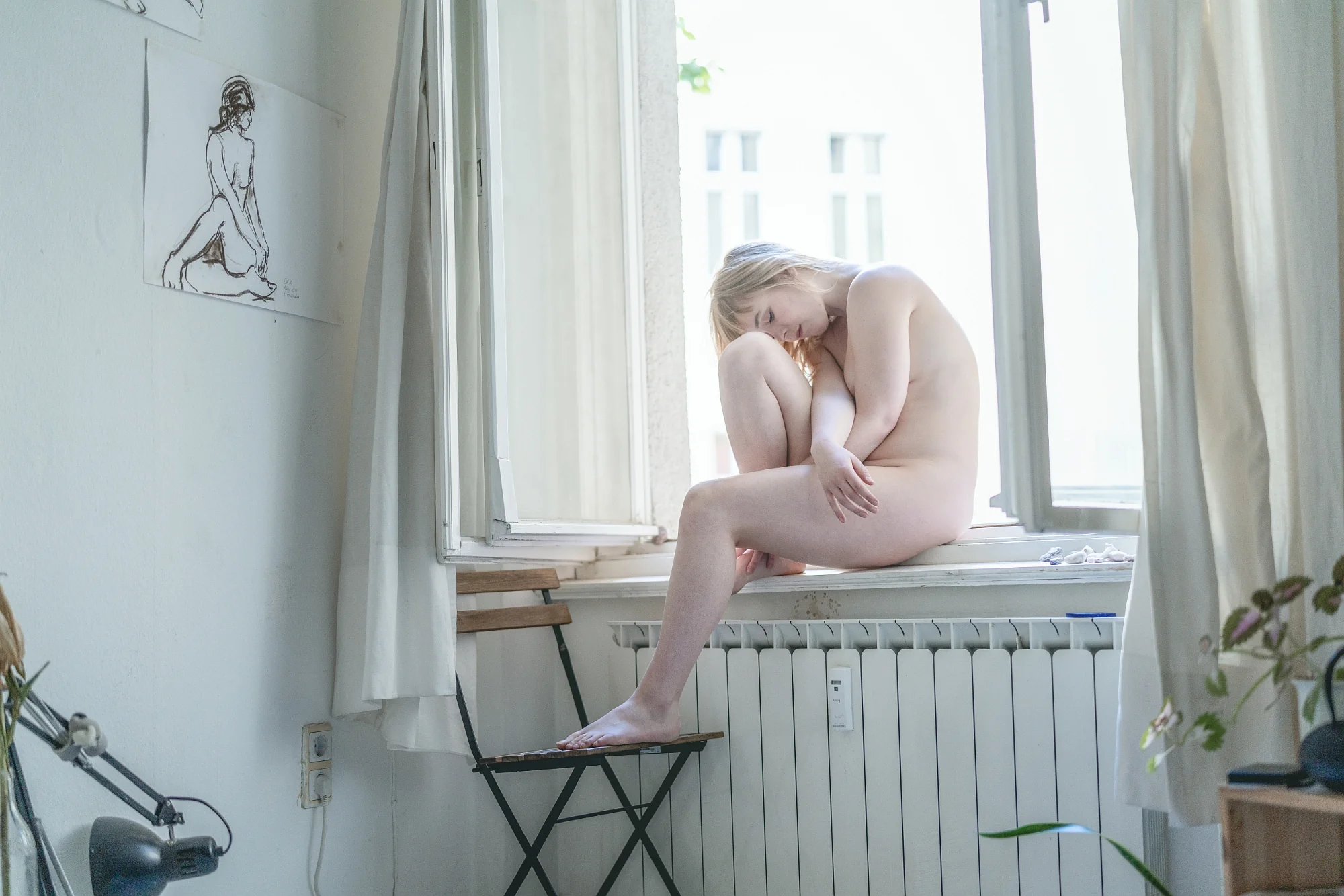
Not sadness as expression, but melancholy as a way of inhabiting a room.
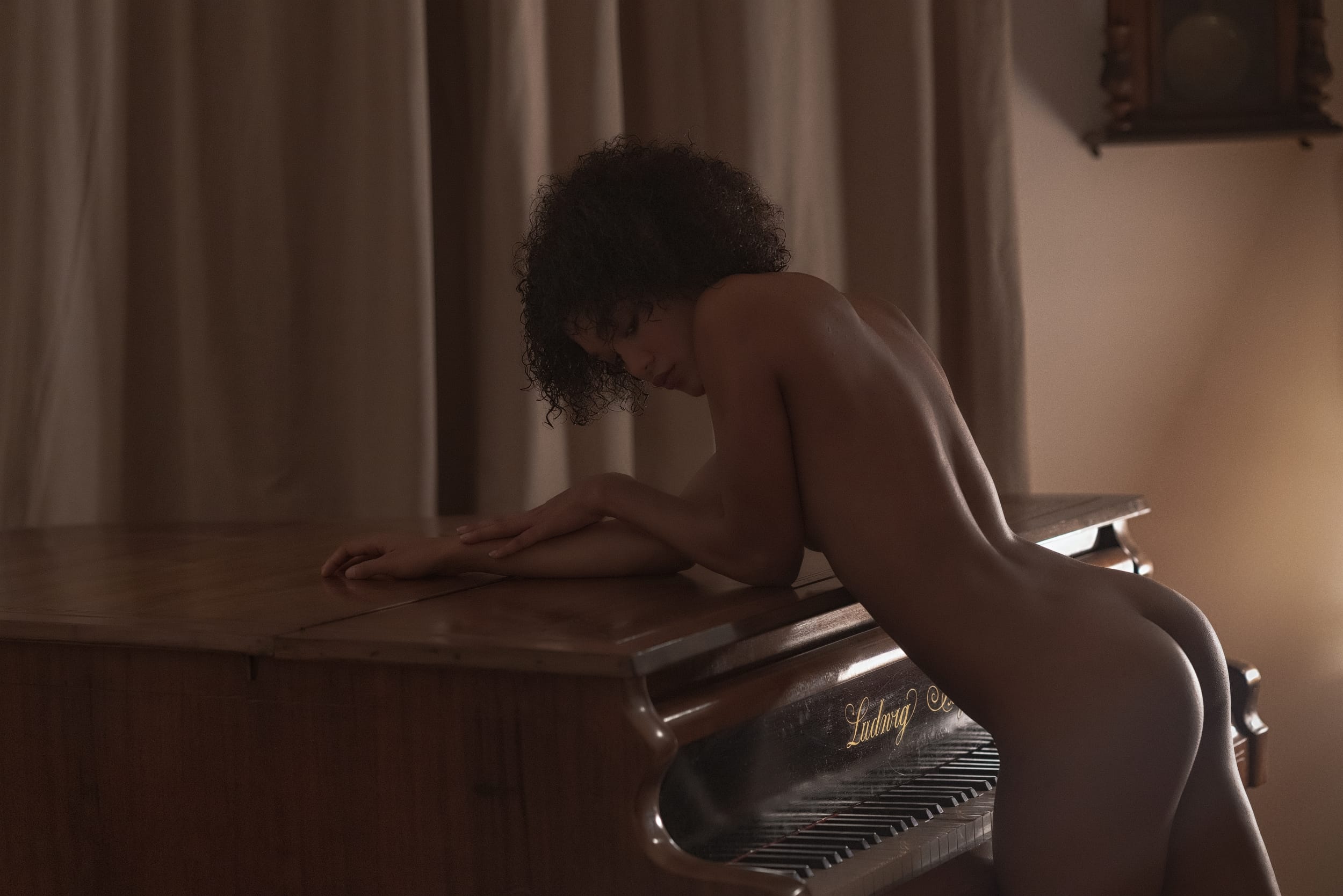
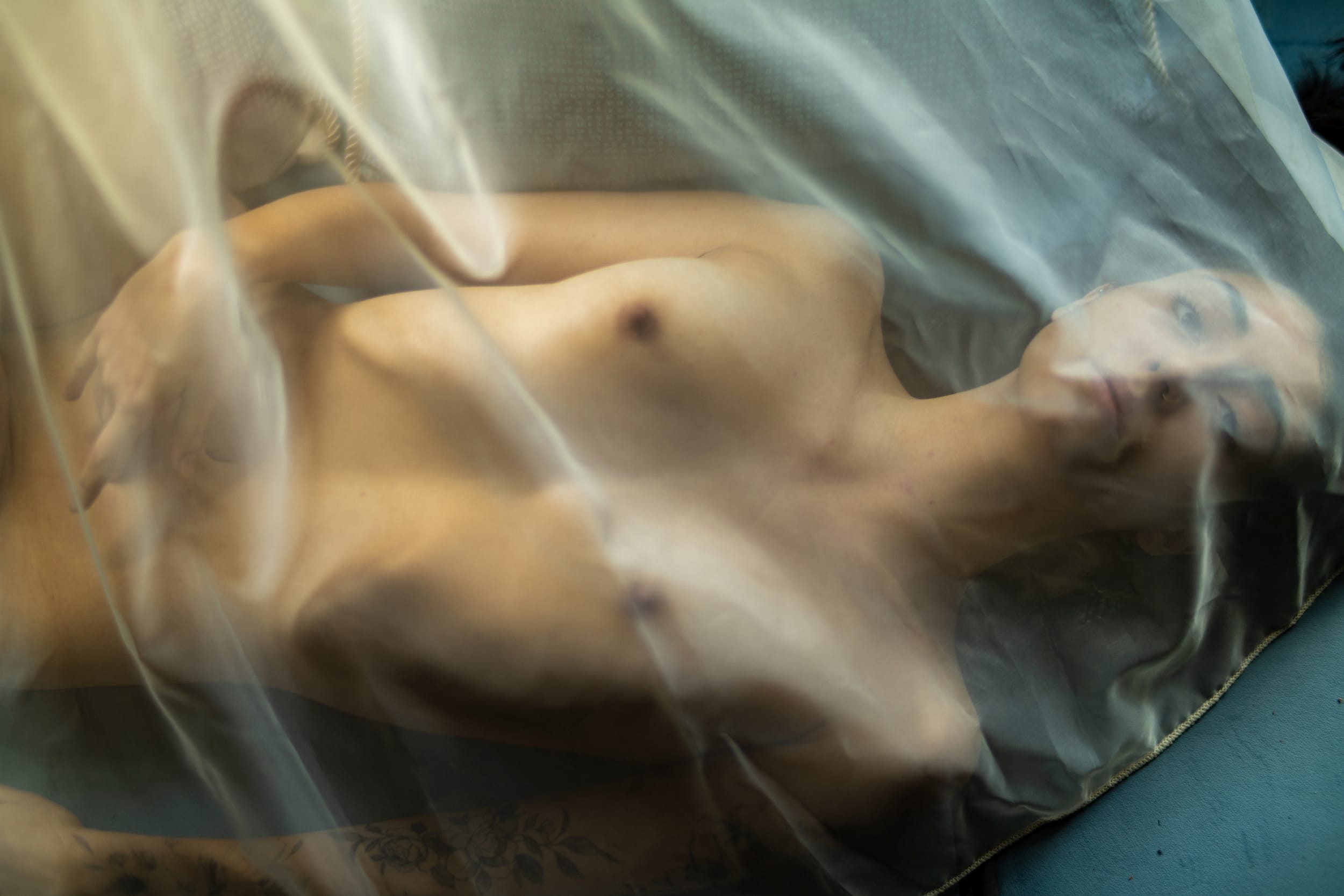
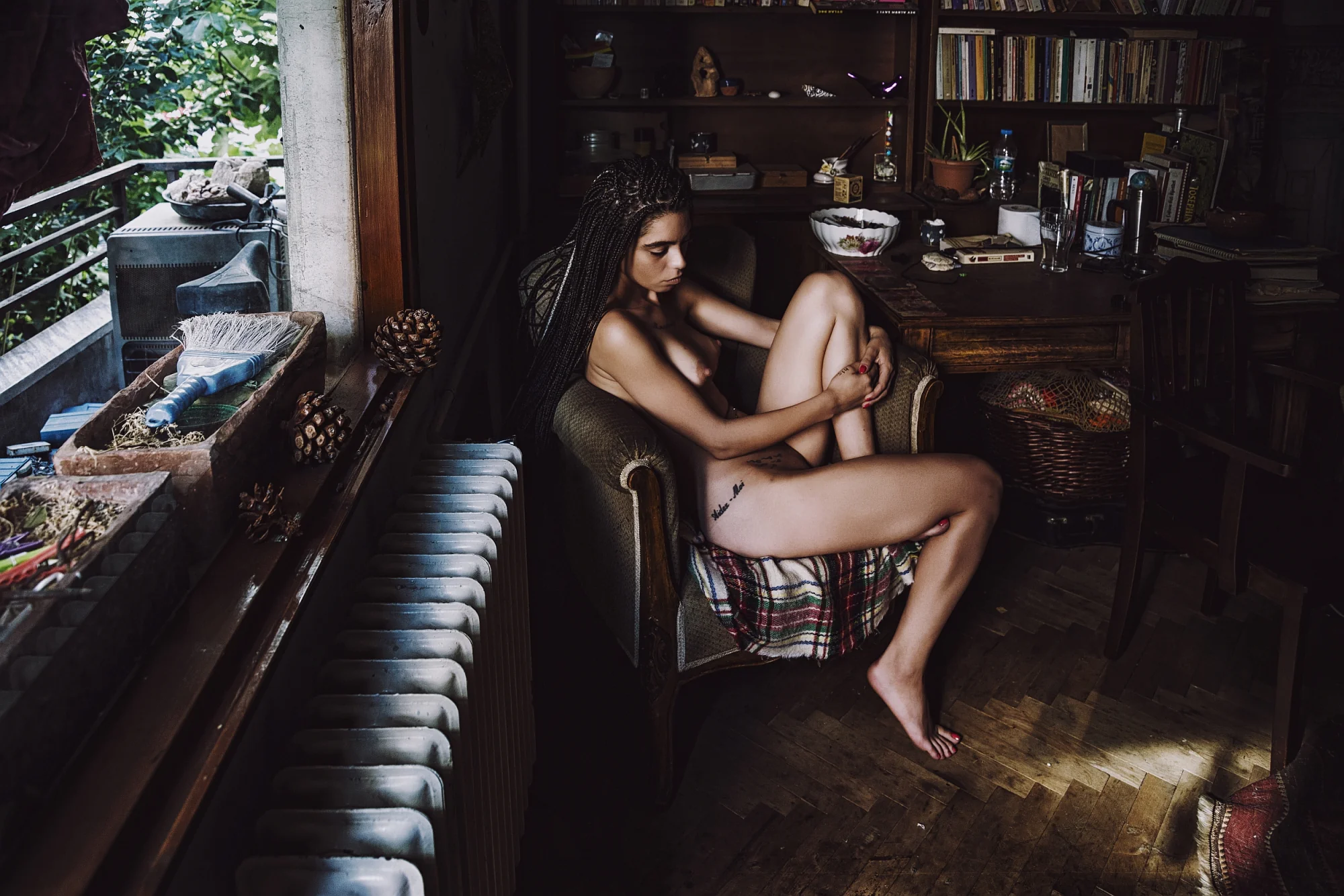
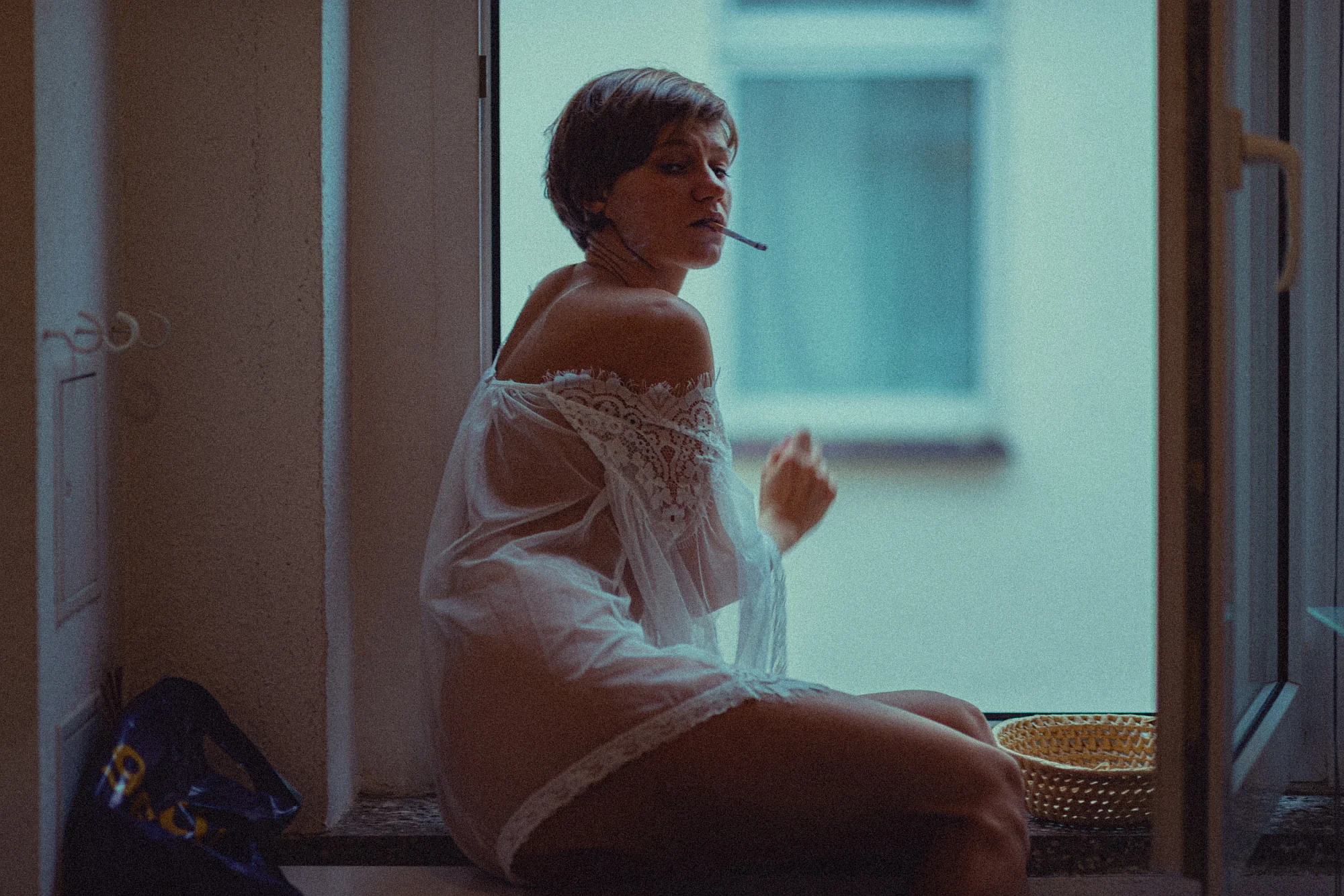
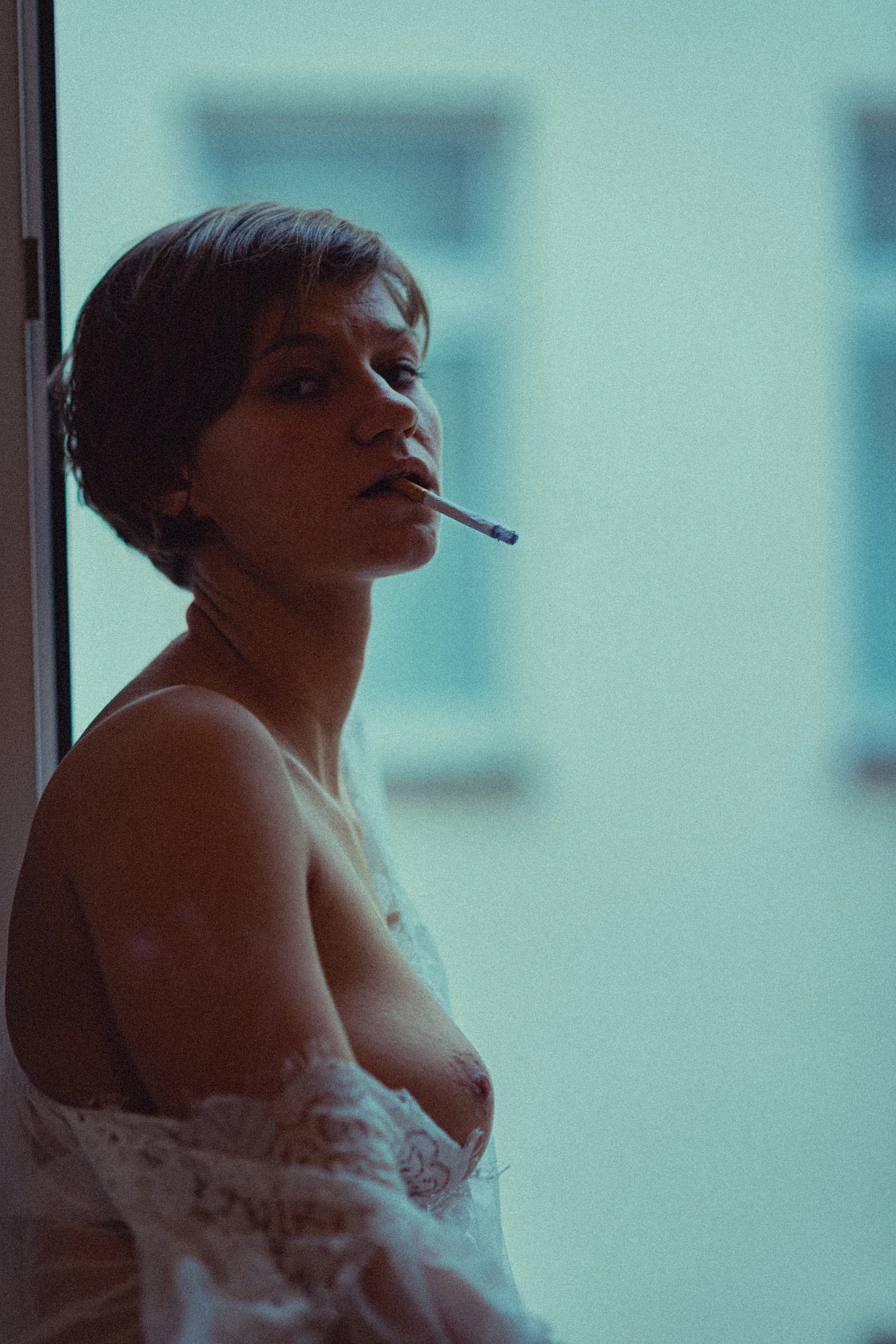
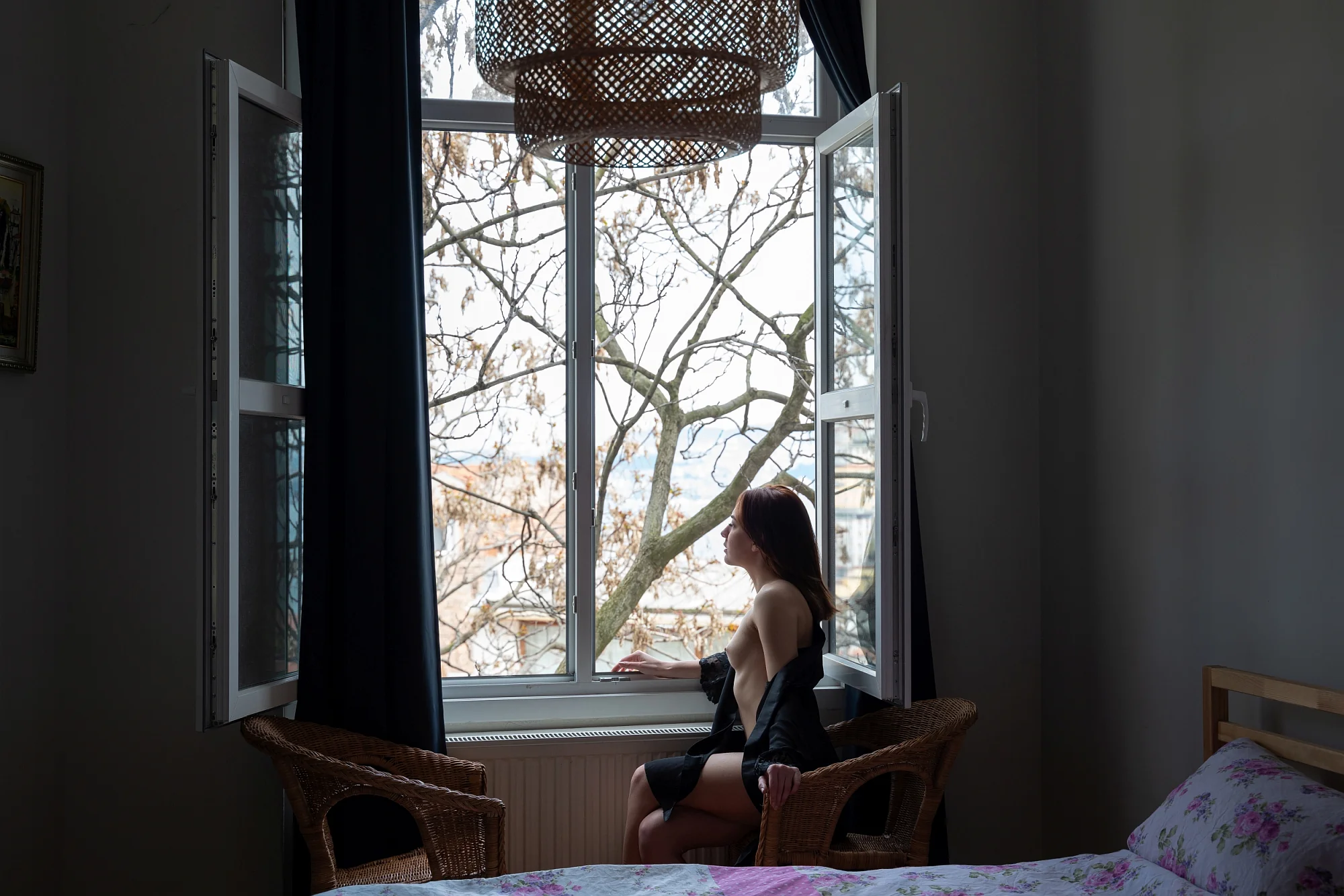
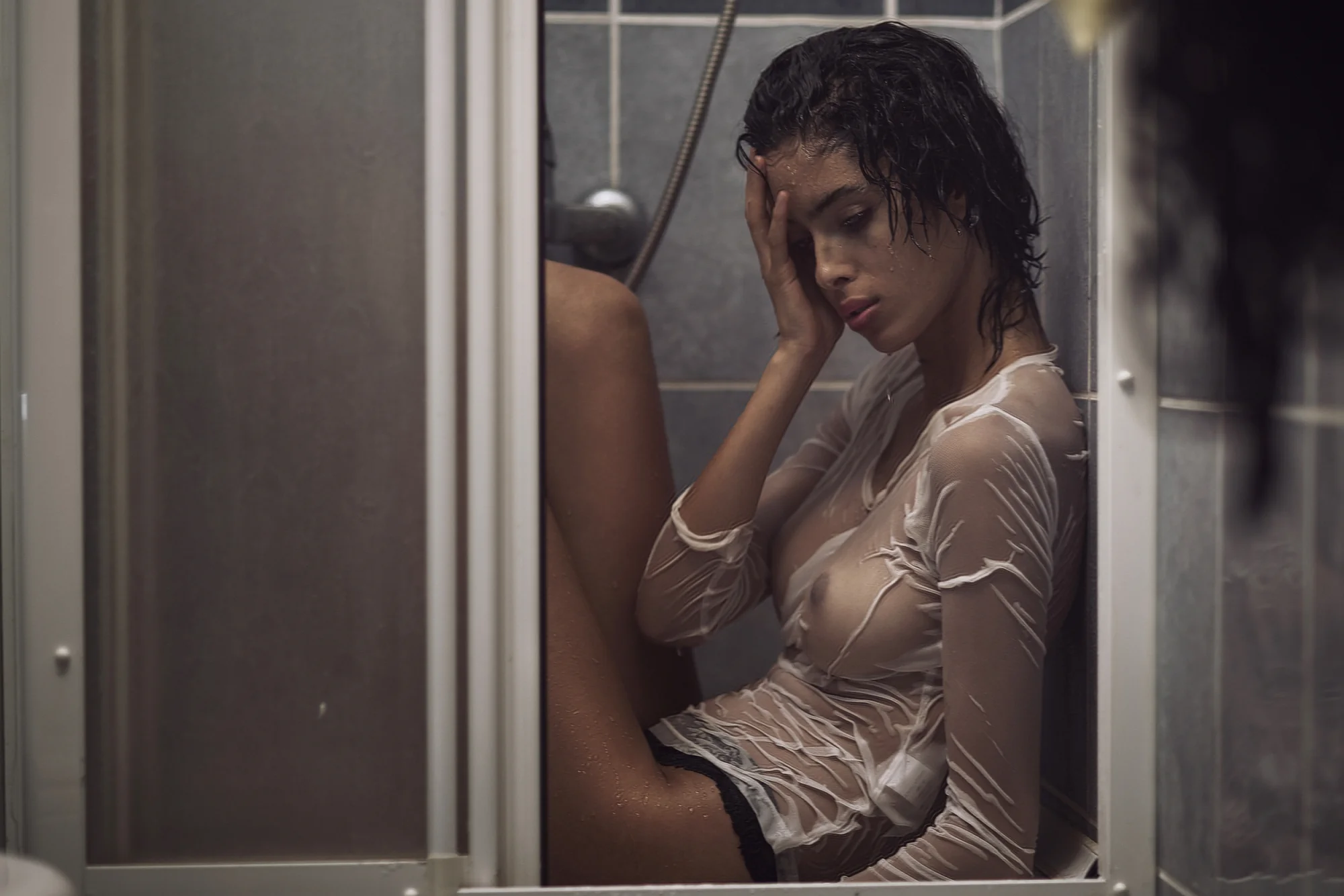
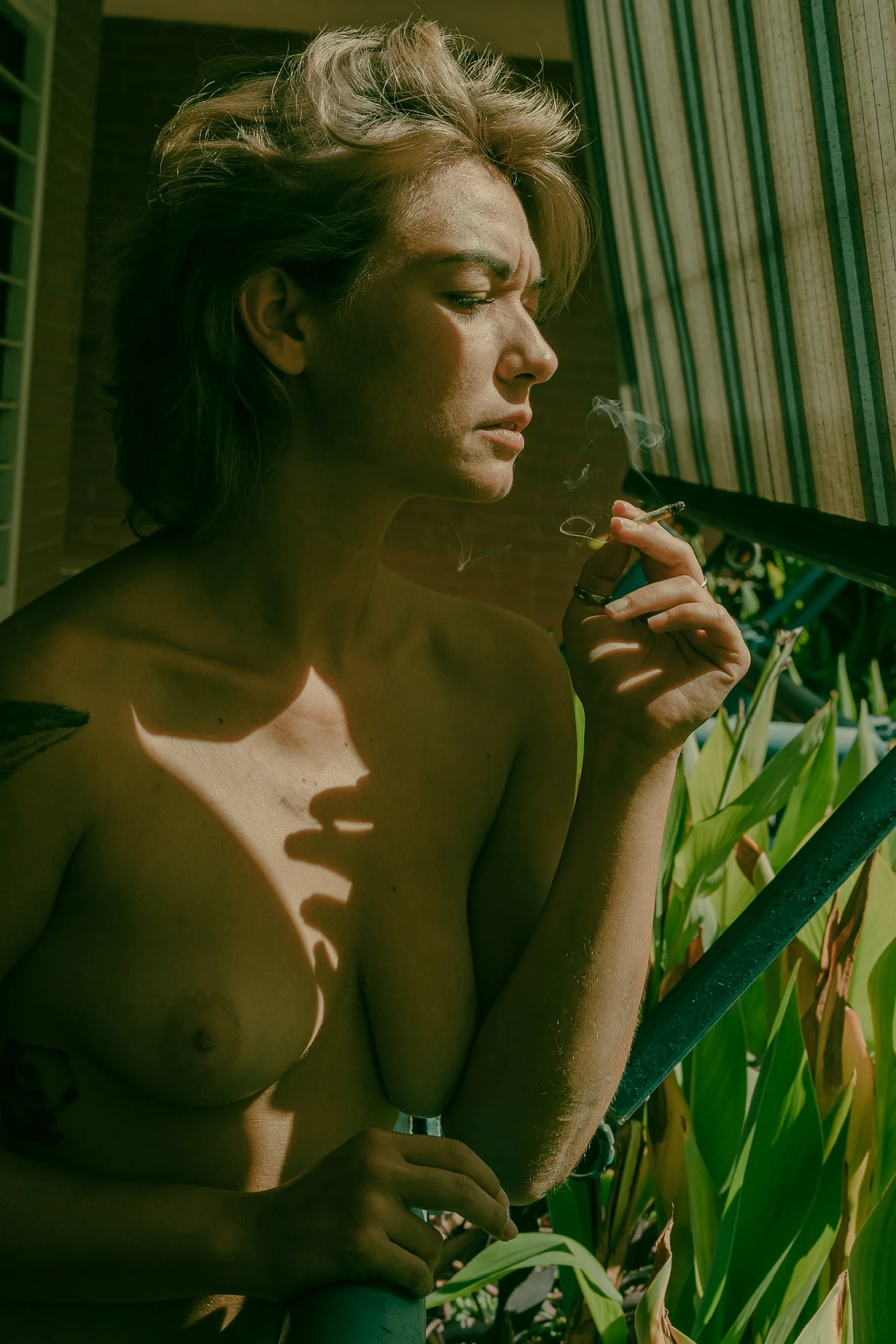
Melancholia photographs a specific temperature of interior life. Not grief, not depression — those have their own visual languages and their own photographers. Melancholy is quieter and older: a condition in which the body becomes slower, heavier, more attentive to the surfaces of the room it finds itself in. The series works in that register.The iconographic lineage runs deep. Dürer's Melencolia I (1514) gave Western art its enduring image of the melancholic temperament — a seated figure surrounded by the tools of reason, unable to use them. The Renaissance understood melancholy not as illness but as the mood of thinking itself; Freud's later essay Mourning and Melancholia (1917) made it psychoanalytic, a form of holding on to what has been lost. Julia Kristeva, in Black Sun, read melancholy as the condition that makes language possible — the underside of speech. Melancholia belongs to this long conversation, but refuses to illustrate it. The photographs are not diagrams of a concept; they are encounters with bodies in which the concept is already at work.The visual grammar of the series depends on slow light. Late afternoon through heavy curtains, lamp light in a room no one has fully entered, smoke from a single source catching a sliver of daylight — each image is lit as if the light had arrived reluctantly. This is not the drama of chiaroscuro, which carves bodies out of darkness for effect. It is closer to Vilhelm Hammershøi's Copenhagen interiors or Edward Hopper's hotel rooms: light that describes time rather than form, that makes a room feel like it has been waiting.The bodies in the series are nude, but the nudity is not the subject. They are nude because clothing would lie: it would suggest a direction, a social context, an errand. The melancholic body has none of these. It has withdrawn from the economy of gesture. Draped fabric, smoke, a piano's black lacquer, an empty corner — these surround the figure not as props but as the material conditions of the mood.Each photograph is the result of long sessions in which very little happens — a subject adjusts a shoulder, shifts a glance, breathes out. What the images finally hold is not drama but the residue of waiting. That residue, the series proposes, is where certain kinds of emotional truth actually live.
Selected Works
Editions
Archival pigment prints are released in limited editions of 5 + 1 Artist Proof, printed on Hahnemühle Photo Rag and FineArt Pearl papers, chosen for their ability to hold the muted tonal range these images depend on. Selected works are represented on Artsper, Saatchi Art, and Artmajeur. Direct inquiries: [email protected].