Elsewhere
The Nude in Public Space
A body placed where it has no permission to be, and the moment it simply exists there.
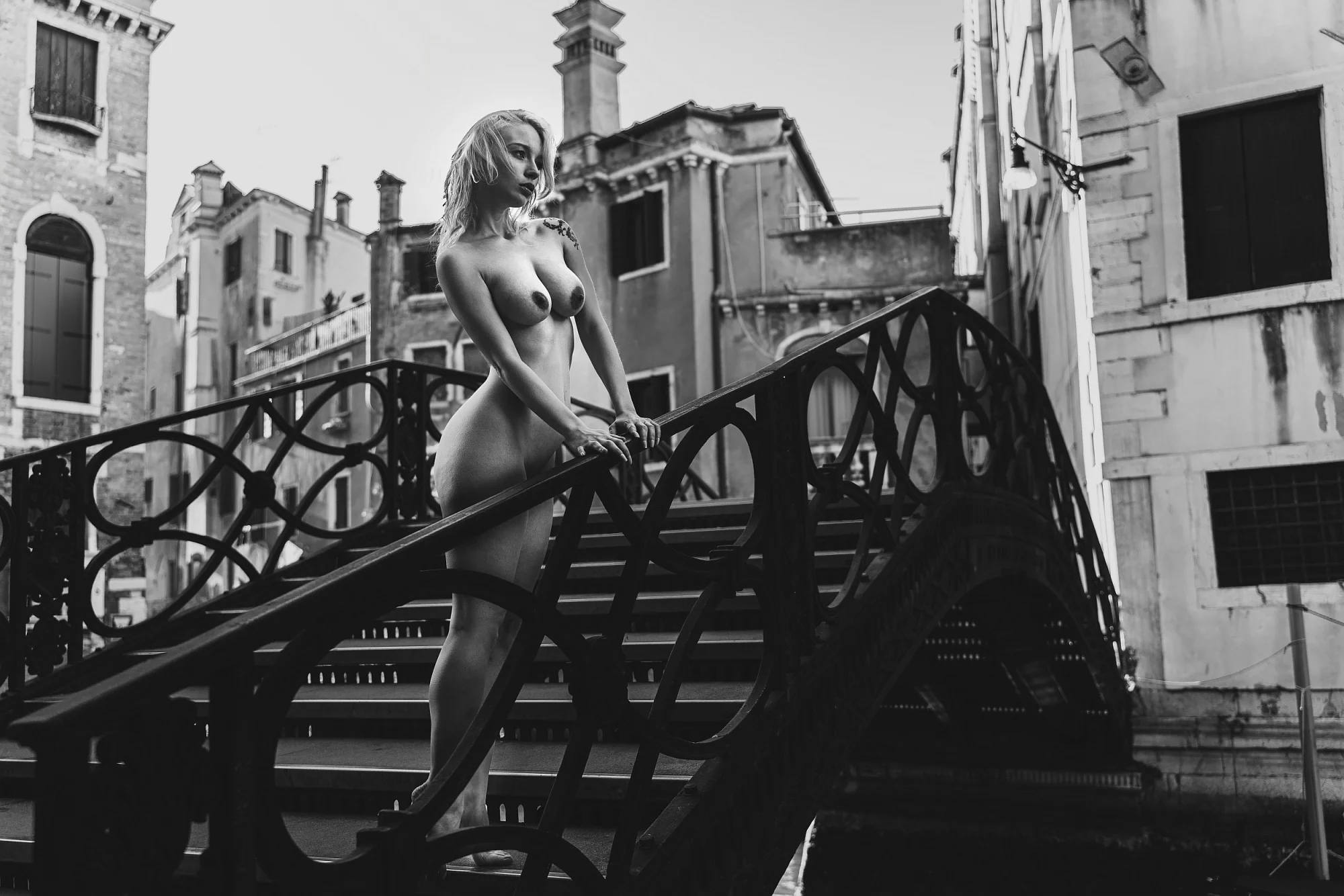
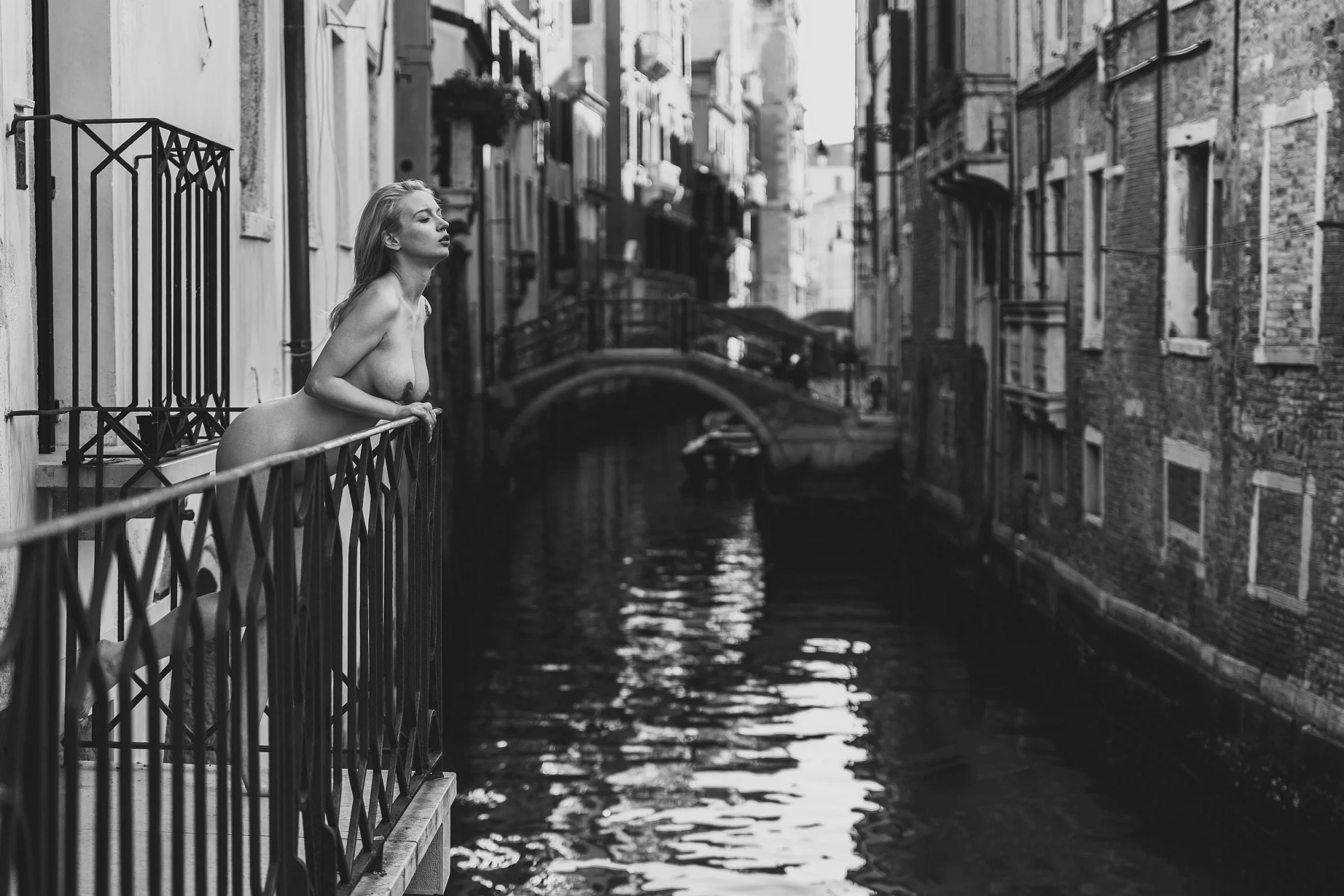
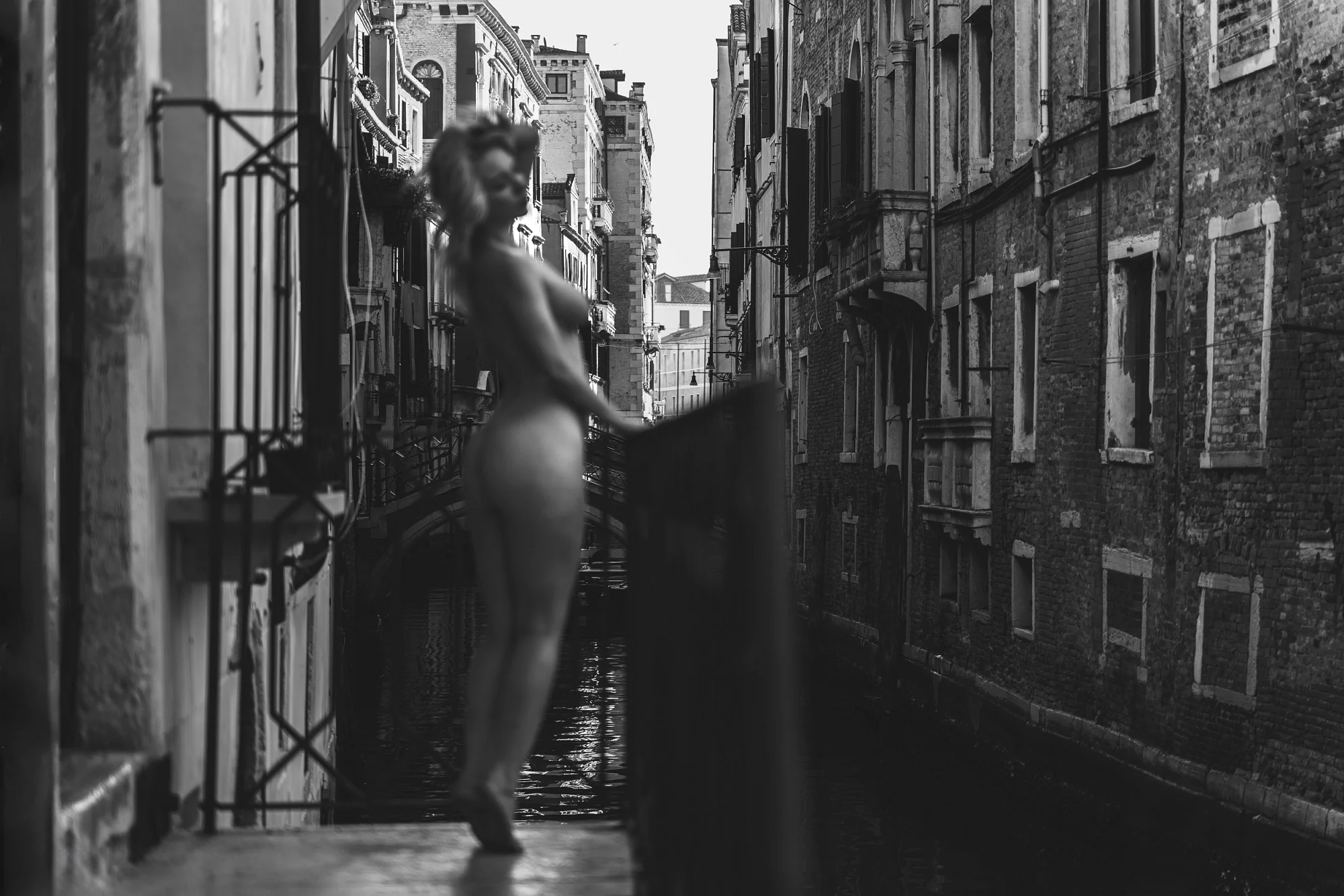
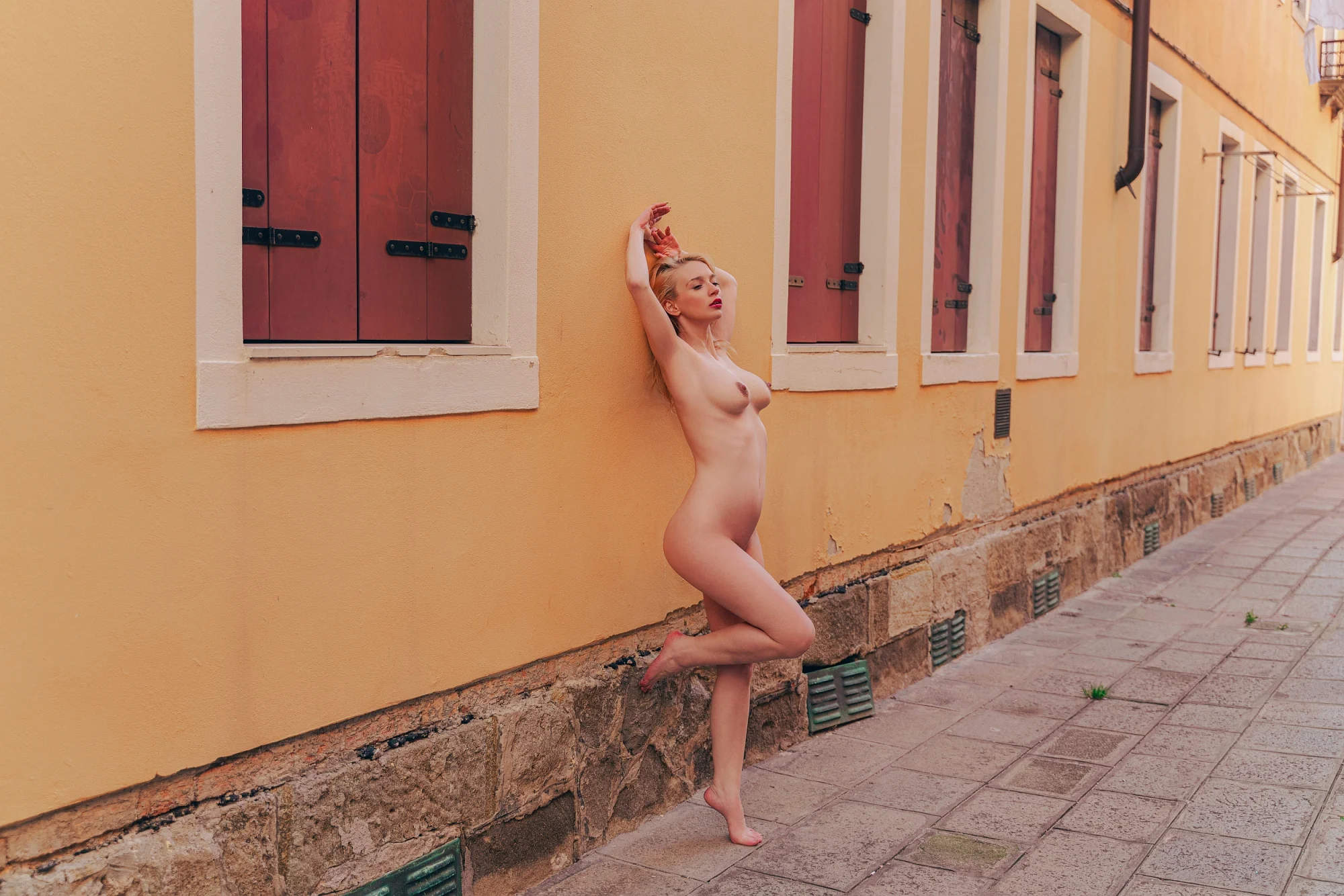
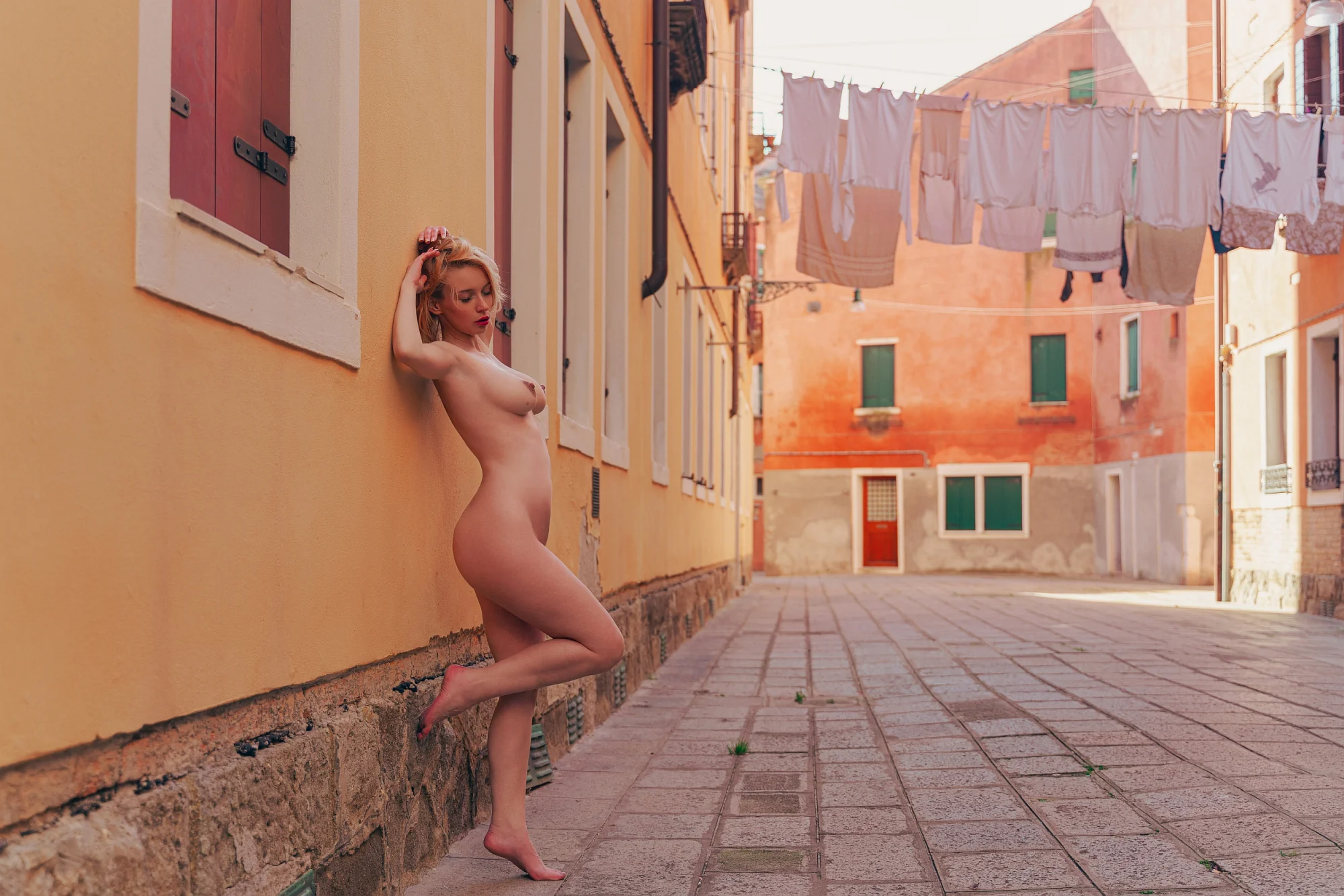
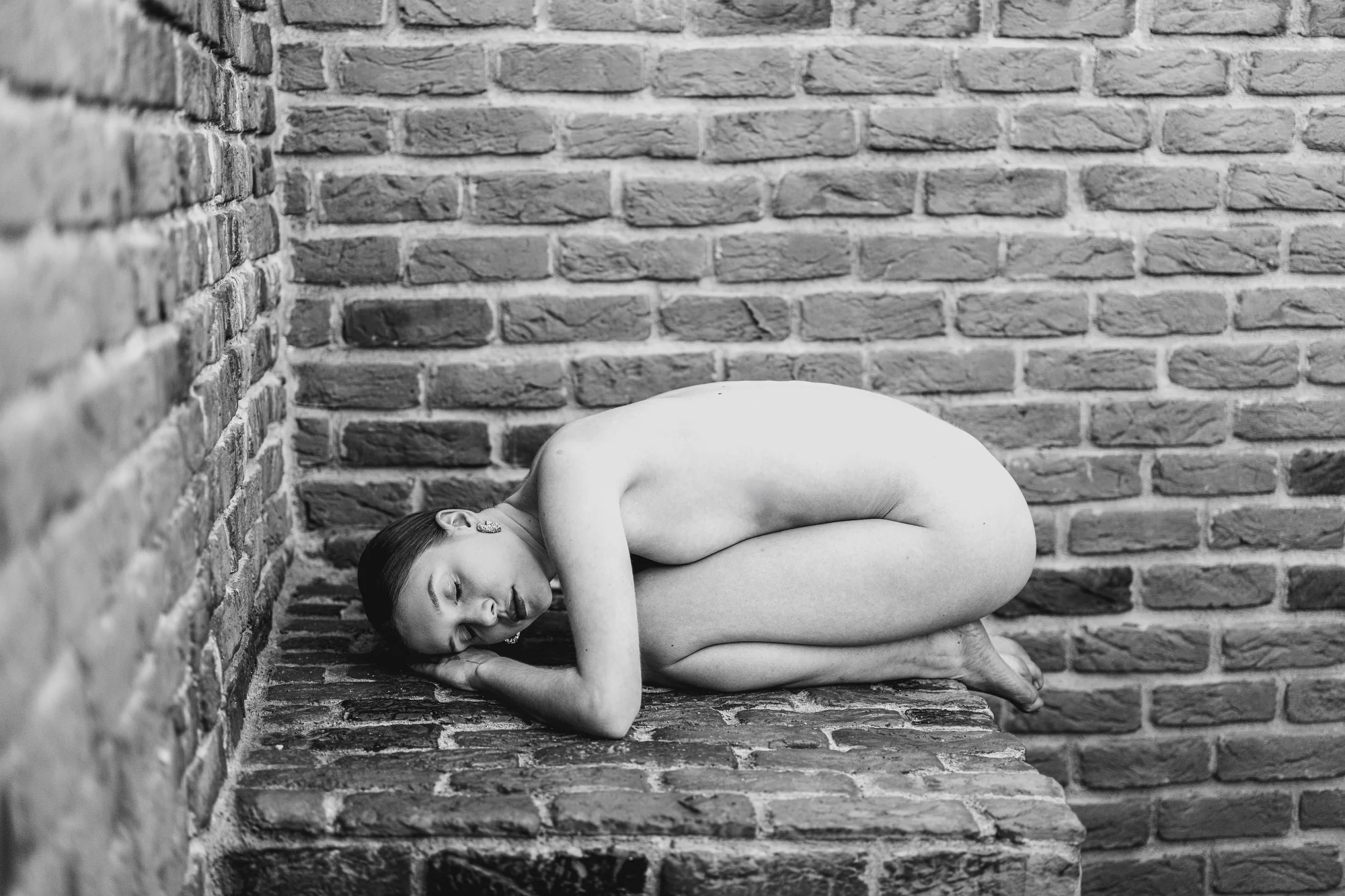
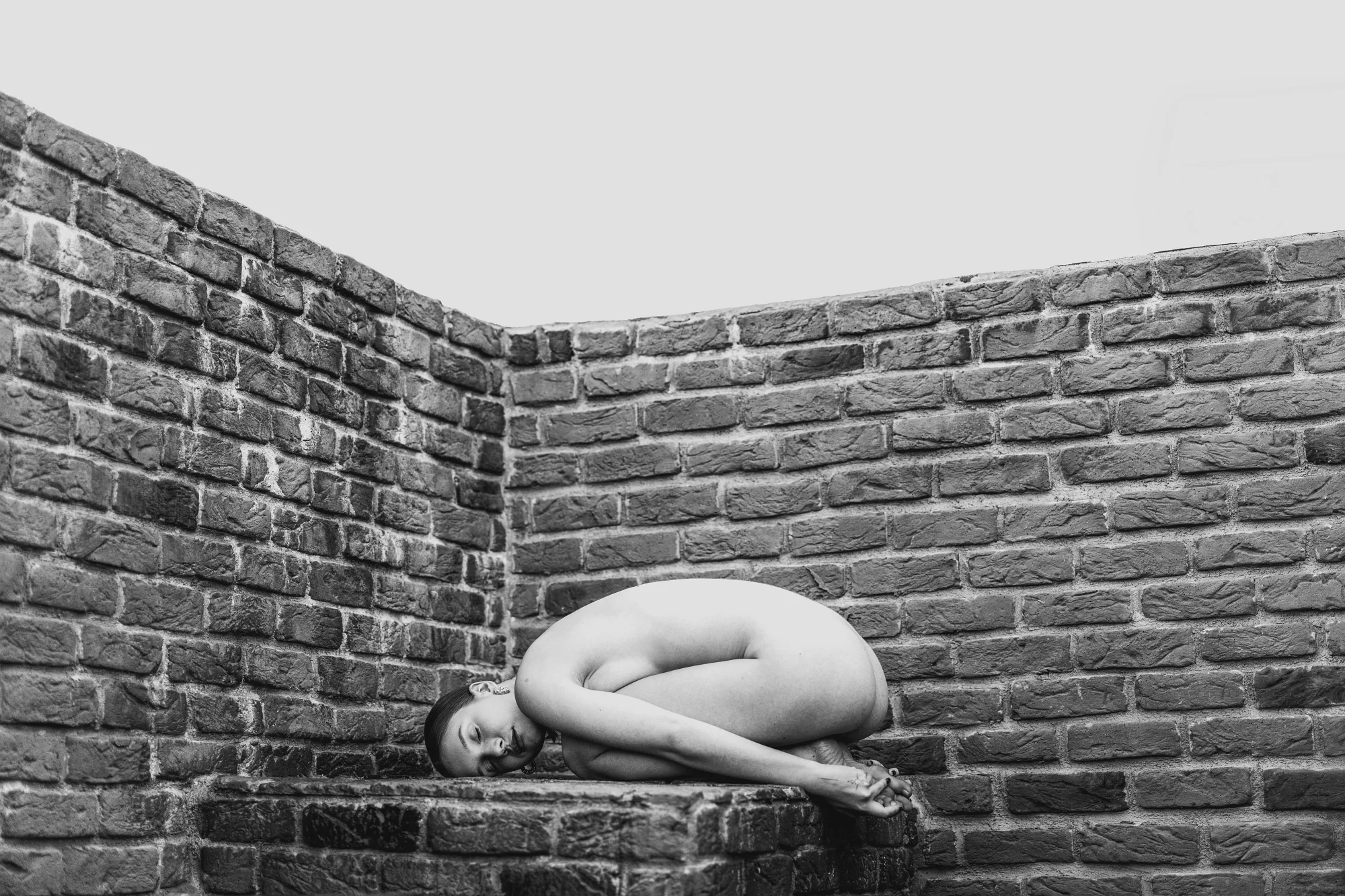
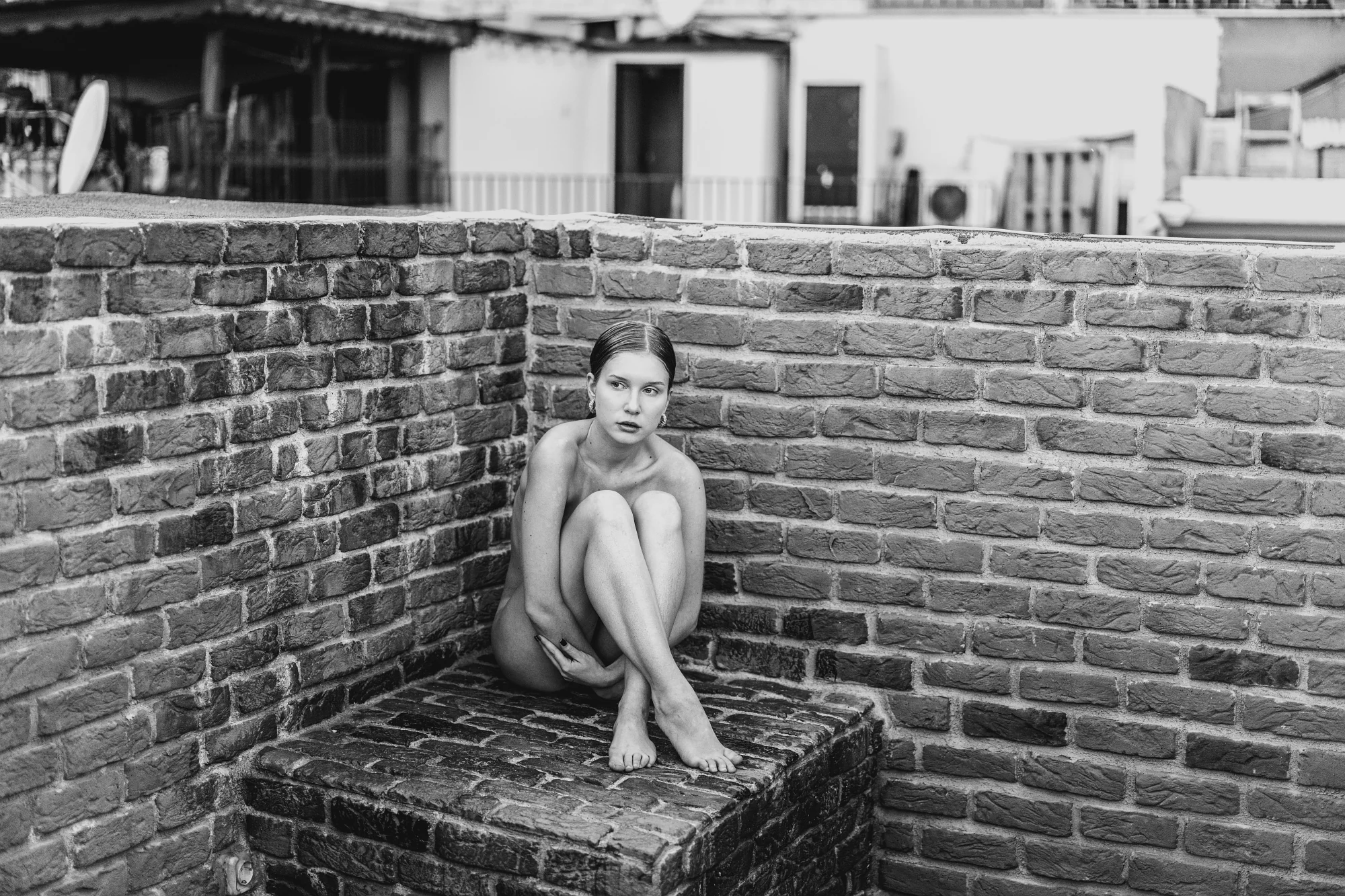
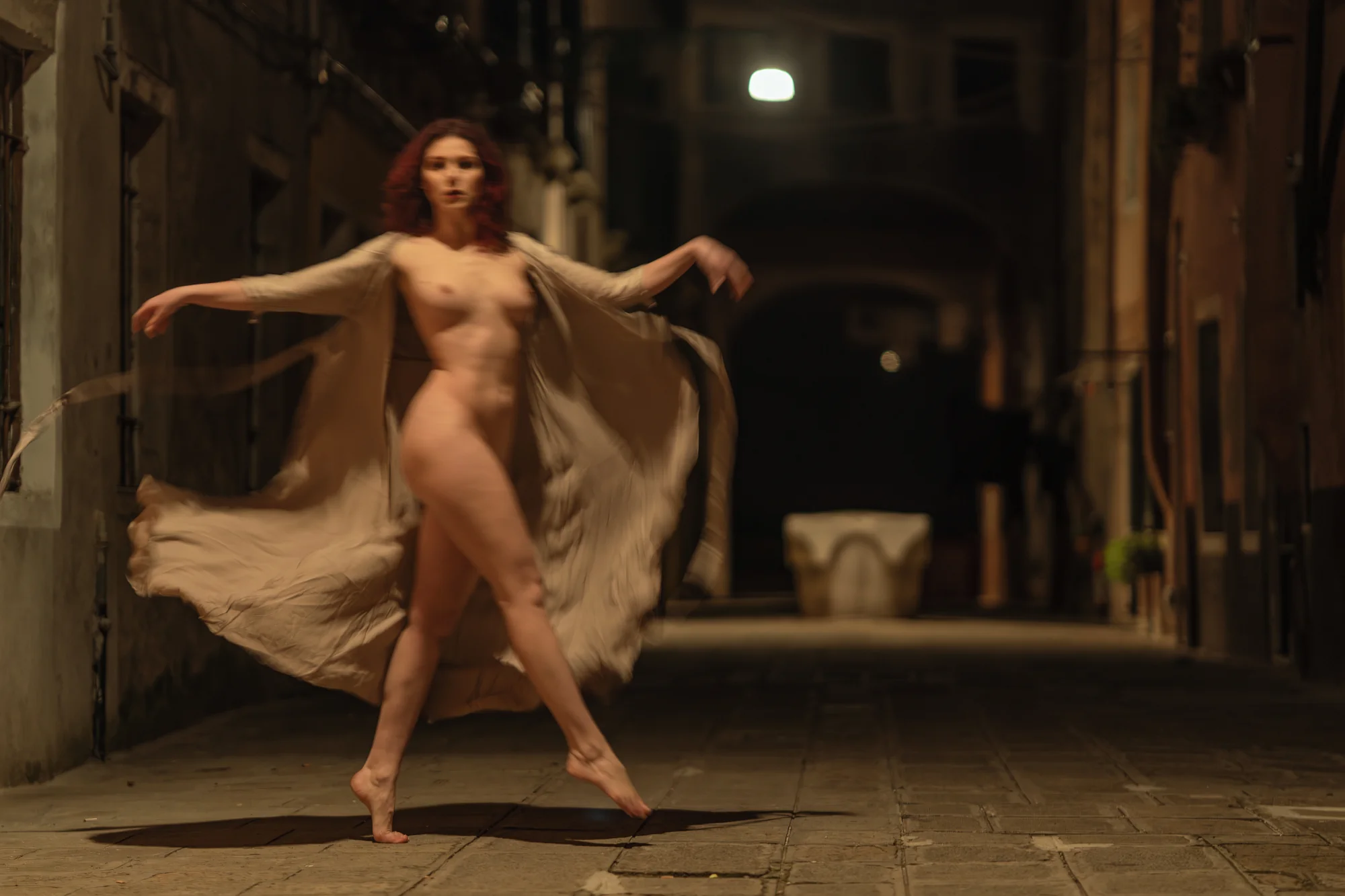
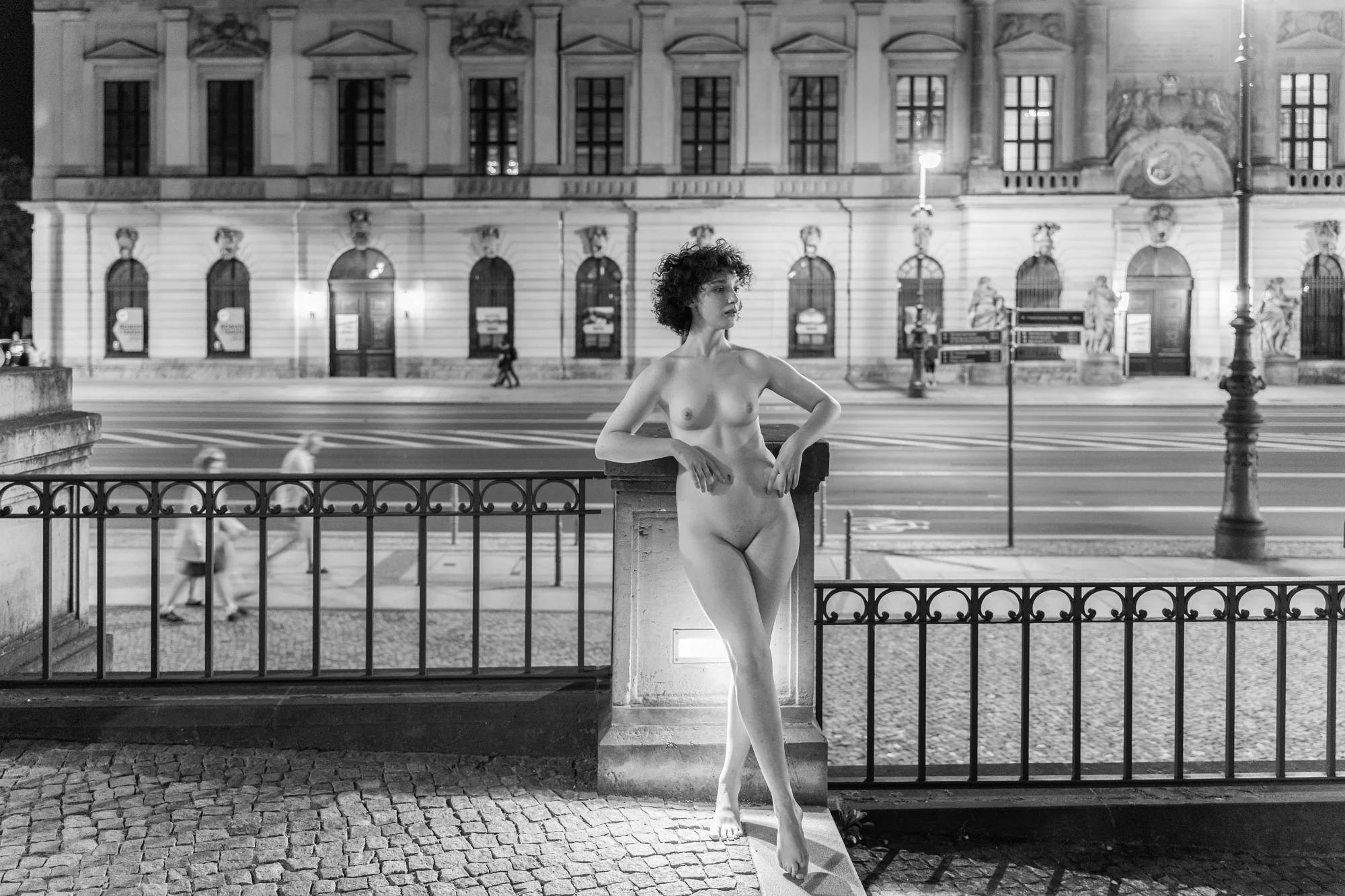
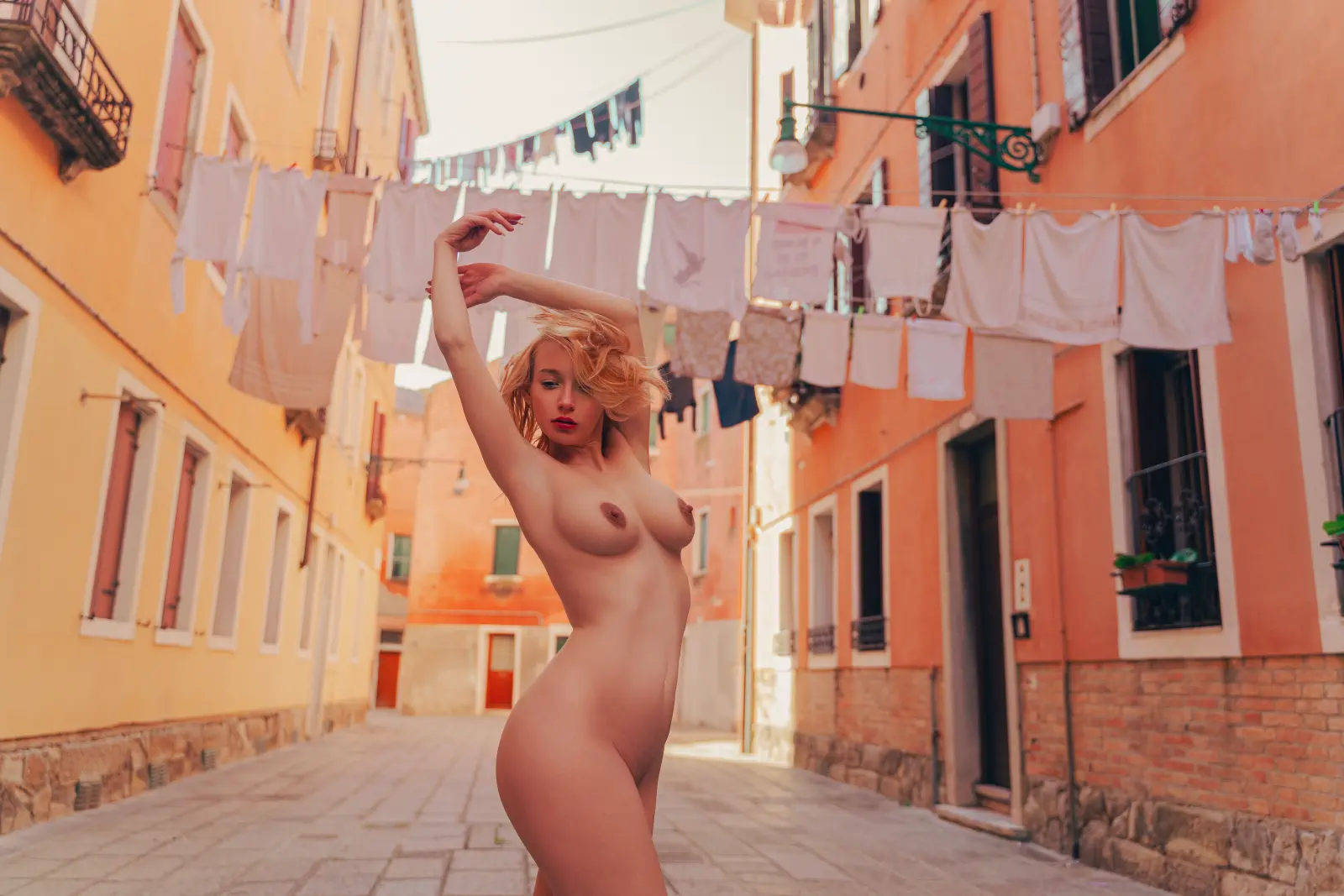
Elsewhere photographs the nude body in public space: alleyways, canal bridges, empty streets at dusk, a balcony above a street, the corners of cities and villages where public and private meet without announcing themselves. The series asks a simple question about existence: what does it mean for a body to be there, unclothed, in a space shared with others? These are not performances or interventions in the activist sense. They are quieter: brief moments in which a body that does not belong is held, photographed, and released back into the city.
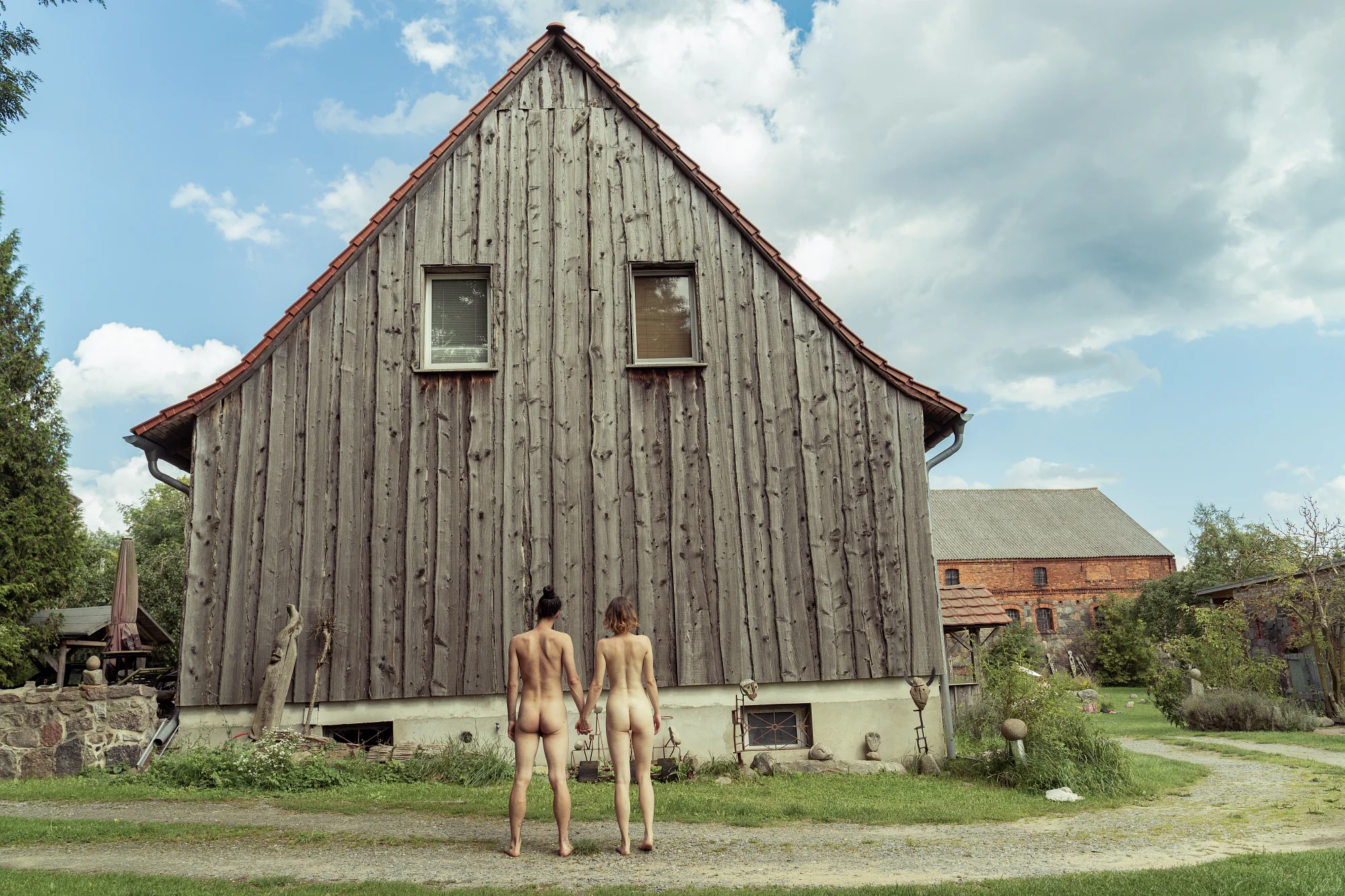
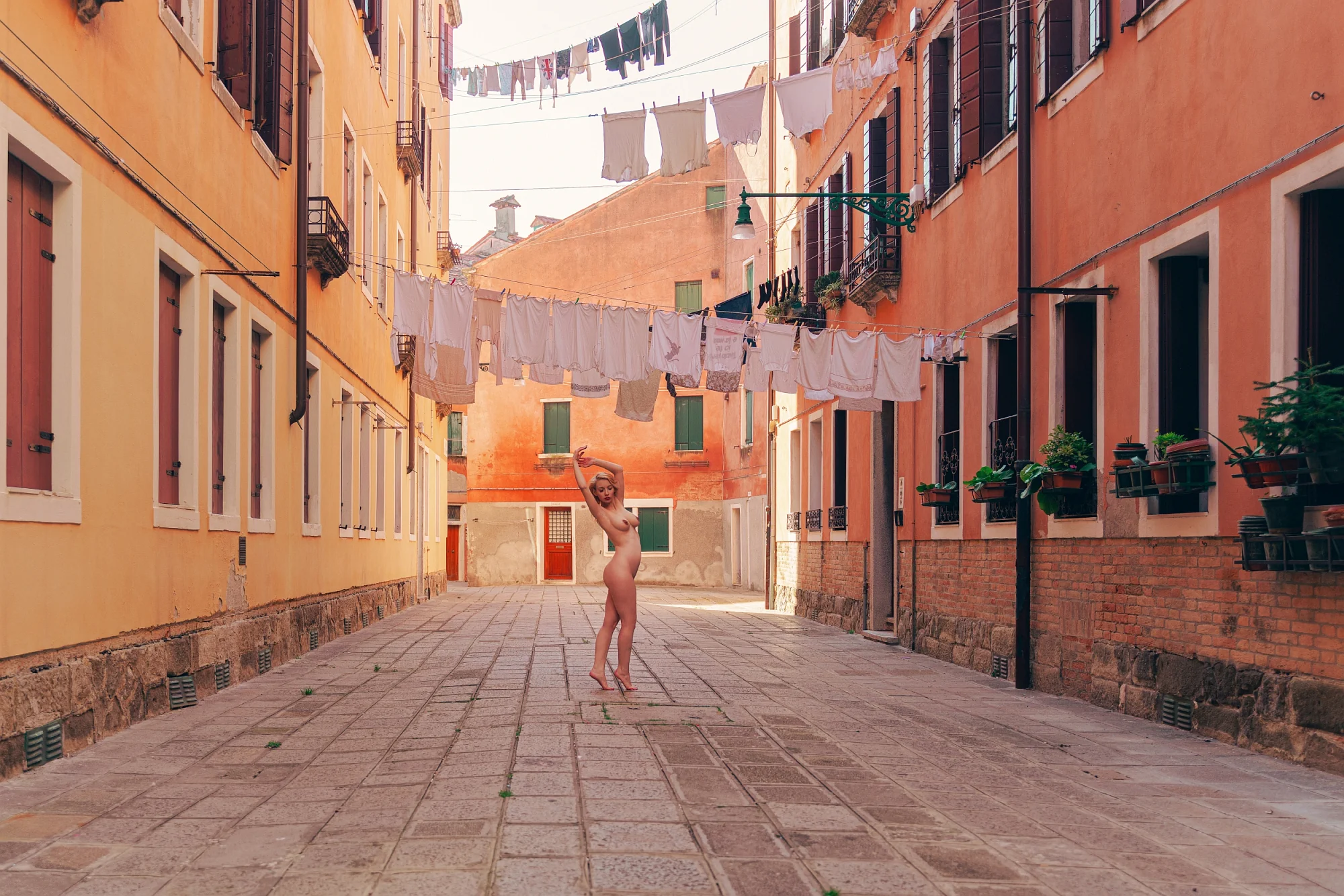
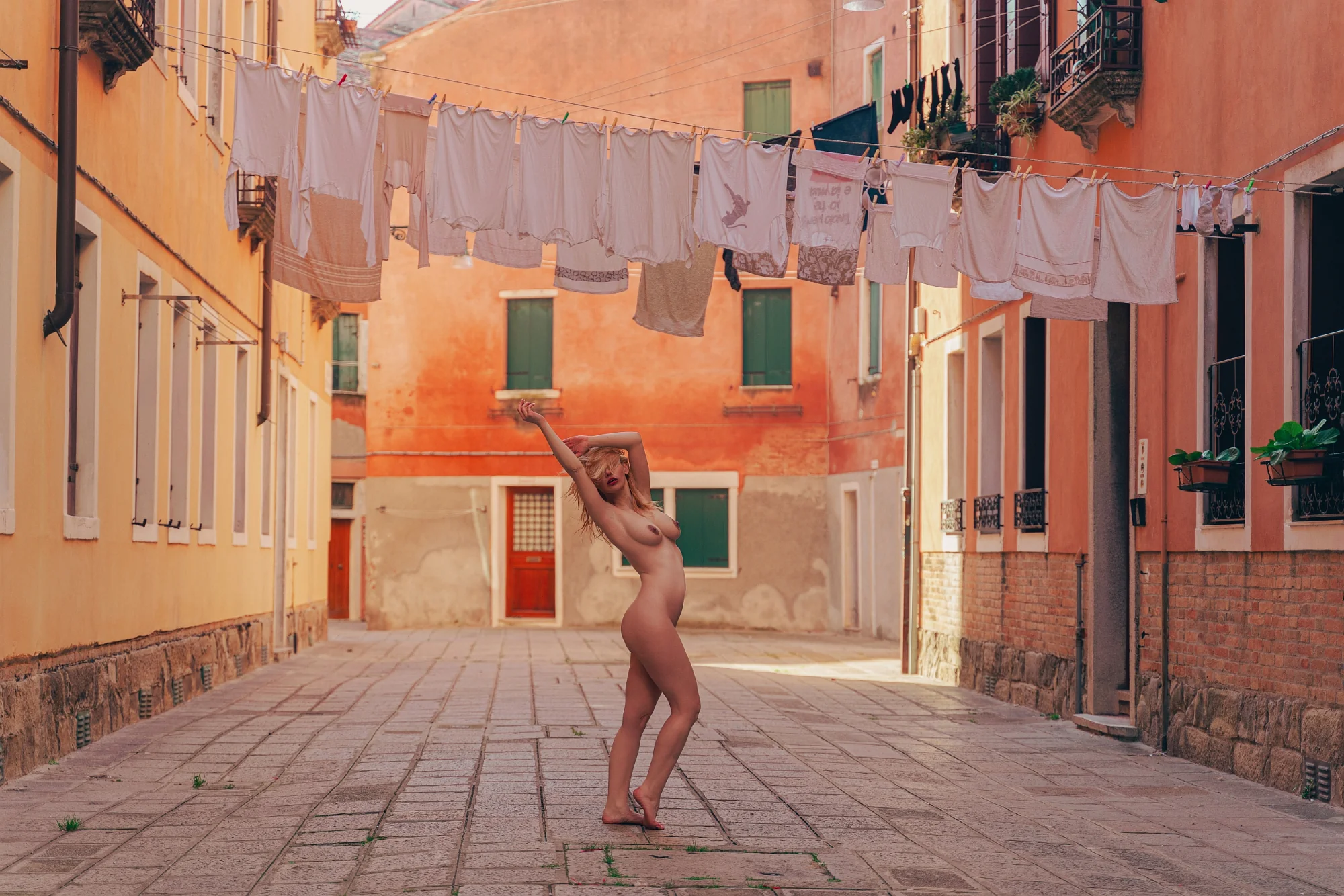
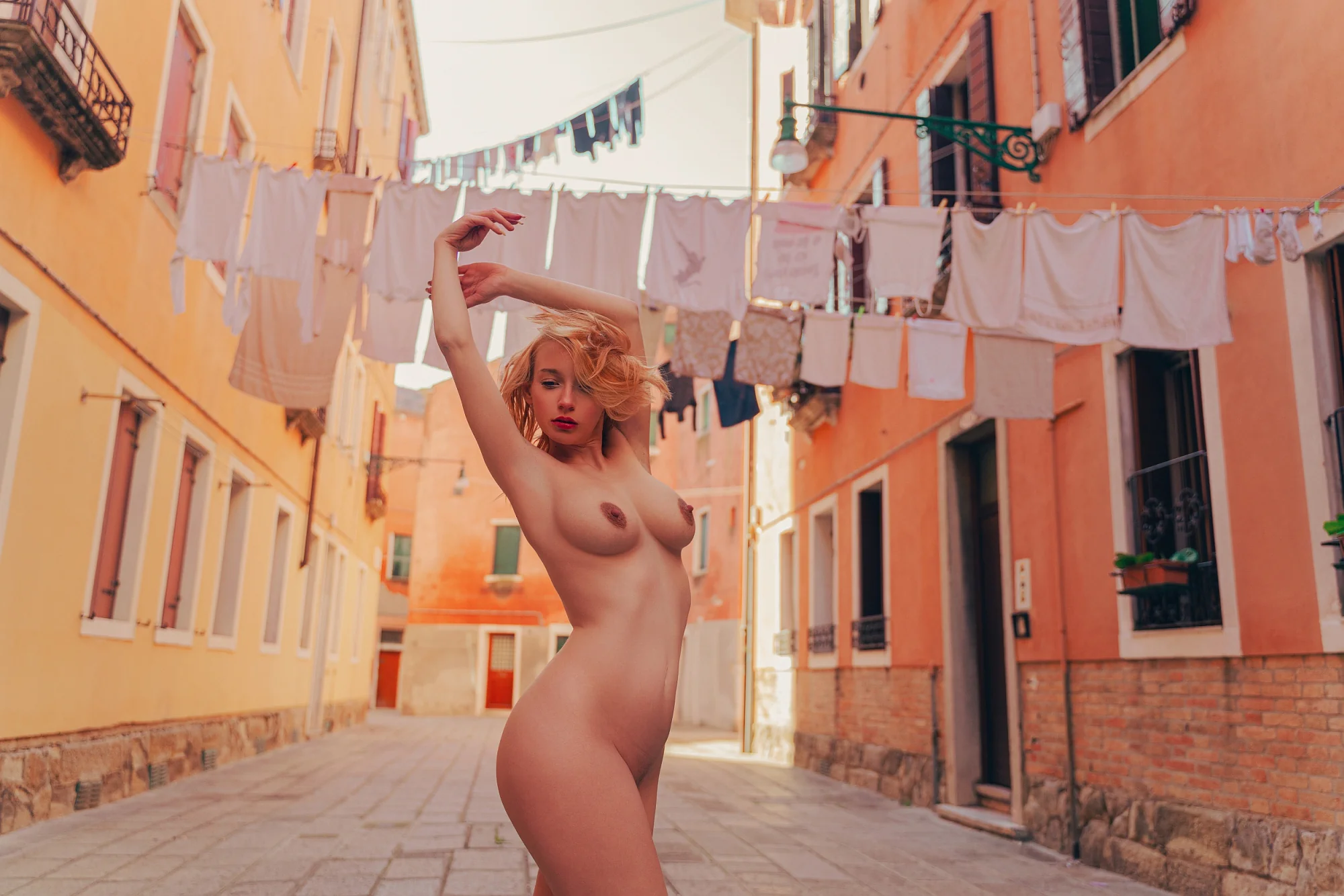
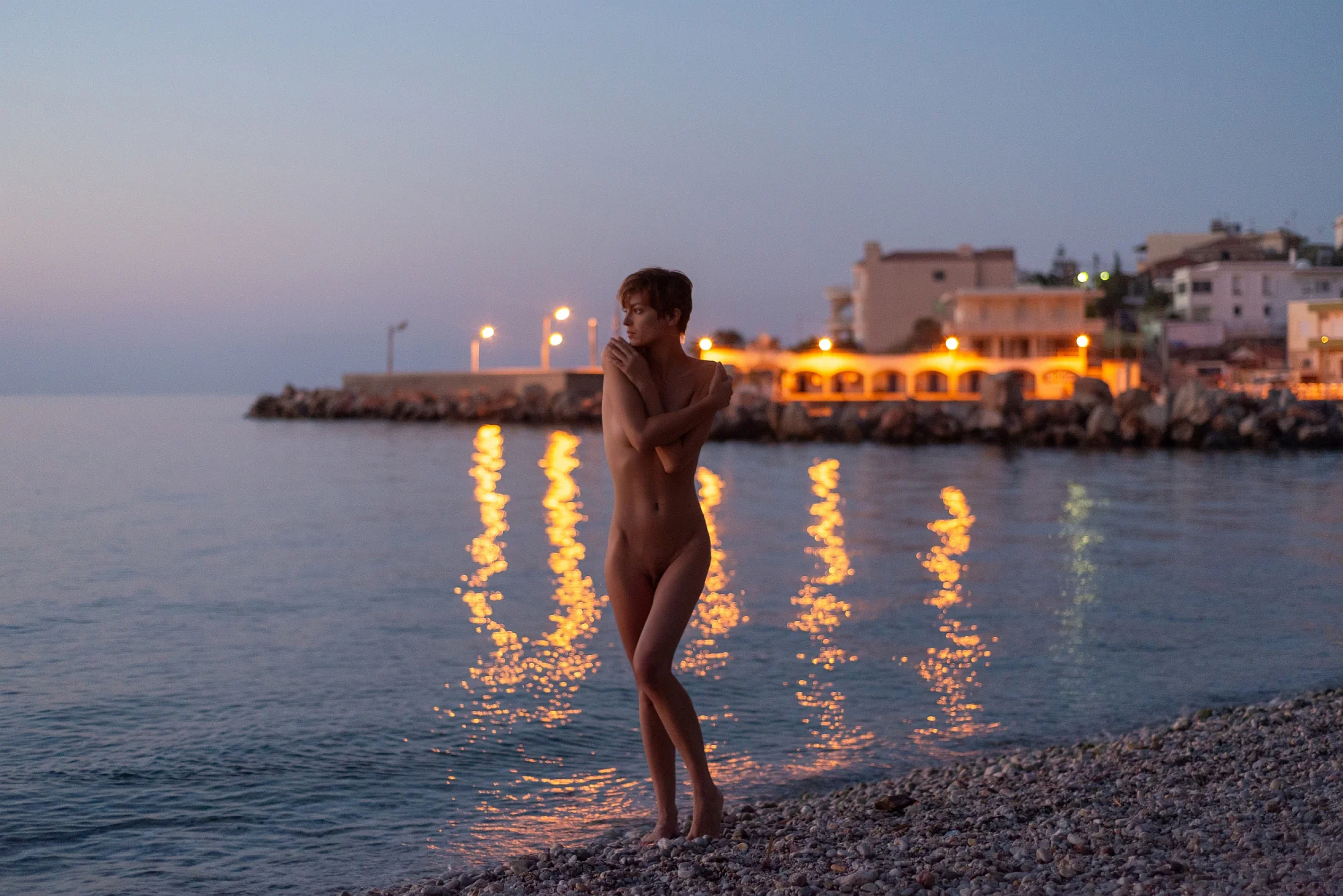
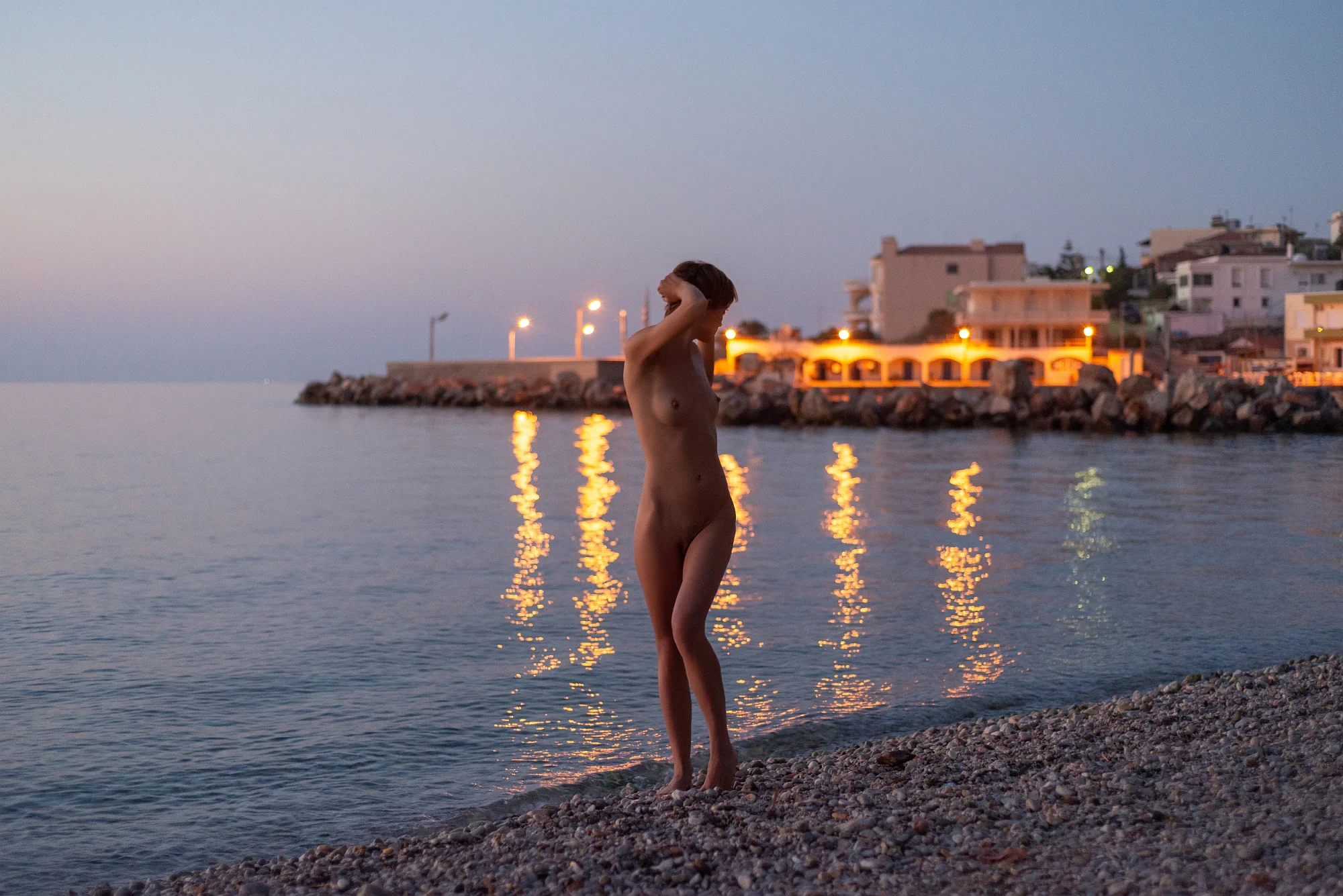
One photograph places a woman at the centre of a narrow street beneath lines of hanging laundry, arms raised as if she had begun to dance, alone between two rows of shuttered windows. Another shows a couple with their backs to the camera, holding hands before the weathered gable of a farmhouse, small and quiet under a wide sky. At night, a figure strides barefoot along a lamplit pavement, a sheer cape lifting behind her, while a passerby continues down the street. At dusk on a shoreline, a woman folds her arms around herself as the lights of the town come on across the water. Freedom, tenderness, exposure, and self-protection sit side by side: the body is present in each image, and the way it is present changes with the place.
Public space runs on rules that are rarely written down: how close strangers stand, where eyes may rest, which parts of a body a street agrees to see. An unclothed body makes all of them visible at once and changes the meaning of everything around it. A pavement becomes a border, a window becomes a witness, a passerby becomes part of the photograph's tension.
The series inherits from the tradition of the flâneur, the figure who walks the city without destination, reading its surfaces, but it inverts the flâneur's politics. Baudelaire's and Benjamin's flâneur observes from the safety of clothing and class. That figure was also a man. In the nineteenth-century city, a woman walking alone and without purpose risked being taken for a "public woman", the polite name for a prostitute, and the freedom to wander and look was largely a male one. The subject of Elsewhere is exposed: literally, and to the quiet violence of being seen where seeing is not expected. When the body in the street is a woman's, that history is in the frame. The series stays inside this exposure.
The photographs are staged with care, and most are made quickly, so as not to disturb people passing by. Every session rests on the participant's consent, with the freedom to stop at any moment. Locations are chosen for their architectural specificity: the narrow cut of a pastel-walled street, the geometry of a canal embankment, the symmetry of a courtyard passage. The body enters these spaces and takes a posture that is neither decorative nor defiant. A nude figure in public space produces a different kind of photograph from a nude in the studio: the environment becomes a collaborator, and sometimes an adversary.
The references cross several lineages. Spencer Tunick's mass public nudes treat the body as a collective political sign; Elsewhere works at the opposite scale, with one or two bodies, one street, and no spectacle. Francesca Woodman photographed the nude in abandoned rooms, bodies half-erased by long exposure; Elsewhere carries some of that ghostly register outside, into inhabited streets. Guy Debord's dérive, the Situationist practice of urban drifting, underlies the method, though here the drift arrives at a body that is simply there, in a place where it is not expected.
The photograph looks calm; the moment of its capture was not. Behind each figure is the rhythm of a city that could have turned a corner at any second, and that rhythm stays in the image after it has gone.
Selected Works