В других местах
Обнаженная натура в публичном пространстве
Тело, оказавшееся там, где ему не положено находиться, и сам момент его простого пребывания там.
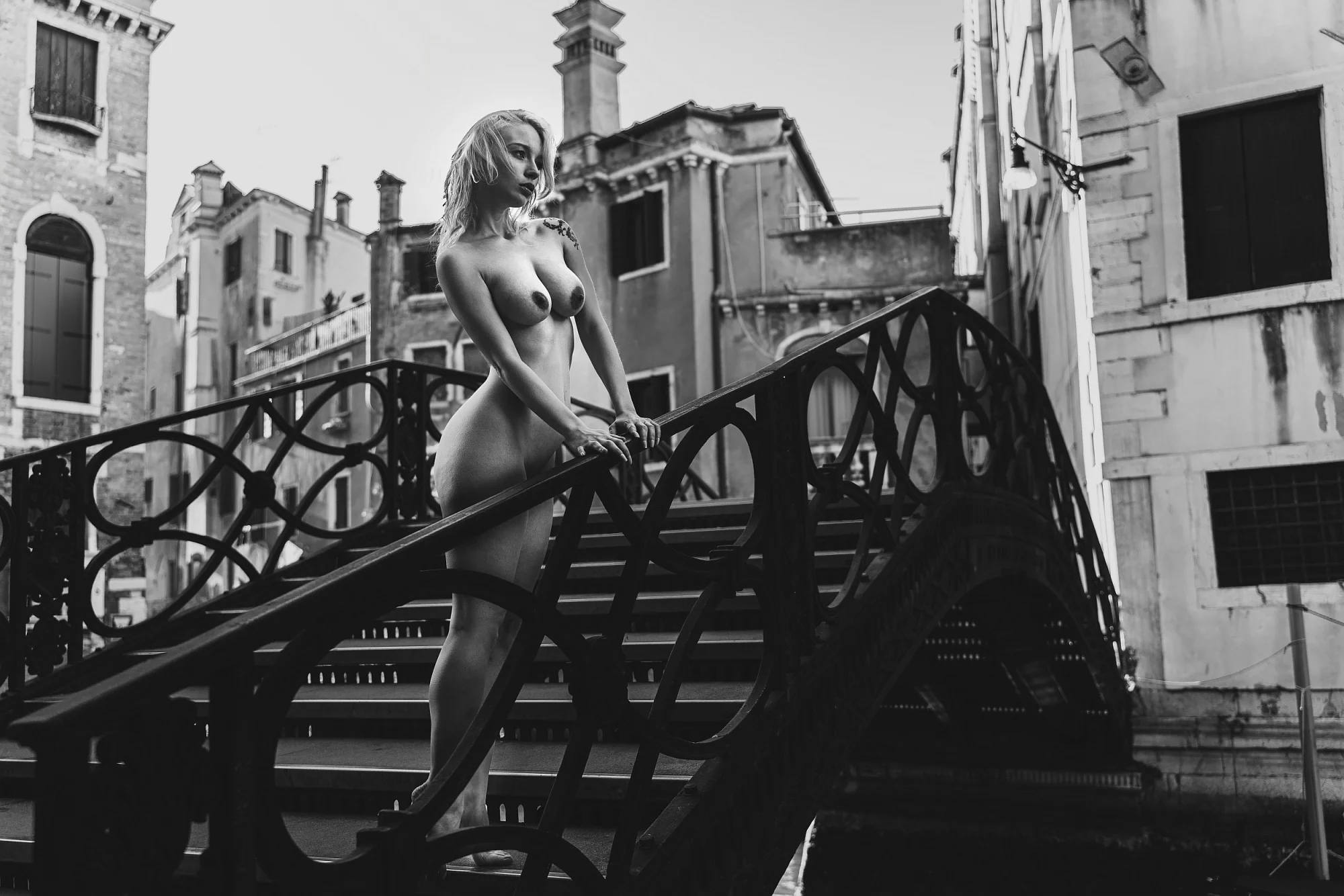
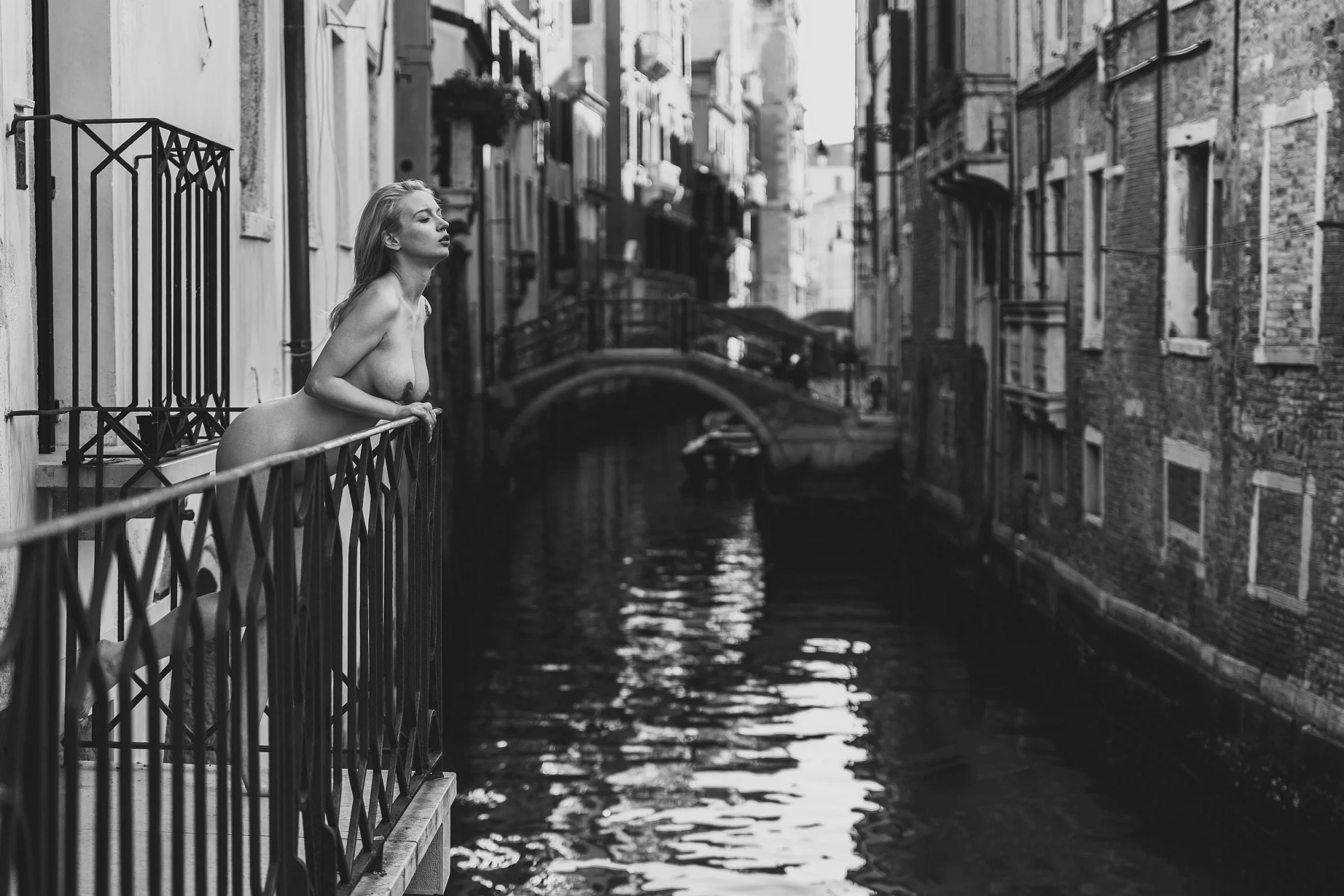
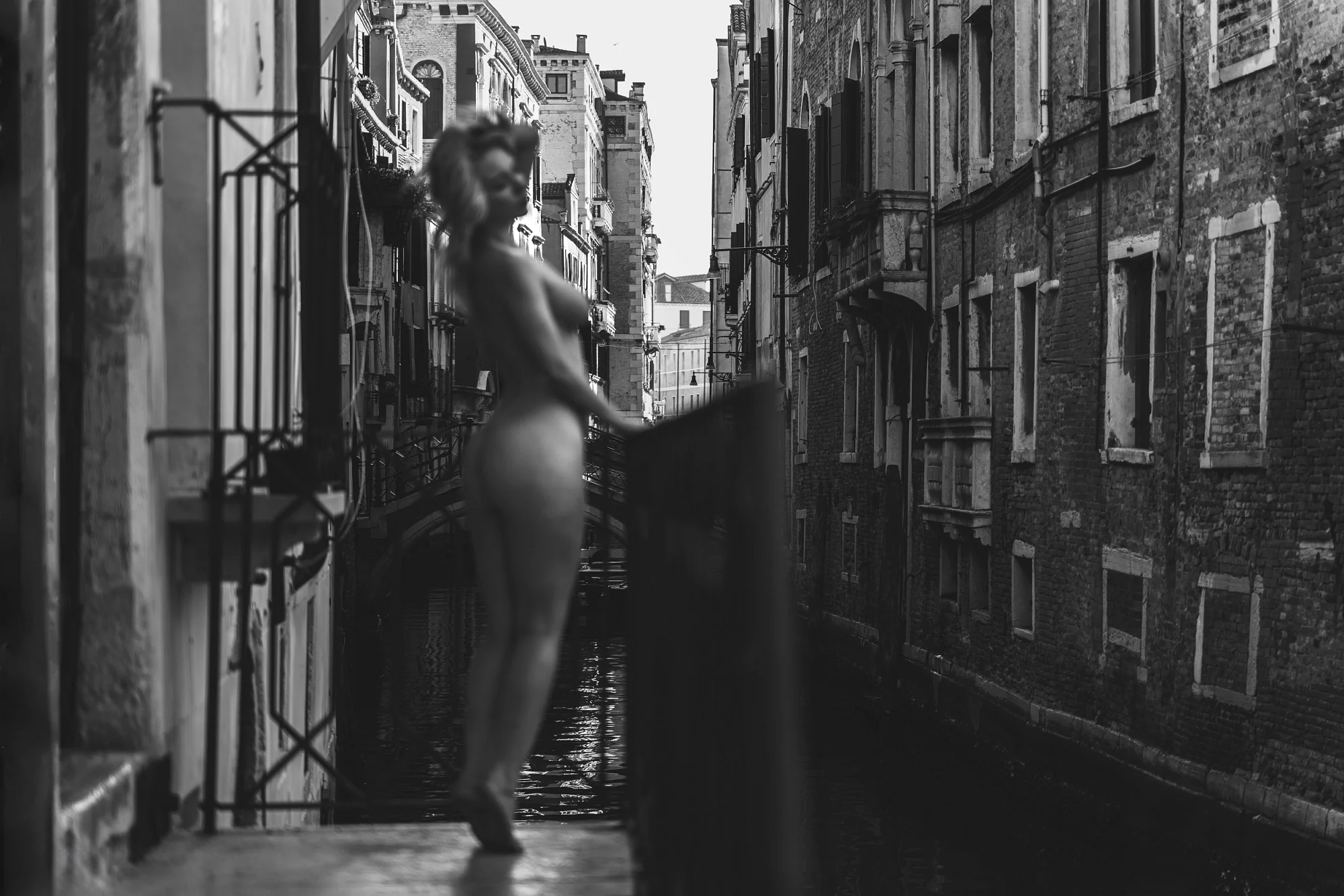
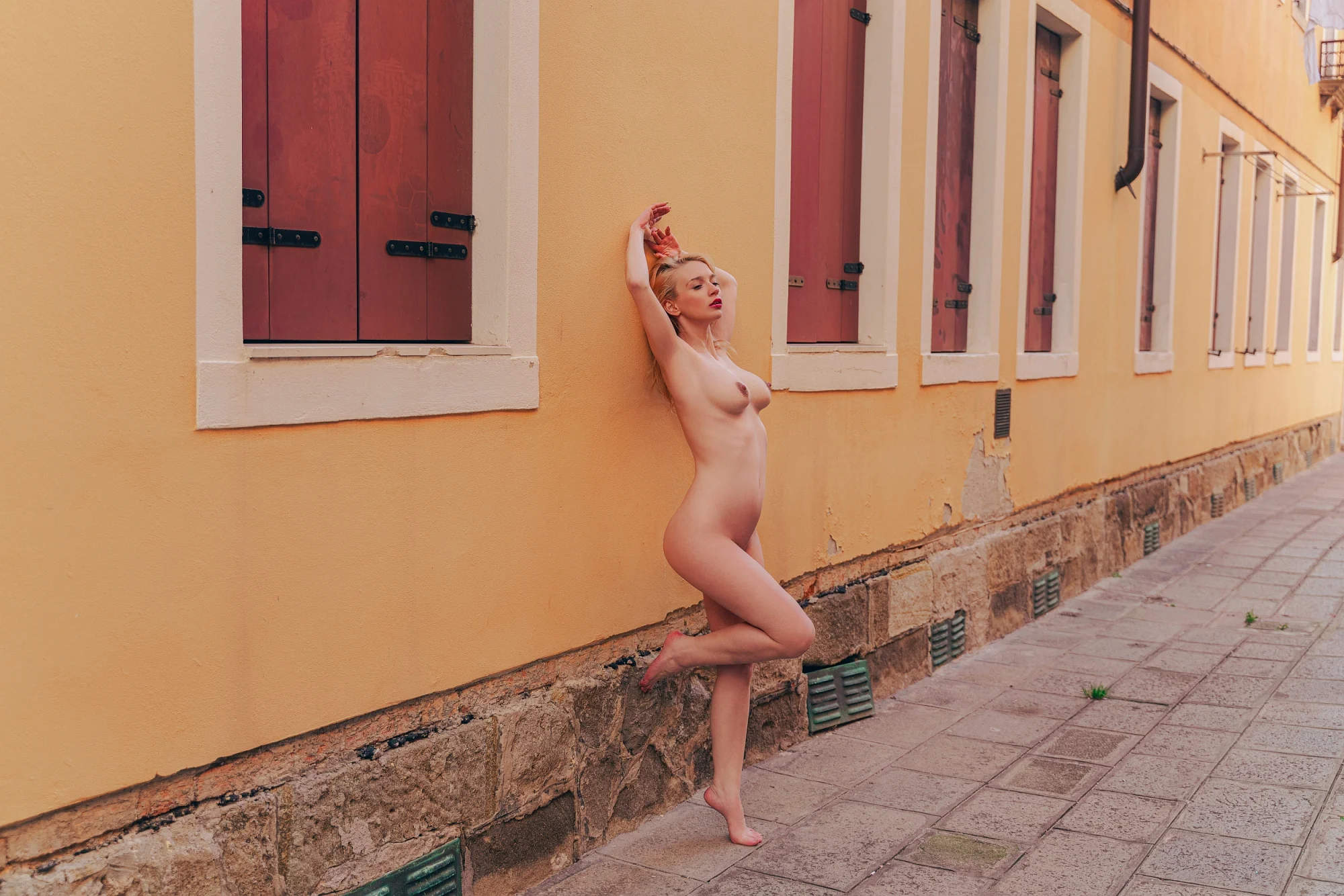
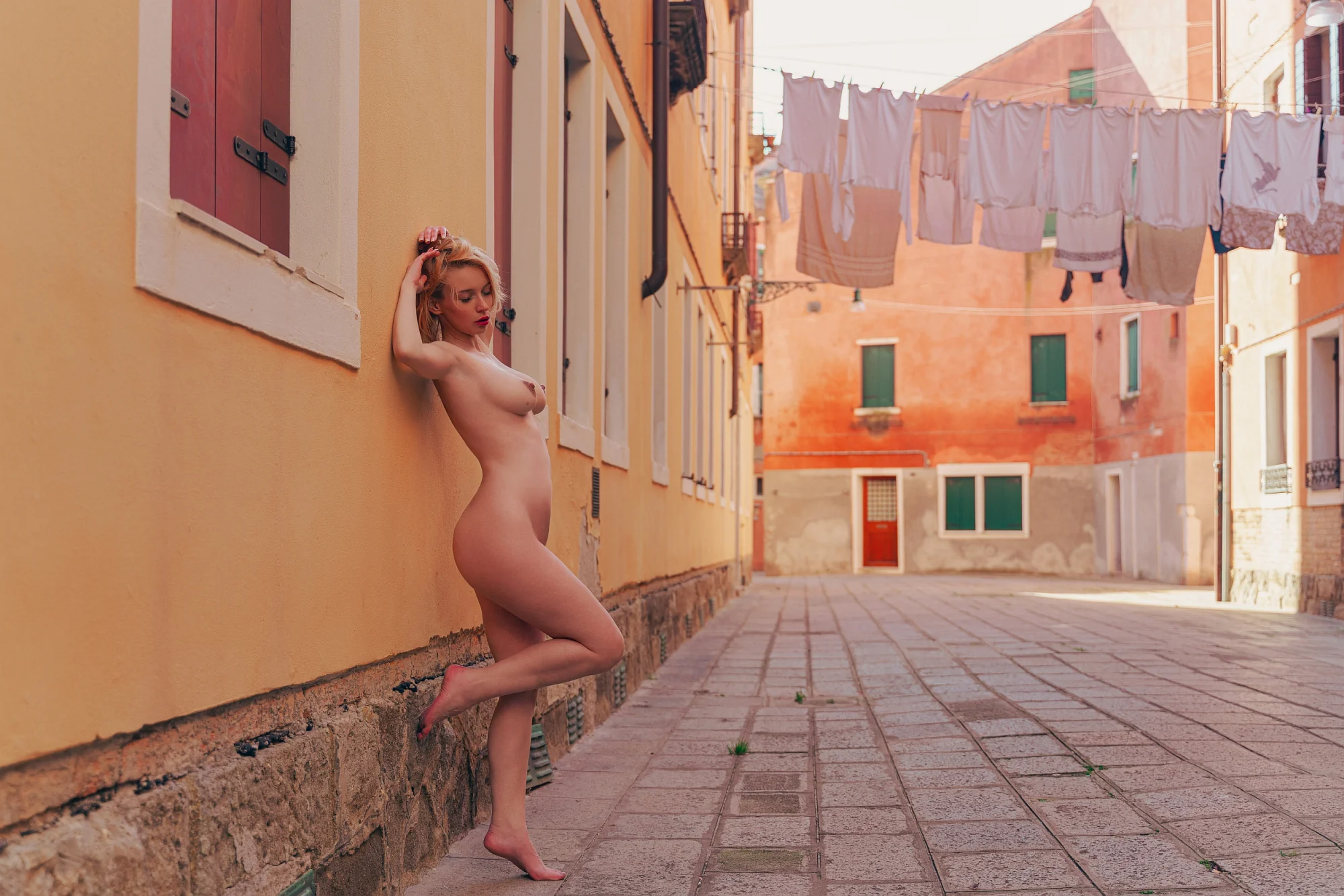
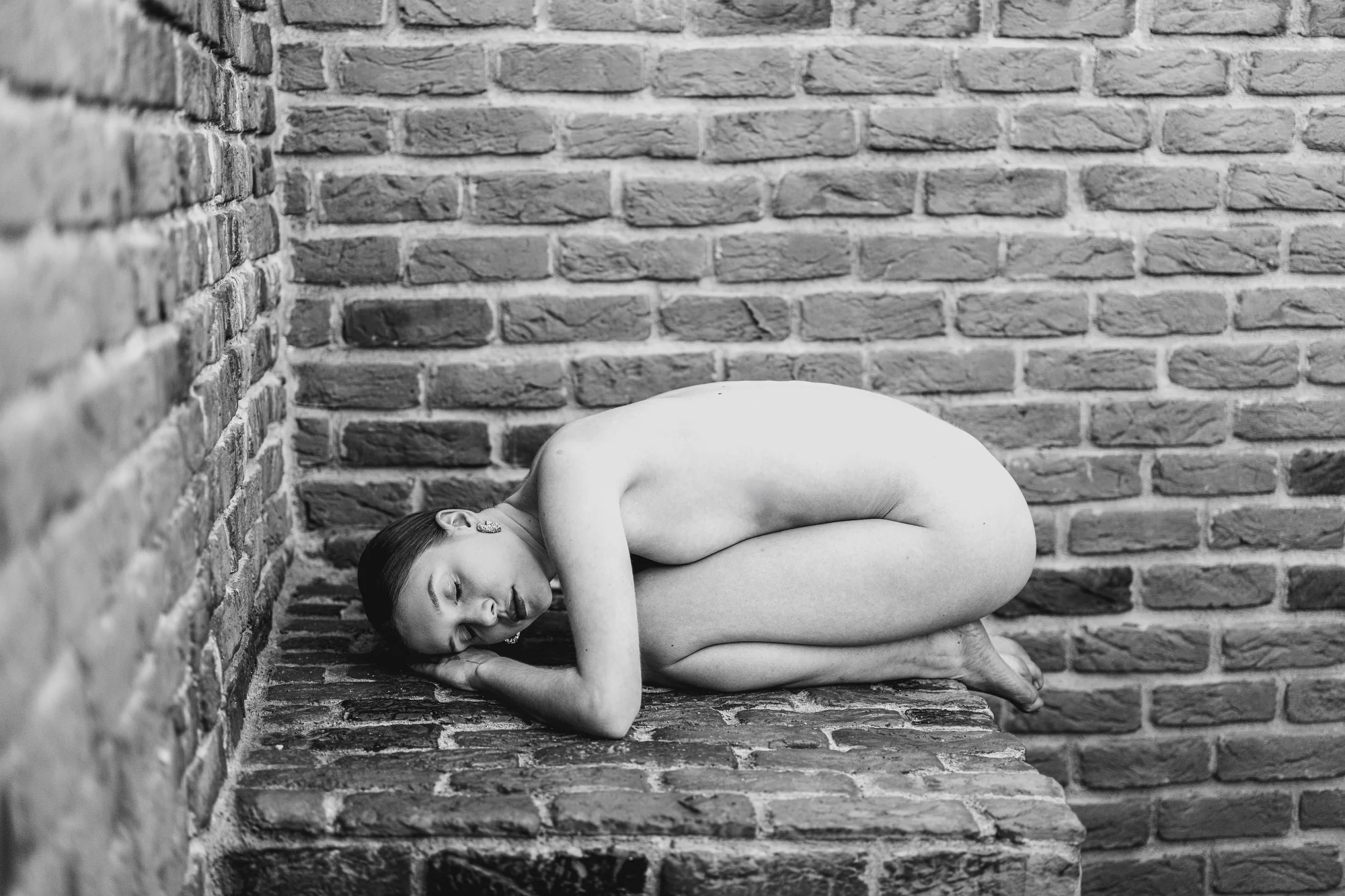
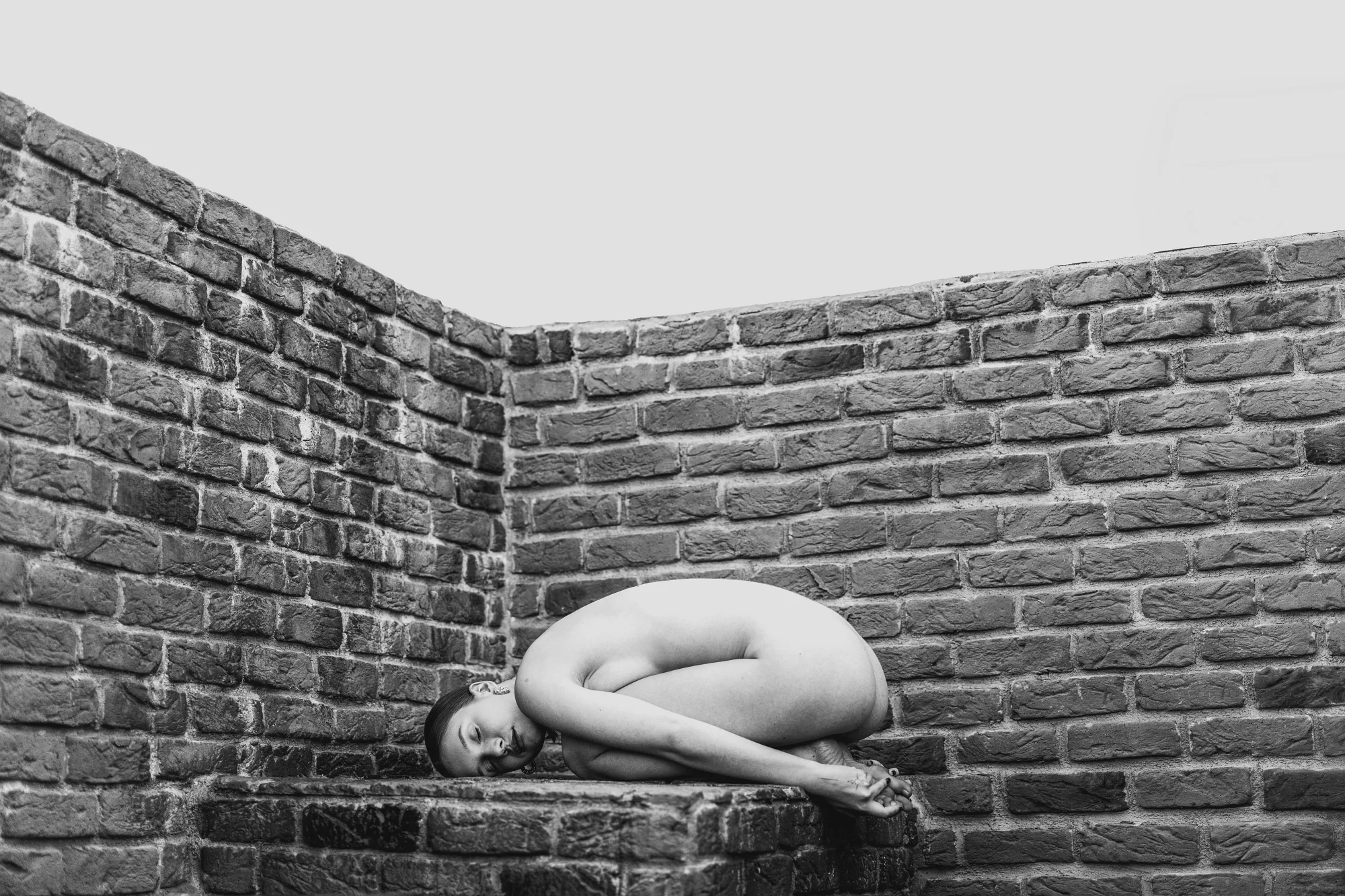
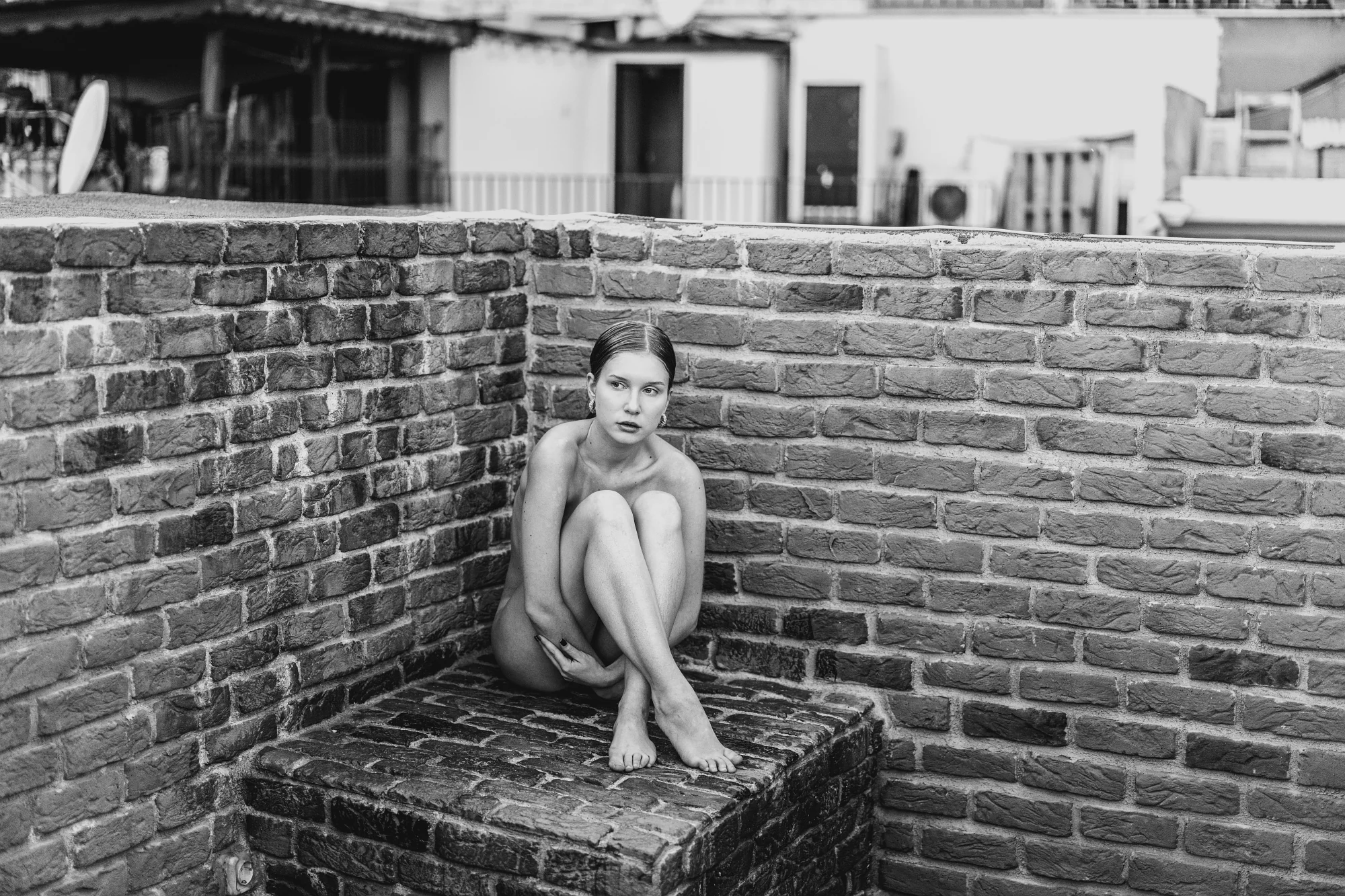
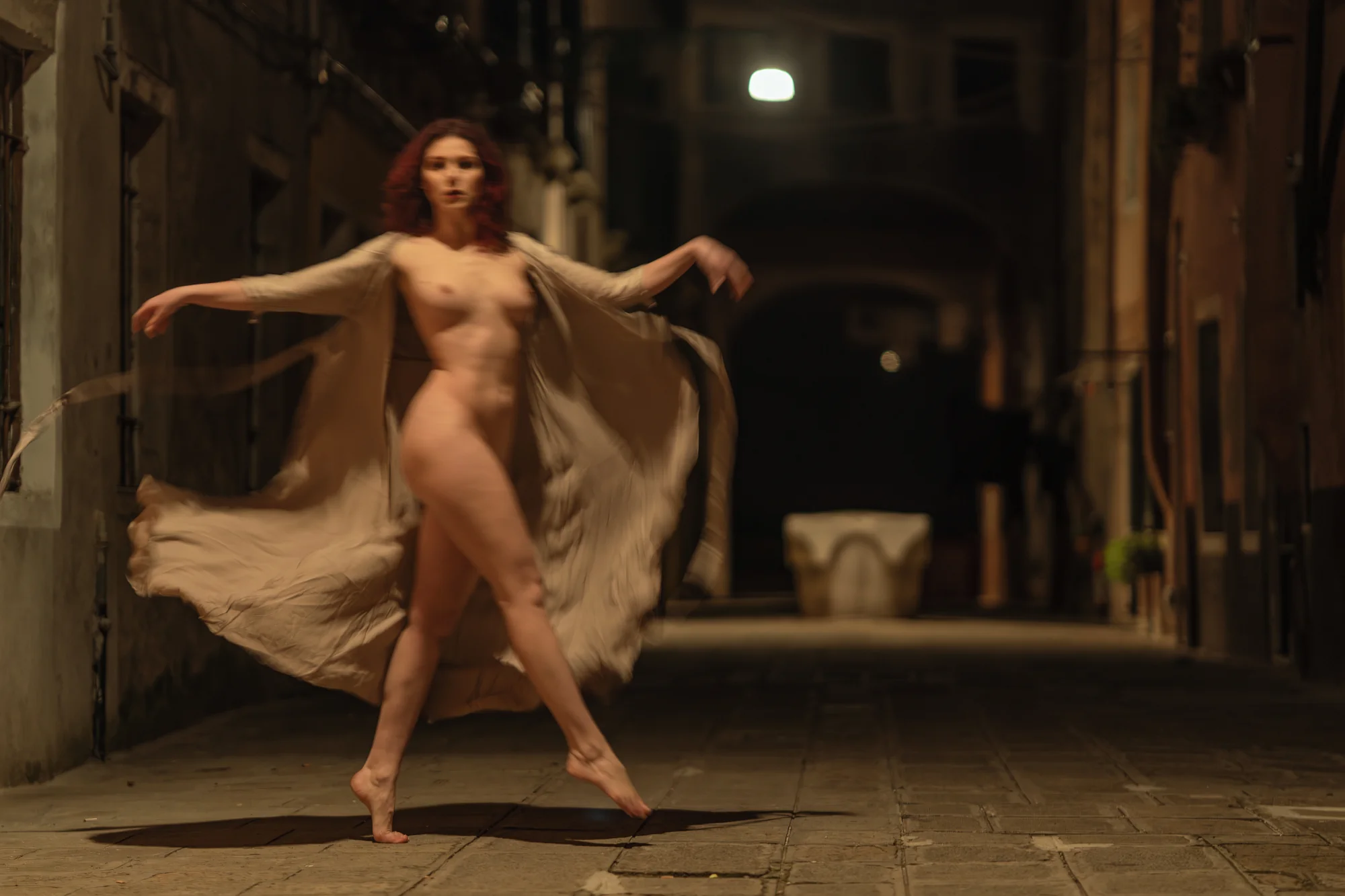
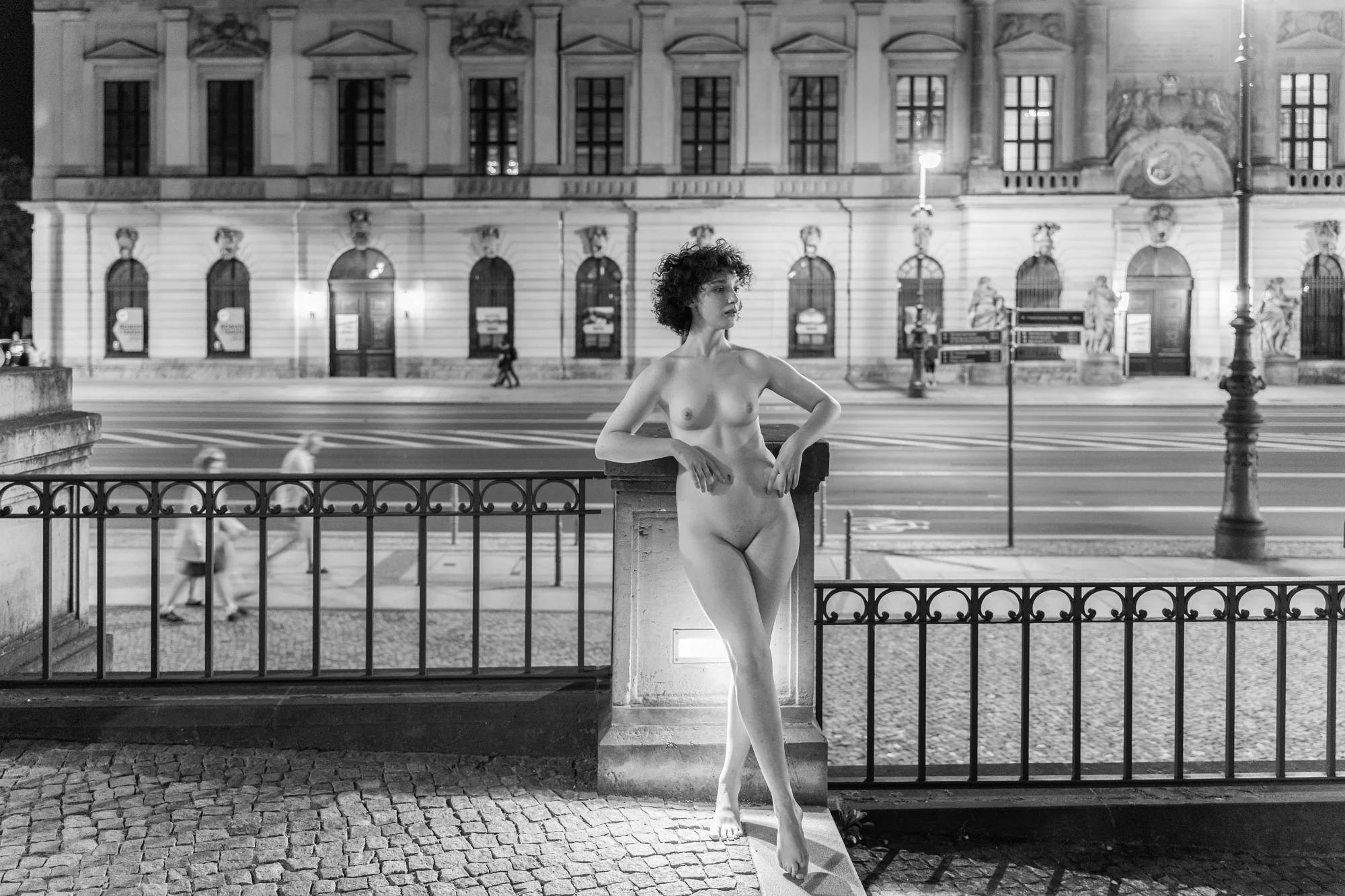
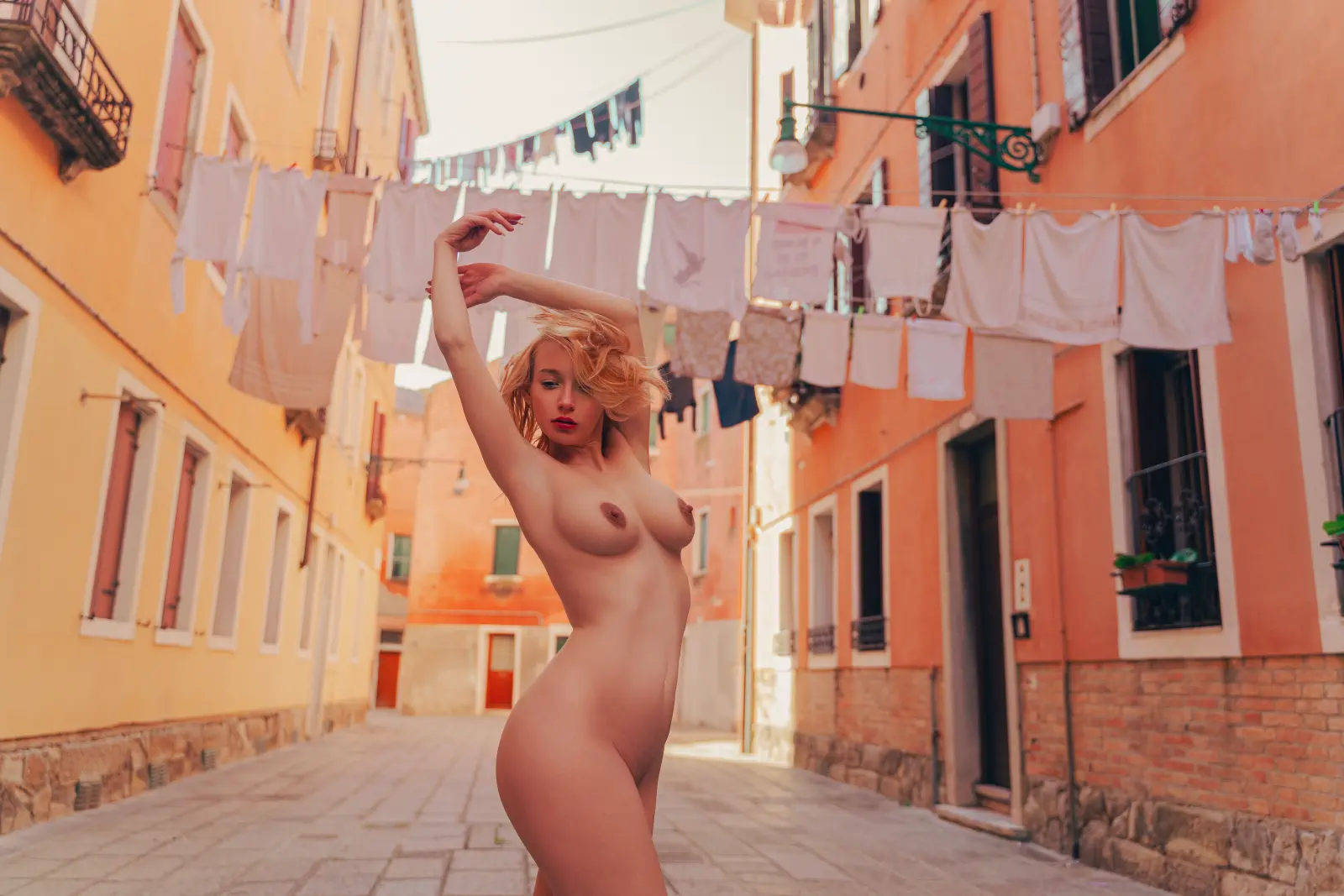
В других местах фотографирует обнажённое тело в публичном пространстве: в переулках, на мостах через каналы, на пустых улицах в сумерках, на балконе над улицей, в уголках городов и деревень, где публичное и личное пересекаются, не давая о себе знать. Эта серия задаёт простой вопрос о бытии: что значит для тела находиться там, обнажённым, в пространстве, которое оно делит с другими? Это не перформансы и не акции в активистском смысле. Это нечто более тихое: краткие мгновения, в которые тело, не принадлежащее этому месту, задерживается, фотографируется и снова отпускается в город.
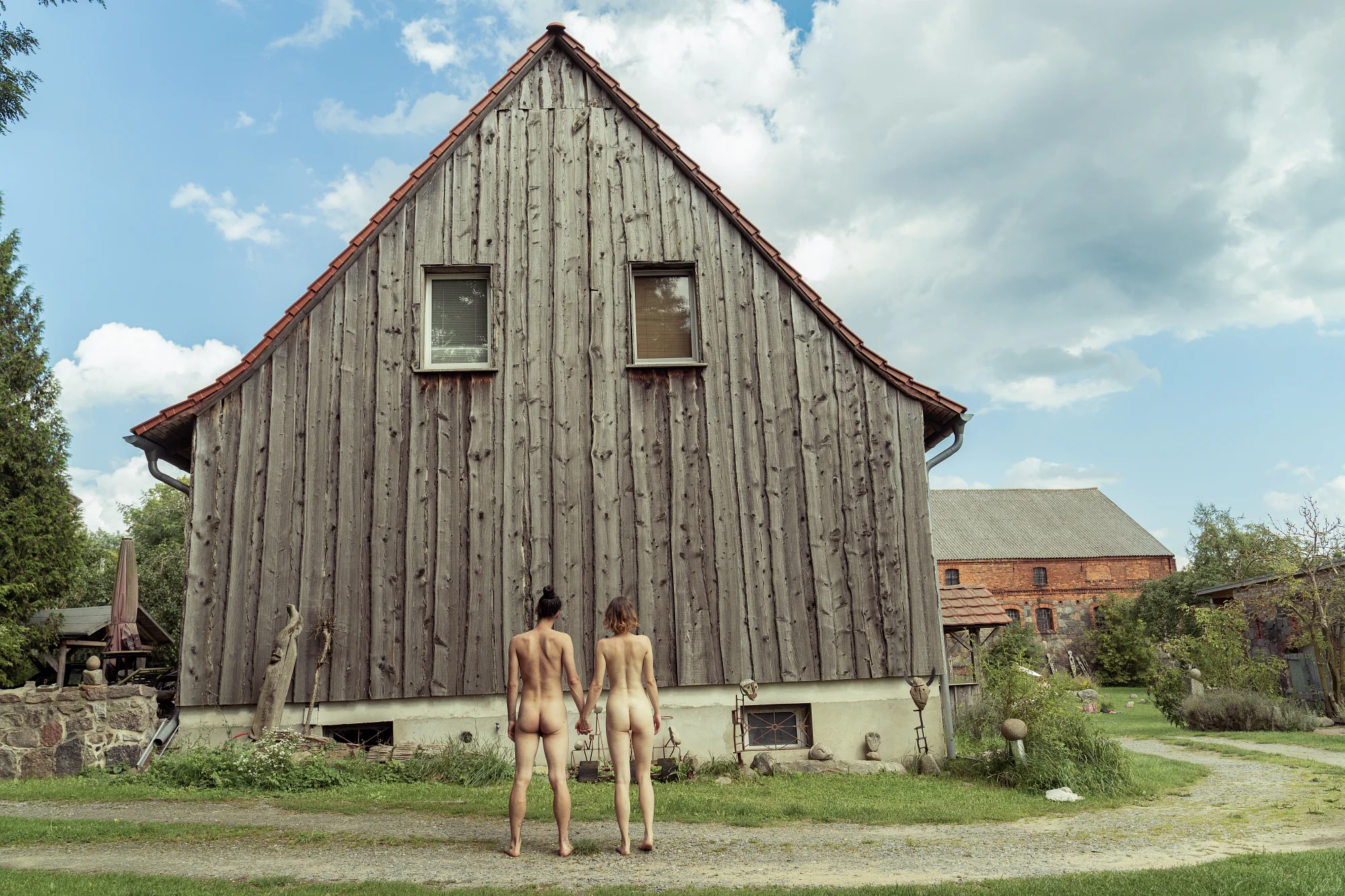
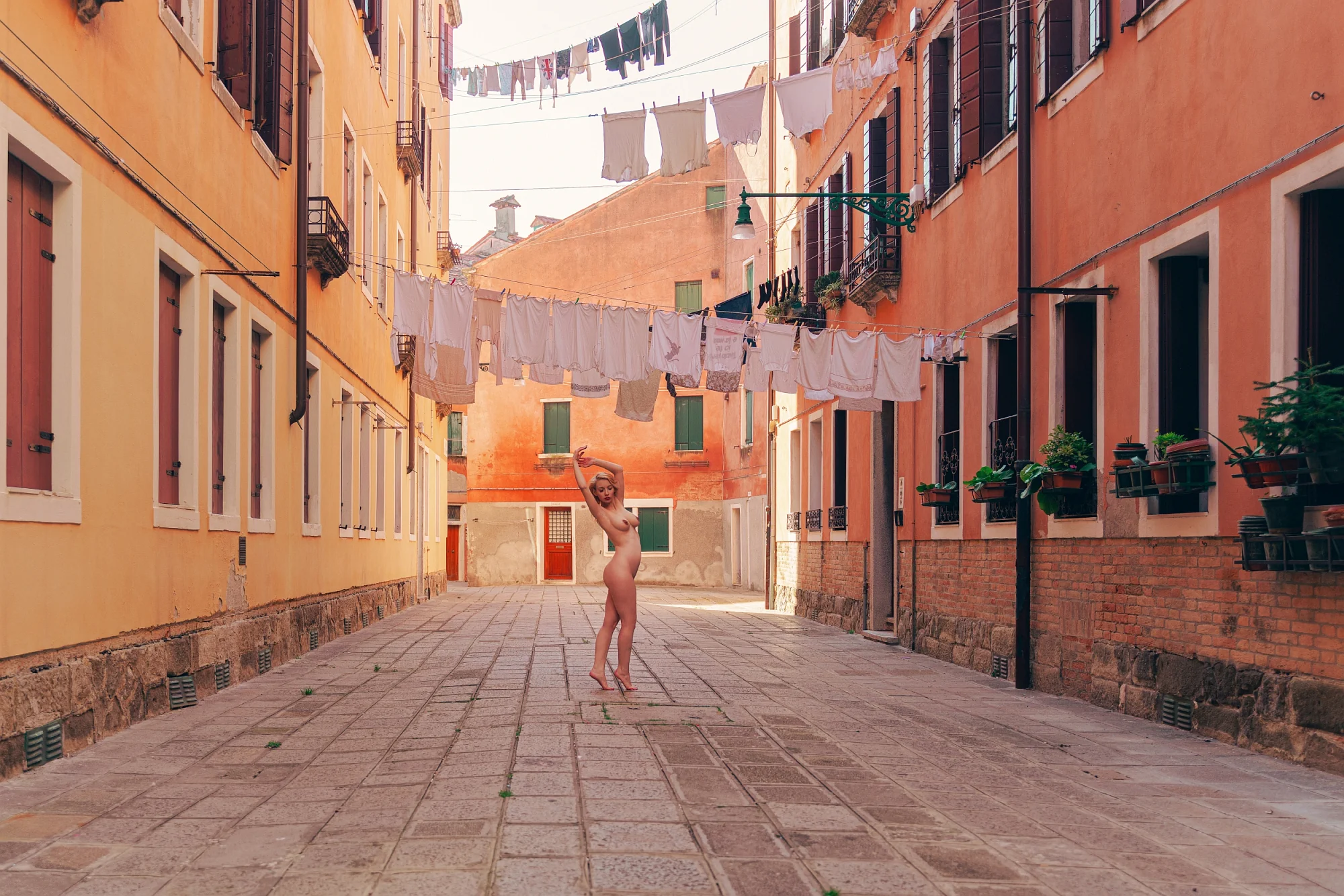
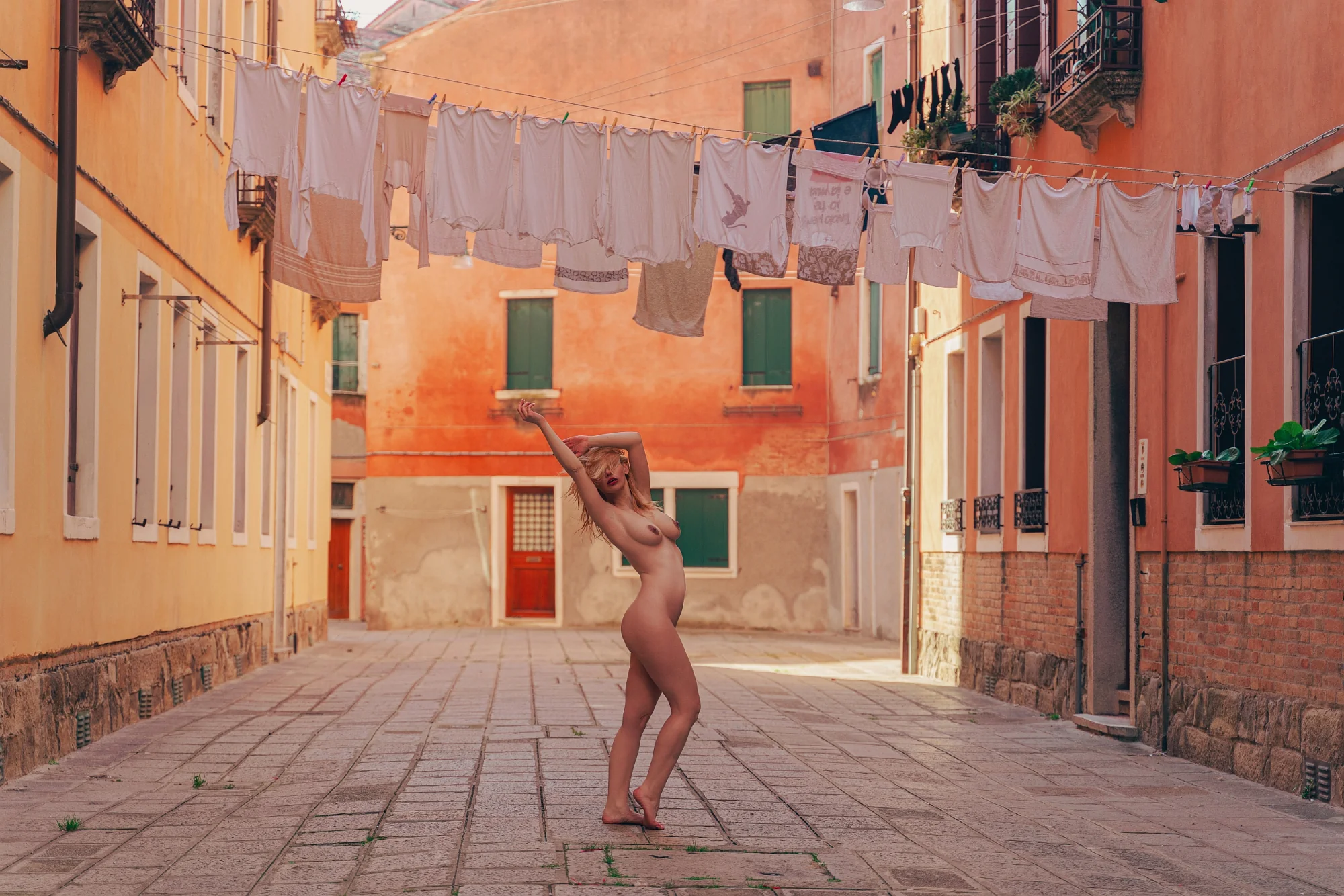
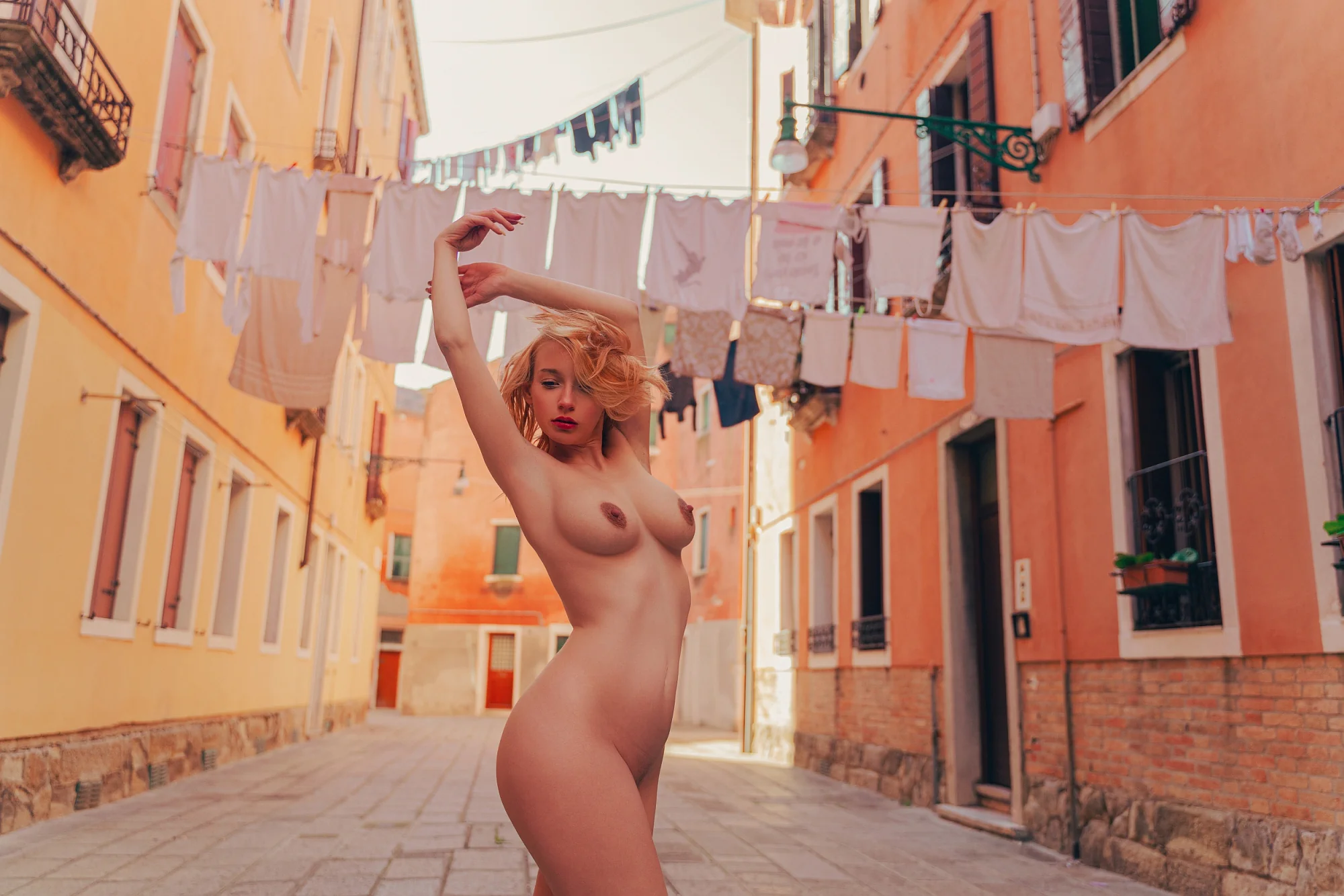
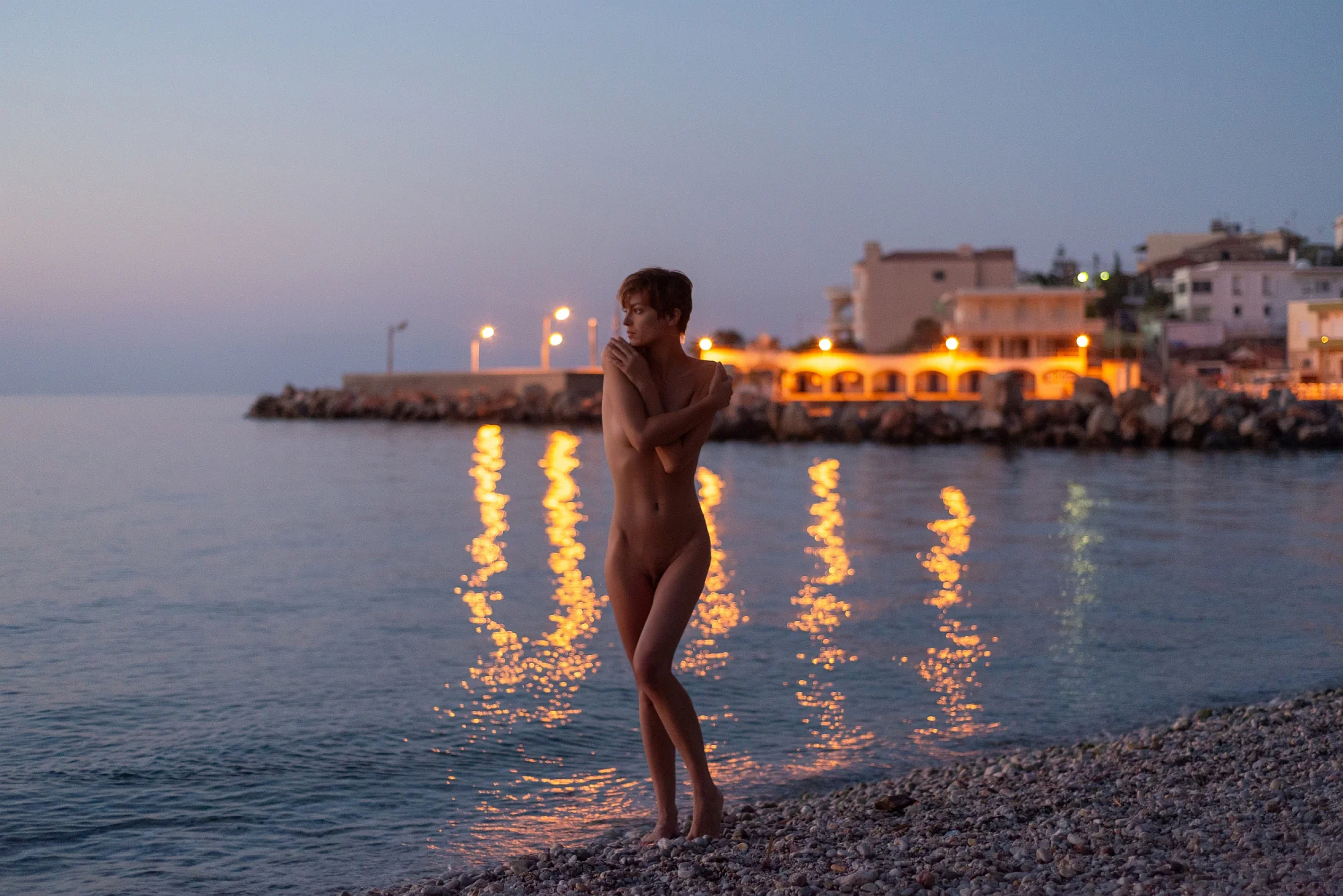
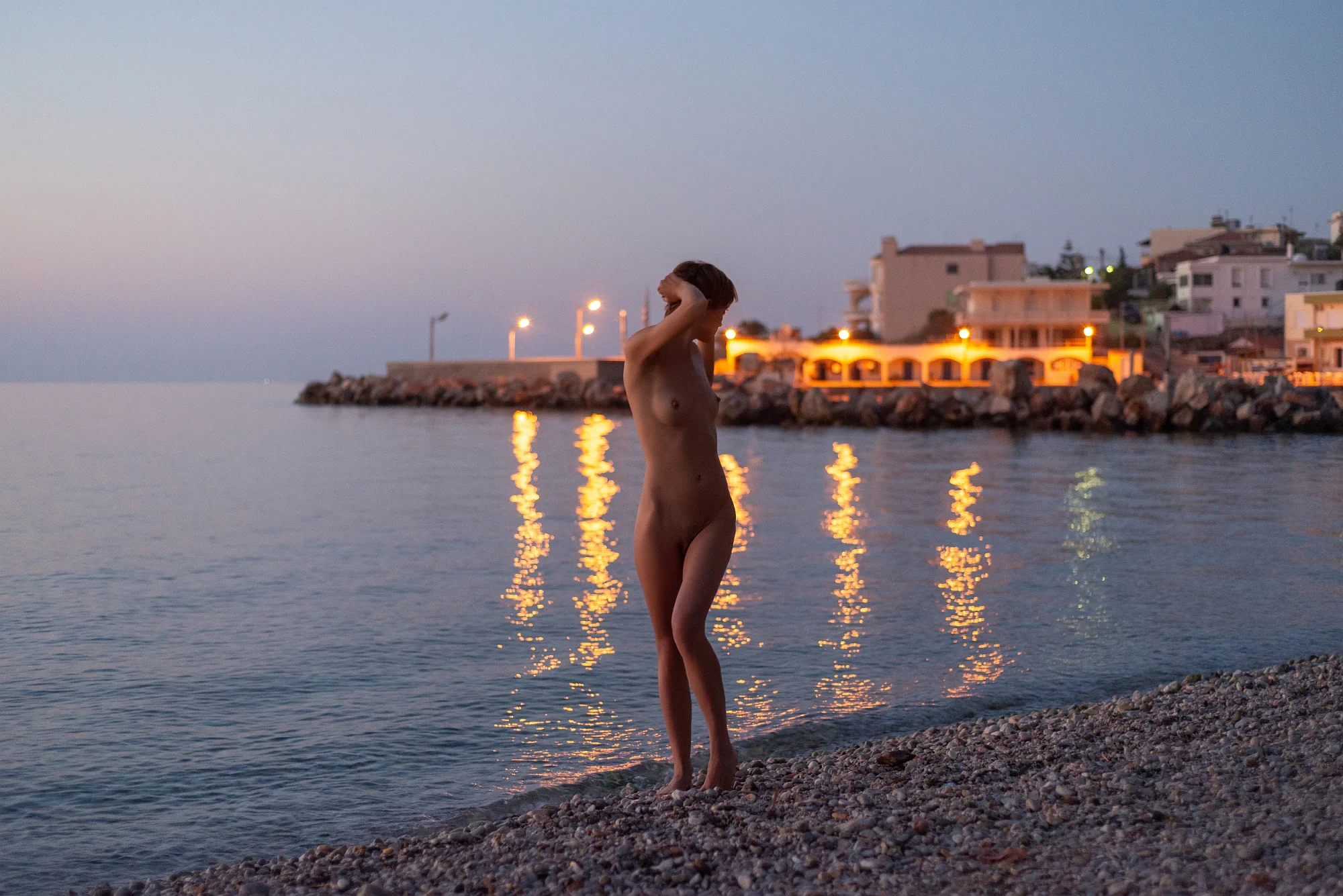
One photograph places a woman at the centre of a narrow street beneath lines of hanging laundry, arms raised as if she had begun to dance, alone between two rows of shuttered windows. Another shows a couple with their backs to the camera, holding hands before the weathered gable of a farmhouse, small and quiet under a wide sky. At night, a figure strides barefoot along a lamplit pavement, a sheer cape lifting behind her, while a passerby continues down the street. At dusk on a shoreline, a woman folds her arms around herself as the lights of the town come on across the water. Freedom, tenderness, exposure, and self-protection sit side by side: the body is present in each image, and the way it is present changes with the place.
Public space runs on rules that are rarely written down: how close strangers stand, where eyes may rest, which parts of a body a street agrees to see. An unclothed body makes all of them visible at once and changes the meaning of everything around it. A pavement becomes a border, a window becomes a witness, a passerby becomes part of the photograph's tension.
Сериал наследует традиции flâneur, the figure who walks the city without destination, reading its surfaces, but it inverts the flâneur's politics. Baudelaire's and Benjamin's flâneur observes from the safety of clothing and class. That figure was also a man. In the nineteenth-century city, a woman walking alone and without purpose risked being taken for a "public woman", the polite name for a prostitute, and the freedom to wander and look was largely a male one. The subject of В других местах is exposed: literally, and to the quiet violence of being seen where seeing is not expected. When the body in the street is a woman's, that history is in the frame. The series stays inside this exposure.
The photographs are staged with care, and most are made quickly, so as not to disturb people passing by. Every session rests on the participant's consent, with the freedom to stop at any moment. Locations are chosen for their architectural specificity: the narrow cut of a pastel-walled street, the geometry of a canal embankment, the symmetry of a courtyard passage. The body enters these spaces and takes a posture that is neither decorative nor defiant. A nude figure in public space produces a different kind of photograph from a nude in the studio: the environment becomes a collaborator, and sometimes an adversary.
Эти отсылки охватывают несколько направлений. В своих массовых публичных акциях с обнажёнными людьми Спенсер Туник рассматривает тело как коллективный политический знак; В других местах работает в противоположном масштабе: один или два тела, одна улица и никаких зрелищ. Франческа Вудман фотографировала обнажённые тела в заброшенных комнатах, причём тела были наполовину размыты из-за длительной выдержки; В других местах переносит часть этой призрачной атмосферы на улицы, где кипит жизнь. Ги Дебор dérive, в основе этого метода лежит ситуационистская практика городского дрифтинга, хотя в данном случае дрифт приводит к телу, которое просто находится там, где его не ожидают.
На фотографии царит спокойствие, но момент съемки таковым не был. За каждой фигурой скрывается ритм города, который в любую секунду мог бы принять совершенно иной оборот, и этот ритм остается в кадре даже после того, как он исчез.
Избранные произведения