UnNude
The Architecture of the Body
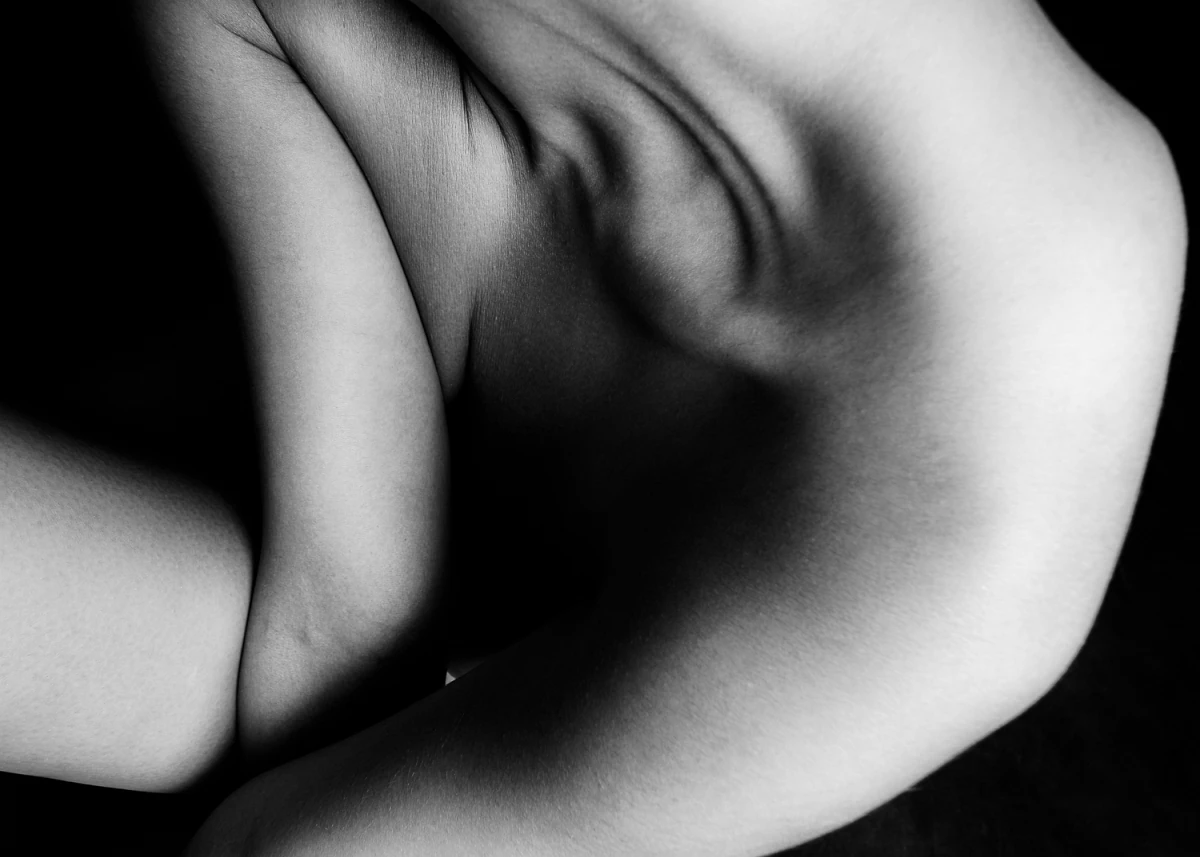
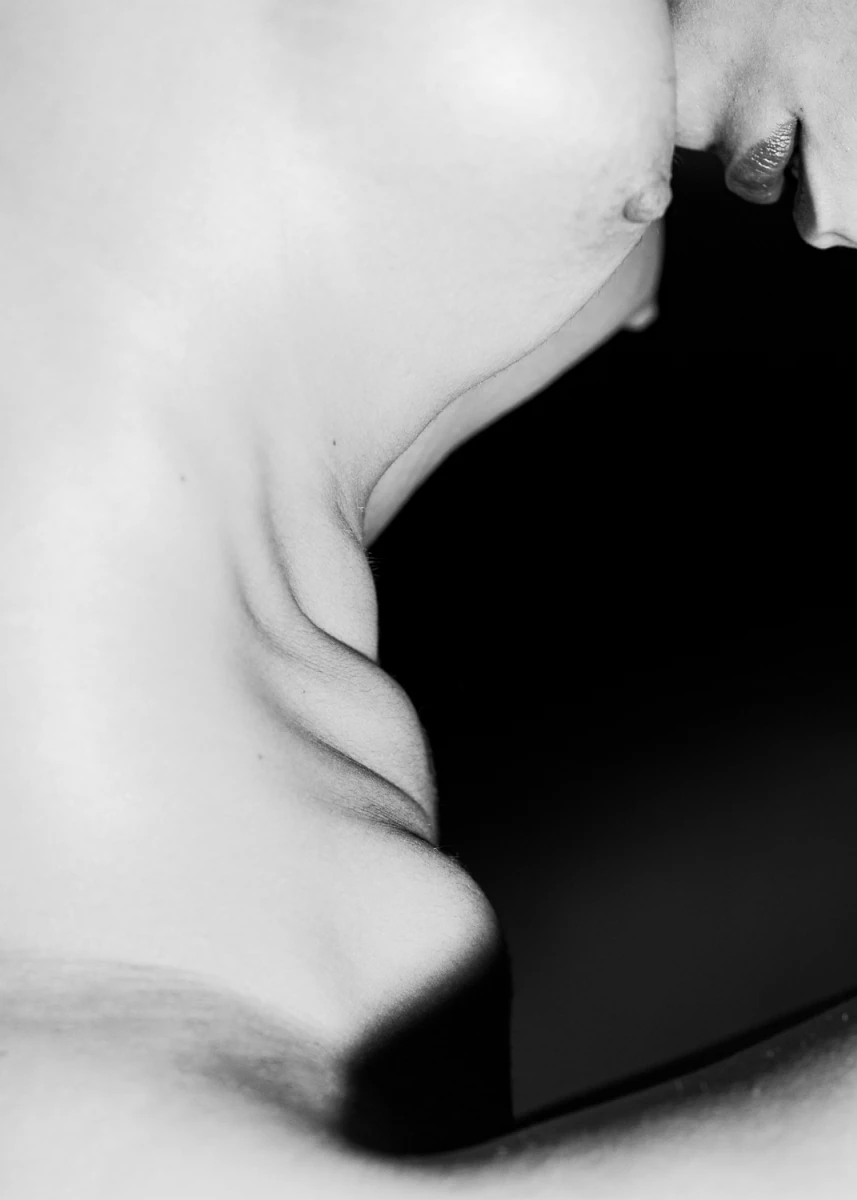
Skin as line, fold as volume, shadow as hollow space: the body read like a landscape or a drawing.
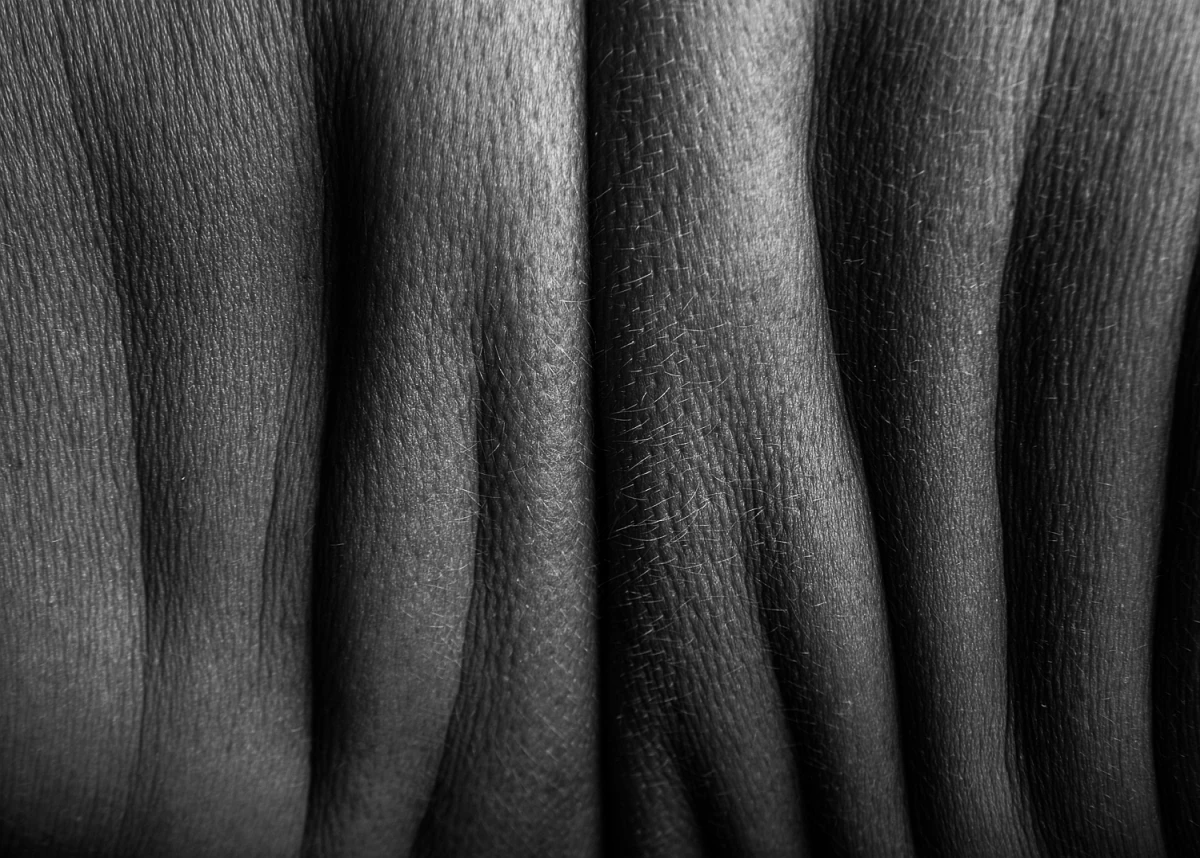
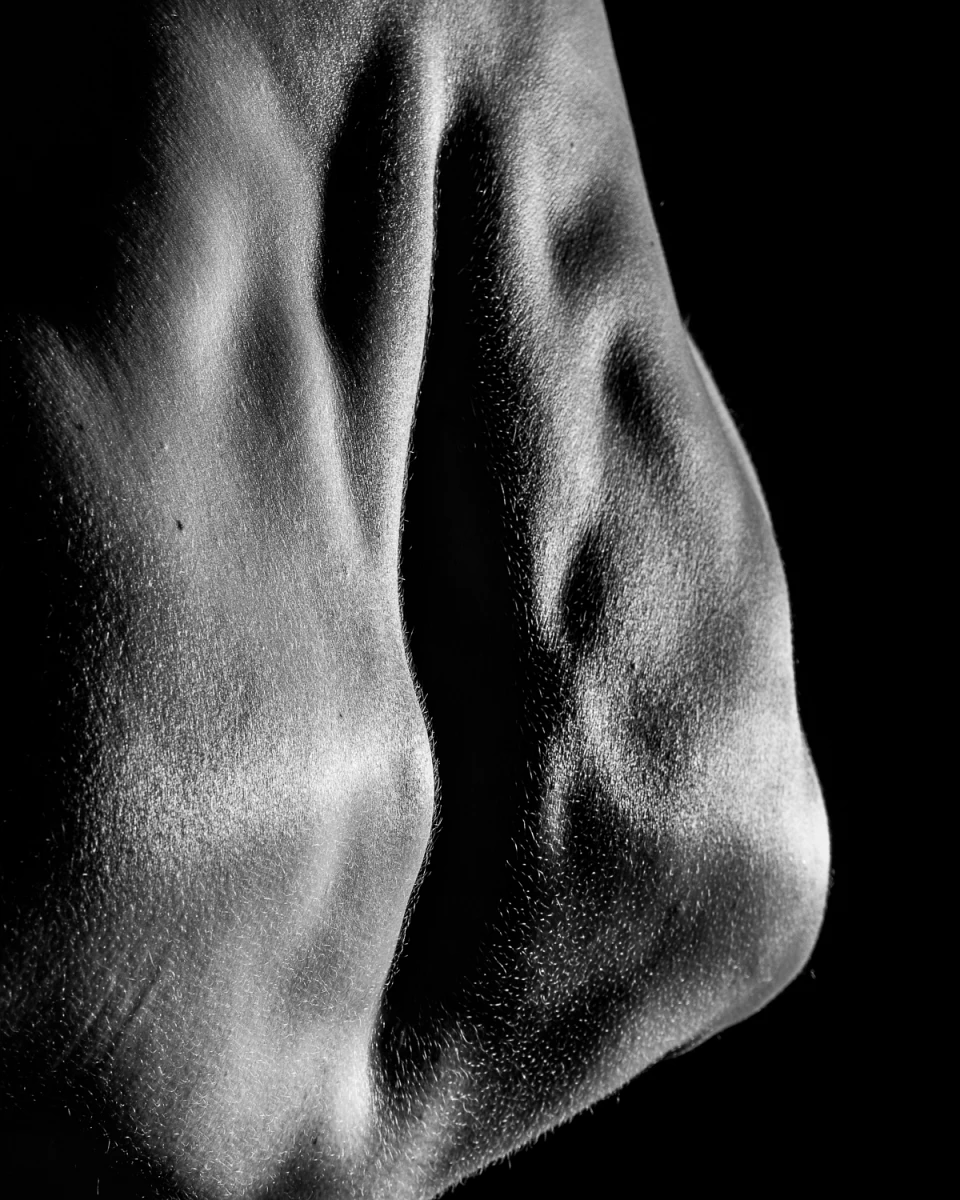
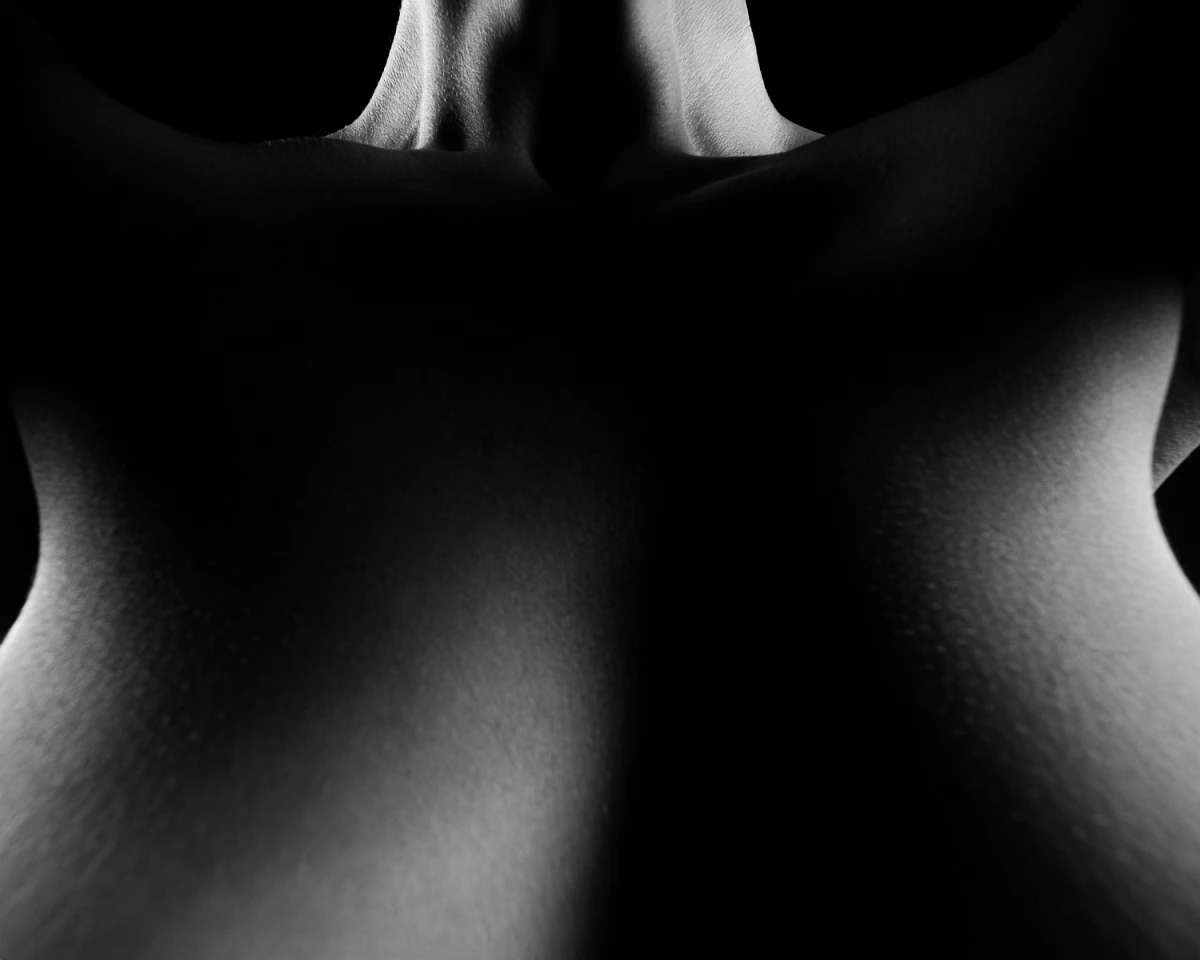
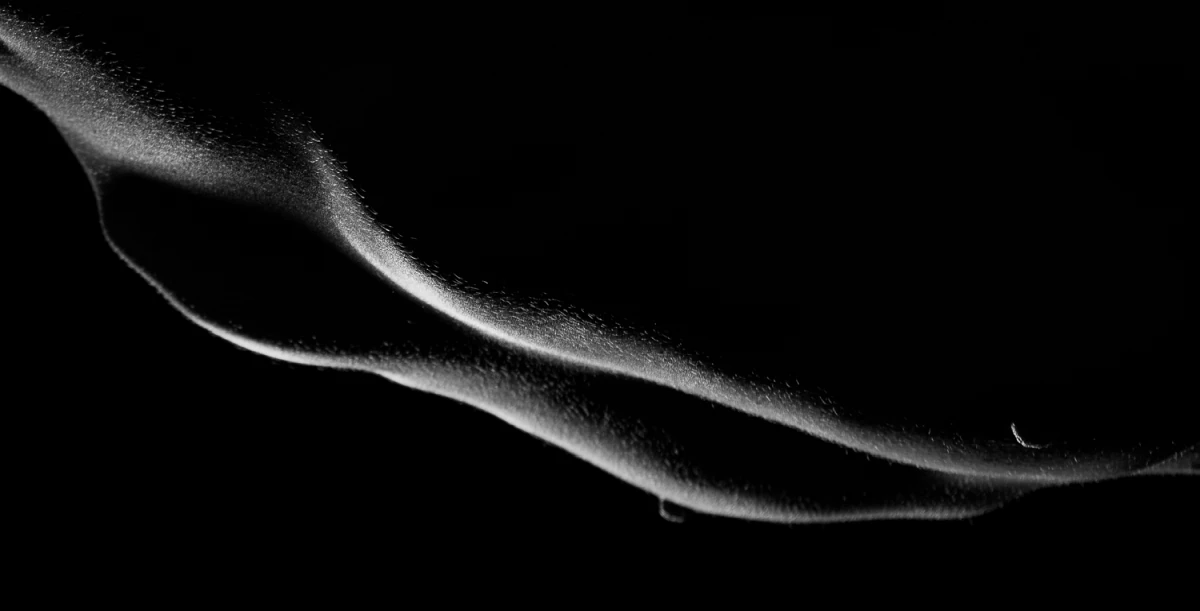
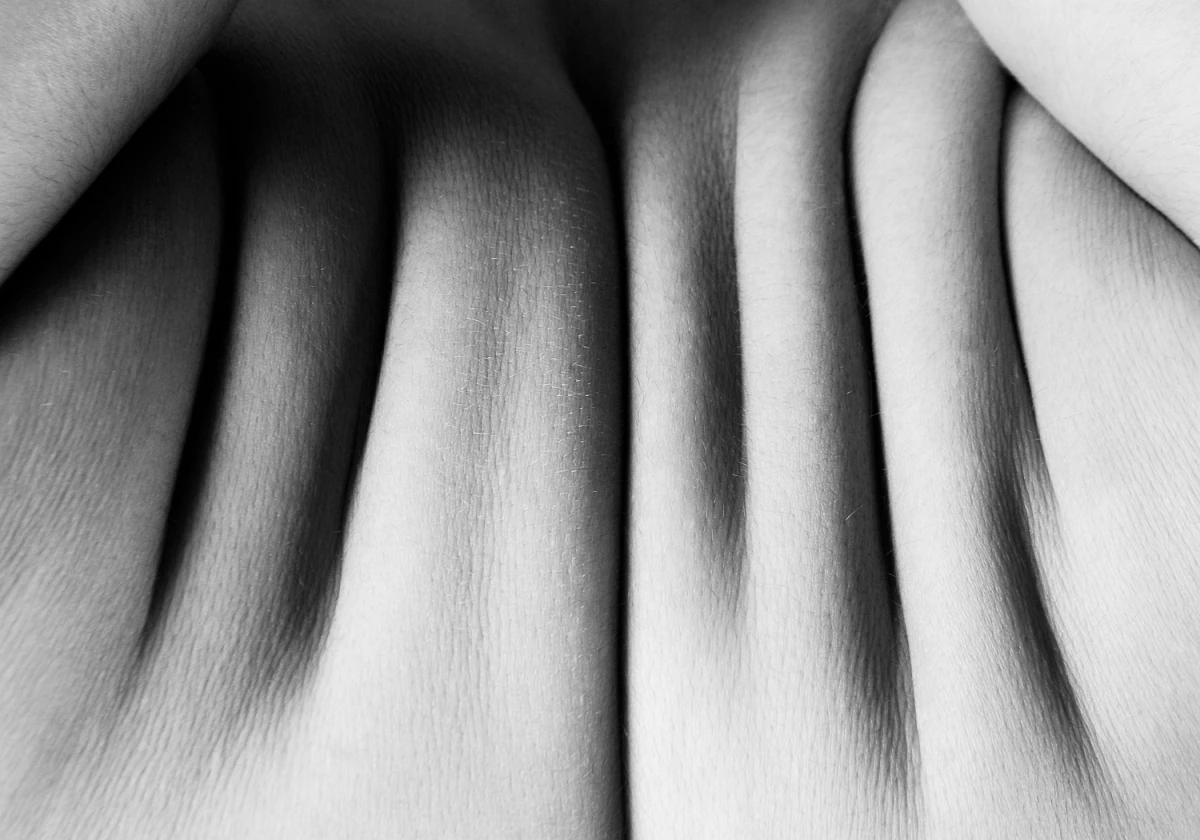
UnNude changes how the body is looked at, more than what is looked at. Over the long duration of the project, the face is removed and the signifiers of identity are softened. What remains is form: skin becomes a line, a fold becomes volume, a shadow becomes a hollow space.
The title points to two ways an unclothed body is usually seen. Naked, it belongs to a person, exposed and ill at ease. As a nude, it is a body reshaped into an ideal and displayed for others, looked at without being recognised as anyone. UnNude takes that anonymity and carries it past the point where the body can still be consumed as a nude. Once the face, the scale, and the familiar outline are gone, the question a portrait asks, who is this, gives way to another: what is this surface, and how does it hold light?
The working method is disciplined: black and white, hard and directional light, tightly cropped frames that unsettle the viewer's sense of scale. A dip in a back can read as a valley, the ridge of an elbow as an architectural drawing. This scale disorientation is the central device of the series. It turns the body into a landscape and asks the viewer to see through touch more than recognition. The eye moves over the surface the way a hand would, brushing it instead of scanning it. The grain of the print, the fine hairs along a forearm, the sharp contrast of skin against black all reinforce that tactile reading.
The abstract forms come from a long interest in reducing the body to its essential shape: breaking the figure into parts, simplifying it until only its main volume remains, letting its curves read as something organic and nameless. The camera adds its own means. Scale becomes uncertain, a torso can read as a dune, and light models skin the way it would model stone. UnNude works with these fundamental tools, light's ability to define form and the frame's power to disorient, and uses them to ask a question that belongs to its own moment.
That question concerns time. A single-channel video installation accompanies the prints: short clips filmed with the same light, pose, and framing as each photograph, slowed down until the subject's breath becomes visible. The still print holds form; the video returns life. The exhibition moves between sculpture and cinema, between space and duration. What the prints alone might present as pure abstraction is restored, in the video, to a body that was there, breathing, in front of the camera.
Fragmenting the body has a troubled history: cut into parts, a person becomes easier to possess. UnNude keeps the fragment and withholds what fragments usually offer. There is no one to identify and no detail to collect, and the slowed breath in the video keeps returning the terrain to a living person. The series does not avoid sensuality; it separates sensuality from the logic of consumption.
Selected Works





Press


Exhibition & Editions
UnNude: The Architecture of the Body was presented as a solo exhibition at Die Akt Galerie, Berlin, in September 2025. The exhibition featured the breathing photographs video installation alongside the archival prints.
Archival pigment prints from UnNude are released in limited editions of 5 + 1 Artist Proof, printed on Hahnemühle Photo Rag, Baryta, or FineArt Pearl papers. Prints are signed, numbered, and accompanied by a Certificate of Authenticity, shipped worldwide from Berlin.
Selected works are represented on Artsper, Saatchi Art, and Artmajeur. Direct purchase via print@burakbulut.org offers collector pricing below platform rates. For exhibition loans, press, or curatorial inquiries: contact@meryemaydin.co.