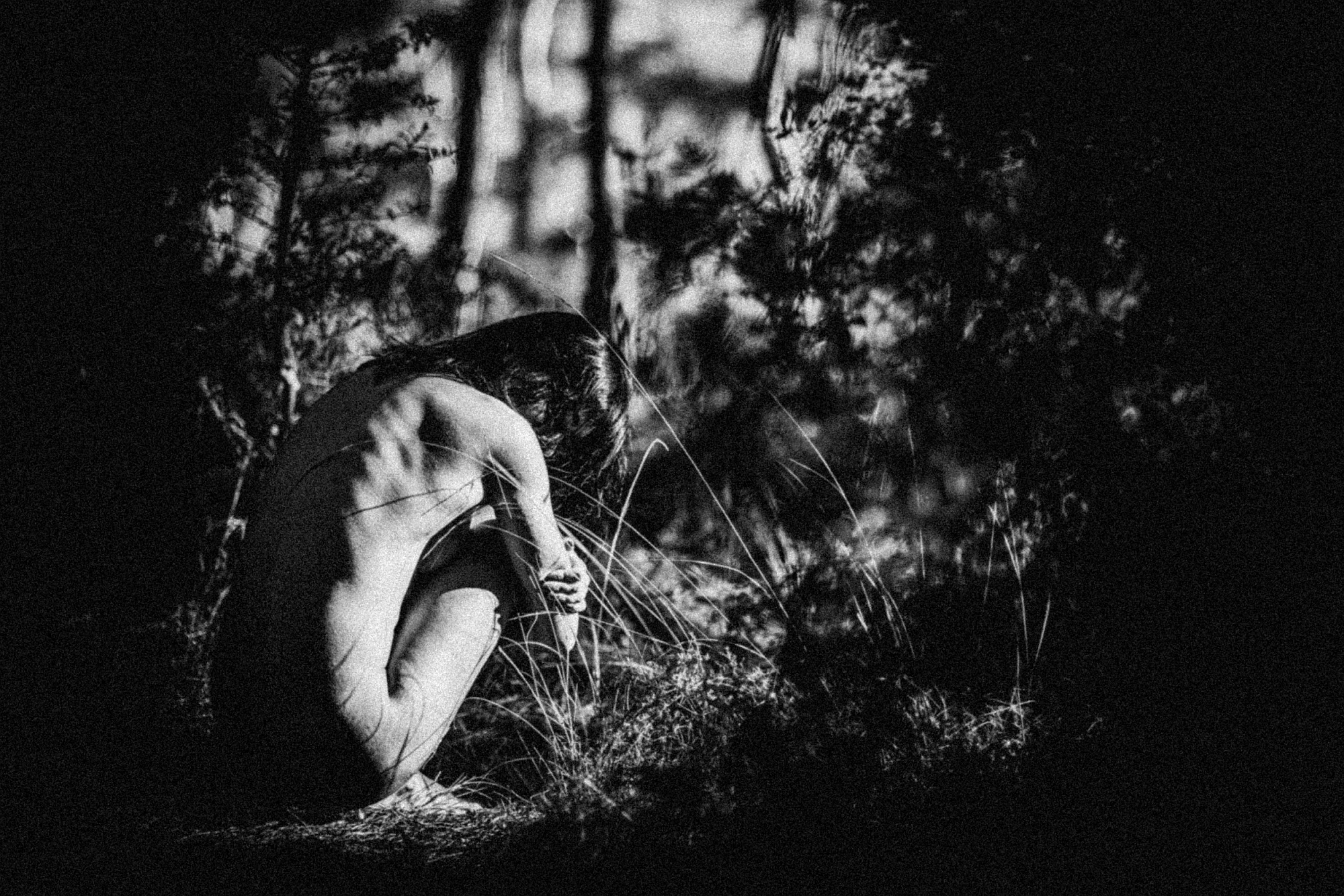
Cette série est née pendant la pandémie, lorsque la distance est devenue la condition de tous les corps du monde. La peau, qui est le premier seuil du corps et le plus vulnérable, ne pouvait plus être atteinte. Les voyages se sont effondrés. Les studios ont fermé. La pratique de la photographie de nu depuis des décennies - en groupe, dans des espaces partagés, dans l'intimité de la proximité - s'est arrêtée d'un seul coup.Tu es le seul à être proche, quand tout est loin a été réalisé dans ce temps suspendu. C'est le chapitre pandémique de Ecotone, la série de longs métrages sur le corps et l'environnement naturel. Ce qui change ici, c'est le registre émotionnel. Où Ecotone place le corps parmi les chevaux, les arbres, les fleurs et l'eau comme un écosystème dont l'homme est l'un des éléments, cette sous-série place le corps seul - assis, accroupi, recroquevillé, détourné - sur une étroite bande de sable sombre où la terre rencontre l'eau et où rien d'autre n'entre dans le cadre.Le paysage est ici minimal, jusqu'à l'abstraction : un rivage humide, de petites vagues, un horizon mince. Pas d'arbres, pas d'architecture, pas de conditions météorologiques visibles, pas d'autres personnes. Le corps a tout le cadre pour lui, mais il est petit à l'intérieur - repoussé dans un coin, parfois à peine lisible sur le sable plus sombre. Ce que les images enregistrent, ce n'est pas le corps dans la nature, mais le corps dans la nature. l'éloignement de la nature. La vague est proche, l'eau est proche, la terre est proche. Tout le reste est loin.Le titre s'inspire de la structure émotionnelle de cette période. Pendant la pandémie, les personnes qui étaient encore physiquement proches sont devenues presque insupportablement proches ; tout ce qui se trouvait en dehors du périmètre domestique a été replié dans des écrans. La proximité dont il est question dans le titre n'est pas un réconfort. C'est un fait sur la proximité sous contrainte : lorsque le monde se retire, ce qui reste à portée de main devient la totalité de l'expérience.Les personnages sont photographiés de dos, à distance, dans des moments d'immobilité plutôt que de geste. Le refus du visage est délibéré. Il ne s'agit pas de portraits d'un sujet spécifique, mais d'études sur la condition d'être seul avec un corps, au bord de l'eau, à un moment où c'était l'une des rares formes de rencontre encore disponibles. La gamme de tons du noir et blanc maintient les images dans un registre plus austère que les registres de couleurs de l'exposition. Ecotone'Les travaux antérieurs de l'auteur.La sous-série s'est développée sur une période unique et prolongée et reste un cycle cohérent au sein de la série. Ecotone. Il n'a pas été rouvert depuis.Œuvres de la série
Photographies en noir et blanc réalisées à la chambre photographique, sans mise en scène ni intervention de post-production.