
Nur du bist nah, Wenn alles weit weg ist
Die Leiche am Ufer
Ein neues Gefühl der Verbundenheit mit der Natur am Wasser während der Pandemie.
Diese Serie entstand während der Pandemie, als Reisen nicht mehr möglich waren, Ateliers geschlossen wurden und die physische Nähe zwischen Menschen eingeschränkt war. Eine Praxis, die jahrelang in Gruppen und gemeinsamen Räumen gepflegt worden war, kam abrupt zum Stillstand. Dieser Bruch mit den gewohnten Lebensroutinen eröffnete die Möglichkeit, die Bedürfnisse des Körpers und seine Beziehung zur Umgebung neu zu betrachten.
Der Titel stammt aus einer Zeile des türkischen Dichters Oktay Rıfat: “Nur wenn du nah bist, bist du nah; wenn du weit weg bist, bist du weit weg” (“Nur wenn du weit weg bist, bist du nah.”) Hier wendet sich eine menschliche Stimme an die Natur. Die durch die Pandemie verursachte Trennung lässt eine Nähe wieder spürbar werden, die im modernen Leben in Vergessenheit geraten ist. Die Verletzlichkeit des Körpers macht uns wieder bewusst, wie sehr er die Natur braucht und welchen Platz er in ihr einnimmt.
Im modernen Leben wird die Natur oft als ein Ort außerhalb des Alltags vorgestellt, den man besucht und wieder verlässt. Die Pandemie hat diese Trennung durch die Verletzlichkeit des Körpers in Frage gestellt. Atmen, Berührung und das Teilen einer Umgebung mit anderen Lebewesen erhielten eine neue Bedeutung. Als sich die Menschen voneinander zurückzogen, um sich zu schützen, spürten sie erneut, wie eng ihr Leben mit der Natur verbunden ist. Die Serie sucht nach diesem Bewusstsein in Körpern am Wasserrand.
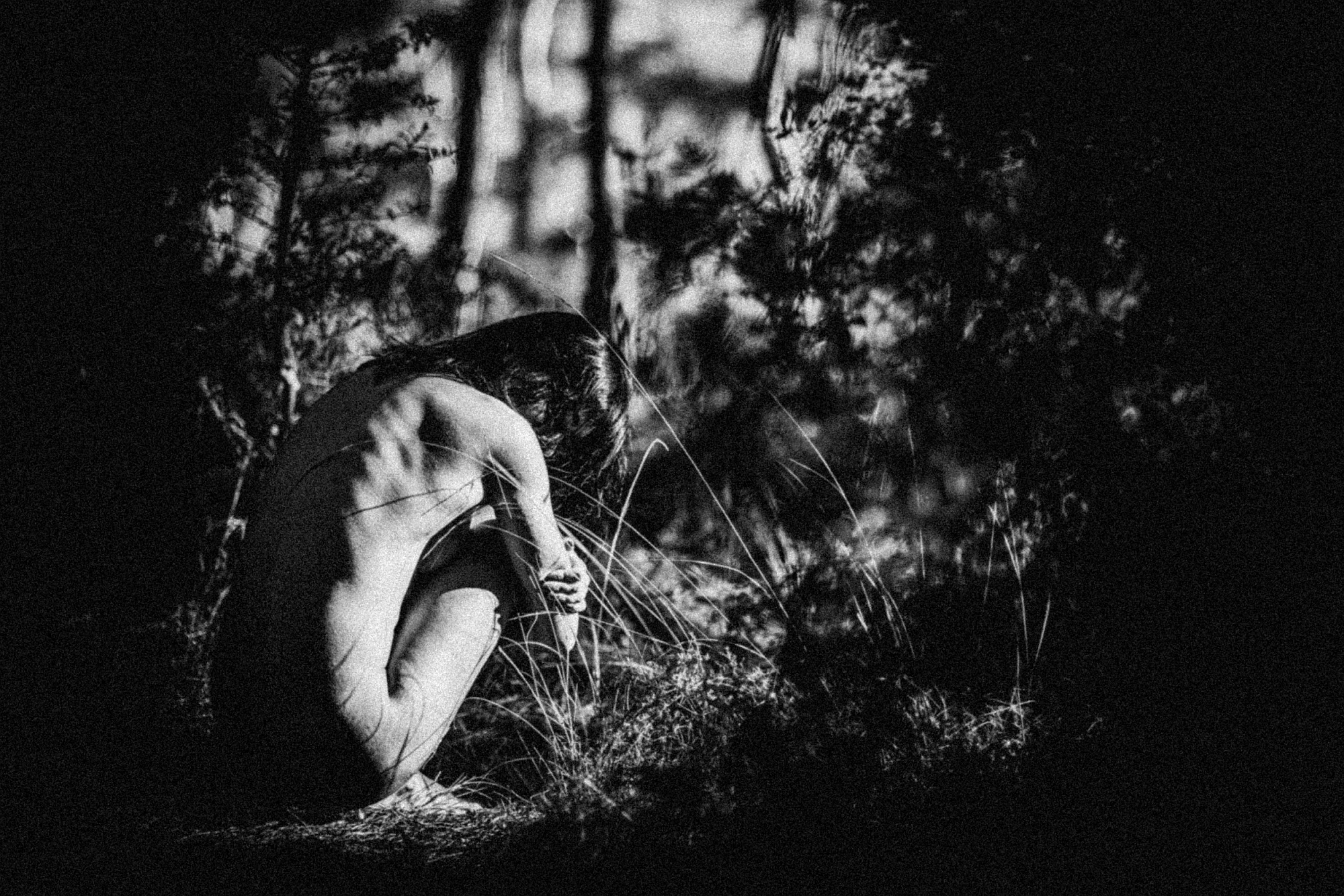
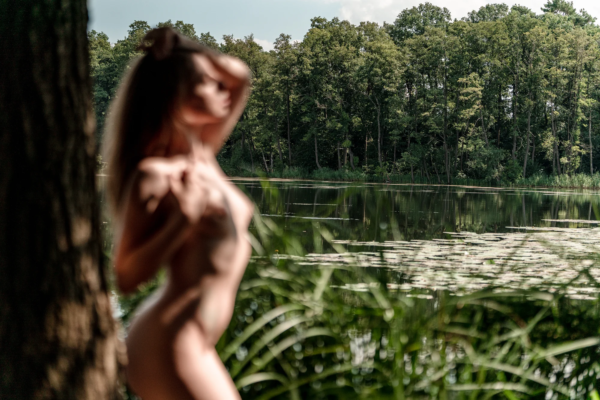
Auf den Fotos sitzen, hocken oder rollen sich Körper am Ufer zusammen. In manchen Aufnahmen nimmt die Figur nur einen kleinen Teil der Landschaft ein; in anderen ist der Bildausschnitt enger gewählt. Schwarz-Weiß-Töne lassen die Hautoberfläche mit den Texturen von Sand, Stein, Wasser und Vegetation verschmelzen. Jede Körperhaltung erhält ihre Bedeutung durch ihre Beziehung zum Ort.
Am Ufer treffen Land und Wasser aufeinander und definieren dabei ständig die Grenzen des jeweils anderen neu. Hier ist der Körper empfänglich für den Boden, den er berührt, für die Bewegung des Wassers und für die freie Luft. Seine Nacktheit macht seine Offenheit gegenüber seiner Umgebung und sein Bedürfnis nach ihr sichtbar. Die Welle ist nah; das Wasser ist nah; die Erde ist nah. Aus dieser Nähe entspringen die Worte des Titels: eine Anerkennung der Welt, zu der der Körper gehört.
Die Serie steht in engem Zusammenhang mit Ökoton, das den Körper als Teil der Natur fotografiert.
Werke aus der Reihe
Schwarz-Weiß-Fotografien, die direkt mit der Kamera vor Ort aufgenommen wurden.