キメラ
身体としての光学的断絶
A body that exists only within the optics of the camera.
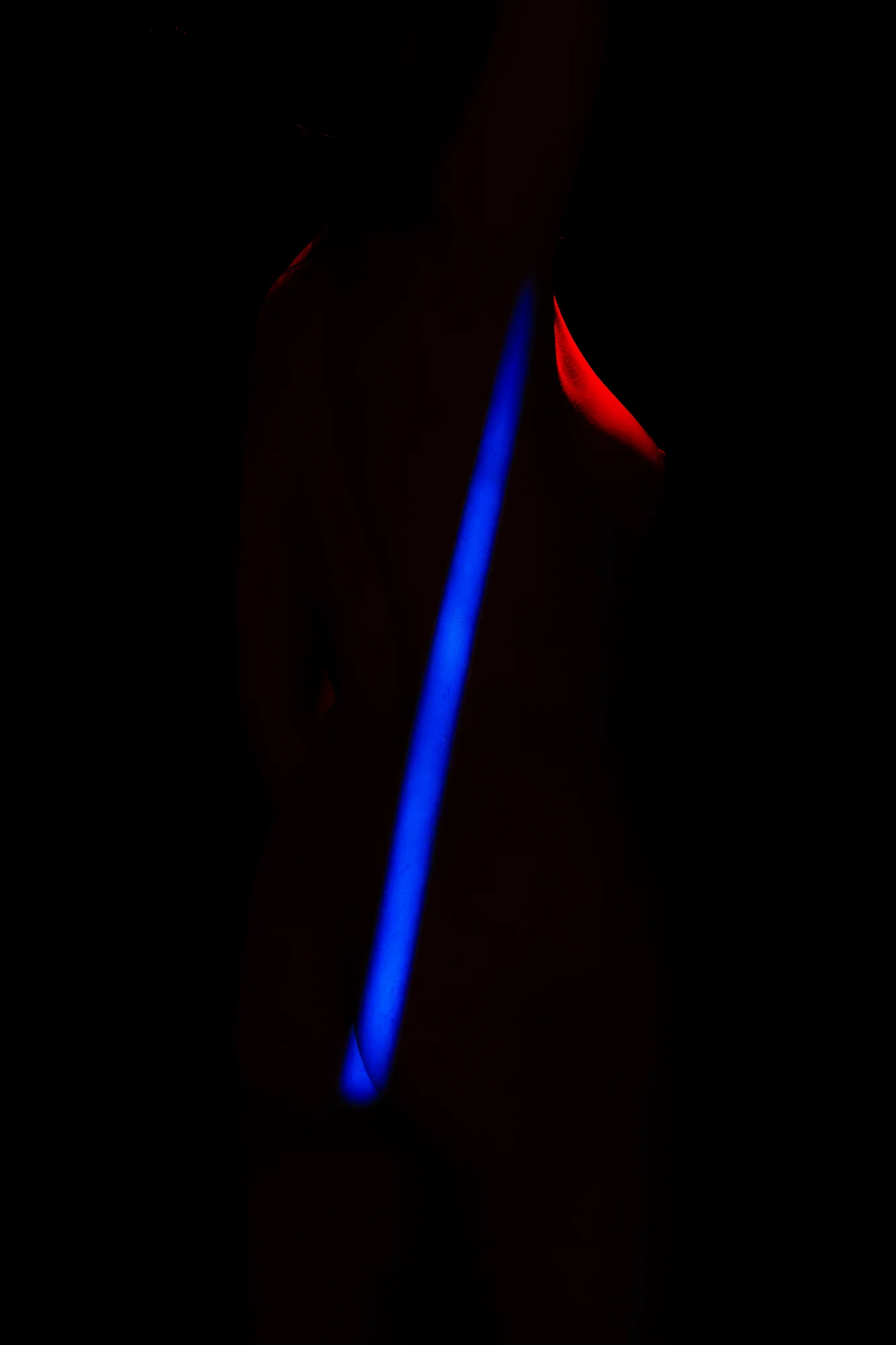
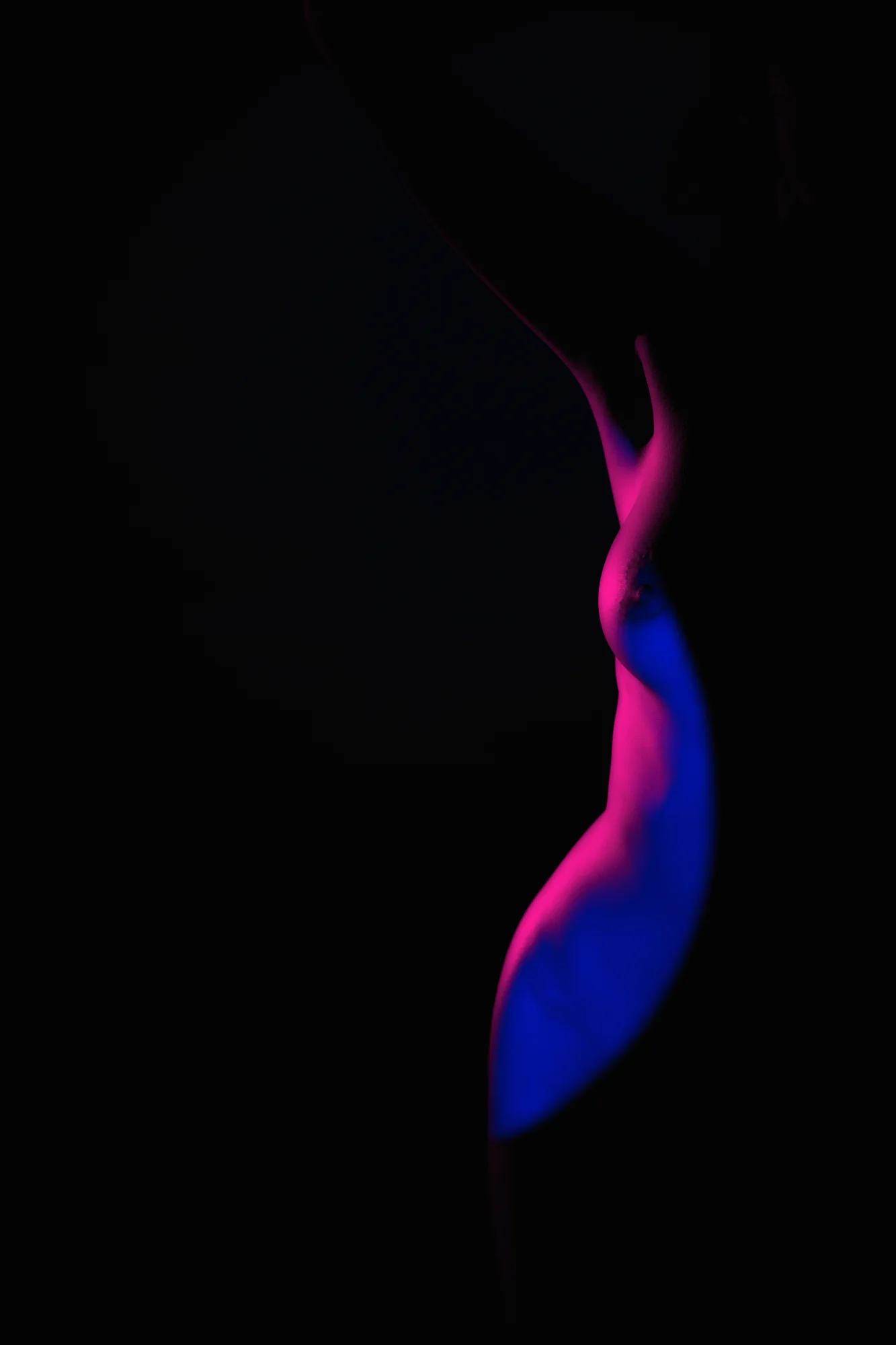
No AI, no compositing, no multiple exposures: every image is a single frame shaped by mirrors and light.
Honorable Mention, Annual Photography Awards 2024, People: Body & Nudes, for the sub-series ディズモルフィア.
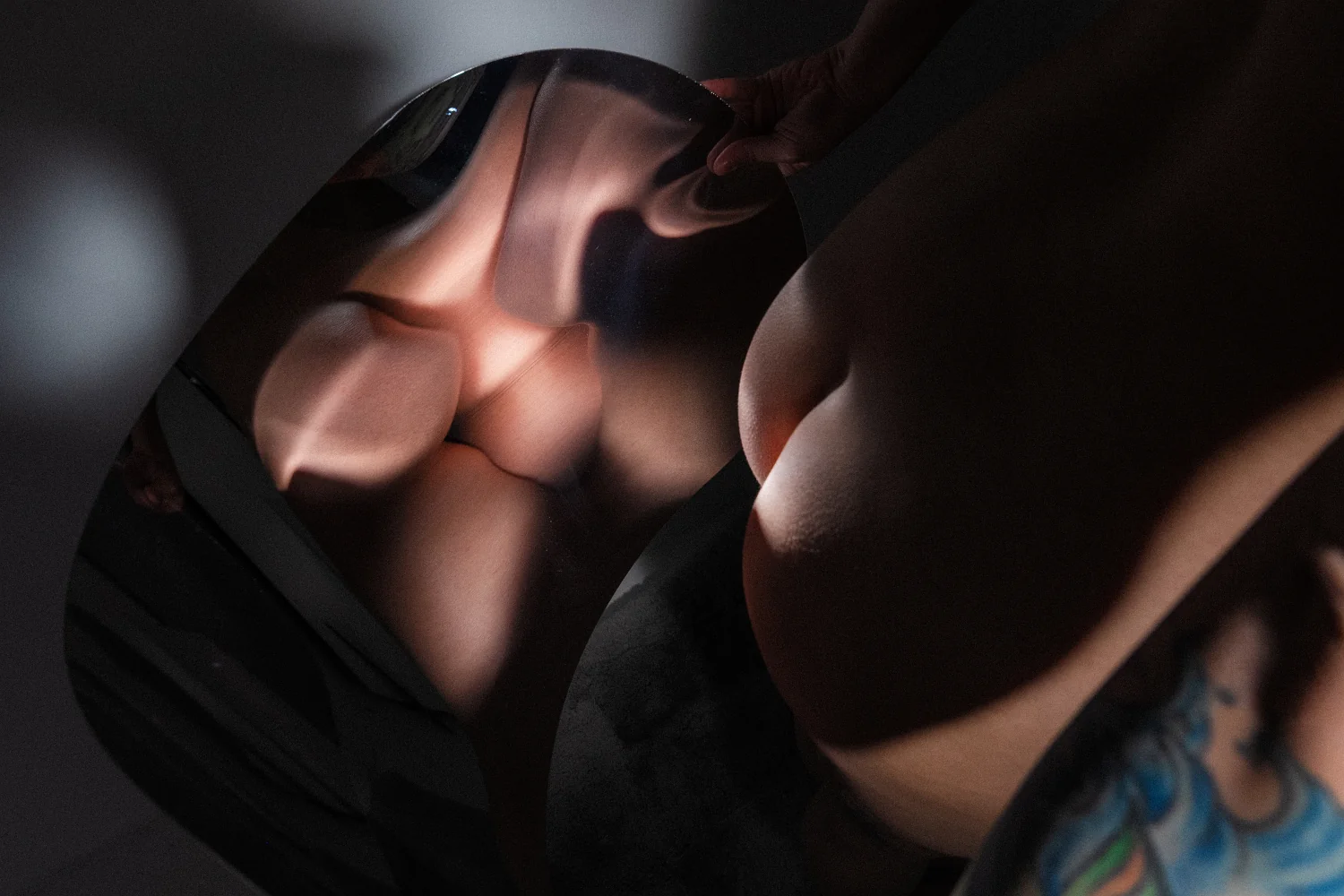
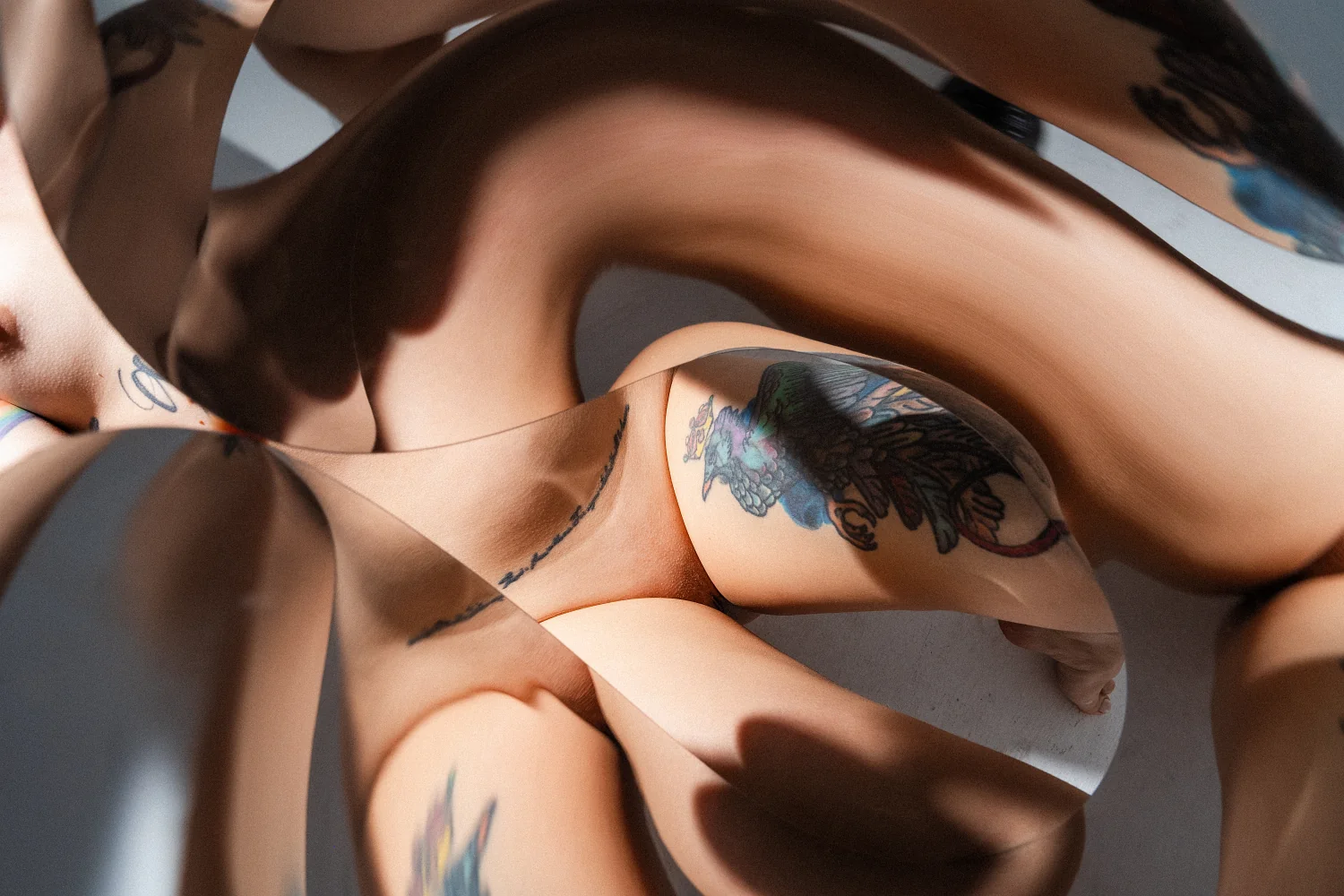
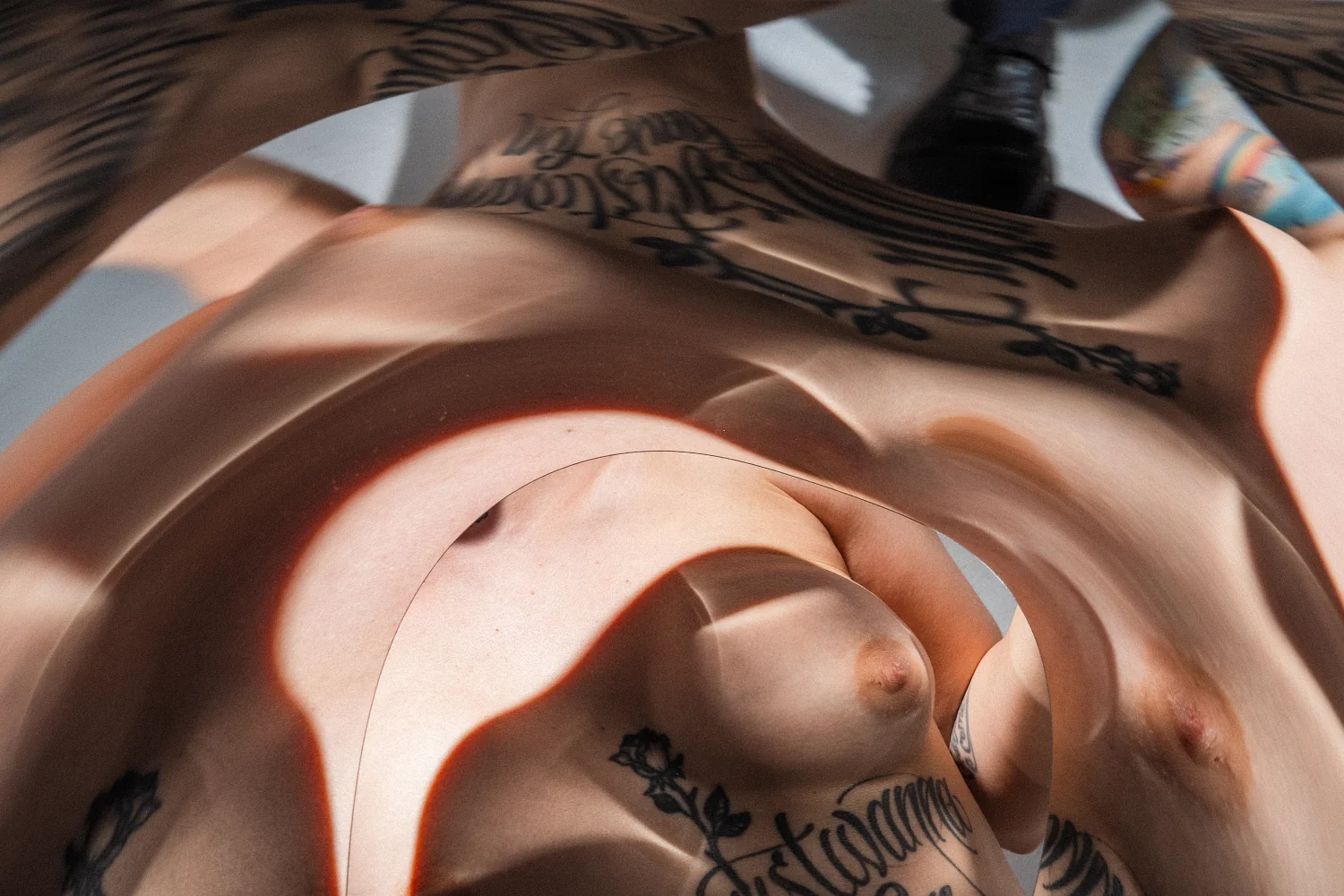
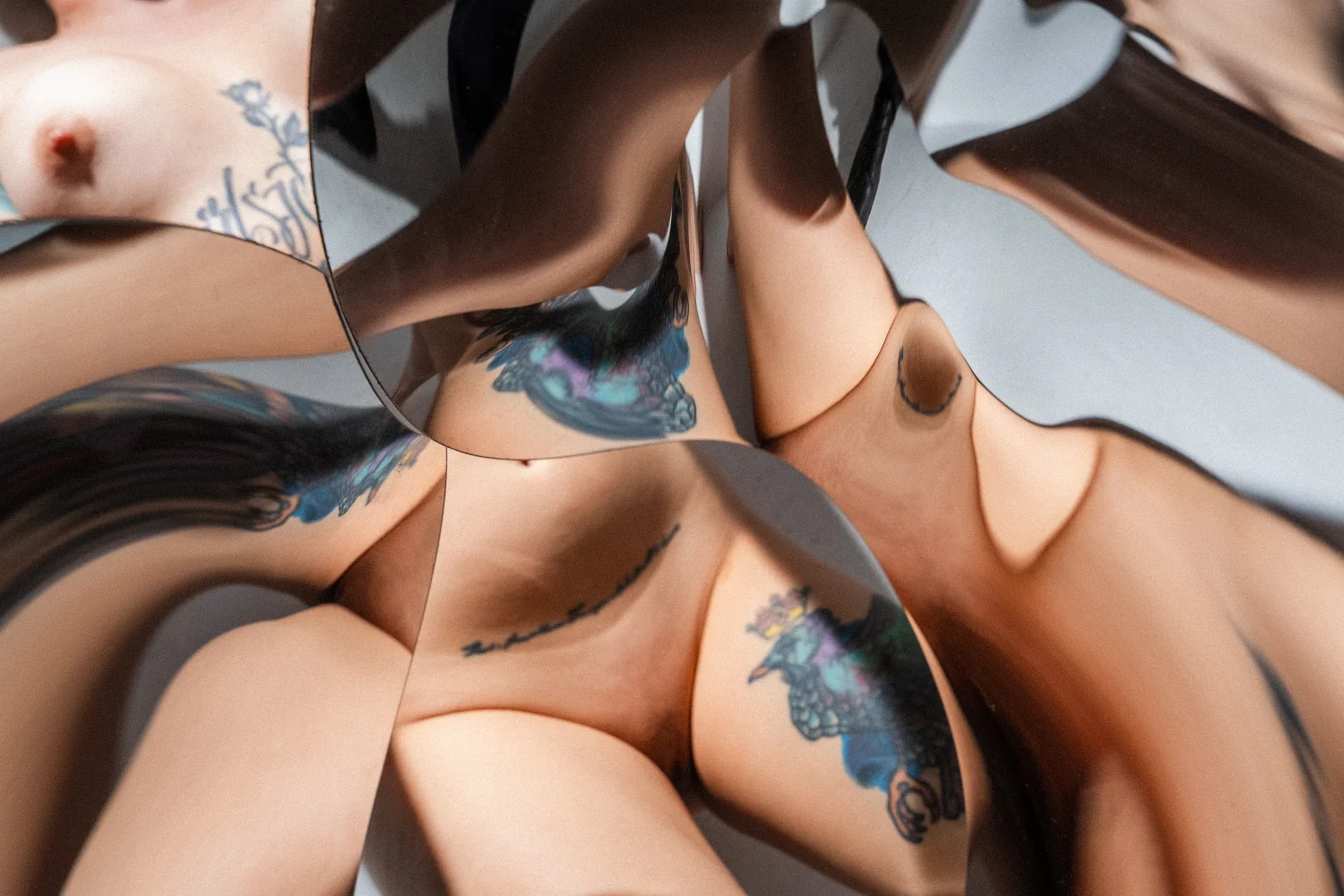
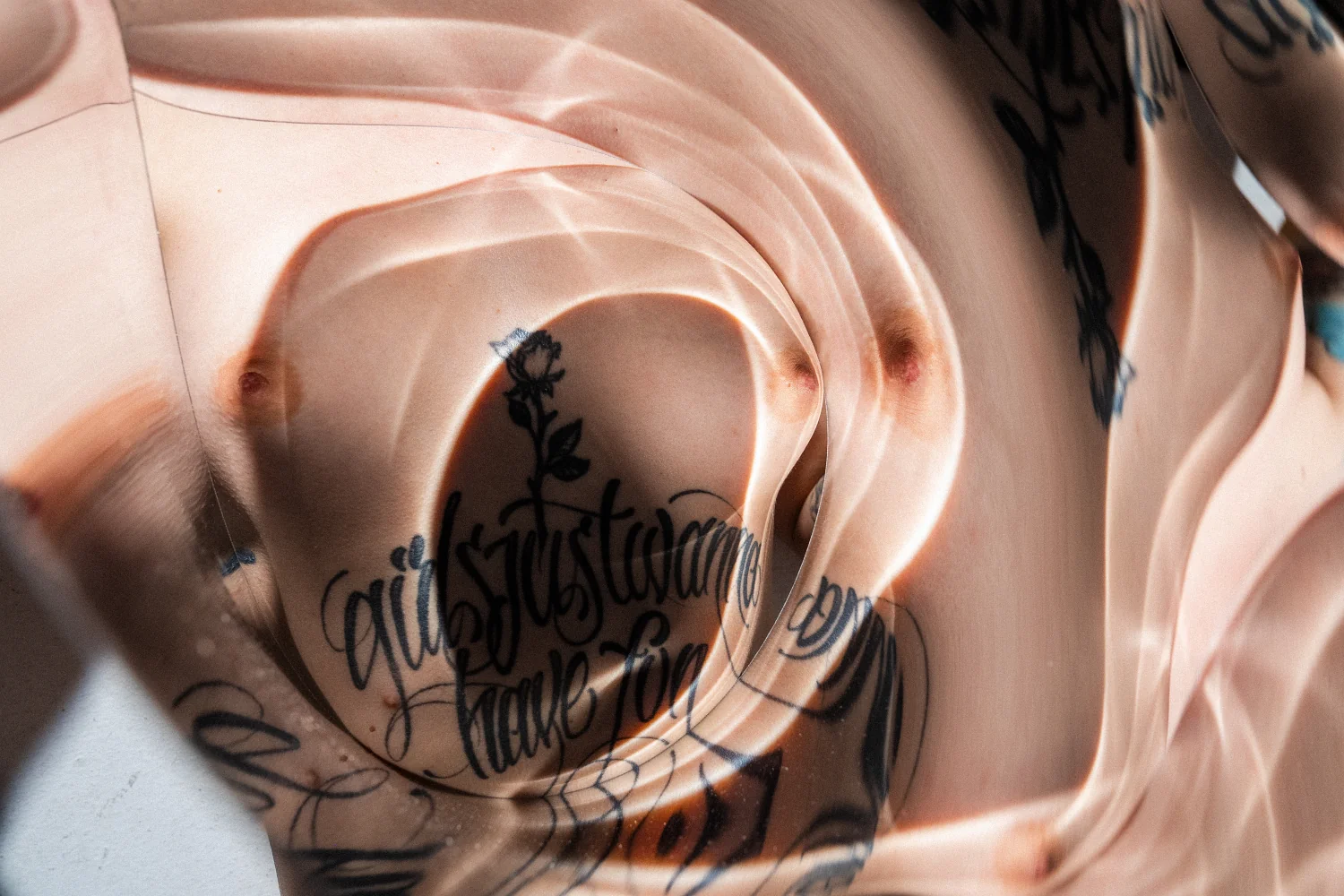
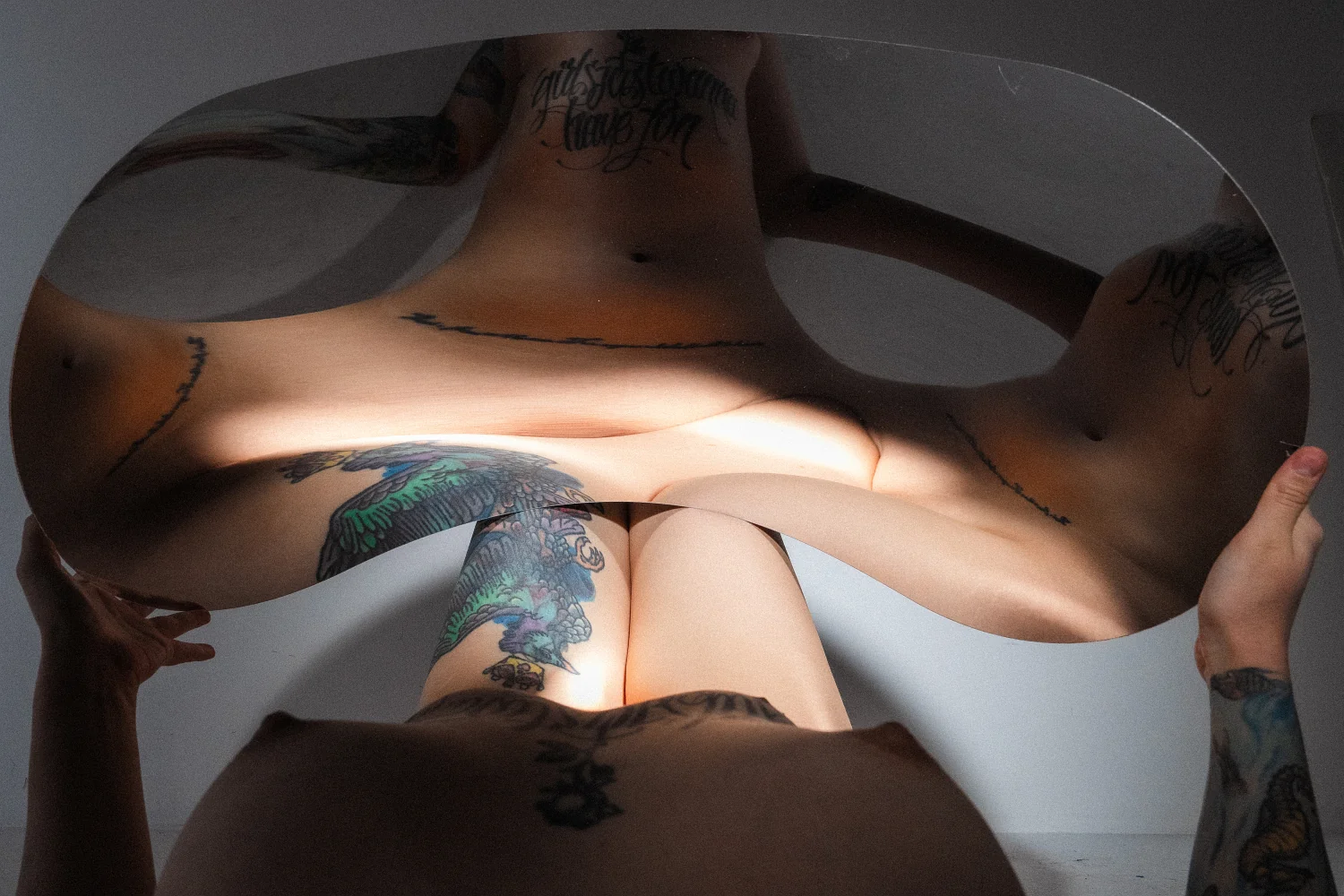
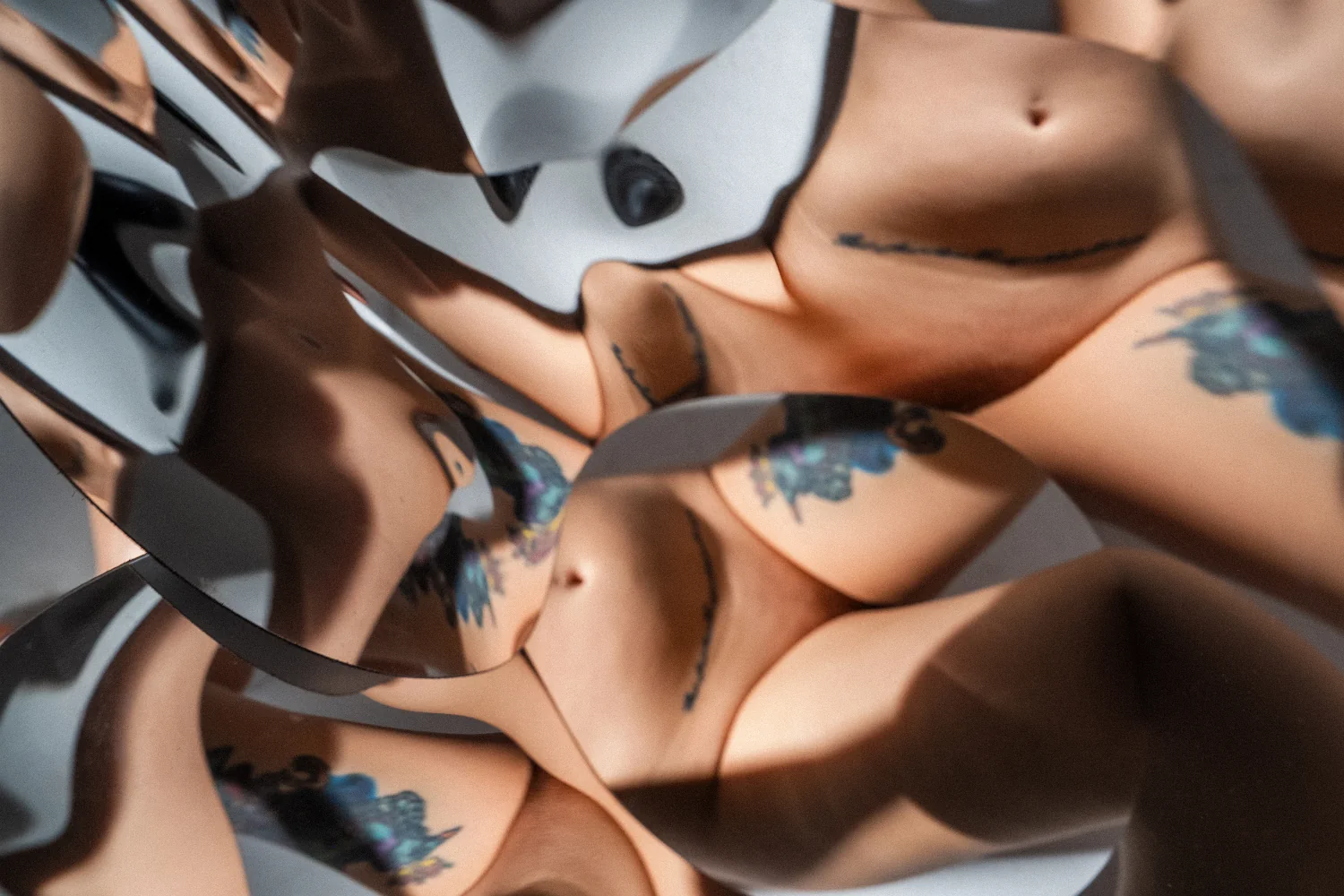
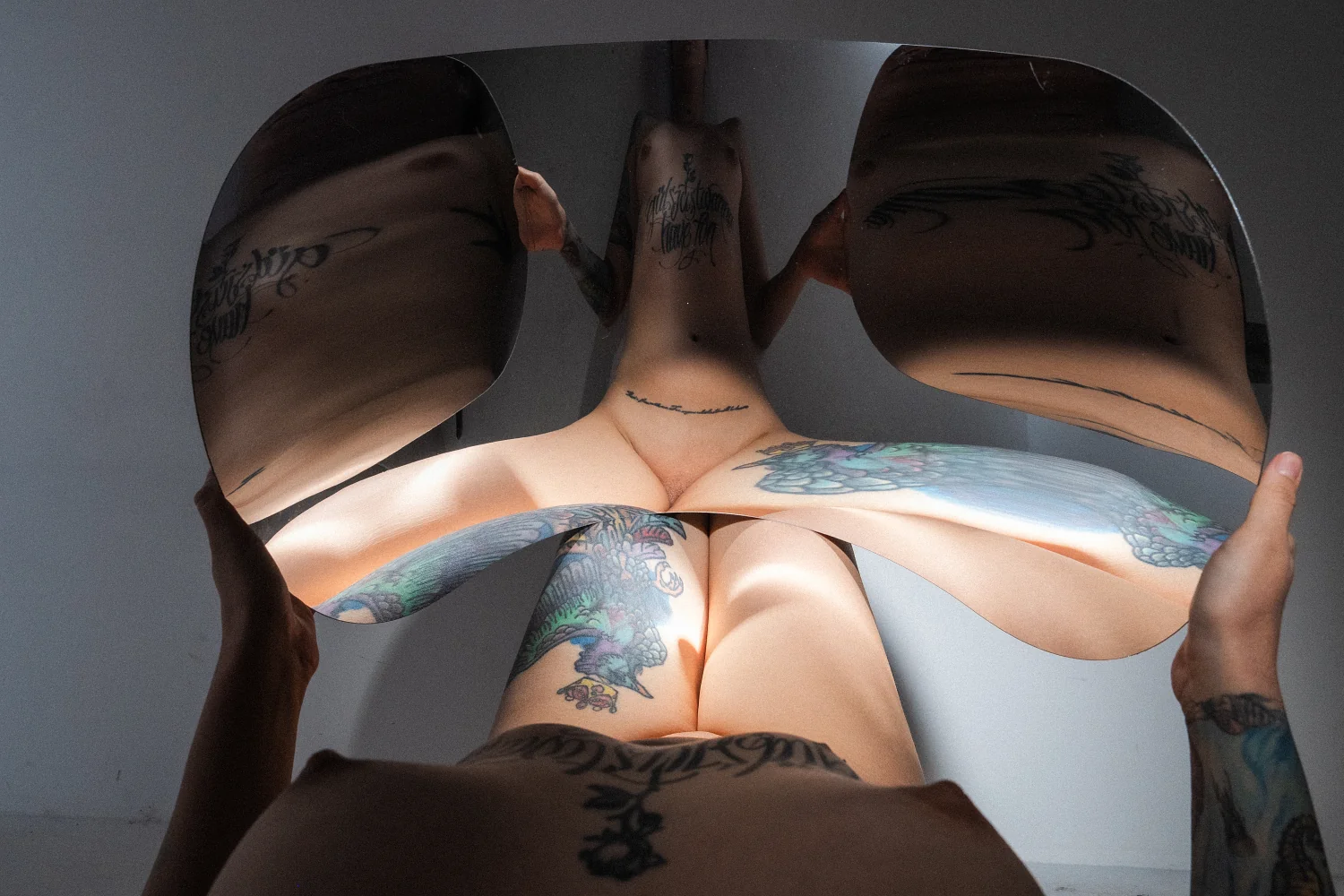
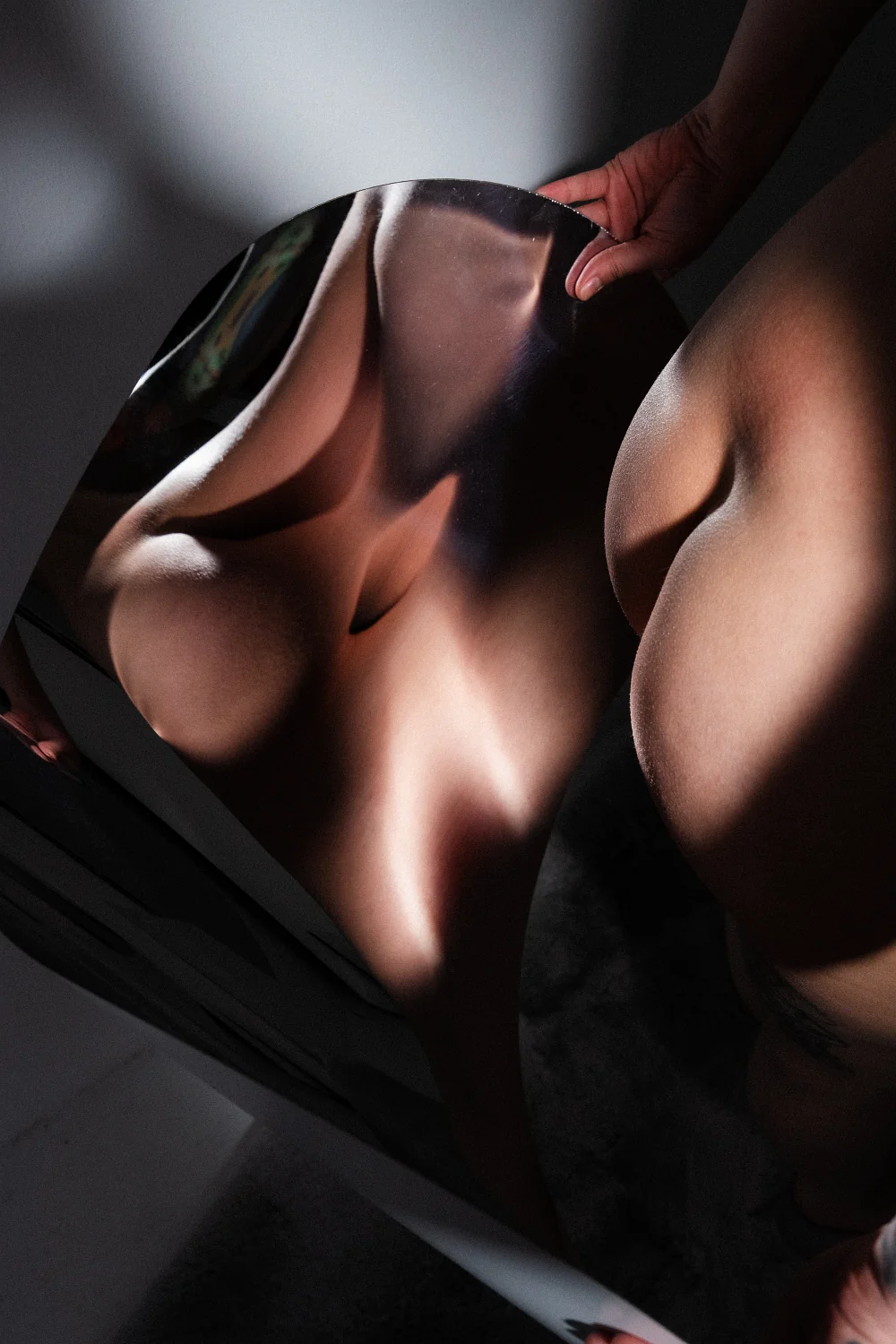
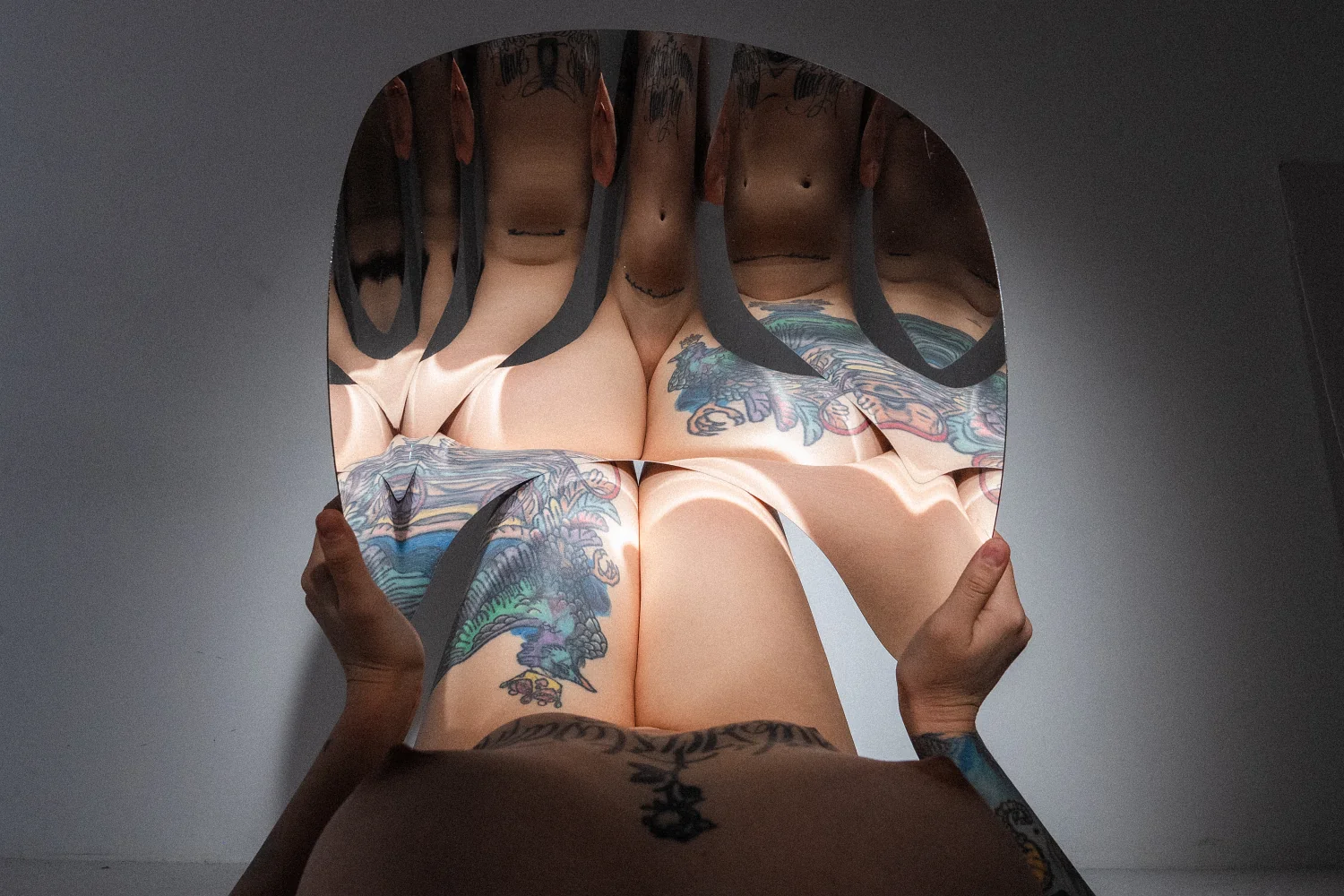
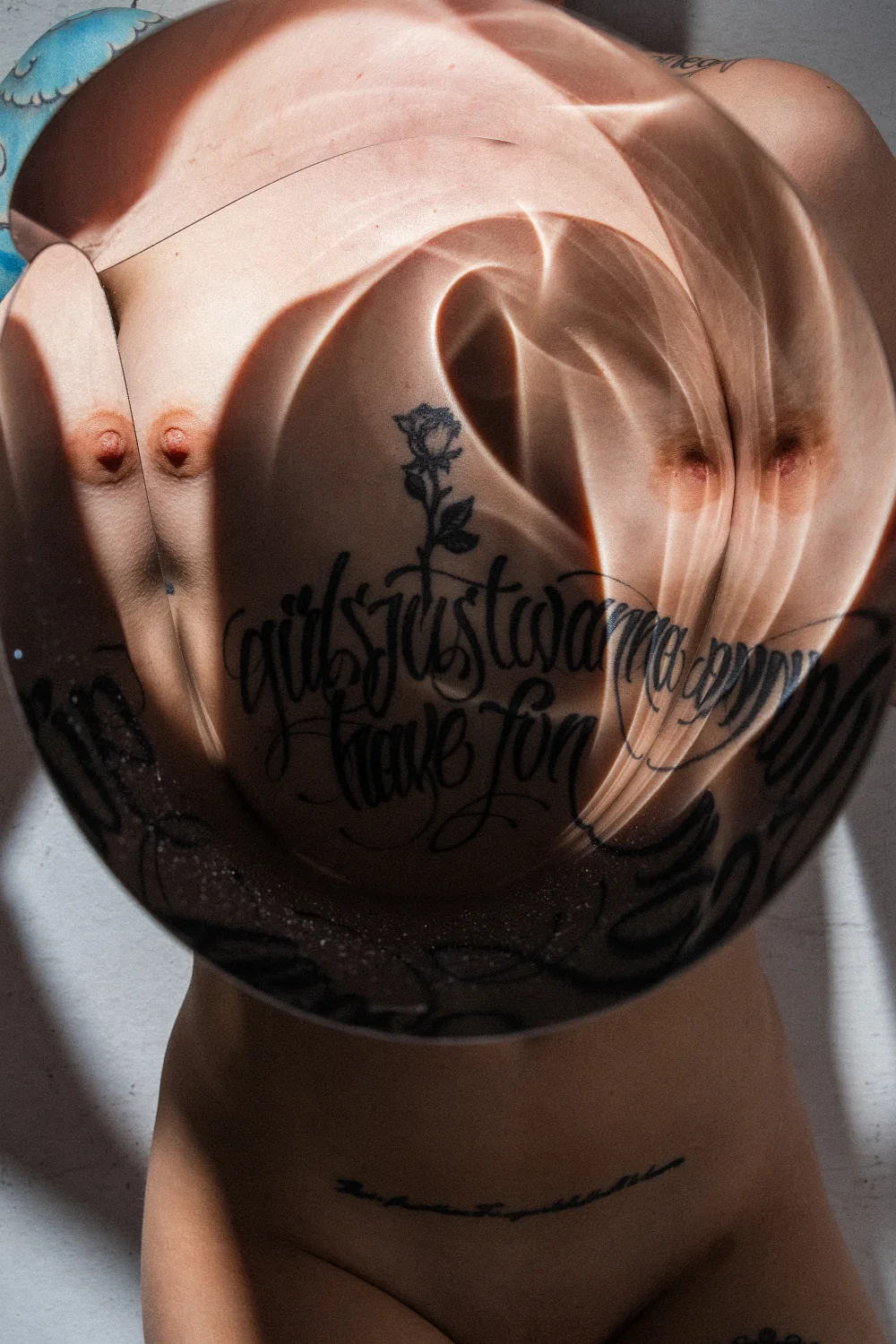
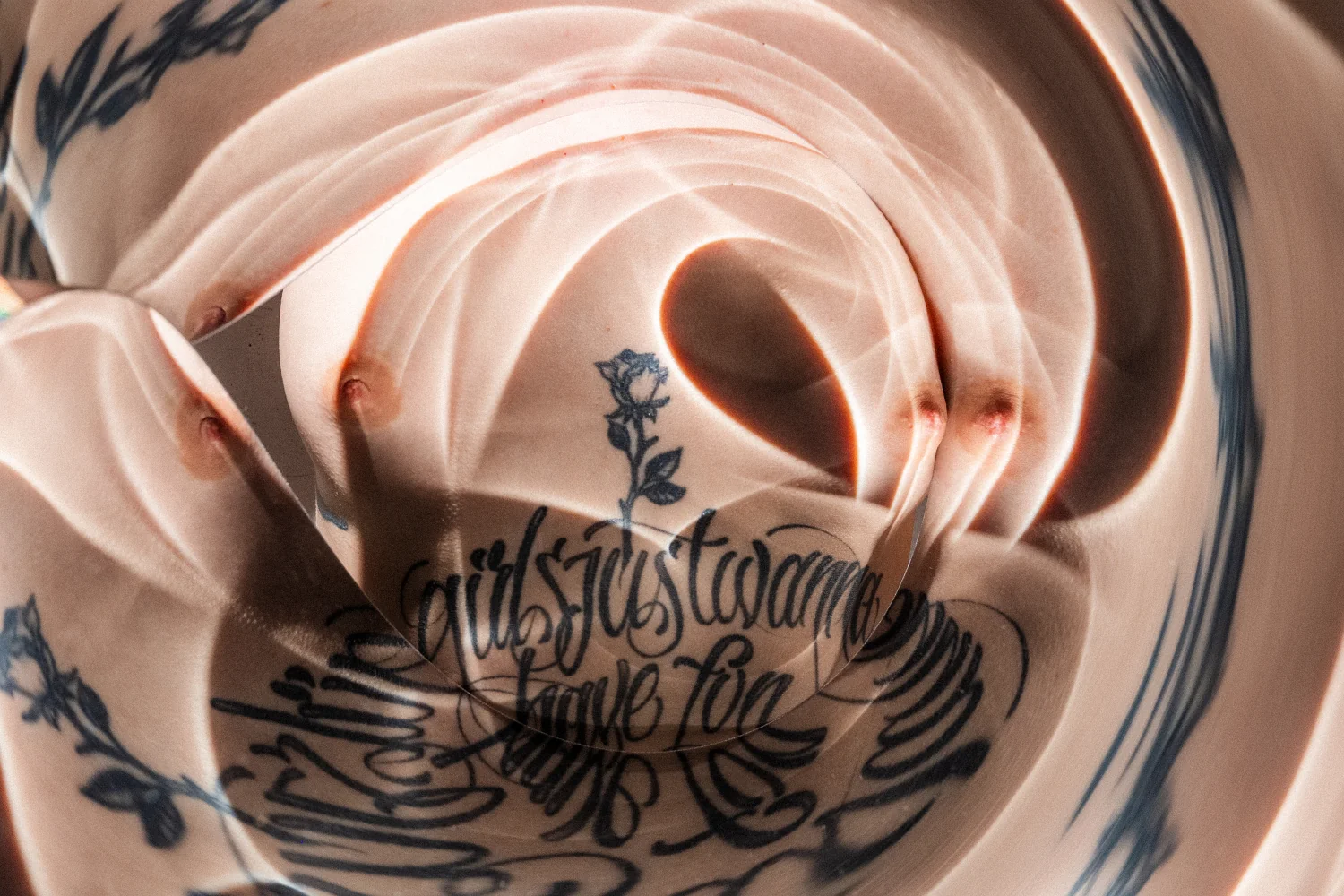
写真は、あるがままを捉えることを約束する。. キメラ その約束を打ち砕く。このシリーズでは、身体の周囲に鏡を曲げて配置し、そこに映し出されるものを撮影している。そこには、単一の視点という権威から解放され、複製され、断片化され、引き伸ばされ、そして自身の中に折りたたまれた姿が映し出されている。撮影後に何かを合成することは一切ない。あらゆる歪みは、レンズの前、鏡の曲面の中で生じているのだ。.
The title invokes the mythological chimera: a creature assembled from incompatible parts, impossible yet present. Here, the body becomes its own chimera, a form that holds contradictions.
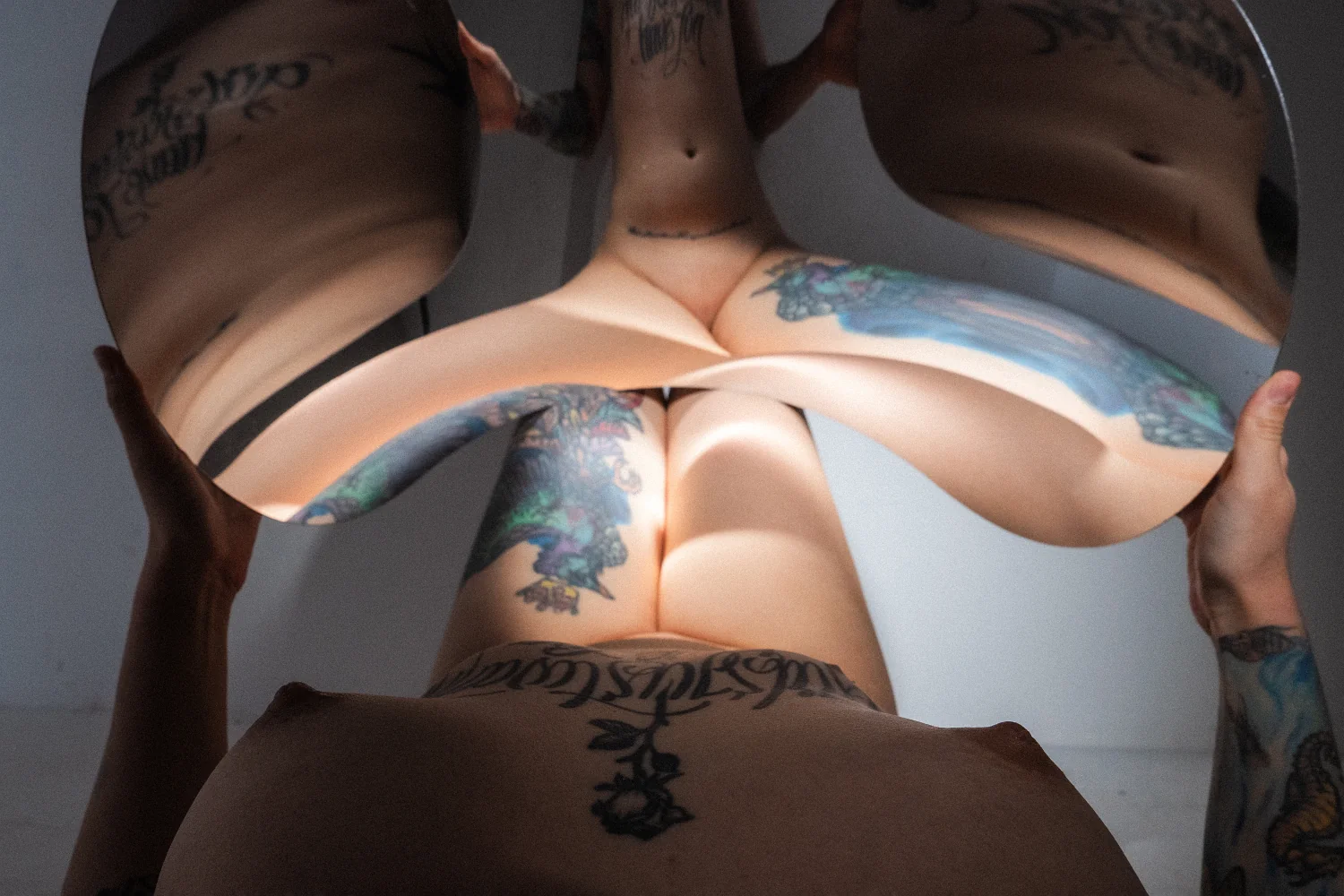
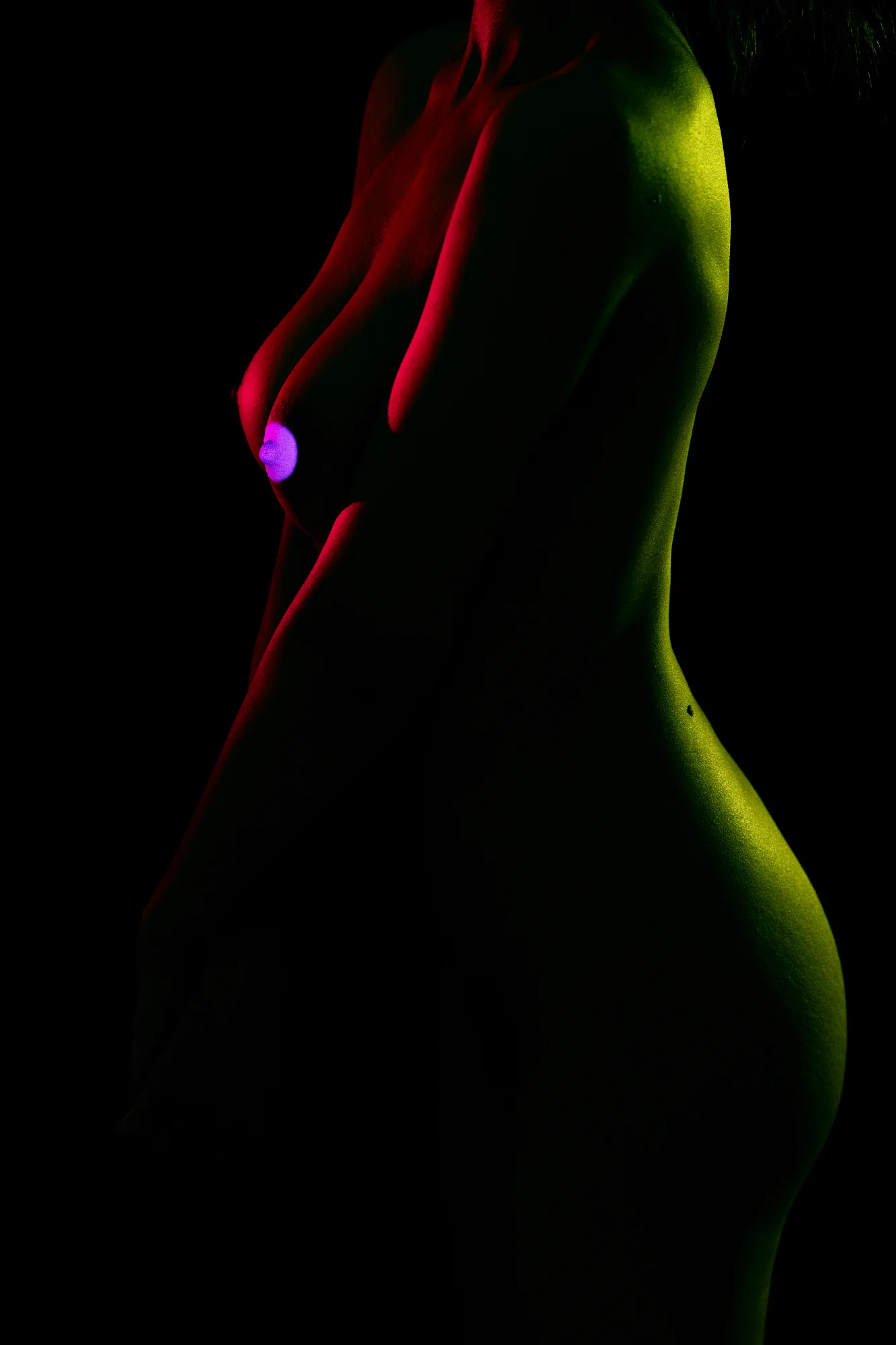
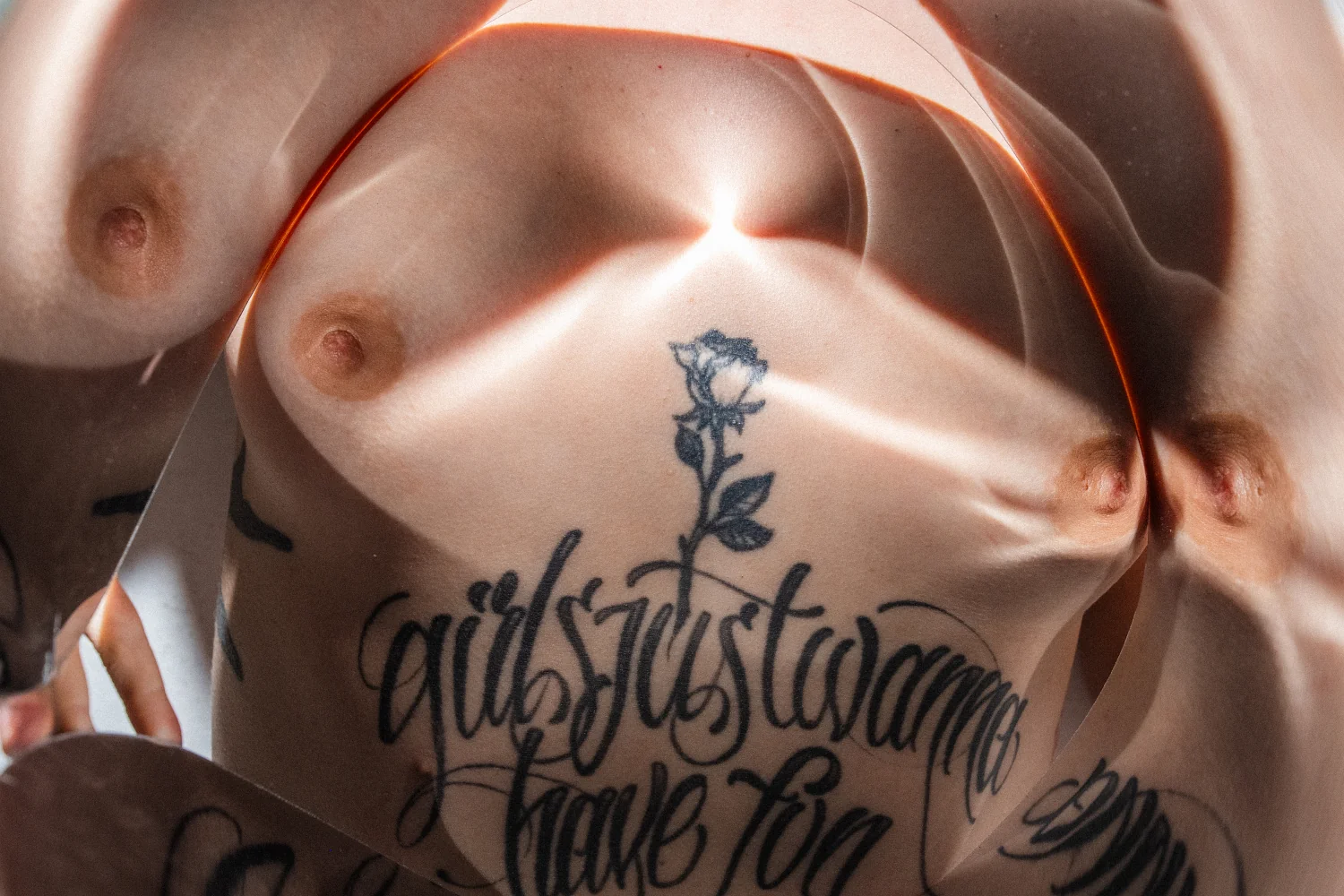
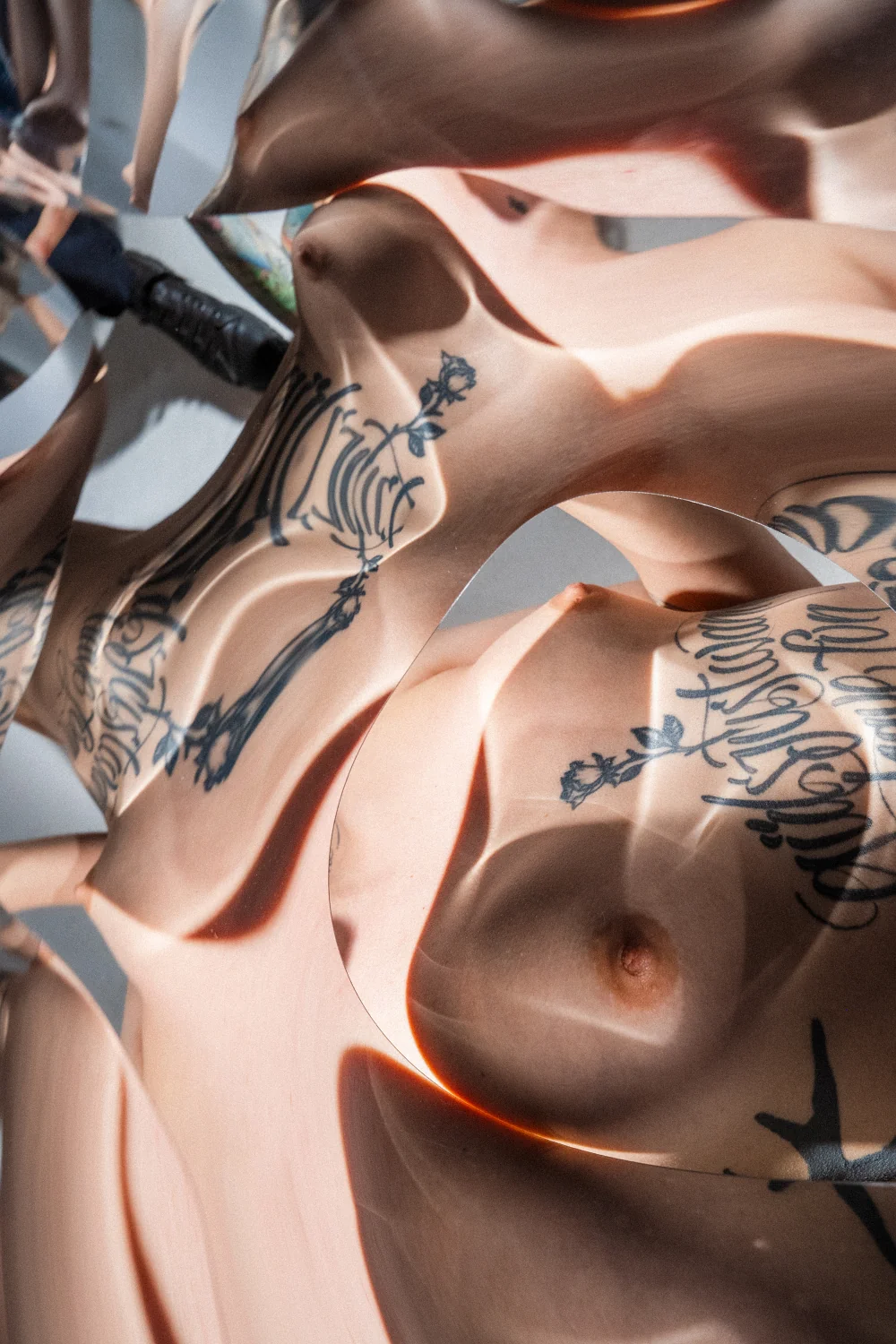
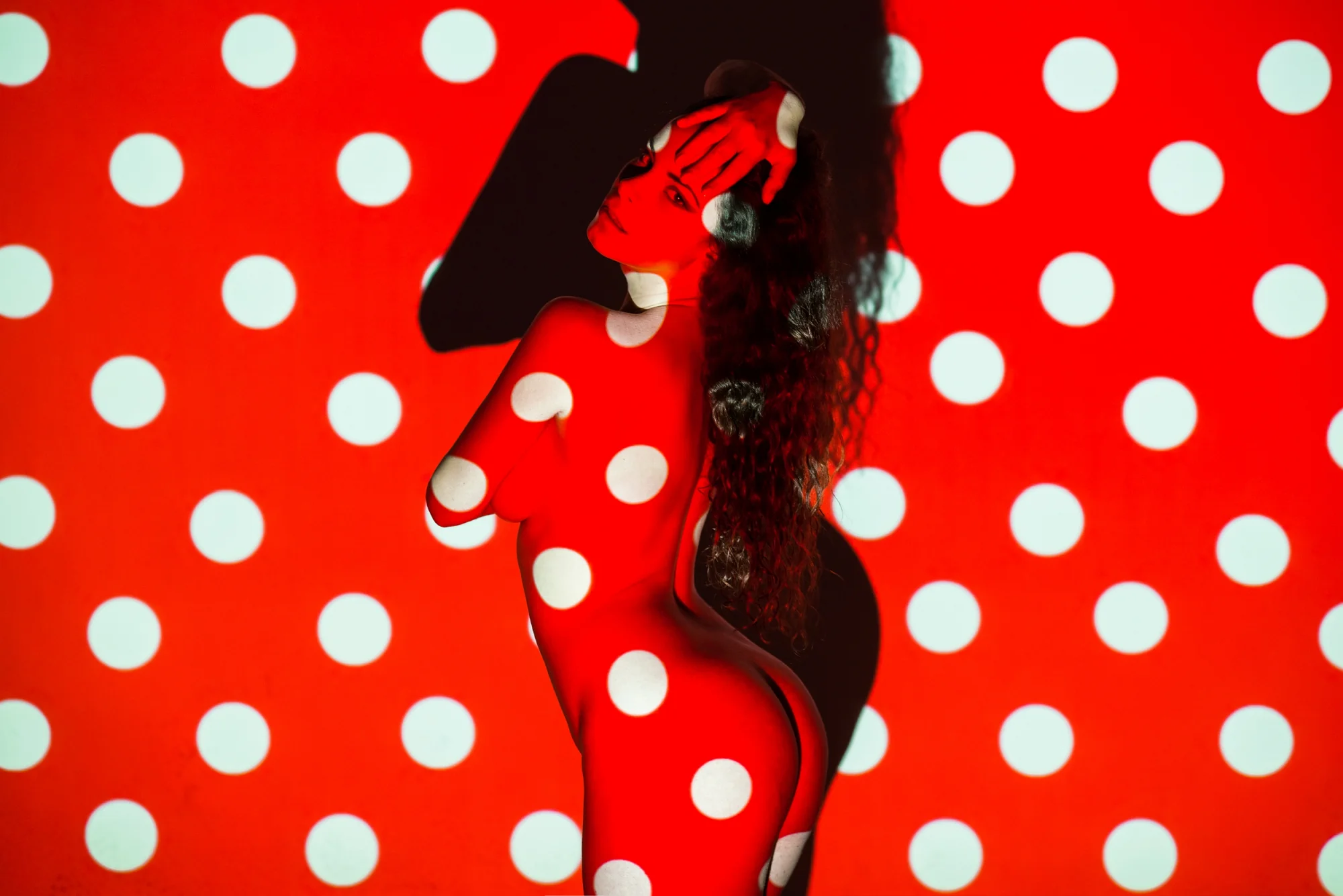
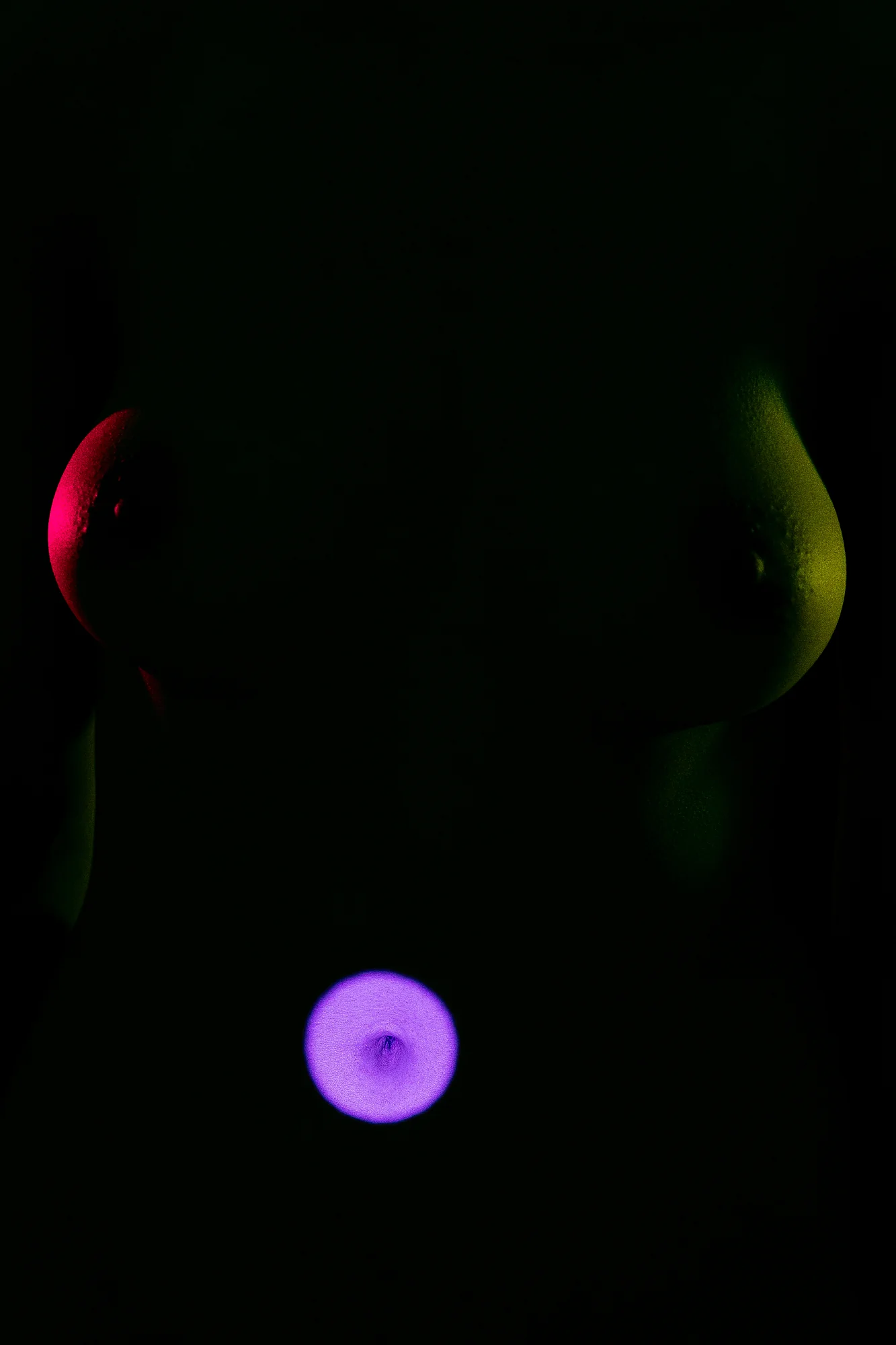
The mirror is the instrument. Mirror sheets are bent and curved, and each bend rewrites the body differently. Where the surface curves outward, a torso narrows. Where it curves inward, a limb swells, and a little further from the glass the same curve can flip it. Where the sheet folds, the figure doubles and reattaches in unexpected places. Refractive surfaces and coloured or projected light extend this toolkit. In one photograph, a tattooed torso flows through the curved edges of several mirrors at once, the script on the skin bending with the body until lettering and flesh become a single pattern.
The photographs are faithful. The camera records exactly the light that reached it; only the path of that light has changed. A mirror adds nothing to the body. It redirects the light the body sends out, and the shape of the glass decides where each part arrives. Since the seventeenth century, artists have made deliberately distorted pictures that only a curved mirror could set right, so that the eye found order where the picture itself showed only distortion. キメラ runs that old optical game backwards: the body in front of the mirror is whole, and the mirror is what makes it impossible.
その概念的な拠り所は、ハンス・ベルマーの ラ・プーペ, 、ベルマーが制作し、分解し、再組み立てた関節人形の写真。それらは、欲望の根底に潜む暴力を露わにしている。. キメラ moves in the opposite direction. Where Bellmer took the body apart, these images bend the light that carries it: the body remains whole while perception splinters. Other references sit at the edges: André Kertész's 歪み (1933), made with funhouse mirrors; the pressure Op Art places on the eye; and Yayoi Kusama's saturated fields.
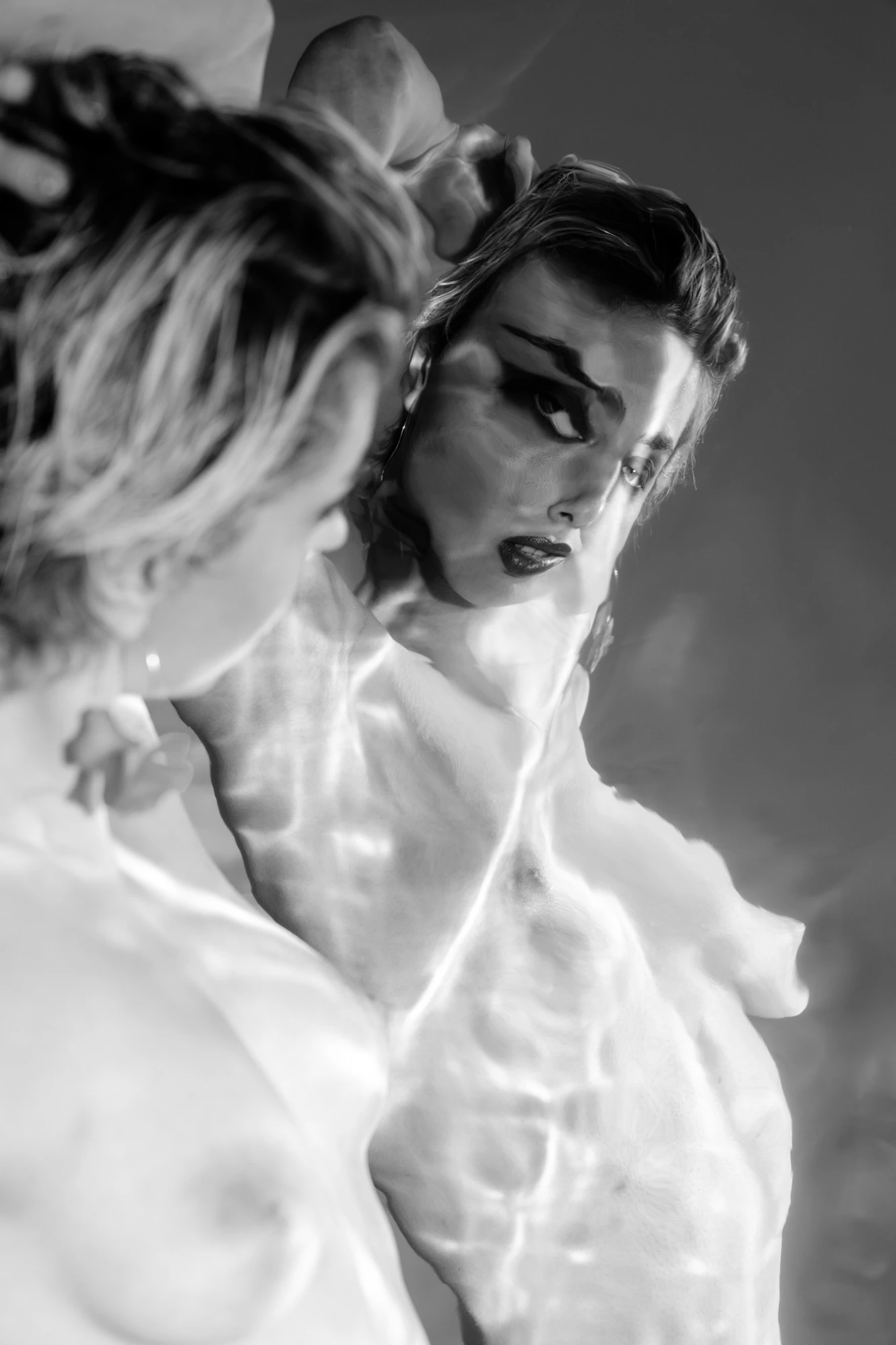
『』に掲載されている写真の一部 キメラ turn the mirror toward the model's own gaze. A woman stands before a bent mylar backdrop and looks at a version of herself that has been warped, swollen, and broken apart; another lies across crumpled mirror film, reaching toward a reflection that no longer resembles her. These images form the sub-series ディズモルフィア.
Everyone lives with two versions of the body: the one felt from the inside, with its weight, position, and reach, and the one seen from the outside, in a mirror or in other people's eyes. Most of the time the two agree closely enough to go unnoticed. ディズモルフィア photographs the moment they come apart, when the reflection insists on a body the person does not recognise as their own. The sub-series refers to the way social pressure can widen that gap, until the mirror shows something harsher than what is there. The images make no clinical claim; they visualise an experience. What does it feel like when the mirror lies? ディズモルフィア received an Honorable Mention in the People: Body & Nudes category of the Annual Photography Awards 2024.
主な作品





サブシリーズ&エディション
キメラ は1つの名前付きサブシリーズを含む。. ディズモルフィア turns the mirror toward the model's own gaze and photographs the body through bent mylar and crumpled mirror film. It received an Honorable Mention at the Annual Photography Awards 2024 (People: Body & Nudes).
Museum-quality archival pigment prints are released in editions of 5 + 1 Artist Proof. Selected works are represented on アーツパー, サーチ・アートそして アートマジュール. For direct inquiries, exhibition loans, or collector pricing: print@burakbulut.org