モートス
持続時間としての身体
Movement and time turned into space, and a body dissolving inside it.
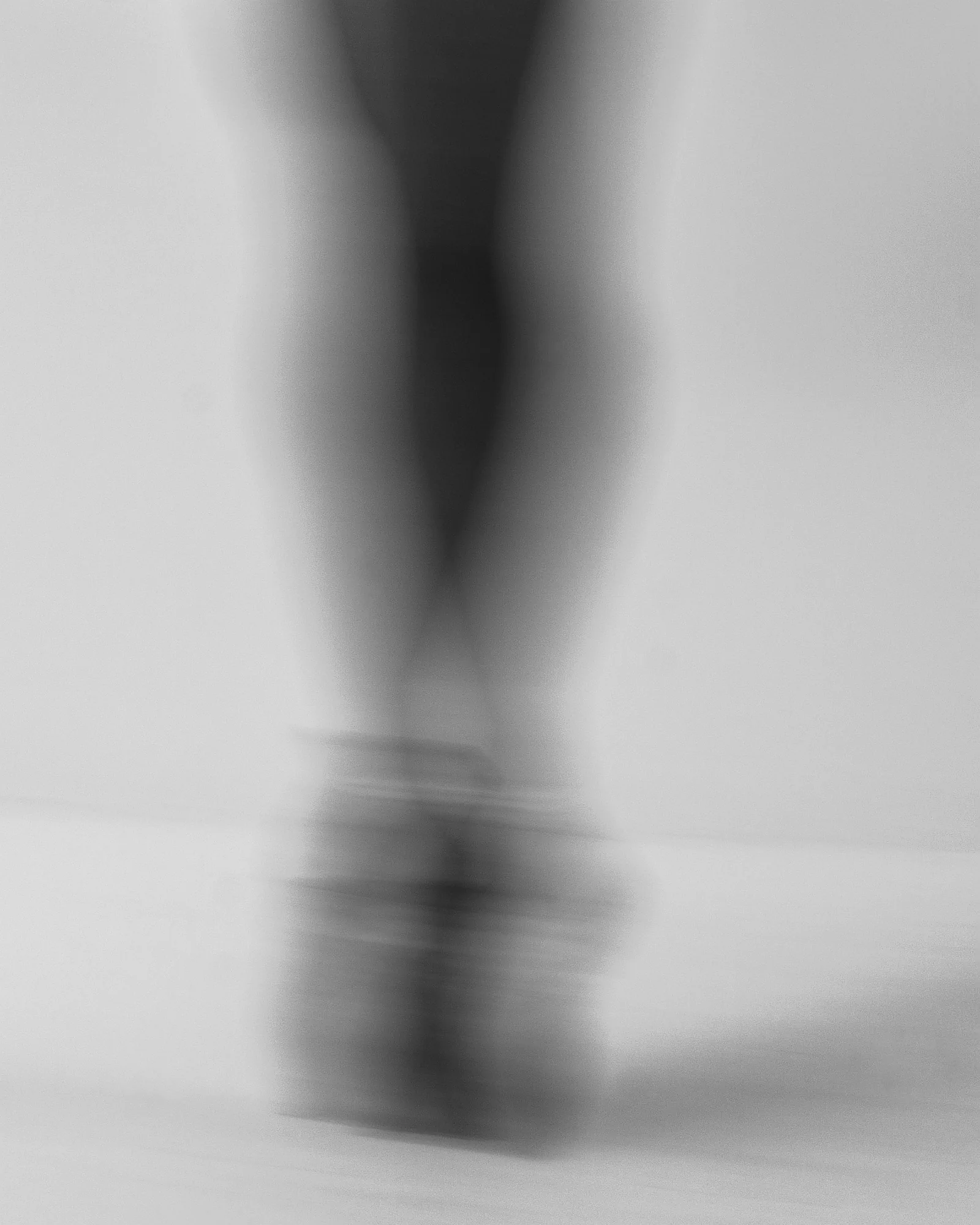
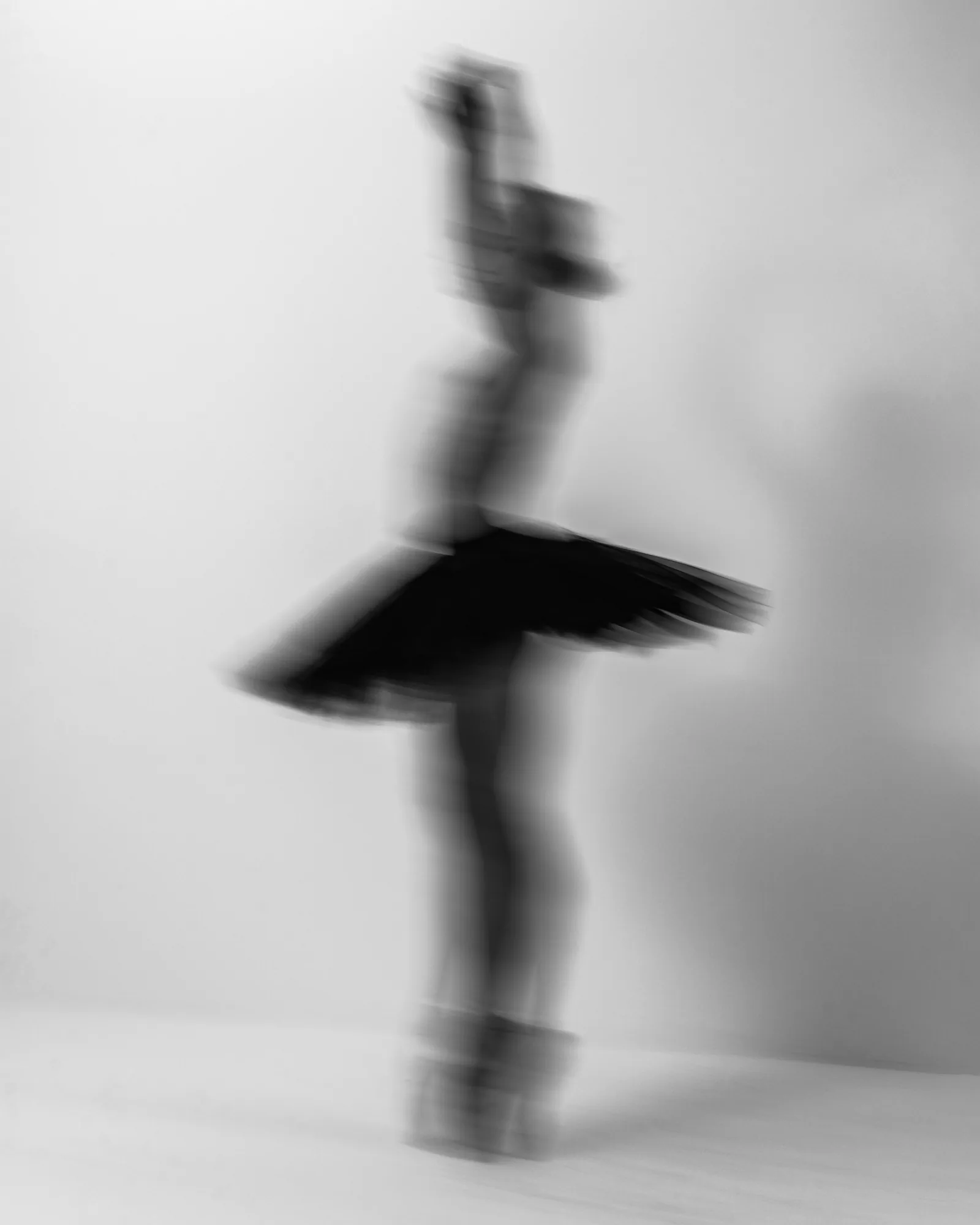
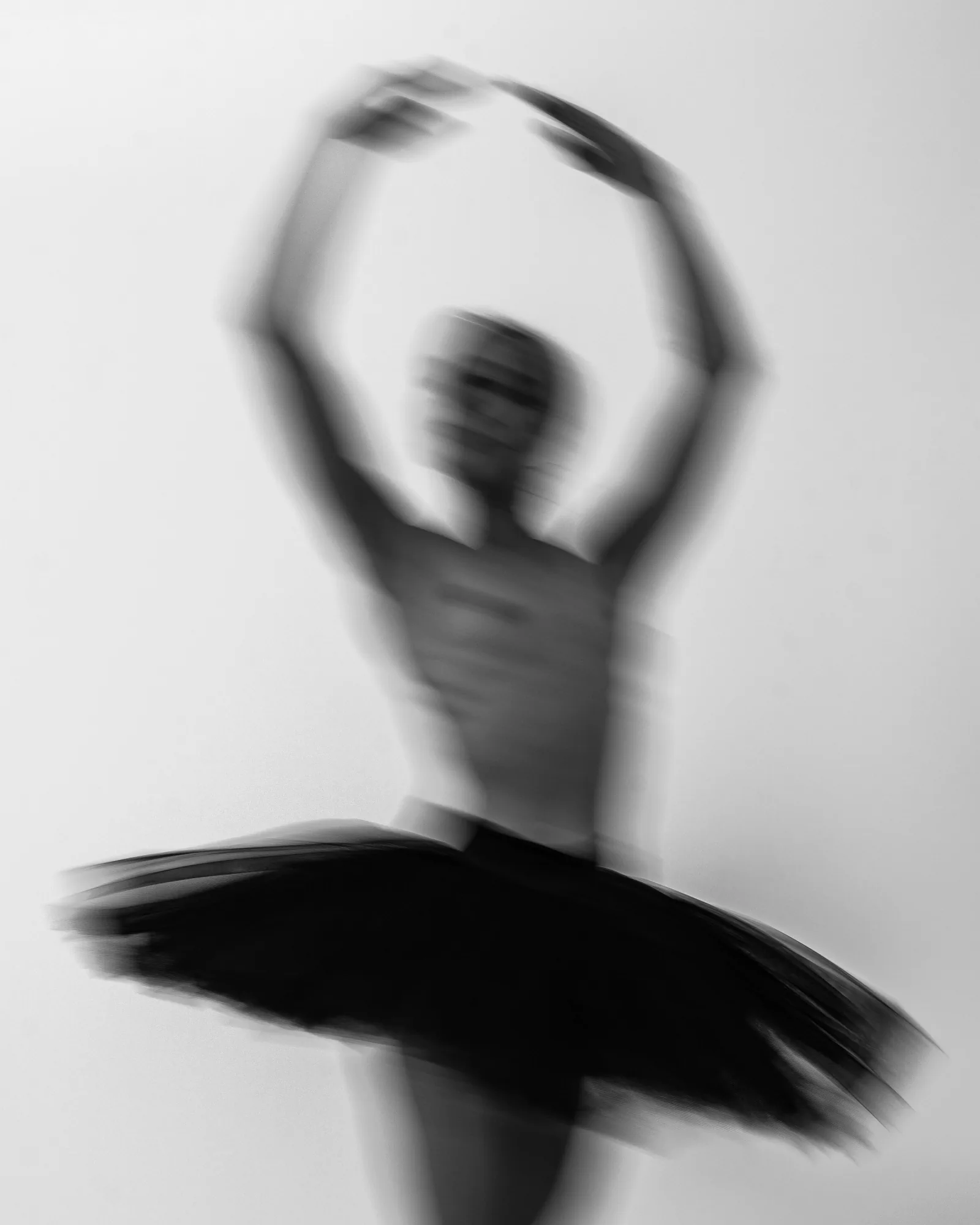
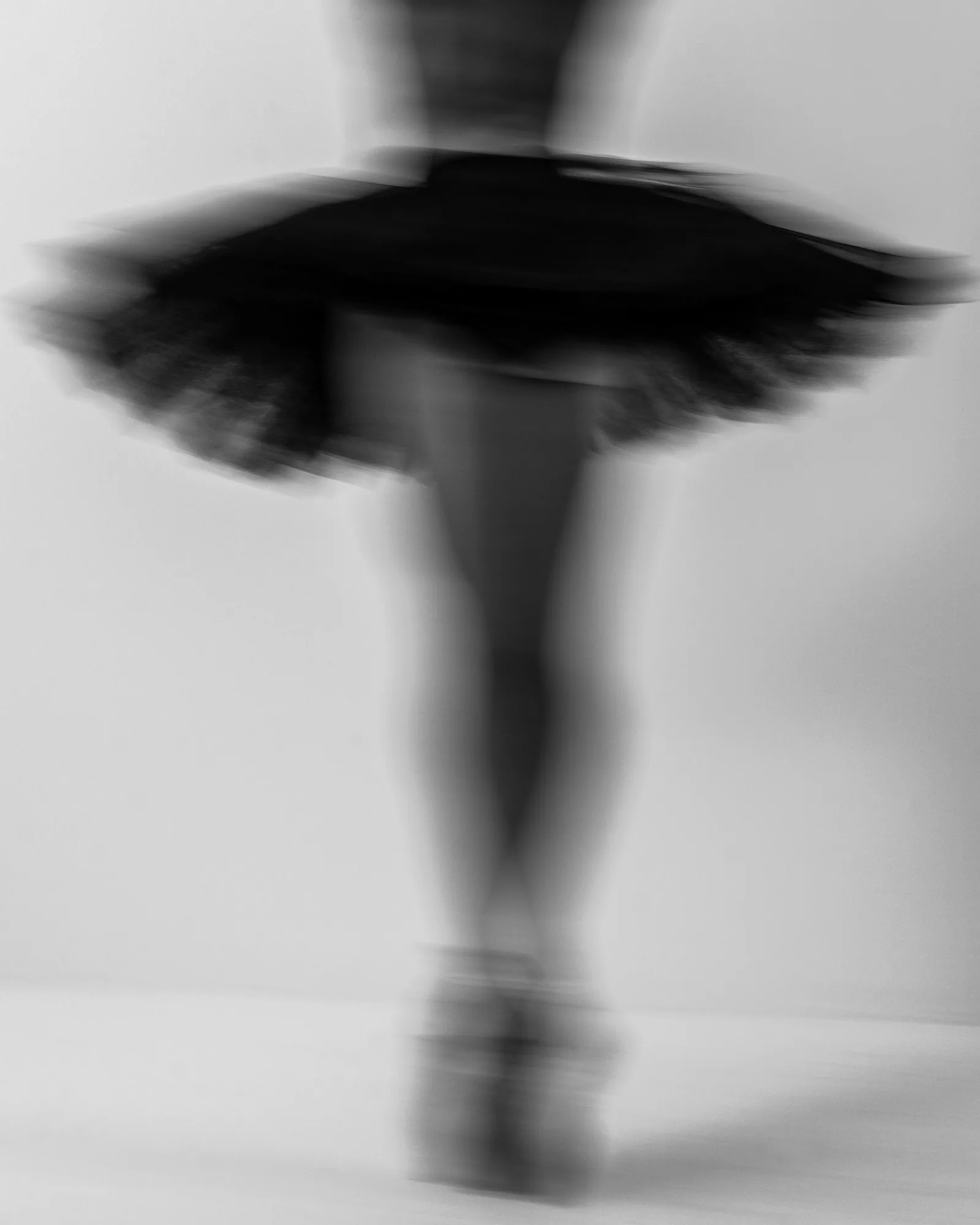
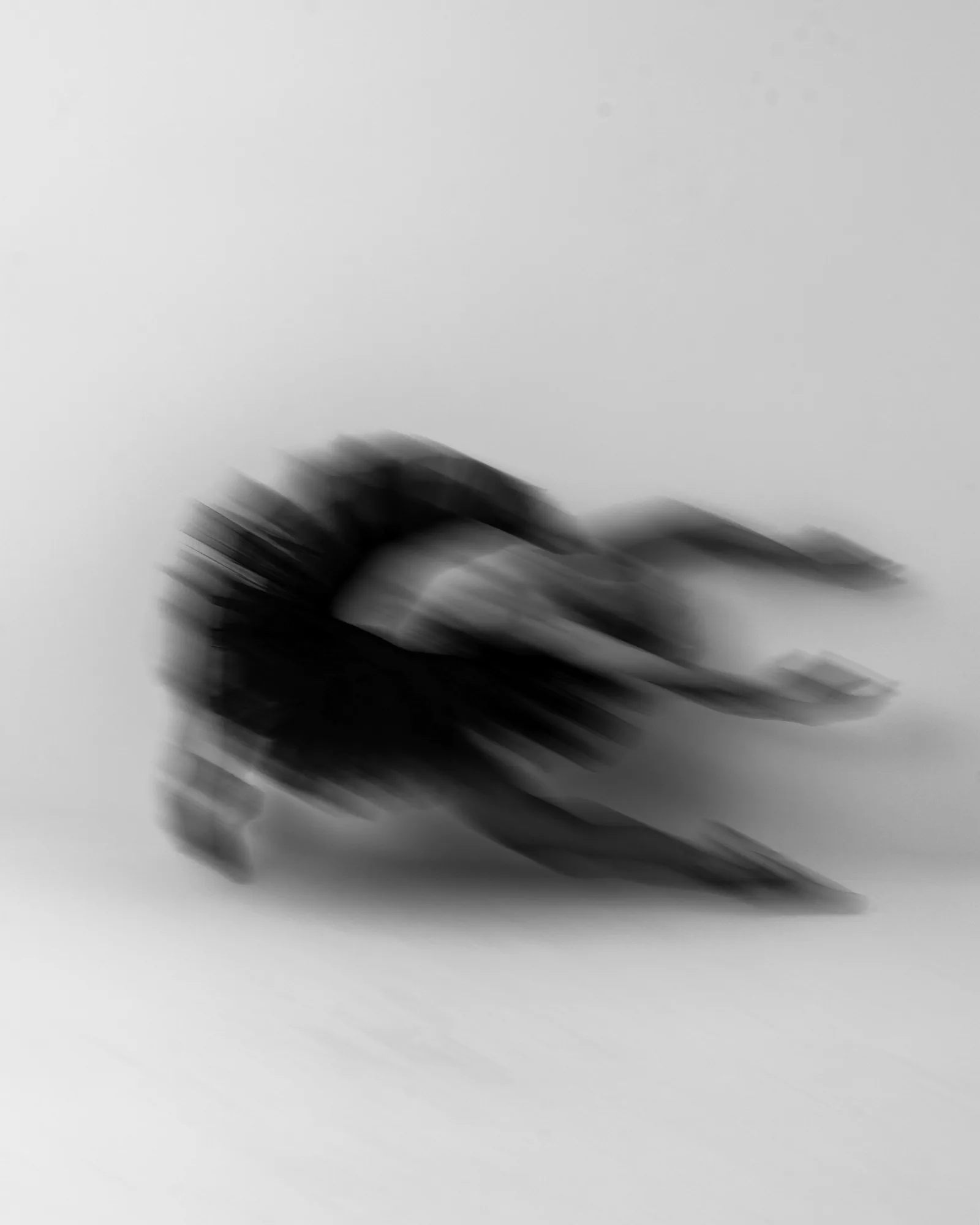
Using long exposures, intentional camera movement, and controlled studio light, モートス lets a gesture spread across the frame until movement and time take on the qualities of space. The body passes through that space and gradually dissolves into it, so that what remains is less a figure than the trace of its own motion.
In Latin, モータス means movement, and in the phrase motus animi, a movement of the mind: an emotion. The title keeps both senses. A turn, a hesitation, a fall: each crosses the frame as a feeling as well as a motion, and the long exposure keeps the whole of it.
A torso turns in the dark and leaves itself behind in soft layers, hair streaming into the black like smoke. A dancer spins against a single warm light, her silhouette held at the centre while the edges of the movement burn away. A woman raises her arms against a dark wall and they open into translucent fans, as if the gesture had grown wings. In black and white, a ballet skirt becomes a spinning cloud above two blurred legs, and a falling dancer turns into a grey streak across a pale floor.
Dance exists only while it is happening. A conventional photograph keeps one position and discards everything between positions, which is where the dance actually lives. モートス keeps the passage. A dancer knows from the inside where each limb is at every moment; these photographs show the outside of that knowledge, everywhere the limbs have been. When the camera moves as well, the image carries two movements at once, the dancer's and the photographer's, and becomes a record of their timing together.
この言及は歴史的なものです。1880年代、エティエンヌ=ジュール・マレーはクロノフォトグラフィーを用いて人間や動物の動きを記録しました。彼は1枚のプレートに一連の露光画像を配置することで、1枚の画像の中で人物が歩いたり、走ったり、跳んだりしている様子を捉えることに成功したのです。 同時期、エドワード・マイブリッジは、一列に並べたカメラを用いて、動きを個別のフレームに分割した。. モートス 写真が動きについて何を明らかにできるかという彼らの好奇心を継承しつつ、その手法を変えている。マレーのプレートが個別の瞬間を捉えているのに対し、マイブリッジは動きを静止画に分割し、, モートス 1回の露光を通じて、その動きを連続的に捉える。その動きは一体のまま保たれ、鮮明さだけが徐々に薄れていく。.
Hiroshi Sugimoto's theatre interiors, each exposed for the full length of a film, and his seascapes showed that time, more than light, could be the real subject of a photograph. Idris Khan's superimposed repetitions of canonical images showed that accumulation itself can carry emotional weight. モートス これらの考えを、生きた身体とその特有のリズムへと落とし込む。つまり、体を回転させるのにどれくらいの時間がかかるか、一歩を踏み出す際に体重がどのように移動するか、そして身振りがどのように消えゆくか、といった点である。.
Each image is made in-camera. No layers are combined in post-production; the blur, the multiplication, and the trailing light are captured in a single exposure. The photograph is a recording of movement: a physical trace, like a brushstroke, of a body's passage through time in front of the lens.
2つのサブシリーズでは、同じ問いを別の方向から掘り下げています。その中では、 急いで, 、イスタンブールの街角に、予告もなくバレリーナたちが現れ、公共の場で一瞬だけ踊る。写真には、その短いパフォーマンスや、動きの痕跡、そして立ち止まって見入る人々や、立ち止まらずに通り過ぎる人々の表情が捉えられている。 Stills, five dancers respond to the same photograph of an everyday object, each through a different movement, and the camera holds the pose in which every response briefly settles.
主な作品


FLUX